
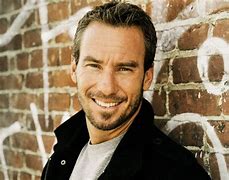
“I stand on truth and I stand on love.” Preston Sprinkle…
So far on this journey of trying to understand homosexuality and Christianity, I have spent many posts explaining Peter Gomes’ point of view as expressed in his book on the Bible, The Good Book. Gomes was a homosexual and a pastor. Then I spent many posts explaining Kevin DeYoung’s point of view as expressed in his book What Does the Bible Really Teach about Homosexuality? DeYoung is a pastor and he upholds the traditional heterosexual model for marriage [marriage between one man and one woman].
Now we turn to a third author, Preston Sprinkle. Sprinkle [or rather Dr. Sprinkle] holds a Ph.D. in New Testament studies from Aberdeen University in Scotland. He has taught theology at Nottingham University [in the U.K.], Cedarville University in Ohio and Eternity Bible College in California. He is the founder and president of the Center for Faith, Sexuality and Gender. Besides being a New Testament scholar, he is a podcast host, a speaker and New York Times bestselling author. The book we will focus on deals with his approach to homosexual behavior (Christianity: People to Be Loved—Why Homosexuality is not Just an Issue). Whereas Gomes advocates for the acceptance of homosexuals in all aspects of church life and Kevin DeYoung will not accept homosexual leaders in the church and same-sex marriage in the church, Preston Sprinkle advocates a third approach to this topic.
He states “The question of homosexuality defies simple answers so I refuse to give thin answers to thick questions.” He realizes that too many Christians have a knee-jerk response to this topic and he refuses that approach. He has a focus on Scripture but he does not use it to express an “us versus them” stance.
I find it interesting that Sprinkle chooses Wesley Hill to write the foreword of his book. Hill is a professor of Biblical studies at Trinity School in Pennsylvania. He has written a much discussed book Washed and Waiting: Reflections on Christian Faithfulness and Homosexuality. Hill is a celibate gay Christian.
Hill describes Sprinkle’s book as a meeting of the minds, minds of other people who think differently, people who can gather around a table and express differing points of view without rancor. This is so rare in our culture today, to express, to listen, to not judge, to make an attempt to understand. Too often we castigate, we label, we hate and yes when it comes to how some Christians handle the issue of homosexuality, we hurt others “with our faith.”
How can Christians ignore Jesus’ call to “love the Lord your God with all your heart, soul and mind. This is the first and greatest commandment, and the second is like it: to love your neighbor as yourself” The first part shows up in Deuteronomy 6: 5 but the second part is added by Jesus in Mark 12: 31, but it has an Old Testament echo in Leviticus 19: 18. Here is the biggest question that Christians must answer. What if your neighbor is a homosexual? As Christians, here is where the “knee jerk” gets in the way. For some there is an automatic dismissal of human beings with a different lifestyle.
Sprinkle says he is “haunted by the pain that Christians have caused gay people” [9]. He believes in God’s word but when he reads it, he does not read passages that mention homosexuality without thinking about “real names, beautiful faces and complex stories.”
Sprinkle has been around the table with others and has achieved an understanding through the exchange of ideas. “I have tried to read the Bible as fairly as I know how with regard to homosexuality. I have listened to people on both sides of the debate, those who affirm same-sex relations and those who do not. To my surprise, I have made many friends with people who hold very different views of homosexuality. Perhaps it’s because, as you’ll see, I have discovered that the Bible challenges people on both sides of the question” [11].
I recently had someone ask me why I write a blog post every week and why would I try to tackle a topic as hard as “can a person be homosexual and be a Christian?” [from three points of view]. My response was I write so I can learn. I write so I can grow in my faith. This topic is not easy, but finding a way to work through it in faith is extremely worthwhile.
I have read writings which advocate that homosexuality is ok for devout Christian life and leadership in the Christian church. I have considered the argument that (on this issue) the Bible is “out of sync” with God’s will as we understand it today. Scripture is shaped by cultural norms. I am not sure that this perspective has convinced me. I have read writings which condemn homosexuality for devout Christian life and leadership in the Christian church. God declares homosexual behavior a sin and we should treat it as such. I have not read author’s comments that are hateful but I have heard individuals express hateful thoughts [Christian individuals]. I struggle with this form of expression [Mark 12: 30-31?]. This perspective easily leads to hurting others.
Now let’s turn to an author who says “I stand on truth and I stand on love.”
Is he capable of finding a middle ground on this topic?
We will see…
 St. John Studies