
“How deep is the wisdom and knowledge of God?”
“God knows every word in every language in every sentence in every paragraph in every chapter of every book ever written.”
“He knows every fact of history past and future, every bit of truth discovered and undiscovered, and every proof of science known and unknown” [Chandler, The Explicit Gospel, 25].
Ok, if the post entitled “God’s Transcendent Creativity” [November 21, 2025] did not hurt your brain, then this one certainly will.
Why ponder things like God’s wisdom and God’s transcendent creativity? Because many Christians do not have much of an idea about the characteristics of God. I will quote from my November 21st post: “Christians actually don’t have much knowledge of God but they really don’t want to admit it.” This idea plays into the main theme that Matt Chandler is working with. He is very bold in his claim that many Christians “assume” they know Scripture when they have only put minimal effort into the study of Scripture. Chandler feels that Christians base their lives on an “assumed” Gospel**, when they should be living their lives based on the “explicit” Gospel. If one wants to understand the explicit Gospel, Chandler writes about they will have to commit to making an effort to know God.
Chapter One of his book is all about introducing believers to God. Chandler says we have to have the complex talk about who God is. “What is He like? How big is He? How deep and wide is his power?” Hence we have to discuss God’s sovereign knowing, a second characteristic of God.
We have to begin with the last two words in the previous sentence. What is sovereign? Sovereign means “supreme power or authority.” Attach that word to knowing and you have an entity that has supreme knowledge. Now go back to the beginning of this post and reread the second and third sentence and “know” that Chandler was not exaggerating about the wisdom of God. This part of his book in Chapter One (dealing with sovereign knowledge) has loads of practical examples of how much God knows.
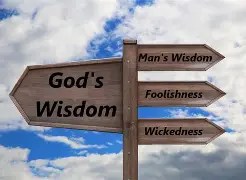
Today we live in a world that seems proud of advanced knowledge, subjects like artificial intelligence and data science, quantum and computing technologies, and biotechnology and space science. Surely man is close to the level of knowledge of God [I am being facetious]. The Bible says otherwise: “If anyone among you thinks that he is wise in this age, let him become a fool that he may become wise. For the wisdom of this world is folly with God” [First Corinthians 3: 18-19]. Now before you go too far and think that I am an anti-intellectual, let me assure you that I am not. I don’t have a suspicion of the more challenging ideas of theology and I don’t stress loving God with my heart and soul, neglecting mental efforts to know God. I believe that Christian education and critical thinking are crucial for Christians to avoid a shallow faith. Today, I believe too many Christian believers are being led by pastors who overemphasize ancillary goals (or even worldly goals) for their flock instead of basic Scripture-based belief.
Yes I am willing to admit that we will never know what God knows but that is no reason to give up on thinking. John Stott [one of my favorite authors) says the Christian’s mind does matter. But there is the old story of scientists laboring for centuries, climbing a great intellectual wall of discovery. They finally reach the top, expecting to see the ultimate explanation of reality—perhaps the triumph of human reason alone. But when they peer over the wall, they find God already sitting there, waiting. That story rings true for me. God is waiting for man to begin to “wise up” but man will never be and can never be “God-wise”.
Chandler states that God knows everything on the macro level, the micro level, and has breadth of knowledge and depth of knowledge. This whole idea of the limitless knowledge of God is challenging, but Chandler likens man to a four-year old in the backseat of the car telling “Dad” “He” doesn’t know where “He” is going. Romans 11: 34 says “For who has known the mind of the Lord, or has been his counselor?” The answer is nobody.
What do we have to operate on? We should not throw up our hands and say, I am too stupid so I will just operate on my shallow faith. Why make the effort to know the “all-knowing” God? We do have a revelation from God as revealed in His Bible. He speaks to us in “dreams and in visions and in words” [30]. The Bible speaks to us though creation. So when we feel intellectually small, we need to know that God has given us some wisdom to grow us, but not enough to counsel Him. That’s man’s problem; we know some things and we get prideful about what we know. Chandler writes “He has revealed enough of His character and attributes to save us, or preclude us from irresponsibility in not being saved, but He has not given us enough information to ever, with even a shred of integrity, second-guess him” [30].
Chandler is a master of the dramatic as he pens his thoughts. On the subject of God’s sovereign knowledge he says “Nobody gets to counsel God. Nobody gets to give God advice. Nobody gets to straighten God’s path. No one” [30].
Enough said…
*a quote from the theologian R.C. Sproul.
**by “assumed”, Christians may hear Scripture read in church, they may read small sections of Scripture in Sunday school or their pastor may preach on Scripture but do they read it on their own, do they think about the meaning of Scripture, do they study Scripture using their own using study methods or by consulting expert analysis? With minimal exposure, they assume they know Scripture.
 St. John Studies