Jesus The Suffering Servant

“The man who loves his life will lose it, while the man who hates his life in this world will keep it for eternal life.[John 12: 25]. 

This Biblical scripture has always confused me.  Why would anyone who loves their life lose their life?   Why would a man who hates his life keep it eternally?  It has always seemed to me to be some esoteric idea that is from a culture that is nothing like America or from a religion that is nothing like Christianity.   But I have never taken the time to read the scripture in the context of Jesus’ suffering or considered that the verses referred to Jesus as the “suffering servant”.   After many years of being confused, I think I finally have a better idea of what this scripture means.  John Stott’s Chapter 13 “Suffering and Glory” from The Cross of Christ concentrates on these verses and they finally make more sense to me.

My perplexity stems from the first sentence, “The man who loves his life will lose it.”  That sounds so extreme and I always assumed that it refers to making the ultimate sacrifice of dying for God but I should have read further and should have carefully considered the importance of the second verse.  Giving up one’s life for a cause is strange enough for someone from a western culture, but if one loves their life and loses their life that makes it even harder.  “The man who hates his life in this world adds new meaning to the first sentence.  Why would someone hate their life in this world?  Maybe the answer resides in the fact that they are merely passing through this world, on the way to their eternal home—God’s kingdom.  Real life occurs after this earthly life is over.

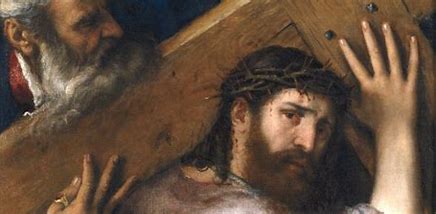
Jesus was (of course) the perfect model of suffering service.  He was chosen by God to show the power of gentleness, meekness and love for His fellow man.  When He was beaten, He did not retaliate.  When His beard was pulled out, He did not complain.  When He was spat upon, He did not react.  He had a mission and that was to bring Israel back to God and provide a light to all nations. 

Stott explains “What is particularly striking in this composite picture is that suffering and service, passion and mission belong together…. We see this clearly in Jesus, who is the suffering servant par excellence, but we need to remember that the servant’s mission to bring light to the nations is also to be fulfilled by the church” [Stott, 312].  Jesus’ mission is now our mission.   “Therefore go and make disciples of all nations, baptizing them in the name of the Father and of the Son and of the Holy Spirit, and teaching them to obey everything I have commanded you. And surely I am with you always, to the very end of the age” [Matthew 28:19-20].

I find it very interesting that Stott focuses on Jesus’s agricultural metaphors to express his main point.   “Death is more than the way to life; it is the secret of fruitfulness.  Unless it falls into the ground and dies, the kernel of wheat remains a single seed.  If it stays alive, it stays alone but if it dies it multiplies” [Stott, 312]. 

When Jesus speaks of God being glorified in His death, He was not only speaking of Himself.  He wanted to communicate this concept to His disciples who followed Him and would also lose their lives for God.  But Jesus intended for all followers to understand this message. 

Stott admits that the role of the suffering servant is hardly ever taught today so maybe I am not alone in my confusion.   Stott writes that other ideas are more common.  For example, a preacher can experience death of popularity because they may be preaching an unpopular Biblical gospel.  A devout follower of Christ can experience death of pride due to the Holy Spirit encouraging them to be modest instead of self-centered.   Furthermore, God may inspire believers to forego material comfort in favor of a simple lifestyle. 

Even in these less severe examples, the servant must suffer some loss in order to bring light to others.  The seed must die if it is to multiply.

The idea of the suffering servant is the third way the cross relates to human suffering after patient endurance [October 20, 2022 St. John Studies] and maturity through suffering [October 29, 2022 St. John Studies].  Stott “pulls no punches” as he takes us through six possible answers about how God’s glory is displayed through Jesus’ suffering.  He describes the answers rising “gradually from the simplest to the most sublime.” 

Suffering service may not be the most “sublime” answer but it may be the most foreign to our culture. 

“The man who loves his life will lose it, while the man who hates his life in this world will keep it for eternal life.”

“And I, when I am lifted up from the earth, will draw all people to Myself” [John 12: 32].

If we follow Jesus, we know our best life will never be experienced in this world.  Even if we love our earthly lives, we should want to lose them because our best life is in heaven with God.  If we hate our life in this world, we know that a future life with God is our ultimate goal, our ultimate best life.  Why would we want to stay in this world and miss our best life?

Jesus suffers and the world is drawn to the light of His suffering …

Posted in Uncategorized | Leave a comment

Maturity Through Suffering?

Now I know it may seem strange, but the second way the cross of Christ relates to human suffering is human suffering matures us; it can make us more holy.*

It may even be more strange, but John Stott posits that Jesus needed further experiences to make him more teleios  [the Greek word for mature].  Jesus needed to suffer on the cross to prove His obedience to God.  Stott cites Hebrews 2:10: “In bringing many sons to glory it was fitting that God…should make the Author of their salvation perfect through suffering.”  Hebrews 5: 8-9 says “Although He was a Son, He learned obedience from what He suffered and, once made perfect, He became the source of eternal salvation for all who obey Him.”

If suffering made Christ more mature, we (in our sinful state) need it much more.  One of the most popular Bible verses comes from James when he calls trials “pure joy;” those same trials test our faith and develop perseverance.  Perseverance leads to mature Christian faith [James 1: 2-4].

Six years ago this month, I experienced the worst trauma of my life [to date].  I fell from a ten-foot ladder and hit the rock hard ground on my posterior.  There was a drought in Kentucky at that time and the ground was extraordinarily hard.  When I fell, I knew something was wrong because I had a hard time getting up.  My neighbors came to check on me as well as my wife and when they assisted me, something inside my body shifted in a strange way.  I was not in pain [maybe it was shock] but the strange internal movement made me stop and lay on the ground.  Emergency services was called and I was rolled onto a board and transported to our local hospital.  There I got an x ray and found I had a complex pelvic break, so complex that local doctors determined that I would have to go to a major trauma hospital for treatment.  I was transported via ambulance to Nashville, Tennessee [Vanderbilt Medical Center] where I was admitted to the trauma ward.  The first hours I was there I was told I would have to undergo surgery soon after my body was adjusted to the proper position.  By this they meant I would have to have a hole drilled in my right leg and a rod inserted.  My leg was elevated throughout the night and the next day I was put back together by an orthopedic surgeon.  Today I have several pieces of extra metal in my body from this surgery. 

Six years hence, I found God in my trauma journey in so many places: on the ground in my front yard, in the thank yous I sprinkled on all the medical people who helped me [I was referred to as the crazy guy who thanked everyone], the peace I felt in the trauma ward awaiting my surgery.  I know it may sound “corny” but I felt like God was all over this event.  When I awakened from surgery, a man came to my room and asked if I believed in Jesus.  He then told me I was going to fully recover, for he had fallen from a second floor building and he broke his pelvis and many other bones.  He bounced back and I would too.  He grabbed my hand and prayed a heartfelt prayer of healing for me. 

Don’t get me wrong.  I don’t want to have another traumatic episode but the whole event taught me so much.  Stott writes “God intends suffering to be a means of grace” [The Cross of Christ, 309].  Suffering fosters perseverance and purifies faith.  When I was recovering I was humbled.  I could not get out of bed.  I could not cook my meals.  I could not drive a car.  I could not take a shower standing up.  I had a special device to help me pick up things and put socks on my feet.  I had to use a walker for three months, not able to put any weight on my right foot.   Paul was given a thorn in his side to keep him humble [to keep him “from becoming conceited”].  It says in Psalms 119: 67 “Before I was afflicted I went astray, but now I obey the word.”

To this very day, when I stand in the shower I remember what it was like to sit on a stool and have to grab shampoo, towel and washcloth with a grabber tool. 

As one of my therapy aids, my therapist found out that I liked to read and he recommended a book by Jim Rendon called  Upside: The New Science of Post Traumatic Growth.  Rendon states that all of us want to avoid the worst life has to offer, accidents, illness, loss of loved ones and violence.  However, seventy-five percent of people will experience trauma in their lives.  Many people suffer, but a significant number report that the event can lead to positive change.  It is in the midst of trauma recovery that we begin to discover the things which really matter; in sorrow, we discover ourselves.

My recovery was not one joy ride back to full use of my body.  I had many days in the middle of winter to ponder my condition.  I did not have it as bad as many.** I had days of depression, problems with urinary performance due to the pelvic break, additional surgery for urinary function, many, many days of pain in my right leg and constant neuropathy.   There were moments when I feared I would never have nerve reconnection to my feet since my pelvic surgery severed nerves in the middle of my body [I have a six inch scar]. 

Now when I walk, I pay attention to my feet and even though there is not 100% feeling, there is so much more than there used to be.  My body does not work exactly as it did before the fall, but it works well enough.  I recall the electric shock of nerve reattachment in my feet with joy.  If there is such a thing as good pain, that was it. 

Stott says suffering stimulates creativity; Rendon agrees.  Suffering matures people because of how they react to what they have gone through. 

Please don’t misunderstand; I don’t look forward to trauma.  No one does but when Stott writes “There is always something indefinable about people who have suffered.  They have a fragrance that others lack.” 

I don’t know about my fragrance but every day I take a shower, I stand up and I thank God for being able to: just one of so many little things I appreciate about life today.   I lost a lot and my merciful Lord has given so much back.

Maturity through suffering?

You decide…

*this post is comments on John Stott’s The Cross of Christ.

**So many medical personnel told me to quit comparing my injuries to others.  “You have it bad enough” so I quit trying to make myself feel better by comparison.  However, there is no comparison to the suffering of Jesus when he took the sins of mankind on His shoulders.

Posted in Uncategorized | Leave a comment

Patient Endurance

As we consider Chapter 13 of John Stott’s Cross of Christ we find ourselves confronted by what he calls “the single greatest challenge to the Christian faith.”  That is the idea that the world [a world created and ruled by God] has suffering. He writes “how does the cross speak to us in our pain?”

In this post, I will comment on the idea of patient endurance.  Stott covers six possible answers to the question of pain and suffering in His world.  Patient endurance is what Stott calls “the simplest.”

We will see…

First of all, I find it interesting that Stott declares suffering as evil and “it should be resisted” but as we all know, there come times in life when we have to accept it because it happens.  The key is how we accept it. 

With patient endurance…

What is the source of our suffering?  Is it the result of some painful accident?  Is it caused by a disease?  Are we in the wrong place at the wrong time when nature destroys our home and livelihood [e.g. the recent hurricane Ian]. 

The Bible has a lot to say on suffering:  “We rejoice in our suffering, knowing that suffering produces endurance, and endurance produces character and character produces hope” [Romans, 3-4].  James 1: 12 says “Blessed is the man who remains steadfast under trial, for when he has stood the test he will receive the crown of life, which God has promised to those who love him.”  Then we have Romans 15: 4-5 that says, “For whatever was written in former days was written for our instruction, that through endurance and through the encouragement of the Scriptures we might have hope.”

Another word for patient endurance is “longsuffering.”  God is patient with us.  We are to be patient with others.  “Through our trials and tribulations, we must be long-suffering.  We must keep our eyes on the Lord and not grow faint”  [Ephesians 4: 1-3 and 1 Thessalonians 5: 14].

All this sounds challenging and it is.  Where do we look for instruction in patient endurance?

We look to none other than Jesus Christ.    From First Peter 2:18-25 we read the following words about slaves and harsh masters:  “Slaves, in reverent fear of God submit yourselves to your masters, not only to those who are good and considerate, but also to those who are harsh. For it is commendable if someone bears up under the pain of unjust suffering because they are conscious of God. But how is it to your credit if you receive a beating for doing wrong and endure it? But if you suffer for doing good and you endure it, this is commendable before God. To this you were called, because Christ suffered for you, leaving you an example, that you should follow in His steps.  He committed no sin, and no deceit was found in His mouth.  When they hurled their insults at Him, He did not retaliate; when He suffered, He made no threats. Instead, He entrusted Himself to Him who judges justly. He Himself bore our sins in His body on the cross, so that we might die to sins and live for righteousness; by His wounds you have been healed.   For you were like sheep going astray, but now you have returned to the Shepherd and Overseer of your souls.”

What are we to do when confronted with suffering?  Like Christ on the cross, we endure it.  Why, because it is pleasing to God.  Why, because enduring suffering is a good thing to do and it produces character.  We know we live in a world that does not promote this attitude.   When we suffer, we complain.  When we suffer, we lash out at others.  When we suffer we try to make others suffer with us. 

What did Jesus do when He went to His death for crimes that He did not commit?  He never retaliated.  Could He have used His heavenly power to change the situation in His favor?  Of course He could, but He chose not to do that .

We are encouraged to fix our eyes upon Jesus for He endured the cross, despite how horrific the method of punishment was.   Stott writes that “Christians in every generation have gained from the sufferings of Jesus, which culminated in the cross, the inspiration to bear undeserved pain patiently, without ever complaining or hitting back” [Stott, 307].

What is the value of all this?

Part of the value resides in people who see us suffer and bear up under the pain.  I have a dear friend who is in the last days of her fight with cancer. Recently hospice was called in to assist her needs and I thought surely she would accept some pain medication and spend more time in bed.  In a recent visit, she revealed that the pain meds dulled her mind and she did not want that and she preferred to be up and around in her home as long as she could.  When I drove to her home for a visit, my wife and I found he at the end of her carport where she greeted us.

What is happening?  Her faith is witnessing to others.   She is being strengthened in her time of need.  She is steadfast in her faith, enduring her trouble with God.  Philippians 4:13 comes to mind: “I can do all things through Him who strengthens me.”  Where is her strength coming from?  God, Jesus Christ and the Holy Spirit are working in her and as she patiently endures, she is giving God the glory.  I think of her and recall Colossians 1: 11 “May you be strengthened with all power, according to His glorious might, for all endurance and patience with joy.” 

A visit to her is amazing as she does not focus on her troubles but continually asks about visitor concerns.  A visit to her is also amazing as she “cracks” jokes; when she was in my Sunday school class, we could count on two or three during a class session.  She is still telling jokes in the midst of her suffering. 

John Stott may label patient endurance the simplest answer for how Christ’s suffering relates to ours but let me tell you, to see it modeled first hand is an amazement. 

I have had my moments of suffering but I did not bear up under it as well as my friend with cancer. 

When her last hour will come she will surely be able to take solace in James 1: 12:  “Blessed is the man (or woman) who remains steadfast under trial, for when he/she has stood the test he/she will receive the crown of life, which God has promised to those who love Him.”

Posted in Uncategorized | Leave a comment

The Last Chapter: The Biggest Problem

John Stott* cites the story of Joseph Parker [1830-1902], an English Congregational minister who was consumed with the desire to preach God’s word to as many people as he could.  Parker would draw thousands of people to his evangelistic events in the days before microphones.  It was said that he was on fire for God.  Yet at the age of sixty-eight after many years of working for the Lord, his faith collapsed; his wife died and “in that dark hour I became almost an atheist.”

What happened?

Suffering…

Stott saves the idea of suffering in God’s world for the last chapter of his book The Cross of Christ.  “The fact of suffering constitutes the single greatest challenge to the Christian faith…. Its distribution and degree appear to be entirely random and therefore unfair.  Sensitive spirits ask if it can possibly be reconciled with God’s justice and love” [303].

It is very confusing to most new Christians who have given their lives to Christ.  There is such promise for a wonderful future with God as our Savior but Christians soon find they are not immune from hard times.  I remember wondering why I had such challenging events in my life after I was “born again.”**   I remember seeking answers from Harold Kushner in his book  When Bad Things Happen to Good People.    The topic here is referred to as theodicy, the role of a Divine God in a world where evil exists.  For many, this complex topic breaks down to either God wants to stop suffering but He cannot, or He chooses not to.

Either option is hard to understand.  God is supposed to be all-powerful; He created our universe and He governs the world.   He is supposed to have a loving nature.  Yet when we listen to the daily news, the world He created has so much suffering and pain and evil. 

The last chapter in The Cross of Christ is entitled “Suffering and Glory” and Stott’s object in the chapter is to “explore what relation there might be between the cross of Christ and our sufferings.”

By way of introduction, Stott mentions four “standard arguments” that try to explain God’s role in suffering.

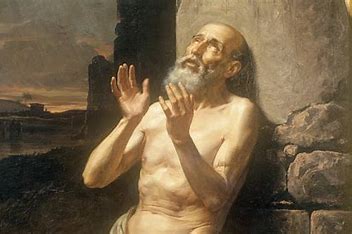
First is the idea that suffering is an “alien intrusion” into a world that God intends to be good.  Evil is satanic, a direct attack from the Devil.   The book of Job illustrates this point of view very well as Job is attacked by a vindictive Satan who wants to test one believer’s faith. 

Secondly is the idea that suffering is a direct result of sin.  Sometimes the sin is our responsibility as we choose to abuse our freedom and we engage in harmful acts.  At other times sin is inflicted upon us as drunk drivers come across the center line, unloving parents abuse us, or cruel policies of aggressor nations inflict casualties on the innocent.  Again in the book of Job, Job’s friends attribute his suffering to his personal sins even though in the balance of the book, that idea is repudiated.

The third explanation is the whole idea of suffering can be explained by our sensitivity to pain.  Of course we live lives where we experience physical or emotional pain.  The idea is that suffering is a wonderful Godly creation because it warns us of impending danger.   We need it for personal and social survival.  If something hurts, the idea is we need to stay away from it.  Physical and emotional pain protect us from harm.

The last standard argument explaining the role of pain in the world is that it comes about because of the environment in which God has placed us.  In this viewpoint, almost all human suffering is brought about due to human sin, but not all.  What about hurricanes, flood, earthquakes and drought?  Today there is increasing scientific evidence that natural disasters are occurring more frequently and at much greater intensity due to human ecological irresponsibility but what happens when ordinary folks suffer due to natural disaster?  They go on living where they are and they don’t move.  They are the true innocents.  They have no “ecological responsibility;” they just suffer.

The problem with many of these standard arguments is that we want a society where we are free from suffering.  Stott cites C.S. Lewis who advocates that we need a “neutral” world where we can have a fixed nature and we can act freely toward other men and toward God.  I find it interesting that Stott rebuts this idea with the words “If we lived in a world in which God prevented every evil from happening…free and responsible activity would be impossible” [306].

This leaves us with four standard explanations and the feeling that none of them are adequate.   Jesus spoke of suffering as being for God’s glory.  He suffered so that the work of God might be displayed, but who really wants to go through suffering so that God can get the glory? 

So what is the relationship between Christ’s suffering and ours?  How does the pain I have felt in my life relate to the cross? 

As we finish commenting on The Cross of Christ in chapter thirteen, Stott posits six possible answers “from the simplest to the most sublime” [306].

In my next post, we will consider the idea of patient endurance.***

*From his book  The Cross of Christ

**a personal example is six years ago; I fell from a ten foot ladder, breaking my pelvis into several pieces.  As I had three months to recuperate, I spent many hours considering “why me?”

***This post is late.  I spent the week with my son in Memphis Tn., helping him work at his home.  All of the work I normally do for the church has been delayed.  Sorry…

Posted in Uncategorized | Leave a comment

Thanks Professor Stott: You Answer so Many Questions

It may not be humble, but let me quote myself: “our efforts at private growth are the bedrock of everything else”.*

Let me quote John Stott regarding this same matter: “The Christian life is not just a private affair of our own” [from Basic Christianity, 139].

Truly it is important to seriously consider what we are doing to further God’s Kingdom in this world.  That takes thought, prayer, being alone with The Father, maybe meditation, listening for the guidance of the Holy Spirit [maybe all of these things and more], but “The Bible will not allow us to retreat from practical responsibilities either into mysticism, or into a monastery, or even into a Christian fellowship which is insulated from the world [142].  “The Christian life is not just a private affair of our own.”

Anyone attempting to follow God and His Son Jesus Christ may feel alienated from the day-to-day happenings in the world.  We watch what is on the news and we strongly suspect our true place is in heaven with The Father.  We know we are only on this earth for a short while.  We are told not to lay up treasures in this world, trying to fit into the “world’s” standards of success.  Our treasure is in “another world”.  With this as a backdrop however, we know we are called to active discipleship here on earth, discipleship for God.  It is our Christian obligation.

What am I referring to? 

We have a duty to the church.  It is necessary to seek out our brothers and sisters in Christ.  Membership in the church universal is not enough; we need to belong to a local branch of the church where we can worship, fellowship with other Christians and join with them in witnessing to those outside the church.

Stott gives guidance in this area: if you have been attending a church since your childhood and then you have made a commitment to Jesus Christ, it would not be advisable to move to another church.  Just make a commitment to attend and support that church.  If you have no church, he provides two key pieces of advice for choosing a place to worship:  Is the pastor submissive to the Word of God, his or her sermons relating to God’s word and attempting to connect God’s ideas to contemporary life?  Does the congregation seem to be a fellowship of believers, loving Christ and one another?

Another piece of advice is (after joining a church) get involved with the ministries of that church.  Sing in the choir, join in and help with the work of a committee or join the church volleyball team.  Participate and make friends with other Christians.  Eventually your closest friends will be your Christian friends.

We also have a duty to work in this world to make it a better place.  When I write that we should not lay up  treasures in this world and comment that our true place is in heaven, it sounds like I am turning my back on earth.

That is not what our faith really calls us to do.  We are to be concerned about our fellow men.  Stott points to the “noble record” of caring for the hungry, the sick, the needy and neglected people of this world.  We are supposed to uplift the victims of oppression, slaves, prisoners, orphans, refugees and dropouts. 

Another responsibility we have in this world is evangelism.  In short, that means that we are to spread the good news of Jesus Christ to the millions of people who have no idea who He is.  We are supposed to win the world for Christ.

Some worry about this responsibility because they do not see themselves as a pastor.  They can’t make the commitment to become a missionary.  This does not mean that we cannot witness for Christ in the various locations where we live.  How are we responding to the problems of life in our families, in our classrooms, our places of business?  Are we exhibiting loving behavior, humble behavior,  honest, Christ-like behavior?  There is an old expression that almost all Christians know: “The only Bible most people may ever see is you, how you handle yourself in life.”  “Actions speak louder than words” is another trite expression but the Christian who lives a life of a dedicated follower is powerful testimony.

Are you concerned about what you will do to help “win the world”?  Start with prayer that asks the Holy Spirit to use your gifts to win souls.  We all have strengths and weaknesses and God will not put you in a position where you are not capable.  Sometimes we try to take on work that we are not suited for, but that is not work based on the guidance of the Holy Spirit.  That is our own selfishness, our own grab for power.  Often that does not result in much success.  

If you are good at listening, you will find yourself counseling people who have problems.  If you are good at building things, you will head a team of workers who repair storm damage.  If you can cook, you will find yourself in the church kitchen providing meals to the homeless.  Again the focus is on actions:  Stott writes “little is more influential for Christ than a life which He is obviously transforming” [141].  Also little is more influential than meeting  a need because you have decided to share your gifts with a needy person.

When I first encountered Basic Christianity  it was 1976.  I purchased my copy from a used book store close to my college campus.  I had no idea that I would read it and it would help change my life.  I was just curious and I have always been a book lover.  I had no idea that I would one day blog on the book.  Over the years John Stott kept coming in and out of my life.  His name would show up in a devotion book or we would study some of his ideas in Sunday school.  I referred to what I wrote in my copy of Basic in my October 25, 2020 post.**  On this last post on the book I refer to my marginal comments again:  “I bought this book in 1976—in 1999 I read it and found it a blessing—Stott answers so many questions.”

It is time to close my comments on the book.  It is falling apart but I will keep it as it is (broken spine and all).  The work on Basic has been worthwhile for me and maybe some reader out there may have received a blessing from some of my comments on his thoughts.   Looking at his little book in depth has been a blessing for me.  Let me close with Stott’s ideas from his final page:  “This is the life of discipleship to which Jesus Christ calls us.  He died and rose again that we might have newness of life.  He has given us His spirit so that we can live out this life in the world.  Now He calls us to follow Him, to give ourselves wholly and unreservedly to His service” 

Thanks Professor Stott.  You answer so many questions.

*from “Getting Out of the Nursery,”  St. John Studies,   September 29, 2022.

**from “Studying Stott Again.”  St. John Studies, October 25, 2020.

Posted in Uncategorized | Leave a comment

Getting Out of the Nursery

I wrote “In my last post on this book [this week’s], Stott explains the Christian’s responsibilities.” quote from my previous post on September 22…

I lied…

This post was supposed to be the “last post” on John Stott’s book Basic Christianity.

It is not. There will be this one and then another.

This post will deal with the responsibilities of a personal commitment to live for Jesus Christ. 

I see the responsibilities of the Christian two ways.

Number one, we have a private responsibility to work toward living a more righteous life.*

Number two, we have a responsibility to do God’s work within the church and God’s work within this world.

Let’s focus on number one because our efforts at private growth are the bedrock of everything else. 

Some would disagree; their efforts are all about church work and work within the world but I know if I don’t have my private commitment to my Father and His Son right, everything else is “just a show.”

Some feel that responding to “the call” is all that is needed.  It is a privilege to be a child of God but we don’t have responsibilities to go along with the privileges.  Just give your life to Christ and that takes care of it.  After being born again, you can resume your regular life and be assured that you are saved.  There is a problem with this.  New Christians don’t want to return to their regular life; they want something different because they are new creatures in God.**

John Stott writes that “Everybody loves children, but nobody in his right mind wants them to stay in the nursery” [136].  But this is the problem with many Christians who focus on privileges and aren’t interested in responsibilities.   They are born again in Christ but they never grow up.  Stott says “Others even suffer from spiritual infantile regression.”  God intends us to become “mature in Christ;” birth should be followed by growth in righteousness.  Justification leads to sanctification.***

When I first read Basic Christianity I knew very little about what lay ahead in my life.  I knew that something special had happened to me [I was born again] but I really did not know what God expected of me [long term].  I knew of His Son but I did not know how to grow closer to Him.  What I needed to understand was I had to develop my mind.  I had to learn about my faith.  I also needed to understand that I needed to work on my relationship with my new Father and His Son.

Obviously the place to start is the Bible.  Good Christian literature helps with growth also [books like Basic Christianity].  I started with the New Testament and I soon began to understand that Jesus advocates for Christians to love their fellow man.  Jesus also intends for us to conform to His character and behavior.  God wants us to obey His commandments and with help from our Holy Spirit, He wants us to do His will.  Our bodies are our temple and God dwells within us.  Not only are we are supposed to take care of our bodies, we are also supposed to make the effort to monitor what goes into our bodies.  Harmful temptations are real and our “original sin” nature makes us vulnerable to making horrible choices.  God expects us to submit to His authority and if we do, good things will appear in our behaviors.****

“Our relationship to our heavenly Father, though secure, is not static” [Stott, 137].  Most of us are very busy and don’t want any other things added to our list of things to do, but arranging time for God every day is a must.  I know many Christians who have never opened a Bible.  I know many Christians who say they cannot pray.  Stott comments that the road to victory in the Christian life is simple, an alarm clock, self-discipline, a Bible reading plan, a Bible, good Christian books, but most of all an honest desire to know God more and decrease the distance between yourself and Him.  Add an honest desire to live a more “Christ-like” life and you have all the basic ingredients for growth. 

Let me also add some very personal needs for growth.  Prayer is our effort to communicate our concerns to God and that is important.  We all have problems and God can help us if we ask Him.*****  Often I hear that prayer is like a wish list, with God as our Santa; some say I am not sure I do prayer right.   I am certain that God hears all our prayers, whether they are about our own needs or the needs of others.  It is also important to listen in the process of prayer as God may speak directly to our Holy Spirit. 

To listen requires silence and as we grow in our faith it is important to learn to meditate on the world of God.  I have personally read the Bible from cover to cover many times and that is good, but what can happen with a rigorous Bible reading plan is there is no time to reflect on God’s Word.  Stott recommends “Pray before you read, asking the Holy Spirit to open your eyes and illumine your mind.  Then read slowly, meditatively and thoughtfully.  Read and reread the passage.  Wrestle with it until it yields its meaning” [138].  Keep a notebook about your reading and read other books about the Bible [a good commentary is helpful].  Overall, look for Jesus Christ.

He is there.

When we commit to follow Jesus, we have a new Father.  It is important to realize that life after our commitment is a life-long effort to know Him better and better.  We may make an effort to emulate Christ in our lives and that effort is extremely commendable, but it is important to be realistic in our efforts.  Christ lived among us and He never committed a sin.  We are not built that way and He knows it.  We will sin but the most important thing is to confess it.  We will have remorse about sinning but don’t dwell on the sin too long.  God does not want a relationship that is static.  He understands us, He made us and He wants us to continue our efforts to know Him more.  Find a way to accept His forgiveness and move forward, getting even closer to Him.

Let me close with the ideas of privilege and responsibility.  To be a child of God is a wonderful privilege and no one should take it for granted.  However, it is just the beginning to giving ourselves to Christ.  Obligations or responsibilities are very important.  We are obligated to grow up as Christians.  We are responsible for our own commitment.

It is not good to be classified as one of those Christians who are born again but do not grow.  Stott writes “To neglect to grow in your understanding it to court disaster” [137]. 

I don’t know about you, but I want to get out of that nursery.

*By righteous life, I mean private righteousness, not public righteousness.  No human can be like Jesus but we can all make an effort to get closer to the Son of God and God Himself.  I use the word “work” cautiously, because I am not advocating legalism.

**”Therefore, if anyone is in Christ, the new creation has come: The old has gone, the new is here!”  2nd Corinthians 5: 17.

***Of course justification is giving our lives to Christ [we are made right, or justified];  sanctification is growing in righteous, Christ-like behavior.

****These “good things” are called fruits of the Spirit: love, joy, peace, patience, kindness, goodness, faithfulness, gentleness and self-control.

*****There are many books on prayer but one of the most thorough is W. Bingham Hunter, The God Who Hears.  I discussed this book on “St. John Studies” beginning with my November 10, 2016 post entitled “Exposing my Bias.”

Posted in Uncategorized | Leave a comment

I Am A Child Of God…

I am a child of God.

What does that statement mean?  It is obviously an identity statement.  I could say “I am David Carter.”  I could say “I am a golfer.”  I could say “I am a teacher.”   However, when someone identifies themselves as a child of God, that statement seems more important than any other statement of identification.   Frankly, I think it is.  As John Stott draws his book Basic Christianity to a close, he focuses on the idea that Christians are children of God. He refers to the Apostle John who explains in his prologue to his Gospel that “He (that is, Jesus) came to His own home and His own people received Him not.   But to all who received Him, who believed in His name, He gave power to become children of God; who were born…of God.”

The major questions about this child of God designation are these:  have you received Him? Do you believe in His name? 

Some might question is God not the Father of all men?  Aren’t  all people children of God?  Well certainly God created man, but that is not what a person means when they say “I am a child of God.”  The identity “child of God” is more than acknowledging that I am a creature who was created by a Creator.  When I say I am a “child of God” I declare that I have a special relationship with God because of my acceptance of Christ in my life.

Reference the statement above:  “He came to His own home and His own people received Him not.”  Contrast that to this idea:  when He came to me, I received Him.

But what does all this mean?  In Basic Christianity, Stott has written a book for a seeker, an individual who has made a new commitment to Jesus but they are not really sure what that means.  They need more information because they want to grow in their faith.   They may be happy that they feel momentarily free from their sins and they may be excited about the new direction they are going in their life but their life change is new.  They don’t really know what their future holds.  They are affectionately referred to as “baby Christians.”  Human babies are fed by parents and growth for them is natural.  Christian babies grow through their own effort: to grow they should read God’s Word and obey God’s Word in their lives.

In this post, I will comment on Stott’s “privileges” for the person who is a new creature, that person who has joined the family of God, and now is related to God as Father.

The first privilege is an intimate relationship with God.  Sins were a huge barrier between God and us before we declared Jesus Christ as our Savior.  Stott writes simply, “We were under the just condemnation of the Judge of all earth.”  Due to Christ bearing all our sins on the cross, we have been “made right” with God.  Our Judge has now become our Father.  Stott comments on this new life by turning to the words of the Lord’s Prayer.  Before I went to church and said the prayer, the words were only an exercise in rote learning.  After giving my life to Christ, “Our Father in heaven, hallowed be Your name” took on a whole new meaning.  He knows my needs before I ask Him.  He promises to give good things to His children and I am now His child.  Do I have carte blanche with my behavior?  No, God disciplines me when I sin and even though I have declared my love for His Son, I will continue to sin.  However, new Christians must realize that God is disciplining us for our own good.  We need His guidance in life so we can grow closer to Him.

Secondly, we have an assured relationship with God.  “Assured” is one of the most important words for a new Christian.  Some people act as if they only hope for a brighter future, but Christians are assured that God will never desert them, God will give us peace and rest and God will give us eternal life. 

Let’s stop and clear one thing up:  God is not promising that life will always be happy, that the problems of life will not occur.  However, He is promising that He will always be there to help us in the tough times.  This is very confusing to new Christians who feel close to God when things are “right” and distant from God when things are “wrong.”  This can plunge the new Christian into uncertainty as we desire all highs and no lows. 

One key to overcoming this problem is to read God’s Word and believe it.  God promises eternal life to those who receive Jesus Christ in their lives.  Secondly, God speaks to our hearts.  When we believe in God, His Holy Spirit comes into our lives and He directs us.  Stott writes “The outward witness of the Holy Spirit in Scripture is confirmed by the inward witness of the Holy Spirit in experience” [134].  When we cry out for God in our prayers, listen.  He will answer if we are quiet, meditative and receptive.  Thirdly, if we are active on His urgings through the Holy Spirit, we will find spheres of life where we can do His work.  There will be evidence of His influence in our acts.  This “indwelling” of the Holy Spirit also gives us a new path to righteousness as God leads us down a new pathway to life.

Security.  Who does not want that?  This is the third privilege that new Christians will eventually discover.  A major fear that many have is the penchant to sin after declaring a “new life in Christ.”  How can this be?  The things I did before I came to Christ are still there:  the old temptations, the old triggers to sin, the weaknesses that have led to sinful habits.  Many new Christians don’t understand that we may be “justified” once but we need to be forgiven every day.  Paul said we have to “die to sin daily.”  Eventually we hope that sin tugs on us less as we seek God more and more but real life is a see-saw battle as righteous behaviors can emerge in one instance and then sinful behaviors can emerge in another.  So many Christians refer to this as the “old man, new man” problem.  When we declare Christ as our Savior, we try to put our “old” behaviors away and we seek better behaviors [our “new” man].   However, the “old man” returns from time to time.  Old habits are hard to break.  New habits are hard to adopt.  Where is security in all of this?  God knows the battle we are waging because His only Son walked this earth living a human life.  His only Son is also in heaven at His right hand advocating for man.  God knows every sin we are going to commit before we commit it.  Our weaknesses are baked into who we are and God has made us.  Despite this, God wants us to succeed in our efforts at righteous living.  Satan is the one who wants to see us fail.

I love the way Stott ends this section of his last chapter.  When we give our lives to Christ, we are cleansed from our sin.  He references Peter who asks Jesus to wash his hands and his head as well as his feet, but Jesus replies “He who has bathed does not need to wash, except for his feet, for he is clean all over.”  In Jesus’ time in the Middle Eastern world,  dusty conditions made it customary for people to bathe before leaving their home for social gatherings. When arriving at someone’s home, a slave would still greet them and wash the dust from their feet.  Stott likens this to what happens when we give our lives to Christ.  We receive a bath which symbolizes the fact that we are made right with God.  That bath never needs to be repeated, but as we walk through the dusty streets of this world, we constantly have to have our feet washed.  This is God’s daily forgiveness.

I am a child of God.

When someone identifies themselves as a child of God, that statement seems more important than any other statement of identification.

It means that God will give you an intimate relationship, an assured relationship and a secure relationship.

New Christians don’t know what they are getting when they give their lives to Christ, but in the closing words of Basic Christianity Stott explains the privileges. 

In my last post* on this book [about the last pages of the book], Stott explains the Christian’s responsibilities.

*My first post on Basic Christianity was October 25, 2020 [entitled “Studying Stott Once Again”].  When I began blogging on December 30, 2014, I had never commented on two books at once, but I admire John Stott so much I wanted to do this, alternating comments on Basic Christianity with The Cross of Christ.

Posted in Uncategorized | Leave a comment

Being A Christian

As I have “ping-ponged” back and forth between The Cross of Christ and Basic Christianity,  I have been heading toward conclusions, the final summaries of each book.  The Cross is considered by many theologians as John Stott’s magnum opus, the crowning glory of all his writings.  Basic is a much earlier work, designed to be helpful to the person who has made a commitment to Jesus but is not that familiar with what that entails.  They seek more basic knowledge about their new faith.

We are in the final chapter of Basic and after navigating through introducing Christ as a person, man’s need for Him, and His work here on earth, Stott is discussing man’s response to Jesus’s sacrifice for us, His death on the cross.

I find it very interesting to read these words: “Yesterday really was an eventful day!…Up until now Christ has been on the circumference and I have but asked Him to guide me instead of giving Him complete control.  Behold He stands at the door and knocks.  I have heard Him and now He has come into my house.  He has cleansed it and now rules in it.”  These are words from a diary, and the next day’s entry is “I really have felt an immense and new joy throughout the day.  It is the joy of being at peace with the world and of being in touch with God.”

These words are from John Stott’s own diary, written when he surrendered his life to Jesus Christ.

What is next in his days ahead?   Life…

The day we find Jesus is pivotal, but life goes on, with its good days and bad days.  Many feel a spiritual high as they realize a freedom from the bonds of sin they have never felt before, an exhilaration of a brighter future with a new approach to life.  That “high” may last for a while but eventually life interferes and we find ourselves confronted with problems and some of them are so severe that our new faith is sorely tested.

We cannot just freeze time and enjoy one bright, shining moment forever.

There is much more to the Christian life than this.  We have to find a way to grow our faith in the midst of what life offers, and we know that life will offer challenges that can suck any enthusiasm we felt out of our “eventful day”.  Stott points out that wise new Christians make commitments to joining a church, hoping that fellowship with other Christians can inspire us and guide us through the good times and the bad.  Christians interested in growth will start the process of learning as much as they can about God, seeking to do His will.  Sinning does not stop in a new Christian’s life so it is essential to understand the grace of God, for we need it every day as we are tempted to do what is not right.  Many Christians look around and see that there are places where there is great need and they decide they can spend their energies serving their fellow man.

As John Wesley says, being made right with God is not the end, it is just the beginning.  We are supposed to move from justifying grace to sanctifying grace.

I remember my own experience of justification.  I like to think it was a pivotal moment.  Before that moment, I was someone who worked very hard; my whole life was centered around pleasing my boss.  I loved the attention I got because when I took on big projects, I succeeded.  I was climbing the ladder of success.  My problem was that I did not have a “relationship” with Jesus Christ.  I had been committed to my goals in life so much that I had quit going to church [even though when I was “going to church” it was just a duty, not for the worship of God].  I fell into the habit of needing Sunday to rest a little and prepare for the work in the upcoming week.  I had life under control.  I was very effective in my job and that was all that mattered.

Until…

I realized one morning that I had left my family behind.  That is where it started.  I had a wife and I had a son.  I barely gave them one percent of my attention, but one morning I awakened to find that I was about to lose them and that shook me to my core.  I needed them but instead of being in their lives, I took them for granted.  I just assumed my family was ok as I selfishly pursued my life vision.

They weren’t. 

I remember the “pivotal moment” that morning when I took the family dog on a walk.  I had heard the most crushing news I had ever heard in my life.  My world was crumbling and the guy who thought he was under control suddenly realized that his “control” was just a figment of his imagination.

My direct address to God that morning was “What do I do Lord?”  He spoke to my Holy Spirt that morning, giving me a message that at the time made little sense: “Go to work, have the best day you can have and wait for help.  I am sending you help.”

John Stott gave his life to Christ and felt that Jesus was taking over.  The next day he knew Christ was in his life, controlling his life and [cleansing it and ruling it].

My point is this:  everyone’s experience is different.  I embarked that morning on a process that took a long time.  It was a full year of commitment to Christ before my wife would even utter the words “I love you.”  I did not deserve those words but maybe she saw a penitent husband who was trying to live a better life, a life dedicated to God, my wife, my son and my church.  Work was good but it was not number one anymore.  My whole experience taught me that putting work “center stage” in one’s life is folly.

My experience taught me that justification is just the beginning.  The real work of the Christian life is beyond the “pivotal moment.”  Do some make that walk to the altar, declaring their new-found faith and stop?  Yes they do.

Stott writes after one lets Christ in the door of their lives, this is just the beginning of the Christian life.  “Becoming a Christian is one thing; being a Christian is another.” 

Taking that first step is important.  You cannot be a child of God without it.  It is truly a miracle.  God has given you a new life.  You are a “new person” in Christ.  You are a new member of a new family, the family of God.  When you were born, you were not conscious of the event.  With the new birth of Christ, you are fully conscious and you know something has happened, something needed, something very good.  You have become a new creature in Christ.

But it is only the beginning.  Stott’s final chapter of Basic Christianity is dedicated to the rest of your life.

I love the title.  It is so appropriate.

“Being A Christian”

Posted in Uncategorized | Leave a comment

But What About Evil People?

Right in the middle of the next to last chapter of John Stott’s book The Cross of Christ (a chapter entitled “Loving Our Enemies”), he has a discussion of a topic I really don’t care to write about.

Most Christians know that Jesus admonishes us to love our enemies: “Love your enemies and pray for those who persecute you,” “Love your enemies, do good to those who hate you.”  “Bless those who persecute you; bless and do not curse them.” [Matthew 5:44, Luke 6: 27 and Romans 12: 14].  The idea is that we can overcome hateful people by showing them how to be good.  Repaying hatefulness with hatefulness only sends the message that their bad behavior is acceptable.  We justify it by mirroring it.

But what about evil people?  What is the Christian (living under the “cross of Jesus”) to do about the truly evil people of this world?  Are we supposed to love evil people and bless evil people?

Stott opens this discussion with the following questions: “Does the cross commit us to nonviolent acceptance of all violence? Does it invalidate the process of criminal justice and the so-called just war?  Does it prohibit the use of every kind of force, so that it would be incompatible for a Christian to be a soldier, police officer, magistrate or prison officer? [291].

These are very difficult questions and each question could be the subject of a chapter by itself.  I won’t address all of them in this post but I will attempt to comment on the Christian’s response to evil.  Of course God knows that evil exists and God knows that man is capable of evil.  With this in mind, God knows that we have to have some kind of response to the existence of evil in this world.

Stott draws heavily on Romans, Chapter 12 and 13 as he discusses evil.  The words of Paul give us counsel about how to handle this ever present problem. 

First of all, Christians are supposed to hate evil.  Paul writes “Hate what is evil; cling to what is good.”  Normally Christians think that love and hate are “mutually exclusive.”  Love will expel hate and hate will expel love but what about evil?  All the advice we receive from God’s word about love seems to ignore the “evil” word, which is the most extreme form of hate.  Paul indicates that we cannot compromise with evil.  It is not on the same plane with love.  While good is the enemy of hate, evil in this world spoils all forms of good.  God hates evil so we should hate it also.

Secondly, Stott points out that we should not attempt to repay evil.  “Do not repay anyone evil for evil…do not take revenge, my friends” writes Paul in Romans 12: 17 and 19.  Revenge and retaliation are not approved by God for if we indulge in those activities we are merely adding more evil to this world.   Responding to the evil of this world can even make a Christian evil.  Why would God desire that?  The worst evil was done to Jesus while He was on the cross and when He could have retaliated, He chose not to.  He chose the route of peace.

Thirdly, evil needs to be overcome. Paul does admit in Romans 12 that evil needs to be overcome.  The main question is how do we do this?  Will blessing evil people work?  Will praying for evil people work?  Will finding a way to serve evil people work?  The world says evil should always be repaid with evil or rather that evil should be repaid with extreme revenge or retribution.  There have been so many movies churned out of Hollywood with that theme.  For example, evil people harm a man’s daughter and what does he do?  He punishes the evil people using extreme violence.  The audience cheers his acts and he eliminates the bad people of the world (usually with minimal harm to himself).  Finally, at the end of the film, the “good guy” ends up face to face with the leader of the evil people and you know what happens: the horrible person meets his end, gets his “just desserts” so to speak.  We can imagine what God thinks about this.  Stott says that when evil is repaid with evil, evil wins: we are increasing the world’s total of evil.  He cites Martin Luther King who called this the “chain reaction of evil” as hate multiplies, violence increases and man descends into a “spiral of destruction.”  What did Jesus’s response to the evil done to Him on the cross accomplish?  It brought salvation to millions of people. 

Ok, repay evil with no response…

But do evil people get off without suffering any consequences for their actions?

The answer is no, but the punishment does not come from man, it comes from God.  This may make us crazy as we think of examples of evil people in the world who have power, wealth and worldly influence.  Do we have to wait until their “last judgement”?   Stott writes the evil people of this world “are storing up wrath against themselves, for the day of God’s wrath, when His righteous judgement will be revealed.” 

What about society; is it totally Godless?  We have laws to deal with heinous acts.  Those laws require punishment by the state.  Paul’s words do not mean that people who do great harm to others should go unpunished; he is trying to say that it is harmful for Christians to have a direct hand in the punishment of evil people.  Ordinary people should not take the law into their own hands despite the desire for revenge. 

Where does all this leave us as we see evil abound  in this world?  My son lives in Memphis Tennessee and this past week a young kindergarten teacher was kidnapped while she was jogging.  Three days later, authorities found her body.  Yesterday a nineteen year old man went on a shooting rampage throughout the city, killing four and wounding three. 

Real people have suffered there.  Lives have been lost and families are now faced with horrible grief for their loved ones. 

How should they respond?

I recall June 18, 2015, a story of a heinous act that brought me to tears, brought me to my knees.  Emanuel AME church in Charleston South Carolina suffered a horrible loss.  An admitted racist entered the church on June 17, while a Bible study was in session.  He opened fire and took the lives of nine people.  I was rocked by the act, but what transpired forth-eight hours later inspired me to be a better man.  I heard the reporter tell of the family members who confronted the killer at his bond hearing. 

They forgave him.

They did not excuse his actions, but

They forgave him.

Ethel Lance was murdered that night in the church.  Her daughter Nadine Collier spoke directly to her killer:  “I forgive you … You took something really precious from me. I will never talk to her ever again, I will never be able to hold her again, but I forgive you and have mercy on your soul.”

It was later revealed by news outlets that the killer expected the killings at Emanuel to trigger a response.  He wanted the killings to start a race war.  Little did he know that family members would react the way they did.

Possibly family members knew that spewing hatred was not the way to respond, wishing harm on the killer would do no one any good.  Healing began at that bond hearing as the state took over the role of punisher.  God will do His part in the killer’s future, at his judgement day.

Jesus prayed for His executioners. That inspires people to be better people.  He forgave His executioners.  He left punishment to the wrath of God.

Additional information for this post comes from USA Today Website  “Five Years after Charleston Church Massacre:  How “Emanuel” Reveals the Power of Forgiveness” accessed on September 8, 2022.

Posted in Uncategorized | Leave a comment

Easy to do? No, but essential…

It seems that peace in this world today is elusive.

Yet the call to Christians today is the same as it always was.  Matthew 5: 9 says we are called to be peacemakers.  First Peter 3: 11 tells us to “seek peace and pursue it.”

In Chapter 12 of John Stott’s book The Cross of Christ, his call for peace is preeminent.  If we are to live “under the cross” every aspect of our lives is to be shaped by the cross, including our conduct in relation to others and this includes that problematic group of people that we all seem to have: our enemies.

“You have heard that it was said, ‘Love your neighbor and hate your enemy.’  But I tell you, love your enemies and pray for those who persecute you, that you may be children of your Father in heaven” [Matthew 5: 43-45].

That seems to be such a high bar, especially in this world today when love and peace do not seem to be uppermost on most people’s minds.  It may seem to be hyperbole, but the prevailing response to differing opinions today is often anger resulting in conflict, attack, and disparagement of others with different viewpoints.

Yet Stott says being a “peacemaker” is essential for living a “true” life devoted to “love and justice which characterized the wisdom of God in the cross” [288].  He points to three places where peace should be foremost: the church, the family and the Christian’s life.

Let’s summarize what Stott says about the church because of all places, one would think that love and peace should reign there, but sadly that is not always the case.  Detractors of the church can find multiple examples of Christians not exhibiting love and peace with their fellow Christians.   When a brother or sister have a sin problem that becomes public, self-righteous gossips appear within the church [quick to judge and spread their opinions].    When a contentious issue outside the church becomes a discussion within the church, people pick sides and go into attack mode against differing opinions.  The objective is to demolish differing views.  When a pastor makes a mistake and needs grace, support and restoration, the most common response seems to be a quick demand for resignation [no grace, no support and no effort at restoration].  The New Testament is clear about the need for love and peace regarding differences in the church.  “Jesus Himself made it abundantly plain that the object of discipline (within the church) was not to humiliate, let alone to alienate, the person concerned, but rather to reclaim him or her” [Stott, 290; see also Matthew 18: 15-17].  In my opinion, when contentious issues arise within a church, intelligent discussion should happen (everyone involved should gather factual information, after careful thought, everyone involved can express their views in a respectful manner, everyone should know that changing other people’s minds is not the goal but understanding other views is the goal even if those views differ from yours [and you don’t intend to alter your personal viewpoint).  It may be needless to say but nonbelievers bolster their reasons for nonbelief when they see Christians who are unable to exhibit love and peace in their “own house.”  Why would they want to become members of a hypocritical institution called “the church,” people who say one thing and then do another.

An additional area where love and peace should reign is the home.  Christian parents should want their attitude toward their children to be marked by the cross.  Stott writes “Love is the indispensable atmosphere within which children grow into emotional maturity.  Yet this is not the soft, unprincipled love that spoils the children, but the ‘holy love’ that seeks their highest welfare, whatever the cost [Stott, 289].  Christian familial love does not eliminate discipline because the loving parent knows that the goal of parenting should be the highest good in the child.  I know this phrase is too simple but Stott writes “Justice without mercy is too strict, and mercy without justice too lenient.”  Children know about justice and mercy because they know when they do wrong and they know they deserve punishment.  Parents have the job of setting boundaries and children know they need them, we all need them.  Again love and justice comes from God and parents should know how to love the family and how to mete out deserved punishment.

Lastly, the Christian’s struggle with love and peace is the bedrock from which the two aforementioned areas are built.  What am I to do if it is impossible to live at peace with someone who is unwilling to live at peace with me?  What did Christ do when confronted by hostile forces that meant Him harm.  Jesus was the “world’s preeminent peacemaker.”  Stott writes “when He [God] determined on reconciliation with us, His ‘enemies’ who had rebelled against Him, He ‘made peace’ through the blood of Christ’s cross” [289]. 

What must we do?  I agree one hundred percent that it begins with listening.  Stott calls this listening “sustained, painstaking listening to both sides.”  When I used to teach listening skills I often drew a distinction between listening with an open mind and listening with an empty gun chamber.   A poor listener is not processing another’s message with the aim of understanding as much as they are preparing to “fire back” a rebuttal in order to win what they see as a debate.  It takes effort to sympathize with others, much less empathize with others.  It takes effort to understand the language that has led to misunderstanding. 

If understanding occurs and responsibility for misunderstanding is accepted, it is hard to apologize to others, for today no one seems to want to accept blame.  If others have done wrong, it is equally uncomfortable to have to rebuke another, for that risks destroying relationships, anger and further recrimination.  Again we can turn to the Bible for guidance in these matters.  Jesus said “If your brother sins, rebuke him and if he repents forgive him.”

Stott comments “The incentive to peace-making is love, but it degenerates into appeasement whenever justice is ignored.  To forgive and to ask for forgiveness are both costly exercises.”  My belief is that the idea of peace and loving one another is a cornerstone of our faith.  Easy to do?  No, but essential for our ability to stay true to God .  “All authentic Christian peace-making exhibits the love and justice—and so the pain—of the cross” [289].

Our new pastor at my church inspires us all with the last words he says after he prays his benediction.  He raises his arms toward God and the cross that hangs from our ceiling and he utters these words:  “Go in peace.”

Easy to do?  No, but essential…

Posted in Uncategorized | Leave a comment