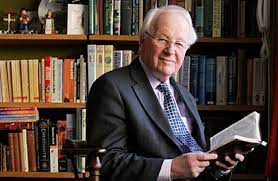
The Most Important Claim of All…

“Jesus Christ is the centre of Christianity.” [Note the British English spelling of our American word “center”].  This quotation is from page 21 of John Stott’s book Basic Christianity.  It is the overarching theme of Stott’s book.

Through three chapters of his book, Stott tries to “prove” the existence of Christ, through discussing Jesus as a person, the claims that He made and the character that He displayed.  Stott tries to be logical in his explanation, stating that if “Jesus can be shown to be a uniquely divine Person, many other problems begin naturally to be solved.  The existence of God is proved and the character of God revealed if Jesus was divine.”

When it comes to claims, they can be summarized as Jesus claiming He was the Son of God.  You can read those in the Bible as He talked about Himself, made “direct” reference to His Father, gave Himself powers that belonged to God, and performed miracles that only God could do [dramatized claims]. 

When it comes to His character, you can read in the Bible what Christ thought about Himself, what His friends said, what His enemies “conceded” and what we can see for ourselves in The Scripture.

Keep in mind the purpose of the book Basic Christianity.  Stott is trying to explain the fundamentals of the Christian faith.  He wants believers to know how the basic beliefs of the faith should be working in their daily lives.  I have already commented above on his attempt to be “logical” and that is clearly at work throughout this book.  He attempted to write a sound, sensible guide for anyone who wants an intellectually satisfying presentation of the Faith.

In Chapter Four of his book, he turns to the most controversial claim that believing Christians make; Jesus Christ rose from the dead.  “Clearly, if it is true, the resurrection has great significance.  If Jesus of Nazareth rose from the dead, then He was beyond dispute a unique figure.  It is not a question of His spiritual survival, nor of His physical resuscitation, but of His conquest of death and His resurrection to a new plane of existence altogether.  We do not know of anyone else who has had this experience” [46].*  

Did people in Jesus’ timeframe believe He had been resurrected?  Of course many did not.  Stott refers to the audience that Paul faced in Areopagus when he claimed that Jesus was raised from the dead: “When they heard of the resurrection of the dead, some mocked” [4].

Today the doubtful unbelievers continue their work.  Josh McDowell writes in his extensive defense of the faith* that some believe Jesus went into a swoon; He did not die on the cross and when placed in the tomb He was really alive.  Others think that Jesus’ body was stolen from the tomb.  Disciples came in the night and removed His body.  Others feel the Jews removed the body.  Some think the Romans removed Jesus’ body.  Believe it or not, there is a theory that post resurrection appearances by Jesus were merely hallucinations.  More practically, some posit that the women who went to the tomb first went to the wrong tomb.  Of course Jesus was not there.  McDowell refutes all these claims with rigorous claims of his own.**

Stott argues that the resurrection of Jesus is a natural outcome for a life that was anything but natural.  Jesus was supernatural and He should leave the earth in a supernatural way.  “His birth was natural, but His resurrection was supernatural. His death was natural but His resurrection supernatural.”  Does His resurrection prove that He was God?  No but the end of Jesus’ life is definitely congruent with the life He lived.

Jesus spoke of His death saying that He would rise from the dead.  See Mark 8:31 “And He began to teach them, that the Son of man must suffer many things, and be rejected of the elders, and of the chief priests, and scribes, and be killed, and after three days rise again.”  See Luke 9: 22 “And He said, ‘The Son of Man must suffer many things and be rejected by the elders, the chief priests and the teachers of the law, and He must be killed on the third day and be raised to life.’”  After His death, the Apostle Paul (in his letter to the Romans) writes that Jesus was “designated Son of God in power…by His resurrection from the dead.” 

Yes, Josh McDowell attempts to refute the theories of the doubters in his book, but John Stott addresses some of those theories too.  He also presents four statements that are clearly evidential. 

The body was gone.  There is no one who has presented evidence that Jesus’ body was still in the tomb on Easter Morning.  Most of the discussion has been centered around who did what to the body?

Number two:  Jesus grave clothes were undisturbed.  We will look at the details of body preparation for burial and see that undisturbed grave clothes do not make any sense.  How could John and Peter arrive that morning and see what they saw?  Given the nature of burial, it is impossible.

Thirdly, Stott points to the instances when Jesus appeared to His disciples after resurrection.  Were those just visions, hallucinations or inventions?

Lastly, we will spend some time discussing how the resurrection changed the Disciples.  When Jesus left them, of course they were despondent.  They realized the holy nature of Jesus and they missed their Master.  What changed in the days after the resurrection?  Just as Jesus predicted, as recorded in John 16: 7,  “But very truly I tell you, it is for your good that I am going away. Unless I go away, the Holy Spirit will not come to you; but if I go, I will send Him to you.”  Something happened to the men who followed Jesus.  They began to spread the Gospel; they created The Church.

I remember the days in my earlier life when I carefully considered what I believed, when I began to encounter other faiths, and when I questioned the faith that I had.  When I was in college and later, I had serious periods of doubt.  I remember thinking that the resurrection is just too good to be true.  When Jesus talked to His Disciples in the upper room He gave them hope about the finality of death in these words:  “Do not let your hearts be troubled. You believe in God; believe in Me as well. In My Father’s house are many rooms. If it were not so, would I have told you that I am going there to prepare a place for you? And if I go and prepare a place for you, I will come back and welcome you into My presence, so that you also may be where I am” [from John 14].

At my age after many experiences with God in my life, I accept the resurrection, and I accept that there is a room that has been prepared for me.  There is one prepared for you also. 

After considering the claims Jesus made and the character He displayed, maybe the greatest claim that will turn an unbeliever into a believer is the acceptance of the resurrection.  Jesus Christ came to this earth to save mankind from sin.  He had a supernatural conception and a supernatural resurrection. 

Jesus Christ came to this earth to show mankind that there is something beyond life on this earth. 

Eternity in His presence is possible…

The most important claim of all…

   *for more extensive discussion of the role of the cross in our faith, see posts related to The Cross of Christ which began on October 25, 2020.

**New Evidence that Demands a Verdict, Thomas Nelson Publishers, Nashville, 1999.  [supplemental discussion will come from this book in upcoming posts].                                                                                                                                                                                                                                                                                                                                                                                                                                                                                                                                                                                                                                                                                                                                                                                                                                                                                                                                                                

Posted in Uncategorized | Leave a comment

The Holy God of Love

My guess is that if an author writes a book centered on the cross of Christ, a large portion of that book must address the idea of atonement or the reparation for a wrong or injury; in the Christian faith, atonement refers to expiation for sin.  In simple terms, something wrong has been done and someone has to pay for that wrong.

In Chapter Five of his book*, John Stott spends most of his chapter grappling with the idea of God being satisfied with the sacrifice of Jesus Christ on the cross.  “Satisfied” seems to be a strange word because it means that God is pleased, God is content with Jesus going to the cross. 

In recent posts, I have discussed the purposes for Jesus’ sacrifice: to disarm the devil, to meet the constraints of law, to honor God and finally Jesus went to the cross to satisfy God Himself.

As we close Chapter Five, Stott sets the stage for Chapter Six with a discussion of “The Holy Love of God.”   How can God be a God of love, punishing man and loving man at the same time?

New Testament Christians may struggle with the necessary sacrifice of Jesus for our own well-being, because we are ignoring the God of the Old Testament.  The fact that Jesus had to undergo such a cruel end to His life, is this not inconsistent with the message of love in New Testament Scripture?

It all depends on how you define “holy love”.

The Old Testament is full of God’s love for man, but it is also full of examples of God’s wrath.  How could God destroy almost everything in a worldwide flood?  How could God destroy the city of Sodom?  How could God destroy the Egyptians in the Red Sea?  God rained down death on His own people as they refused to follow His law, allowing the Assyrians to defeat the ten tribes of Israel in Second Kings 17:1-23 and the Babylonian destruction of the two tribes of Judah in Second  Kings 24:1-4.

Is this the “holy love” of God?

Stott says it is.  Maybe the only way for humans to begin to understand God’s behavior is to turn to the experience that most parents have as they raise their children.  Personally, I have a son and I have always loved him but he has not always made me happy.  In fact he has done things in the past that had to be punished. When punishment had to be inflicted, I did not enjoy that; in fact, I hated it but it had to be done to teach that certain behaviors are just not acceptable.  I still loved my son as I punished him; I was dealing with conflicting emotions.

As Stott describes this parallel, he cautions readers about going too far in trying to understand God’s holy love through human understanding.

In the Old Testament, God refers to Israel as His child, His son.  One can turn to Hosea Chapter 11 and see that God felt a need to punish “His Son” for straying away from His commandments. Even though He refers to Himself as a compassionate and gracious God, He does not leave the guilty Israelites unpunished. 

Can God be kind and stern at the same time?  If one studies the Old Testament, those conflicting ideas are common.  Stott cites Emil Brunner about the New Testament attitude that emerges in modern times, the idea that a Holy God must always be a loving God.  Old Testament “Divine Holiness has been swallowed up in that of the Divine love…[the] twofold nature of holiness and love is being replaced with a unilateral, monistic idea of God.”**   Divine holiness had no problem with mercy and wrath in “one synthetic conception.”  God can be a righteous God, a God capable of exacting penalties but also a God with “transcendent love.”

Stott writes that the duality of God should never be thought of as a problem, for “God is not at odds with Himself, however much it may appear to us that He is” [Stott, 131].  For God to be at odds with Himself, He would not be a God of peace; He would be a God in turmoil.  “We may find it difficult to hold in our minds simultaneously the image of God as the Judge who must punish evil-doers and of the Lover who must find a way to forgive them…but God is both at the same time.”  John Calvin writing on this topic is bold in his words: “in a marvelous and divine way He loved us even when He hated us.”

We are left with the problem of understanding a God who is satisfied by what happened on the cross.  God needed to be “satisfied” with the exacting of punishment before He was prepared to forgive man, Jesus stepping into our place on the cross.

For us to understand the idea of a satisfied God, we must get away from the duality of God as indulgent or God as harsh.  We must get away from the idea that God loves us so much that He is willing to compromise His holiness.  We must get away from the idea that God is harsh and vindictive and wants to crush and destroy us. 

God is more complex than all that.  He is more complex than we can comprehend.  Just because we like to see ourselves and others as consistent in our behavior does not mean that we can limit God by that need.  Too often we tend to see people as good or bad, right or wrong, or loving or hating.  God cannot be put in that box.  Stott writes “How then can God express His holiness without consuming us and His love without condoning our sins?  How can God satisfy His holy love?  How can He save us and satisfy Himself simultaneously?”

On June 9th, I posted “Stott’s Statement on Satisfaction and Substitution.”  In that statement, Stott explains the view that the only way for God to be satisfied is for Him to sacrifice Himself for us.  Chapter Five has been about God’s satisfaction from Jesus’ sacrifice.  When we return to The Cross of Christ, Chapter Six will be concerned with an indepth discussion of “The Self Substitution of God.”

Stott cites theologian P.T. Forsyth*** who writes of the holy love of God, saying that the simple idea of human love does not apply.  “Christ’s first concern and revelation was not simply the forgiving love of God, but the holiness of such love…If we spoke less about God’s love and more about His holiness, more about His judgement, we should say much more when we did speak of His love…Without a Holy God, there would be no problem of atonement.  It is the holiness of God’s love that necessitates the atoning cross” [Forsyth in Stott, 132].

The contentment of God with the sacrifice of His Son is much more complex than we can ever understand.  The substitution of Himself for us to save us is more complex than we can ever understand.

Stott begins Chapter Five with the words “No two words in the theological vocabulary of the cross arouse more criticism than satisfaction and substitution

Completing his exhaustive discussion of all the ways we understand God’s satisfaction, now Chapter Six will deal with substitution…self-substitution. ****

*The Cross of Christ

**Emil Brunner, Man in Revolt

***P.T. Forsyth, Work in Christ

****The next series of post will deal with “The Resurrection of Christ” from Stott’s book Basic Christianity. I will return to Chapter Six of The Cross of Christ after that discussion.

Posted in Uncategorized | Leave a comment

Just Trust and Obey…

All my life as a Christian I have heard the following:  “Jesus Christ died for you,”  “Christ took the punishment that you deserved,” and “Jesus gave you the greatest gift, a chance at freedom from sin, grace that you do not merit, and mercy that is beyond your comprehension.”

John Stott writes about Jesus in Chapter Five of his book, The Cross of Christ, the idea that Jesus was a substitute for man.  That is very much in line with the opening quotes of this blog post.  It is a common idea that you can hear discussed from many pulpits on Sunday morning. It is a common idea that gets discussed over and over in Christian writing.  It is a common idea that is expressed in the New Testament.

But is it that common?

Stott discusses the sacrifice of Jesus in order to satisfy the devil.  Especially in the early church, there was a notion that Satan had so much power over man that the devil “had to have his due.”  Jesus was our substitute [see “Did The Devil Make God Do It?” on June 3rd].  Stott discusses the nature of law in Christ’s time; that certain laws were broken and Jesus had to go to the cross in order to satisfy the need for punishment [see “God and Man’s Law” on June 10th].  Stott discusses the need for God’s honor to be upheld.  Man sinned against God and Jesus came to earth to die on God’s behalf; Jesus’ death was God’s way of showing the world how much respect He deserves [see Man’s Sin and God’s Honor on June 17th].

Now we are set to consider that God needs to satisfy Himself through the death of his own Son [before we begin, let me refer you to “Stott’s Statement on Satisfaction and Substitution” on June 9th].  That “statement” may give easier basic ideas about what we are dealing with here. 

Stott writes that the methods of God’s “satisfaction” thus far discussed have a limitation in that the devil, the law and the notion of honor all deal with ideas external to God. Ronald Wallace writing in his book The Atoning Death of Christ states that “Atonement is a ‘necessity’ because ‘it arises from within God Himself’” [as quoted in Stott, 124].  Yet explaining that God needs to be self-satisfied has negative connotations because of human associations with the words “self-satisfied”.  Human beings with self-satisfaction are often labeled as selfish, lacking self-control and full of pride [I am “satisfied with myself”].  Maybe there is a problem with the idea that God must satisfy Himself through the sacrifice of His only Son.  God is perfect in His thoughts and desires so why does He have this need?  Therefore the necessity of God’s need for self-satisfaction must come from His very nature, “not found in anything outside Himself but within Himself.”  God does no wrong; He is not selfish, lacking self-control or prideful.  God is also true to Himself, “He is invariably Himself” [Stott, 124-25]. 

Furthermore, God is self-consistent, not wrong, not selfish, not lacking self-control and not prideful.

Let’s turn to Scripture to find support for the idea that we worship a God who is what He says He is and does what He says He is going to do.  Stott has four “languages” in Scripture that support his ideas, words which show God’s consistency.

First is the “language of provocation.”  Any reader of the Old Testament will encounter passages where God is “provoked” by Israel’s idolatry.  When this happened God was not only angry but also jealous.  One need not attribute human qualities to God’s anger or jealousy; for God, the response is a perfect response to evil.  God has a “holy intolerance” of idolatry, immorality and injustice.  Unlike man, God is not unhinged; He is provoked for good reason.  If He did not respond with anger and jealousy and uphold His Divine standards He would no longer be God.

Secondly is the “language of burning.”  In the dry heat of the Palestinian summer, fire is easily kindled.  When it is started, it burns with great heat and it is hard to put out.  When God is ready to react with anger or jealousy, He is described as “He did not turn away from the heat of His fierce anger, which burned against Judah” [see 2nd Kings, 2nd Chronicles and Jeremiah].  Once kindled, God’s anger is not easily quenched, it burns against people, it consumes them.  We all know fire can be destructive and in this case, God’s fire can consume anything that it touches. 

Next is the “language of satisfaction” itself.”  This concept may be difficult since I have used the word “satisfy” so much in the discussion of Chapter Five.  What Stott refers to here is the nature of God Himself.  What is characteristic of God must happen “the demands of His own nature and character must be met by appropriate action on His part” [Stott, 126].  The word that is used to describe this type of satisfaction is the Hebrew word kalah, which means complete, finished, at an end, accomplished and spent.  In the Old Testament it is almost always used to indicate the end of something.  In Lamentations 4: 11 “The Lord has given full vent [kalah] to His wrath; He has poured out His fierce anger.  In summary, God is provoked to anger by His people, His anger burns and is not easily quenched and He unleashes, or pours it out and “spends it.”  This is how God’s judgement “arises from within Him, out of His holy character, as wholly consonant with it and therefore as inevitable” [Stott, 127].

Stott writes that so far the picture has been “one-sided.”  The threat of destruction against Israel happened against a background of God’s love for His people, His choice of them as His “chosen nation” and His covenant with them.  As commented on earlier, the need for God to be satisfied arises out of His character, “for the sake of His name.”  God loved His people because He loved them; He did not have to explain His love.  He is God.

Could this same love just as easily be applied to us?  It could.

God is a compassionate and gracious God, slow to anger and abounding in love and faithfulness [from Exodus, 34: 6].  It says in Ezekiel 20: 44 “You will know that I am the Lord, when I deal with you for My name’s sake and not according to your evil ways and your corrupt practices, O house of Israel, declares the sovereign Lord.”  It is clear that God acts according to His nature, according to His name.  This is God being consistent, a trait that humans seldom achieve.  Christ commanded that we deny ourselves but God cannot deny Himself.  Why can God not be inconsistent?  Because God is God and not man, let alone fallen man.  When we are commanded to deny ourselves by Jesus we have to work hard to do that because that is incompatible with our true nature.  It is not incompatible with God’s true nature.  Stott says “there is nothing in God that is incompatible with His true deity and therefore nothing to deny…God is never other than His true self that He cannot and will not deny Himself….He cannot contradict Himself” [127-28].  As humans we are constantly aware of our inconsistencies.  We may even use phrases like “that is so uncharacteristic of him” or “I am not myself today.”  Would we ever say something like this about God?

In summary we can say that the death of Christ for the satisfaction of sin is appropriate.  It can also be appropriate to say that Jesus’ death occurred for God to satisfy Himself if we rid ourselves of anthropomorphism*.  We may have times when we do things that are uncharacteristic but God never does.  We may be made in His image, but that does not mean that God reflects our flaws.  If God were to behave as inconsistently as man, the whole world would be thrown into chaos.  God is God; “He never deviates one iota, even one tiny hair’s breadth” [129].  

He is what He says He is and does what He says He is going to do.

If He feels the need to satisfy Himself by sacrificing His Son for us, He has His reasons.  It is not for us to question His motives.

Just trust and obey…

*incorrectly attributing humans traits to God……

Posted in Uncategorized | Leave a comment

Seeing the Forest

We have all heard the old adage “don’t miss the forest for the trees.”  For readers of this blog, I want to remind you of what I am trying to accomplish.

I am commenting on two books by the same author, one written in 1958 and the other written in 1986.  The earlier book Basic Christianity is an intro. to the Christian faith.  The writer (John Stott) is covering the basics of our faith, hoping to help readers build a strong foundation for a worldview centered on believing in Jesus Christ, the Son of God.

The latter book The Cross of Christ is not an introductory book at all. The writer (John Stott) is focusing on the central symbol of our faith [the cross] and he is attempting to stretch the mind of the reader with a biblically precise, thoughtful and thorough theological discussion.  The Cross is not an easy book to read, especially for someone who is seeking the basics of Christianity.  It is not an easy book for me to write about; at times I feel I am being stretched beyond my capabilities.

Basic Christianity was an important book for me at a time in my life when I had questions about life and I was finding answers in a new belief in God.  It was straightforward and I needed that.  It was also written with a firmness of thought which I desired.  John Stott’s book was there for me when I needed it and he became one of my favorite writers.

The Cross is a challenge, but after believing for twenty-three years, dedicating myself to the study of God’s word, worshipping in the house of God and teaching an adult Sunday school class, I felt I was ready for Stott’s more complex thoughts.

Don’t be confused as I go from one book to the other. My plan is to explore John Stott the writer who introduces Christianity to the new believer and John Stott the writer who can take a complex subject and digs into it with great theological detail. 

As readers come to St. John Studies, don’t get lost.

Don’t miss the forest for the trees……..

Posted in Uncategorized | Leave a comment

Man’s Sin and God’s Honor…

Exodus 20: 12 ““Honor your father and your mother”

Romans 1:21 “For although they knew God, they did not honor Him as God”

“If the early Greek fathers represented the cross primarily as a ‘satisfaction’ of the devil…and the early Latin fathers saw it as a satisfaction of God’s law, a fresh approach was made by Anselm of Canterbury in the eleventh century…of the cross as a satisfaction of God’s offended honor” [John Stott, The Cross of Christ, 118].

Why would Stott devote pages in his book to an author who was the Archbishop of Canterbury in 1093?  In today’s world are we even concerned about a man who lived nine hundred and twenty-eight years ago?  Do we even care about a man who lived in an era where people were worried about the outdated idea of “honor”?  Today, do we know what it means to give honor to another person?  Do we ever regard others with such great respect?  Maybe Christians should show honor to everyone, even if they don’t deserve it.  “Love your neighbor as you love yourself” should be taken seriously; it is the “second commandment” behind “Love the Lord your God with all your heart and with all your soul and with all your mind” in Jesus’ top two commandments list.  Think about it. Loving your neighbor as you love yourself is all about honoring others.

Granted, Archbishop Anselm lived in another time period all together, a time period when honor was considered sacred. Honor was the willful sacrifice of man’s lower instincts to much higher sentiments.  Christianity in Anselm’s day preached that honor should be a personal habit, a way of life for all men. In his day, Christians “venerated” honorable men, men who sacrificed for the honor of others.  They believed the effort to honor others raised a small person up to be a great person and a great person to be a hero.

I have had a life-long fascination with the exemplars of honor in European history, medieval knights.  Those heroes placed great emphasis on being true to chivalrous ideals and the epitome of the most virtuous knight was the Christian knight, the “Knight Templar.” These knights were part of a large organization of the most devout Christians who carried out important missions in the Holy Land.  They protected European travelers visiting sites in the Holy Land and carried out military operations in the name of God.  Their whole existence depended on how much honor they paid to God.*

Into this medieval climate of honor and knighthood, Anslem wrote his book Cur Deus Homo?, a systematic study of the cross as a satisfaction for God’s offended honor.  Stott cites Robert Franks who describes Cur Deus Homo?: “[this book for] the first time in a thoroughgoing and consistent way applies…the subject and conceptions of satisfaction and merit.”  James Denney called Cur Deus Homo? “the truest and greatest book on atonement that has ever been written.”

In Anselm’s view, when man sins he is committing a dishonor to our Lord and Savior.  Man owes God the best behavior that he can produce.  When we sin, we take away from God what is His own, which means we steal from Him and dishonor Him by how we act.  Yet when man sins he wants forgiveness from a God who cannot accept our obedience and good works.  Human obedience and good works is not satisfactory enough for God.  “Good works cannot make satisfaction for our sins, since they [good works] are required of us anyway.  So we cannot save ourselves.  Nor can any other human being save us, since ‘one who is a sinner cannot justify another sinner’”  [from  Cur Deus Homo?].  Here’s the key: “No one…can make this satisfaction except God Himself….No-one can do it except one who is truly God, and no-one ought to do it except one who is truly man” [Stott, 210].  Here is where Anselm introduces Jesus Christ in his theological discussion.

We are talking about the necessity of the highest idealistic human behavior dedicated to Almighty God, one who deserves more honor than any human can imagine.  This extremely idealistic vision of human behavior is very reflective of the feudal culture of Anselm’s age.  Society was “rigidly stratified;” each person “stood on the dignity” which was due him, conduct of inferiors to superiors was codified, improper behavior of inferiors was severely punished and all debts had to be properly paid.  Anselm portrays God in terms of a feudal overlord who demands honor and punishes dishonor.

Stott declares that Christ died for our sins in our place, but God did not inflict punishment on Jesus because He was an “injured party;” He inflicted punishment on Christ as Ruler of everything [God Himself].  The only proper thing that God could do was mete out punishment.  The notion of honor dictated that.  Sin is more than an attack on His honor; it is an attack on the world order which is an expression of His will on this earth.  Stott cites theologian Emil Brunner who writes “All order in the world depends upon the inviolability of His [that is God’s] honor, upon the certitude that those who rebel against Him will be punished.”

This post began with the fifth commandment and Scripture from Romans 1: 21.  In Romans, Paul declares that God has made Himself perfectly clear to mankind that no one is excused for ignoring Him.  We may choose not to seek out God, but we cannot pretend that we don’t know what is expected of us.  We should honor God as our Creator, but instead, many of us believe we have developed ourselves on our own and we have acquired what we have on our own.  Paul is saying that if we do not understand God as the Creator and Provider we cannot understand how the universe works.  We have a faulty understanding of how the universe works and our part in it.  This condemnation from God is a rightful condemnation.  We truly get what we deserve.

Sin is the breaking of God’s law and law is the expression of the will of God.  If man breaks God’s law, the law does not heal all by itself.  Sin therefore is a “break in the world order” [Stott, 124].  Reparation or restitution is necessary.  God demands it and nothing man can do can satisfy it.  Anselm sees God as the Ruler who exacts punishment that is due.  In doing this, He upholds His honor; He maintains His dignity.  Christ bore the brunt of the punishment but God does not humble Himself through atonement.

Referring to Stott’s statement on satisfaction and substitution [on St. John Studies, June 9, 2021], “The biblical gospel of atonement is of God satisfying Himself by substituting Himself for us.”

Why does He do this?

He is the Ultimate Ruler.

He demands the best behavior from man.

The best we have cannot atone for the sins we have committed.

He has to satisfy His need for dignity and honor somehow.

God-Man Jesus fills that bill.

According to Anselm, what we must say is…thank you Jesus!

*Honor, A Counter Revolutionary Virture, Hugh O’Reilly accessed on 6/17/2021

Posted in Uncategorized | Leave a comment

God and Man’s Law…

“How…can we possibly believe that God needed some kind of ‘satisfaction’ before He was prepared to forgive [man], and that Jesus Christ provided it [satisfaction] by enduring  as our ‘substitute’ for the punishment we sinners deserved” [112, The Cross of Christ].

John Stott is outraged by the thought that almighty God could be beholden to anyone and anything  and in my previous post, [“Did the devil make God do it?”] he takes on the idea that God had to use His Son Jesus as a bargaining chip to defeat Satan.  He cannot understand why Christians think these thoughts.  God is all powerful and it is denigrating to have Him making deals with the devil.  Not only does God not need some sort of satisfaction in order to forgive man, but the devil certainly does not have the power to exact any demand on Holy God.

After dispensing with the idea that the devil has any power over God, Stott turns to the more complex relationship: God’s relationship with law.  What makes this more complex is the fact that His Son lived on earth where He was subject to man’s law.

Man’s law demands obedience.  When a law is broken, lawbreakers have to obey the justice system by paying for their disobedience.  Then there is moral law.  When sinners sin, don’t they also incur some sort of penalty for their sinning?  They cannot be simply let “off the hook.”  For law to work, “its dignity [must be] defended and its just penalties paid.  The law has to be ‘satisfied.’” 

Is God under the stricture of man’s law?  What about His Son Jesus Christ?

I found it interesting that Stott uses the familiar Bible story of Daniel and the lion’s den to illustrate the dilemma that can occur over obeying the law.  King Darius was certainly not God but he was a powerful man who expected devotion from his subjects.  Of course Daniel was a visitor to the king’s country and Daniel had serious problems with worshipping a king because he was devoted to worshipping God.  He enjoyed the king’s favor and that made him an object of envy by members of the king’s court.  They plotted to get Daniel in trouble and they did so by getting Darius to pass a law: any man who prayed to any God except King Darius for thirty days would be thrown into the lion’s den.  They knew that Daniel had a daily habit of praying to Yahweh three times a day.  When news of the new law reached him, Daniel not only continued to pray to God but he did so in an upstairs room which had windows facing Jerusalem.  He was in public view.  In short, he was caught and had to be thrown in the lion’s den.  Darius was greatly distressed and wanted to save him but he was trapped by his own law.  Daniel had to be thrown into the den.  The law had to be satisfied.  No substitutes could be made.  Daniel was the offender; Daniel had to be punished.

King Darius’ dilemma was a good illustration of how law ensnares even the most powerful.  The decree was in writing and that made it unalterable.

Any comparison between Darius and God stops right there.  Darius was powerful but God is God and God is all-powerful.

How much does God have to obey the law?

God does not have to obey the law at all; God is the creator of law.  His law supersedes man’s law.  His law is the foundation that man’s laws are often based on [I use the word “often” to allow for unjust laws that have been created by unjust men].

But what about His Son Jesus?  He lived on the earth.  Did He have to obey the law?

Jesus repeatedly points out in Scripture that the Pharisees and Sadducees were too rigid in their adherence to all the extensive rules related to Old Testament Law.  Jesus felt that these rules were so strict that no man could successfully follow them.  Jesus found Himself in certain situations that demanded that the rules needed to be broken or at least ignored.  He touched lepers. He healed people on the Sabbath.  On the Sabbath, Jesus and His disciples pulled grain from crops in the field as they were walking.  He talked to women.  He advocated the symbolic drinking of blood [the wine at the Last Supper].  He denounced the religious authorities of the day for advocating laws which were impossible to follow, yet He stated that He did not come to abolish the law but fulfill it.

Many point to the fact that Jesus had to pay the ultimate price for his “law-breaking;” He had to bear the penalty of death.  Why did Jesus have to do this?  Could God not have saved Him from this horrible punishment?  Is this an example of an “all-powerful” God allowing obedience to man’s laws?

Of course, God could have taken “this cup” from His Son but that was not the plan.  God created a perfect Son who submitted to earthly laws and obeyed them unto death.  What is the message that Jesus is sending to the world by breaking or ignoring extreme religious regulations?  Those regulations were not reflective of His Father’s law; they were more about maintaining power among the elite of contemporary Jewish society. Did Jesus obey the laws of the Roman Government?  Yes He did.  He fulfilled the messianic predictions within the laws of His day. He encouraged others to obey the laws of the day.  It is New Testament Scripture but Paul writing in Romans 13: 1-2 says it best: “Obey the government, for God is the One who has put it there. … So those who refuse to obey the law of the land are refusing to obey God, and punishment will follow.”  Jesus was clearly teaching obedience to the Roman laws. He and His followers were obeying God’s commands, rather than religious rules and regulations, but they were not breaking civil laws. Jesus and the disciples were law-abiding citizens of the Roman Empire.  Jesus was tasked with doing two important things at once.  He had to display perfect obedience to the civil law and He had to communicate that religious law was not of God His Father.  For accomplishing His task, He had to suffer an unjust penalty.  When He could have defended Himself, He did not mount any defense.  He went to His death in an obedient fashion, just as God had planned. 

Stop and think about what that Scripture says.  God put the law in place.  God is above Human law.  Jesus could have been saved when He was on trial: His Father could have saved Him.   Jesus could have summoned angels to save Himself.  He chose not to do that; He recognized that in the context of His day He should not rise above the law that everyone else had to follow.  There are always those (even in our world today) who feel they are “above the law” but that attitude can breed hatred among those who don’t have power and are forced to live under the law.

Let’s return to the situation with King Darius and Daniel.  Due to Darius’ envious advisors, the king punished a righteous man for righteous practices.  Darius was caught in what Stott called a “technical legal muddle.”  God is never in this situation.  Stott describes God’s connection to law with the following powerful words from R.W. Dale’s book Atonement:  “God’s connection with the law is ‘not a relation of subjection but of identity….In God the law is alive; it reigns on His throne, sways His scepter, is crowned with His glory.”

Can man demand obedience of God?   Of course not.  Did man’s law apply to His Son Jesus when He was on earth? It did and Jesus followed man’s civil law.  Jesus was perfectly obedient to man’s law and at the same time He was perfectly obedient to God’s law.  He broke no commandments.  As followers of God and His Son Jesus Christ, it is important for us to understand these closing words by Stott regarding satisfaction of the law and the substitution of Jesus for the breaking of man’s law.

God’s moral laws bring condemnation for humankind because God created those laws.  Stott says it this way:

“The real reason why disobedience of God’s moral laws brings condemnation is not that God is their prisoner, but that He is their creator.”*

*emphatic punctuation is mine, from Stott, 118.

Posted in Uncategorized | Leave a comment

Stott’s Statement on Satisfaction and Substitution

“We strongly reject, therefore, every explanation of the death of Christ which does not have at its centre the principle of ‘satisfaction through substitution’, indeed divine self-satisfaction through divine self-substitution. The cross was not a commercial bargain with the devil, let alone one which tricked and trapped him; nor an exact equivalent, a quid pro quo to satisfy a code of honour or technical point of law; nor a compulsory submission by God to some moral authority above Him from which He could not otherwise escape; nor a punishment of a meek Christ by a harsh and punitive Father; nor a procurement of salvation by a loving Christ from a mean and reluctant Father; nor an action of the Father which bypassed Christ as Mediator. Instead, the righteous, loving Father humbled Himself to become in and through His only Son flesh, sin and a curse for us, in order to redeem us without compromising his own character. The theological words ‘satisfaction’ and ‘substitution’ need to be carefully defined and safeguarded, but they cannot in any circumstances be given up. The biblical gospel of atonement is of God satisfying Himself by substituting Himself for us.”

John R. W. Stott

In light of this issue in Chapter Five of The Cross of Christ I thought this statement would be very helpful. David Carter

Posted in Uncategorized | Leave a comment

Did the devil make God do it?

“No two words in the theological vocabulary of the cross arouse more criticism than satisfaction and substitution.”  With these words John Stott begins Chapter Five of his book The Cross of Christ

Stott makes it clear that the next two chapters of his book will elaborate on the idea that God needed some sort of satisfaction before He could forgive man of his sin.  He also plans to discuss the fact that God’s satisfaction could only be gained by substituting Jesus Christ for man, Jesus taking the punishment man deserved.

It may seem that this subject has already been discussed in Chapter Four, but in Five and Six, Stott is going to take a “deeper bite” at this apple.  His problem centers around those first words already mentioned:  satisfaction and substitution.  He feels that the ordinary Christian’s understanding of Jesus’ sacrifice denigrates God because man’s conceptualization has God performing acts that are contradictory to His very nature.

“What demands are being made to stand in the way until they are satisfied?  And who is making them?  Is it the devil?  Or is it the law, or God’s honor or justice, or ‘the moral order’”? [Stott, 113]. 

Stott lays out the purpose of his discussion best in the words “I will argue, however, that the primary ‘obstacle’ is to be found within God Himself.  He must ‘satisfy Himself’ in the way of salvation He devises; He cannot save us by contradicting Himself.”  He cannot do something that compromises His perfect goodness in order to make our lives better.

Let’s take on the devil first. 

In the early church it was common to think that the devil “made” the cross necessary.  Jesus and his Apostles did comment in Scripture that the cross was a means to overthrow the devil but when one considers this approach, it assumes the devil has a lot of power, more power than he should have.  “Since the Fall, and on account of it, humankind has been in captivity not only of sin and guilt but to the devil.” 

Does the devil have so much power that God used His only Son to overthrow Him?

Stott thinks not…  

The devil is described in Scripture as “a rebel,” “a robber,” and “a usurper” but the devil did not have power over God.  God is all powerful and “all controlling,” not the devil.  What power the devil has is allowed by God, not power the devil has on his own.

Secondly, early Christians thought of the cross as a transaction between God and the devil.  Man needs to be “ransomed” from the devil and Jesus is the price that must be paid so the devil’s captives [mankind] can be released.  This was a popular belief in the early church but just because it was a popular way of understanding the reason for the death of Christ, does not make it a viable explanation.  Is it too simple?  Does it denigrate God?

Thirdly some discount the power of the devil in the death of Jesus altogether.  The devil may have power over sinners but does the devil have power over Jesus Christ, someone who had committed no sin?  See Hebrews 2: 14 “Since therefore the children share in flesh and blood, He himself likewise partook of the same things, that through death He might destroy the one who has the power of death, that is, the devil.” The devil has no real authority over Jesus and even if he did, he shed innocent blood.  Stott writes that this is “abuse of power” and if the devil abuses his power “he is deprived of it.”    Some early church theologians felt that maybe the devil was not aware of what was going on, that he did not realize that Jesus was God in human form.  Would God try to trick the devil into making a grievous error?  Saint Gregory of Nyssa (writing in the Fourth Century) makes this argument, that “God… in order to secure that the ransom in our behalf might be easily accepted by him [that is, the devil] who required it…was hidden under the veil of our nature, that so, as with ravenous fish, the hook of the Deity might be gulped down along with the bait of flesh, and this, life being introduced into the house of death,….(the devil) might vanish” [Nyssa in Stott, 114].  The idea is that God “baited” the devil with the blood of Christ. 

Stott thinks this is an interesting take on God’s use of the death of Jesus, but feels it is just another way of explaining Jesus’ death to the common man.  Maybe it was satisfying for early Christians to think that God outsmarted the devil like the devil outsmarted man in the Garden of Eden.  Since the snake deceived man into disobedience, God turned the tables and also took away the devil’s power through deception.

Here’s the “rub.”

God is so perfectly good that He would not stoop to fraudulent action.  To think so is to denigrate God, and attribute an act to God which is contradictory to His nature.

Are these “devil” theories of any value?  Stott says that they did communicate the seriousness of evil.  He cites Luke 11: 21 which describes the devil as a “strong man, fully armed.”  People in the early church did fear the devil..  Secondly when Jesus went to the cross, early Christians did understand that His death was the death of evil.  The power that Satan had over man was over when Jesus died on the cross.

The problem was the degree of power that believers attributed to Satan.  Does the devil have the power to tempt man, to steal man’s life from him and to ruin man’s life with God after death?  Yes, those powers are real. 

Does Satan have so much power that God has to satisfy him by performing some “power move” to overthrow him, some transaction to appease him or some trick to bait him.

The answer is no. 

God is all powerful.  God is perfectly good.  God does not engage in fraud or trickery.  He does not need to do something that is against His perfect nature. 

“Any notion of Christ’s death as a necessary transaction with, let alone deception of, the devil is ruled out” [Stott, 115]. 

Satisfaction and substitution…

If God needed some sort of satisfaction before He could forgive man of his sin, it does not stem from His relationship with Satan.  God did not sacrifice His only Son to appease the devil.  There was no substitution in God’s plan.

Posted in Uncategorized | Leave a comment

Taking Stock: Where Am I in This Journey? Two Books, One Author: Not a Post, An “Interregnum*” so to Speak…

Blogging has been a real adventure for me.  When I started writing on January 6th, 2015 I began with a discussion of a book by Kyle Idleman  Aha: The God Moment that Changes Everything.  I remember the book and the discussion: Idleman tries to express the idea that we have moments of great spiritual awakening, moments of great honesty about our relationship with God which should lead us to action. The book was full of examples and testimonies which can communicate good messages to folks that do not want a “weighty discussion.”  My blog posts reflected that.

Since 201,5 I have discussed other books that reflected my interests and maybe even my growth as a Christian (see Ongoing List of Books Discussed).  Then in October 2020, I felt a need to return to an author who meant so much to me in my “baby days” as a new born-again Christian:  John Stott.  His book Basic Christianity was seminal in my early deepening faith, but instead of returning to BC, I chose his book The Cross of ChristThe Cross is the opposite of Aha.  Instead of a simple messages supported by example and testimonies, The Cross is a book that discusses the centrality of the cross in Christian faith.  It is packed with theology and at times “above my pay-grade” [to use a cliché in order to describe my intellectual inadequacy.] 

After starting the book, I decided that a return to Basic Christianity may be good too, so I decided to do two books at the same time: two books, same author, one book very dense and one book simpler and more “basic.”   I have never discussed two books at the same time. 

My intent is not to confuse followers of this blog as I switch from one book to the other.  I thought it would be interesting to compare Stott’s writings and offer my comments on a “heavier” subject and then turn to a lighter, more straightforward topic. 

At this point we are returning to The Cross of Christ.  I have commented on Chapters One through Three in Basic.  I have commented on Chapter One through Four in The Cross

Stott has discussed in great detail the central importance of the cross for Christians.  He has also discussed the purpose of the cross in His plan to save man [with a heavy emphasis on the need to sacrifice His only Son Jesus Christ].  Indeed Chapter Four of The Cross is all about the need for Jesus to die so man can be forgiven.

We are now ready for Chapter Five, entitled “Satisfaction for Sin.”

*Interregnum technically means a period or pause between successive periods of governmental affairs;  in this case a pause between books to reflect…

Posted in Uncategorized | Leave a comment

The Jesus We Meet in the Gospels

If you have been a believer in God and His Son Jesus Christ for any reasonable length of time, you have been encouraged to read The Bible. 

My history of Bible reading has been circuitous at best; maybe a better word is haphazard.

That is not unique. 

Many Christians have a strange relationship with God’s Word.  We claim it as “our Book” and in many homes there is a Bible, but it winds up being a token, an ornament, a revered object that is never touched.

I have always enjoyed reading and as a young person I felt that The Bible was a “foundation” book, something you build your life around but I never really made much effort to read it, much less study it.  That foundation stuff was all talk.

I had the usual excuses: “It is too long,”  “It does not have much relevance for today’s world,” “I just can’t understand it”…

Then something happened.

I had a turning point in my life and I found that I needed answers.  My old ways were not working anymore.  I knew I needed something new, a better way.  For the first time in my life, I knew I needed to make choices that were more God centered, more spouse-centered, more family-centered, more church-centered. I knew I needed to find a way to be a better man.

I found that my initial answers were in the Gospels. 

I remember it like it was yesterday but it was twenty-three years ago. I had just returned from an Emmaus Walk.*   I had a deep spiritual experience on that walk.   I learned a lot, and when I came home, I had an overwhelming desire to learn more.  I tore into the Gospels. 

I went from someone with minimal exposure and minimal interest in The Bible to someone who literally hungered for The Word.  I read The Book like it was a very engaging novel, turning page after page, feeling like it was written for me, speaking to me.  As I read, I remember saying to myself: “Why has it taken so long for me to read God’s book!”

Reading The Bible like that was a unique event and I don’t know that I will even have that experience again, but I have continued reading God’s Word over the years and each time I have encounter The it I have learned more.

John Stott’s book Basic Christianity was a book I read to supplement my hunger for Christ and his book touched my heart as well.  As a born-again believer, of course I knew about Jesus but did I really know Him?   Some would say the Bible is all you need,  but I needed additional information to fill in some of my blanks.  In Chapter Three of Basic , Stott introduces the character of Christ to the new believer.  He thinks that in order to know Him you need to look at what He thought about Himself, what His friends thought of Him, what His enemies thought about Him and finally what we can see as we look in the Gospels.  Stott writes “we do not need to rely only on the testimony of others; we can make our own estimate” [42-43].  In fact he states that the writings of the evangelists are so good that “the picture of Jesus…is a comprehensive one.”

If we read these writers, what kind of man do we see?

For the most part, the writings cover the three years of Jesus’ adult ministry;  there are only small glimpses of his boyhood years.  Luke describes the child Jesus as “developing naturally in body, mind and spirt, growing in favor with God and man.”

The adult Jesus must be described as a fully developed “God-Man.”    John Stott’s words about Jesus as revealed in the Gospels are like poetry and my summary will not “do them justice”, but Stott says of Jesus that this special Man is indeed “beyond our reach.”  He believed His own teachings but He was not a fanatic.  His doctrine was not popular but He was not an eccentric.  Make no mistake, He was a man: He got tired, He slept, He ate and drank like other men.  He felt love and anger, sorrow and joy.  He was fully human, yet He is not “mere Man.”

He was confronted with numerous trials and tribulations.  Some worshipped Him like a hero and wanted to make Him King.  Some feared Him and wanted to take Him by force and shut Him up.  He upset the power structure of His society; the Pharisees and Sadducees were constantly trying to trick Him into committing blasphemy.  Despite the temptations to be self-centered and self-serving, He never was “pompous.”  “There was no touch of self-importance about Jesus.  He was humble.”

He preached self-sacrifice and He lived it.  He knew He was Lord of all, yet He showed the world how to be a servant.  He knew He was going to judge the world, but He stooped to wash the feet of His disciples. 

He had almost no possessions, none of the comforts of His time.  He had no home.  Although He could have spent His time with the wealthy and powerful, He spent his time with fishermen and tax collectors.  He touched the outcasts of His society like lepers and harlots.  He gave more than He received; healing, helping, teaching and preaching.  He preached love for others and showed that love meant putting yourself last.  Why was this His message?  He knew that He represented God; He was God in the flesh.  As a role model He epitomized selflessness and love because God is love.

Again Jesus knew He was Lord of all, yet He allowed Himself to be despised and rejected by His own people.  He was misunderstood and misrepresented and became a victim of man’s tendency to be prejudiced.  He played into the vested interests of the power structures of the day.  He did not have to suffer the death that He did but that was His Father’s  plan and He knew it.  He had to give Himself up for man so our sins could be forgiven through His sacrifice.  “He gave His back to be flogged, His face to be spat upon, His head to be crowned with thorns, His hands and feet to be nailed to a common Roman gallows.  And as the cruel spikes were driven home, He kept praying for His tormentors, ‘Father forgive them; for they know not what they do’” [Stott, 44].

He could have retaliated against His detractors and taken total control of His destiny.  He was God in human flesh.  He had complete mastery which allowed Him not to grow resentful or irritated.  He had self-control beyond a mere human mortal.  He was on a mission to fulfill the will of God.  He did not seek His own will or His own glory.  He was not living on this earth for His own pleasure.  

When I turned to the Gospels for answers to my questions about life, I was hoping to get solutions to my problems, inspiration for my life and guidance for how to behave.  What I got was a glimpse into the life of a special Man, a God-Man, the Son of the Living God, Jesus Christ.  As Stott writes, the Gospels give us an ample opportunity to form our own judgement about Jesus, indeed “we can make our own estimate.”

Over the years as I have continued to read and study the Bible I have marveled at the Man–Jesus Christ.  Where I have failed, He succeeded without blemish.

Truly “such a man is altogether beyond our reach.”

* The Walk to Emmaus (also known as the Emmaus Walk) is a three-day retreat  where pilgrims are given a basic course in Christianity.  It includes singing, learning, praying, and small-group discussion focused on fifteen themes shared by Emmaus leaders.

Posted in Uncategorized | Leave a comment