Jesus Christ, the Self-centered Messiah

Self-centered: “concerned solely with one’s own desires, needs, or interests.”

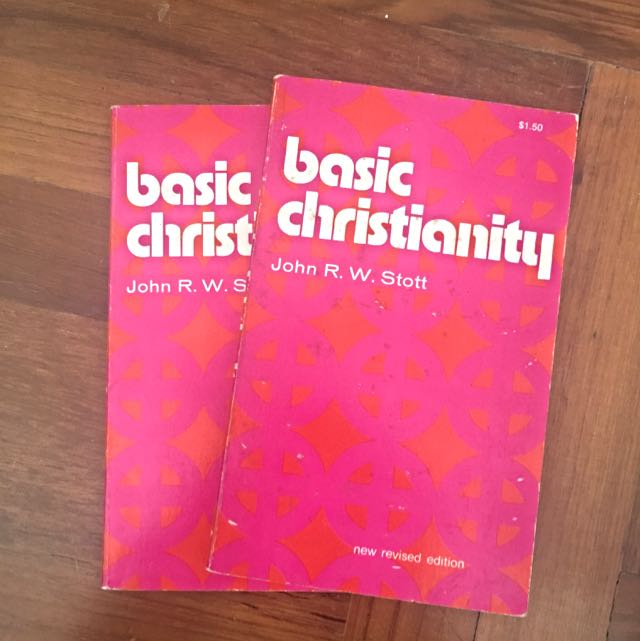
In his book Basic Christianity* John Stott attempts to provide evidence that Jesus Christ is God.  His contention is that if someone seeking a foundation for Christianity cannot believe that Christ is who He said He was, then any foundation that one may have is undermined.  To provide evidence, Stott turns to the Bible for Jesus’ claims. The first major point that he attempts to make is that Jesus is self-centered.  Stott writes “The most striking feature of the teaching of Jesus is that He was constantly talking about Himself.”

 “Jesus is self-centered” [23].

How could this be?  This is the Child who was born in a stable, and cradled in a manger.  He was so common that he did not own an acre of land, much less a home.  He rode into Jerusalem in His last days on a donkey.  His told parables of humility, sending a message that a simple work of service can be considered doing the work of God. Jesus told of the Pharisee who prayed in a proud manner when Jesus said that humble prayer is the best way to thank God for the blessings of life.  He told the parable of the guests at the wedding feast “When you are invited by someone to a wedding feast, do not take the place of honor, for someone more distinguished than you may have been invited by him, and he who invited you both will come and say to you, ‘Give your place to this man,’ and then in disgrace you proceed to occupy the last place. “But when you are invited, go and recline at the last place, so that when the one who has invited you comes, he may say to you, ‘Friend, move up higher’; then you will have honor in the sight of all who are at the table with you. “For everyone who exalts himself will be humbled, and he who humbles himself will be exalted”  [Luke 14].  In the upper room Jesus took the time to wash his Disciples’ feet, sending a message that a simple work of service can be considered doing the work of God.  Richard Newton, writing on Christ’s humility says “He did not mean that they should literally make a practice of washing each other’s feet; but that they should show the same humility to others that He had shown to them, by being willing to do anything, however humble it might be, in order to promote their comfort and happiness. It is not the act itself, here spoken of, that Jesus teaches us to do; but the spirit of humility in which the act was performed that He teaches us to cultivate.”

Yet Stott says “Jesus is self-centered.”

There is great evidence of this.  “I am the light of the world.”  “I am the bread of life.”  “I am the resurrection and the life.” “I am the way and the truth and the life.”  “Take my yoke upon you, and learn from Me.” [a sampling of Scripture from John and Matthew].

Truly these seem to be self-centered claims and they are powerful statements.  Stott writes these types of statements are not “self-effacing. He [Jesus] was self-advancing.”  When He could have pointed men away from Himself saying “This is the truth; follow that.” He said “I am the truth; follow Me.”

When it comes to His role as a human being in this world,  He had no doubt.  He was sent on a mission and that allowed Him to be bold about His claims.  Luke 24: 27 is a passage showing His strength for He was rebuking two disciples on the road to Emmaus:  “And beginning with Moses and all the Prophets, He explained to them what was said in all the Scriptures concerning Him.  A few verses later [44] He says to a group of His followers “Everything must be fulfilled that is written about Me in the Law of Moses, the Prophets and the Psalms.”

Some Christians feel that Jesus only shows up in the New Testament but what He was saying is no, I have always been.  In Genesis we learn that The Messiah would be descended from Eve, Jewish [from Abraham and the tribe of Judah] and He would crush Satan and rule as King forever.  Moses says in Deuteronomy “The Lord your God will raise up for you a Prophet like Me from among your brothers.  You must listen to Him.”  God deals with Israel by choosing them, redeeming them and establishing a covenant with them, making atonement for their sin, but in their experiences, they were redeemed from their bondage to the Egyptians and through our experiences, we have been redeemed of our bondage to sin.  The parallels are there.

In the Law of the Prophets, we encounter many Old Testament kings who tried to rule a nation on their own, a nation that knew it was really ruled by God.  Over and over kingdoms fell as kings ignored God’s laws.  Kingdoms were redeemed as God found a way to forgive His wayward people.  King David vowed to build God a permanent home and even though he was another imperfect ruler, his better qualities began a discussion of what Jesus would eventually be.  Stott writes that the four characteristics were “peace, justice, universality and eternity.”  Isaiah 9: 6-7 prophesizes the coming of Jesus in these words: “For unto us a Child is born, to us a Son is given, and the government will be on His shoulders.  And He will be called Wonderful Counselor, Mighty God, Everlasting Father, Prince of Peace…He will reign on David’s throne and over his kingdom…the zeal of the Lord Almighty will accomplish this.”  These words foretell the glory of Jesus and in Isaiah 53, we see words that foretell His suffering.  “He was pierced through for our transgressions, He was crushed for our iniquities; The chastening for our well-being fell upon Him, And by His scourging we are healed.  All of us like sheep have gone astray, each of us has turned to his own way; but the LORD has caused the iniquity of us all to fall on Him.  He was oppressed and He was afflicted, yet He did not open His mouth; like a lamb that is led to slaughter, and like a sheep that is silent before its shearers, so He did not open His mouth.”

The third division of the Old Testament is called the Writings, the Psalms and wisdom literature.  Several Psalms apply to Jesus in the New Testament making reference to His deity, His humanity, His suffering and His exaltation.   Phrases from the Psalms are repeated often in the New Testament such as the words of God from Psalm 2: 7 which we find repeated at Jesus’ transfiguration “You are my Son; today I have become your Father.”  References from Psalm 8 to man as “lower than the heavenly beings” are applied to Christ in the New Testament book of Hebrews.  “My God, My God why have you forsaken Me” is a direct quote from Psalm22:1 Wisdom literature references are common in the teachings of Jesus and when we turn to Proverbs 8: 27-31 and note that this Scripture celebrating God’s creation of the earth starts with the words “I was there when He set the heavens in place” the inference is very strong that the One who was there was Jesus. 

Stott makes it perfectly clear that when he writes that “Jesus is self-centered” this is not to be considered a criticism.  He writes that Old Testament Scripture “depicts Him [Jesus] as a greater prophet than Moses, a greater priest than Aaron and a greater king than David.  That is to say, He will perfectly reveal God to man, reconcile man to God and rule over man for God.  In Him, the Old Testament ideals of prophecy, priesthood and kingship will find their final fulfillment.”

Jesus may have been bold in His claims but He knew what He was supposed to do.  He was calling man to Himself when He said “come to Me” and “follow Me.”  In Him He knew that salvation for man was possible, if we could only let go of our earthly concerns and look for a life with Him.  He knew He was our guide.  He was opening the door for us to live a life with Him now and forever.  He was prophesized to do this work and He knew the best approach.

Not “This is the truth; follow that.”

He knew the best way was “I am the truth; follow Me.”**

*My first post on The Cross of Christ made reference to Basic Christianity so I am going to insert comments on that book in between posts on The Cross…   I think readers may find this approach interesting.  For my opening comments on Basic see the post “Studying Stott Again” on October 25, 2020.  I have never worked on two books at a time but now is the time to do that.
**Supplemental content for this post comes from John Stott  Understanding the Bible.

Posted in Uncategorized | Leave a comment

“It’s Time To Get Back To Fundamentals!”

Recently I have had some serious questions about my Christian faith.* 

I was “born again” in 1998 in the midst of personal upheaval.  I found God in that upheaval.  I have referenced that many times in this blog so let’s not return to that story.  Before 1998, I had forty-seven years of mostly “regular” church attendance.  In reality, I would say my regular attendance should really be better described as “spotty” but the main point is that I was raised in a home that valued church attendance.  After 1998, I have been on a different pathway in my Christian life.  Like most Christians, I have had my ups and downs over the years, but generally I began to try to learn more about God, support my church, advance my prayer life, serve others and be more disciplined in my life choices. I have had a sincere interest in having a closer relationship with Jesus Christ.**  You might say I have been on a pathway to righteousness.

Recently, I have been interested in focusing on fundamentals.  Athletic coaches sometimes love to preach that sermon.  When gifted athletes begin to have problems they say “It’s time to get back to the fundamentals!”  So I have begun to reread, rethink and meditate on basic books like Rick Warren’s The Purpose- Driven Life.  Another basic book for me has been John Stott’s Basic Christianity.  If  you have been following this blog, you know I have devoted some posts to Basic Christianity.  I have been interweaving them with posts from Stott’s more challenging book The Cross of Christ. 

Stott has already declared in his book “Basics” and I have written on the following ideas: “Jesus is the Son of God,” “Jesus came to earth for a reason and we need to respond with our actions,” “God created the world and He has expectations of us humans.”***

Those ideas are what I would call introductory, but I am not sure they are what most Christians would call “the absolute foundation of Christian faith”.  Stott begins Chapter 2 in Basic with the following statements and questions that get at that foundation.  “We have seen that it is necessary to seek if we are ever to find.  But where shall we begin our search?  The Christian answers that the only place at which to begin is the historic person of Jesus of Nazareth; for if God has spoken and acted, it is fully and finally in Jesus Christ that He has done so.  The crucial issue is this: was the Carpenter of Nazareth the Son of God?” [Stott, 21].

If one does not believe that Christ is who He said He was and if He did not do what He said He had come to do, then the foundation of our faith is undermined. Jesus Christ must be the absolute center of our beliefs.  Who was this God Man?  If one can accept that Jesus Christ was and is real, then God becomes real and God’s character is revealed.  Man begins to have a purpose because man’s purpose is wrapped up in God’s purpose for man.  Rick Warren says “You were born by His purpose and for His purpose.”  Life after death has meaning because Jesus taught us in His words and His actions that life after death is real.  Even the teaching of the Old Testament has more meaning because Jesus taught from the Old Testament and we can see that His life fulfilled Old Testament prophecy.

But for the person who seeks to have Christian faith, the starting point is not the Old Testament but instead, the Gospels.****  The seeker needs to see these books of the Bible as historical even though more advanced believers see them as inspired by God.*****  Their authors were Christian men who were honest, objective observers of Jesus Christ on this earth. Their accounts are the accounts of eye witnesses.  Based on what they say, Stott writes that the seeker should see Jesus portrayed in the Gospels as “neither God in human disguise, nor as man with Divine qualities, but as God-Man…Jesus was a historic person with two distinct and perfect natures,  Godhead and manhood” [Stott, 22].

Where is the evidence?

As I have stated, it is in the Gospels, but when we search the Gospels, what should we be looking for?  One thing is the claims that Jesus made, His teachings.  Stott describes Jesus’ teachings as “self-centered.”  He said “I” am the Messiah, the One who has come to establish the Kingdom of God on earth, the Kingdom that was prophesized in the Old Testament.  Still another is the “indirect claims,” the ideas He advanced as implications of His ministry [e.g. forgiving sins, bestowing life, teaching the truth and judging the world].  He did things that were functions of God.  Finally Jesus had what Stott calls “dramatized claims” which were His signs and wonders or what we would commonly call miracles. 

In the upcoming posts, I will be discussing all these claims as answers for people who are seeking a foundation for Christian faith.  Some would argue that a supposed “God-Man” making claims does not constitute evidence but the claims do demand an explanation.  Stott cites Archbishop William Temple who wrote “It is now recognized that the one Christ for whose existence there is any evidence at all is a miraculous Figure making stupendous claims.”  The claims of Jesus bear explaining and as they are explained, people who are seeking to fulfill their spiritual longing can find hope in the historic person of Jesus of Nazareth.

In helping others with their faith, I may be helping myself to resolve some of the serious questions I have recently been having about my faith.  In 1998, I found purpose for my life in my born-again faith.  Is that purpose still alive?  Is it real in my life?  Famous atheist Bertrand Russell is to have said “Unless you assume a God, the question of life’s purpose is meaningless.” 

Here is how I respond:  I know I was born to live for God and I do live for Him. 

I look forward in the next posts to discussing the “self-centered teaching of Jesus” and His claims (direct, indirect and dramatized). 

As I reaffirm my faith maybe I can reaffirm others’ faith.

Let’s get back to the fundamentals!

*Here is my problem:  I have exposed myself to people who love to tell others they are Christian and then do things that don’t quite seem Christian [I will be the first to tell you that I don’t know their heart].  My return to “fundamentals” has helped me a lot, but also I recognize that I need to quit paying so much attention to people in the media who seem so confused about “Thou shalt love the Lord thy God with all thy heart, and with all thy soul, and with all thy mind. This is the first and great commandment. And the second is like unto it, Thou shalt love thy neighbour as thyself.”

**This “closer relationship with Jesus Christ” is a trite phrase in Christian circles, but it really means a sincere desire to live a better life according to Biblical principles; the more a person lives like Jesus [impossible task] the more they “relate” to Him.

***These ideas are explained in greater detail in posts on St. John Studies on December 7, 2020; December 21, 2020;  January 27, 2021 and February 2, 2021.

****the books Matthew, Mark, Luke and John.

*****more advanced believers also often have knowledge of the Gospels as historical documents with proof texts from the First Century that corroborate the accuracy of the writings.

Addendum:  My first post on The Cross of Christ made reference to Basic Christianity so I am going to insert comments on that book in between posts on The Cross…   I think readers may find this approach interesting.  For my opening comments on Basic see the post “Studying Stott Again” on October 25, 2020.  I have never worked on two books at a time but now is the time to do that.

Posted in Uncategorized | Leave a comment

“Eloi, Eloi, lama sabachthani?”

In John Stott’s book The Cross of Christ, he vows to devote his whole book to an in-depth analysis of the meaning of the cross for Christians.  In “Chapter Three” entitled “Looking Below the Surface,” he has considers the deep meaning of Jesus’ words at The Last Supper,  he analyzes Jesus’ words and acts in the Garden at Gethsemane and to end the chapter, he focuses on the “cry of dereliction” on the cross. 

If you are an experienced Christian, how many times have you wondered why Jesus cried out “Eloi, Eloi, lama sabachthani?” or “My God, My God, why have You forsaken Me” [referenced in Matthew and Mark]. 

At this point, Jesus has suffered betrayal, arrest, trial, scourging, spitting, mob hysteria and mocking.  He has been forced to carry His own cross along the via dolorosa out of the city to Golgotha, the place of the skull.  There you know the process, the hammering of the nails into His limbs and the tearing that occurs as the body is lifted up on the cross and dropped into the hole that stands it upright. 

The crowd remained to watch for a while.  Jesus spoke very little, saying “Forgive them, for they do not know what they are doing.”   Jesus asked John to care for His mother.  He spoke words of comfort to the criminal who expressed repentance at His side.

Down below, the skeptical and the hateful shouted out “He saved others, but He can’t save Himself!” 

Good point…

Why could He not use his Divine powers to come down from the cross?

He could have…

Why did He not summon an army of Angels to assist Him?

He could have…

Why did He not have God His Father to perform a miracle and actually remove Him from His deadly perch?

He could have…

Christians know the reasons for Jesus not putting these scenarios into play.  He could not save Himself and save the rest of us at the same time.  He chose to sacrifice Himself in order to save the world.

Until “Eloi, Eloi, lama sabachthani?”

Why did He have to say that?  For a man on a mission, that utterance seems to be surprising and it is a major point of discussion for John Stott.

“The cry of dereliction”…

Some theorize that the words are a cry of anger, that Jesus wanted God to rescue Him or that God would give Him some form of comfort that would help Him endure His time on the cross.  But that was not to be.  God had truly deserted His only Son and Jesus felt it.   Some theorize that the words indicate lack of belief, but if they did, Jesus was mistaken.  He imagined that God had forsaken Him but really we know that God had not.   Looking for flaws like anger, lack of belief or even despair deny the “moral perfection of the character of Jesus.”    Really they are accusing Him of failure but believing Christians know that their Savior was not a failure. 

A second interpretation is that the cry was a cry of loneliness.  The problem with this interpretation is that Jesus knew that God never fails His people [see Joshua 1:5, 9 or Isaiah 41: 10].  He knew the permanence of covenant love.  But Jesus was a Man upon that cross, a Man who was in need of His Father.  His human side needed some Fatherly love, Fatherly kindness.  Stott points to the humanity of Jesus and writes He was having what “the saints have called the dark night of the soul” [82].  This explanation does not cast aspersions on the character of Jesus because His feelings were real; this explanation is based in His humanity.

Thirdly, the most popular interpretation is that Jesus was uttering a cry of victory.  Jesus quoted the first verse of Psalm 22 on the cross [“My God, my God, why have You forsaken me?”] and that means that He meant to represent the whole Psalm which ends with great confidence and triumph.  Stott writes that this idea is “ingenious but (it seems to me)  far-fetched.  Why would Jesus have quoted the Psalm’s beginning if in reality He was alluding to its end.”  If this was the case, no one would have understood His purpose for going to the cross.

Finally, the words of despair could be taken at their face value.    As Jesus spent His time on the cross, a darkness in the sky began to form.  This darkness could represent a true separation from God.  Why the darkness?  It was due to our sins.  Why the separation from His father?  It was due to our sins.  Why does Jesus feel forsaken?  It was due to our sins.  This abandonment was our fault; it was suffered by Jesus because it was the way that God reconciled the world to Himself through His Son Jesus Christ.  Jesus was the bridge between God and man but in order to be the bridge, He had to bear the guilt of man’s sins when He had never sinned.  It was not fair, but it was part of the Divine plan.

After the “cry of dereliction” Jesus said three more things: “I am thirsty,” “It is finished” and “Father into Your hands I commit My spirit.”  Stott writes “Deliberately, freely and in perfect love He has endured the judgement in our place.  He has procured salvation for us, established a new covenant between God and humankind, and made available the chief covenant blessing, the forgiveness of sins” [84].  The curtain of the temple which for centuries symbolized the separation of human sinners from God was torn in two in order for us to have a literal representation that Jesus destroyed that barrier. 

Jesus’ action and words at The Last Supper emphasize the importance that He attached to His death.  His words in Gethsemane certainly explain the agony He knew He was going to face on the cross and the cry of dereliction was appropriate for an innocent man separated from His Father as He bore our sins on the cross.

Stott closes this chapter with three strong statements about “ourselves, about God and about Jesus Christ.”

First, “our sin must be extremely horrible.”  A righteous God had to bear our sins in order for us to have a chance at righteousness.  We needed Jesus as our Savior.  We should put our trust in Him.

Secondly, “God’s love must be wonderful beyond comprehension.”  God could have abandoned us to our fate.  We deserved to reap the fruit of our own wrongdoing, but He pursued us all the way to the cross.  We toss the word “grace” around a lot as Christians.  That is what God did; He gave us something that we did not deserve: forgiveness. He “graced” us with forgiveness.

Thirdly, our salvation is the greatest free gift that we could ever get.  Jesus purchased it with His own blood.  There is nothing left for us to pay.  Jesus paid it all.  Some feel that the gift of forgiveness is a license to sin.  These folks can always come back to the “fold” because He offers a cleansing, time after time.  But that is not the intention.  God intends for us to live a holy life, not a sin-forgiveness, sin-forgiveness cycle.

That is not the idea of “new life.”

We never achieve the level of righteousness that is “good enough” but God intends us to try anyhow.  God intends us to use His gift for the good of this world.  Produce the fruit of our life with Him and give Him the glory.

It all begins with our trip to the cross…

Our confession of our sinning…

Our thankfulness for His sacrifice…

Then we can receive from Him our full and free forgiveness…

Thank you God…

Posted in Uncategorized | Leave a comment

What Will Our Acceptance of God’s Will do for Us?

“Jesus Christ died for you!”  This is one of the more common statements one hears in Christian circles; most Christians just accept it as a foundation of our faith.  I have heard countless preachers say that to their congregations.  “Jesus Christ died so that He could bring us to God.”   This is a bit more complex statement than the previous one because it gets into the mission that Jesus was trying to accomplish as He spent time on earth.  He tried to be an intermediary between God and man because man needs God and man needs Jesus’ leadership and His inspiration to get to God.  Man could not understand God without Him becoming incarnate.  “Jesus died for our sins in order for us to receive God’s gifts.”  We all sin; it is just a part of our makeup.  We fail to live perfect lives and when we fail, we are separated from God and His blessings.  Jesus’ sacrifice on the cross took away the barrier of sin and gave us all a chance for forgiveness and a chance to experience God’s wonderful gifts.  “Jesus died our death.”  That statement means that we are the ones who should suffer on the cross.  We are the sinners; Jesus knew no sin.  He did not deserve to be there for He was guiltless.   He was our substitute.

Unless you are brand new to The Faith, these four statements are not very original.  In fact, you might consider them trite or at best you would describe them as “basic.”  Mature Christians assume that everyone knows what they mean. 

In John Stott’s book The Cross of Christ, he dedicates his whole study to an in-depth analysis of the meaning of the cross, not a “basic” approach to Christ’s sacrifice [note the word “in-depth”].

Look at all four of the statements above.  They all refer to Jesus’ death, His death on the cross and they are considered by many as cornerstone statements of The Faith.

Stott is not content with accepting these rudimentary ideas; he wants to examine three scenes in Jesus’ last twenty-four hours on earth to really understand the meaning of the cross for Him.   He thinks that the Gospel writers who witnessed Jesus’ last days can give us some insight into what He was thinking in those days.   He is trying to “enter into the mind of Christ Himself” [69].  In my previous post, we delved into the deep meaning of The Last Supper.

Now we will turn our attention to the agony that Jesus displayed in the Garden of Gethsemane.

Is “agony” a hyperbolic word?   Stott references B.B. Warfield who writes on the emotional life of our Lord.  The original word used by Luke is agonia.   Warfield feels this translates as pain, distress and being overwhelmed with deep sorrow.   In Mark’s Gospel, his original word translates as deeply distressed or horror struck.  Matthew’s word for agony translates as loathing aversion, consternation, appalled reluctance and despondency.  Taken together, Jesus was feeling something extra painful in the Garden at Gethsemane, something causing profuse sweating, a sweat so extreme that it was described as drops of blood.

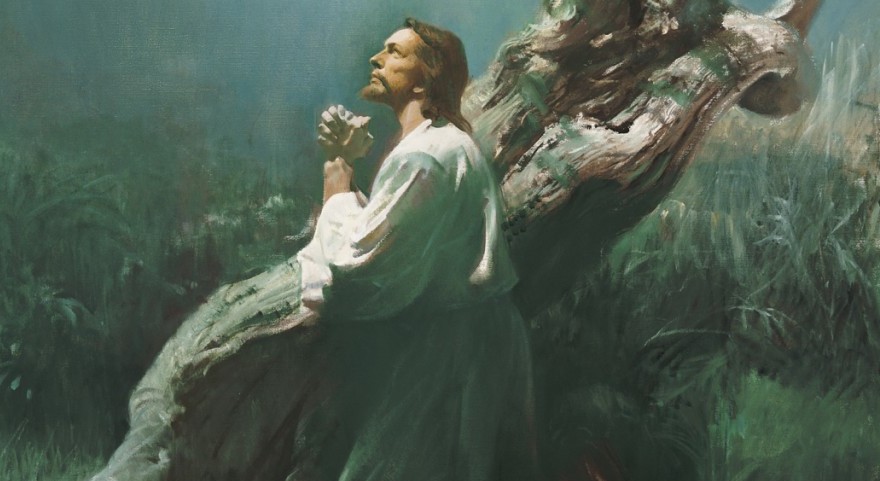
The ordeal that He knew He would face in His immediate future was not going to be easy.  Some point out that His knowledge of His upcoming suffering was the reason for His asking God to alter the course of His life in His prayers in the garden: “My Father, if it is possible, let this cup pass from Me.” 

But Stott seems to think it was much, much more than Jesus’ anticipation of His upcoming suffering.  He has an extensive listing of Christian martyrs who faced death at the hands of their persecutors, from the Disciples to Ignatius, Polycarp and Alban.  He even mentions Socrates who did not protest when he was given his cup of poison in his prison cell in Athens.  If it was just anguish over His upcoming suffering, Jesus did not handle it as well as many of those who were persecuted for their faith.

Stott writes “the cup from which He shrank was something different.  It symbolized neither the physical pain of being flogged and crucified, nor the mental distress of being despised and rejected by His own people, but rather the spiritual agony of bearing the sins of the world—in other words, of enduring the Divine judgement that those sins deserved” [Stott, 78].  A cup is the symbol of God’s wrath, seen throughout the Old Testament in Ezekiel 23: 32-34, Isaiah 51: 17-22 and Psalm 75: 8.  Jesus recognized that the wine He was being offered would turn His world upside down.  Here was a sinless man being given full contact with human sin.  Here was a sinless man anticipating alienation from His Father.  Here was a sinless man being judged for sins He did not commit. 

Why did He pray that “this cup be taken away?”  Because He knew everything is possible for God.  He knew God could take it away; He had the power.

But let’s examine the whole prayer of Jesus for the whole story…

When Jesus asks for the cup to be taken away, He followed those words with the very courageous words “yet not as I will, but as You will.”  It is almost as if His human side feared the upcoming pain but His Divine side knew to leave His fate in the hands of God and He knew His whole life on earth was a mission to save human sinners.

This mission was impossible without the “sin bearing death of the Savior” [Stott, 79].

When His agony was over, Jesus seemed to feel a resolve to carry out the will of His Father.  When the soldiers came to take him to Pilate, Peter drew his sword to defend Jesus.  Jesus said “Shall I not drink the cup my Father has given Me?” [John 18:11].   At this point Jesus knew that He would experience a wrath that no human would ever want.   His Father had ordained this and He would accept it. 

Was it bitter and painful?

Of course it was, but if it was His Father’s will, He had no choice.

As we look “below the surface” of the agony in the garden, we see a Jesus who grows closer to His death on the cross.  In the Upper Room, he tried to teach about the significance of His death; many feel that is what His last supper was all about.  Communion is all about Jesus teaching the significance of His death.  But in the garden, we saw a man who does not want the pain and agony of the cross, yet he accepted it.  What was he trying to communicate with his actions?  Certainly he was not trying to show fear, dread or anguish.  He was showing resolve.  He was showing reverence.  He was showing acceptance.

“Yet not as I will, but as you will.”

This acceptance of God’s will is one of the most important things we can do as Christians, for in doing this, we bend our will to God’s and we take the humble position of a sheep as we follow our Shepherd.   In the previous post on St. John Studies “Remember Him…,” I centered a lot of my comments around the service of communion which only occurs monthly in my church.  When I go to church every Sunday, I pray the same prayer, the prayer that Jesus gave us as our model and I say the same line  “Your kingdom come, Your will be done, on earth as it is in heaven”.

In my opinion, one of the most powerful phrases in the whole prayer comes in the middle of that line: “Your will be done.”

Jesus knew that God’s will would be done when He prayed in the Garden.

That phrase turned His anguish into courageous resolve.

What will our acceptance of God’s will do for us?

Posted in Uncategorized | Leave a comment

Remember Him…

This past Sunday my church celebrated communion.  Once again, I heard the familiar words about the bread and the cup:  “’This is My body, which is given for you; do this in remembrance of Me’…In the same way, after supper had ended, He took a cup of wine, gave thanks for it, passed it around to them and said ‘This is My blood of the new covenant, which is poured out for the forgiveness of sins; do this, whenever you drink it, in remembrance of Me.’”

These familiar words may just be too familiar, masking their significance, their impact.  In these words we may get some insight on how Jesus viewed his own death.

John Stott* is fascinated by why Jesus chose to go to His death.  He wonders when Jesus went to His mountain-top transfiguration, why did He come back into this world?   Peter, James, and John went to the mountain where they saw Jesus transfigured into a radiant, glorious figure.  Moses was by His side as well as Elijah.   Many think this was a foreshadowing of the risen Christ but maybe Jesus could have chosen to go to His Father right then.  He could have bypassed the cross.  He didn’t; He came down from the mountaintop and faced the human experience of death. 

Most Christians are satisfied with four precepts that characterize what Jesus did:  He died for us, He died for us that He might bring us to God, He died for our sins that we could receive God’s gifts, and He died for our death (our sin should have equaled our death). 

John Stott is not “most Christians.”  He wants a better rationale for Jesus’ behavior.  “Something deeper was happening than mere words and deeds, something below the surface.”  Jesus knew He was going to die:  “On Maundy Thursday Jesus had already seen the sun set for the last time.  Within about fifteen hours His limbs would be stretched out on the cross.  Within twenty-four hours He would be both dead and buried.  And He knew it” [Stott, 69].   Stott feels the extraordinary thing about all this is that at the height of His powers, Jesus was looking at death as the completion of His purpose here on earth. 

When Jesus was in the Upper Room, He uttered the words in the first paragraph of this post.   The words about His body and His blood [the bread and the wine] added drama and significance to the meal, but what did the words really mean? 

Stott writes that there were three lessons that Jesus was trying to teach.

First of all, He was trying to point out that His death was to be celebrated in a memorial service that would occur over and over again.  “Do this is remembrance of Me” and “whenever you drink it” are phrases that point to the idea that the Last Supper will be performed again.  The “bread” did not stand for His living body which was before them in the upper room; the bread stood for His body which would be given for them in death.  The wine did not stand for the literal blood in His veins; it stood for the blood which was to be poured out for them in His death.  Jesus wanted all of His followers to remember His death.  Stott goes so far as to say, “There is then, it is safe to say, no Christianity without the cross.”

Secondly, by His behavior in the Upper Room, Jesus was teaching about the purpose of His death.   Jesus did not just refer to the wine as blood, He referred to the wine as a symbol of the “new covenant” associated with His blood.   Matthew writes that Jesus’ blood was shed “for the forgiveness of sins.”  Jesus knew He was instituting a new “pact” with His people, a pact that promises the forgiveness of our sins.  The “Old Covenant” was established with Abraham, which promised to bless him with good land, abundant prosperity and multitudes of descendants.  This covenant was ratified through the blood of sacrifice, but as the years passed, the Israelites continually broke the covenant and provoked God’s judgement.  The Prophet Jeremiah knew that the New Covenant was coming, not commandments written on stone but law in the minds and hearts of the people, law that will forgive their sins and remember them no more [Jeremiah 31: 31-34]. 

Six centuries passed, years of waiting for a Galilean peasant, carpenter and itinerant rabbi to seal the “New Covenant.”  Jesus knew He was The Messiah, dying to bring His people into a new relationship with God.

Thirdly, through His death, Jesus taught that believers should participate in their faith personally.  How can we do that?  When we take communion, we are taking blessed bread and blessed wine.   We are not spectators at that point; we become participants.   Stott calls the act of communion a “vivid acted parable of receiving Christ as our crucified Savior and of feeding on Him in our hearts by faith” [73].  Jesus had already taught about the “living bread” when He fed the five thousand; note these words from John 6, 53-55: “I tell you the truth, unless you eat the flesh of the Son of Man and drink His blood, you have no life in you.  Whoever eats My flesh and drinks My blood has eternal life, and I will raise him up at the last day.  For My flesh is real food and My blood is real drink.”    Participation in the Lord’s Supper is not intended to be an option for the believer; we are expected to partake of Christ’s body and His blood.

Keep in mind that all of these teachings in the Upper Room occurred in a context.  That context was the Passover.  Jesus knew that His death was going to coincide with the annual commemoration of God’s liberation of Israel from the Egyptians.   Jesus referred to the Last Supper as the Passover meal but Jesus was taking liberty with the celebration.  Passover was supposed to be eaten on Friday evening when Jesus was on the cross.  The real symbolic significance of this “rearrangement” is that when the Passover lambs were being sacrificed, Jesus was dying on the cross.  Truly the Lamb of God was being sacrificed, and the event was right on God’s schedule, not mans.   Stott surmises that Jesus may have been giving instructions to His believers that the annual celebration of Passover should be replaced by His Last Supper.

Jesus understood the purpose of His death and when one looks “below the surface,” the meaning of His death becomes even more important.  What I did on Sunday takes on a more important meaning.  Communion points to the centrality of Jesus’ death in our faith.  Communion was Jesus teaching about the purpose of His death.  Communion becomes our participation in the death of Jesus, a very personal participation.

“This is My body, which is given for you.”

“This is My blood of the new covenant, which is poured out for the forgiveness of sins.”

Whenever you do this, remember Him…

*in his book  The Cross of Christ

Posted in Uncategorized | Leave a comment

“Our Response” *

“It is important to realize that the basic ideas of Christianity rest upon the idea that God made the first move”  [from St. John Studies, “In the Beginning,” January 27, 2021].  God spoke the world into existence,  God acted in order to reveal Himself to man  (first through the Old Testament prophets and then through Jesus Christ) and finally God made His move to save man by sending His only Son to the cross to bear man’s iniquity.

Obviously we owe God quite a lot but what does He want in return?

Maybe we can see what He wants in the following verse from Matthew 7:7:  “Ask and it will be given to you; seek and you will find; knock and the door will be opened to you.”  The major emphasis should be on the word seek.  John Stott, in his book Basic Christianity, writes that for many, the wonderful things God has done for all of us seem to remain in the past.  “So what if God created the world…  How does that relate to me?  Of course if He did create it, that’s great, but I am not sure I owe Him anything for that.  It is nice that God wants me to know Him but my experience is that this knowledge of God matters little to me in today’s world.  I know about Jesus, but I am not sure I need Him, that I need to worship Him.  In fact, if I become a dedicated follower, I may have to give up some of the fun things that I enjoy doing.”

This is the classic response of someone who does not value life with God and His son Jesus Christ…

In Psalm 14: 2, 3 it says:  “The Lord looks down from heaven upon the children of men, to see if there are any that act wisely, that seek after God.  They have all gone astray, they are all alike corrupt; there is none that does good, no not one.”

The truth is God has sought us in the past and He is still seeking us.

What must we do?  How do we respond?

We must decide to seek Him.

This is the response that God wants from man.   In Matthew 18: 12 He explains that all of us are important.  “”What do you think? If a man owns a hundred sheep, and one of them wanders away, will he not leave the ninety-nine on the hills and go to look for the one that wandered off?”  In Luke 15: 8-10 “What woman, having ten silver coins, if she loses one coin, does not light a lamp, sweep the house, and search carefully until she finds it?  And when she has found it, she calls her friends and neighbors together, saying, ‘Rejoice with me, for I have found the piece which I lost!’   Likewise, I say to you, there is joy in the presence of the angels of God over one sinner who repents.”

Stott writes “God desires to be found, but only by those who seek Him” [16].  God wants to be found by those who recognize that they benefit by what He has done and their lives will be made better by a relationship with Him.

How do we respond to God?  Stott says we must be diligent in our quest to be with The Father.  The life of the Christian is not a lazy life.  We should strive to learn as much as we can about God in His Word and we should strive to serve others with His love in our hearts.  We should also be humble as we approach our Father.  Pride is a common hindrance to knowing God.  He does not want us to go beyond our capability as we begin our efforts to know Him.  We should be willing to acknowledge that our minds are limited and no human is capable of truly understanding God’s ways.   Stott writes “Jesus loved children.  They are teachable.  They are not proud, self-important and critical.  We need the open, humble and receptive mind of a little child” [17].  We should approach God honestly.  To really know God, it is important to have our preconceptions set aside.  Many people read the Bible with their minds made up with their own personal agenda.  If that is the case, God may not be found in the pages of His Word.  Jeremiah 29: 13 says “You will seek Me and find Me; when you seek Me with all your heart.”   Lastly, as we seek The Father, we should be prepared to be obedient to His message.  God’s message demands our obedience, a moral change in our lives.  If we find God and insist on doing our will, He will not work within us.  It is His will that we should seek to obey rather than our own.  Earlier in my “classic response,” the last line is the key to the person who decides not to follow God’s ways.  When someone says “I may have to give up some of the fun things that I enjoy doing,” they may be saying that they refuse to make a moral change in their life.  A believer in God does not fear living the life that God requires; they realize the value of making a change.  Stott says “Fear is the greatest enemy of the truth.  Fear paralyzes our search [for God].  We know that to find God and to accept Jesus Christ would be a very inconvenient experience.  It would involve the rethinking of our whole manner of life…We do not find because we do not seek.  We do not seek because we do not want to find” [18].

On January 11 of this year I lost a friend, a man I had known for forty-five years.  This man may have known The Lord, but in my experience with him, we never talked of faith.  In his last years he joined my church and he found his way to my Sunday school class.  He interacted with the class and as his teacher, I would ask him questions from time to time.  I would describe him as someone who struggled to let go of his worldly desires and allow Jesus to have more control of his life.  I know that he had some habits that he enjoyed and they controlled him.   The moral choice that God demands was too much and he could not make a change. 

I was not with him in his last days on this earth, but I have a friend who was.  This woman has a strong belief in The Lord and had similar habits that existed until God took them away and she began to follow Him.  She was able to witness to my friend in ways that I could not.  She was so familiar with his path.  In the last hours of his life, my friend found The Lord, professing a peace that he had never known before, a strength to reconcile with God and a desire to be with Him.   Like the landowner in Matthew who paid his workers equal amounts despite the length of time each worked, God accepted my friend to be with Him even though he waited until the end of his life to profess his true faith.  It does not matter, for in God’s kingdom the “last will be first, and the first will be last.”  God is a generous God and God continues to seek us, even unto our last hour on this earth. 

He wants us to give Him a chance in our lives.  He has spoken, acted and saved and He wants us to respond.  Seek Him.  Come to the Bible that “claims to be His revelation. Come particularly to the Gospels which tell the story of Jesus Christ.  Give Him a chance to confront you with Himself and to authenticate Himself to you” [19].

God made the first moves.

He spoke, He acted and He saved…

Won’t you respond?

*My first post on The Cross of Christ made reference to Basic Christianity so I am going to insert comments on that book in between posts on The Cross. I think readers may find this interesting. For my opening comments on Basic see the post “Studying Stott Again” on October 25, 2020. I have never worked on two books at the same time but I feel now is the time to do this.

Posted in Uncategorized | Leave a comment

“In the Beginning…”*

“In the beginning God…”

These are the first four words in the Old Testament, the first four words of The Bible.

They are also the first four words of Chapter One of John Stott’s book Basic Christianity.

They indicate the beginning of creation, in this case making something out of nothing.  Some people enjoy the activity of creation: painting a scene or object on a canvas for instance, but God did not create as man does.  God created out of nothing, the Latin phrase for this is ex nihilo.  For example when a painter paints, he has canvas, paints, brushes etc., the tools of creation already exist; the painter does not create out of nothing.

God had nothing.

He created form out of chaos, a universe out of emptiness, light out of darkness. 

He spoke the world into existence, the Divine Imperative if you will.  Stott writes He made His first move when He said the words “In the beginning.” 

After the act of creation, “Many people visualize a God who sits comfortably on a distant throne, remote, aloof, uninterested, and indifferent to the needs of mortals, until, it may be, they can badger Him into taking action on their behalf” [Stott, 11].

Nothing could be further from the truth. 

God has always and will always continue to be involved with man, from that first day of man’s creation [Adam, the first homo divinus] to today.    The reason is that soon after man’s creation, it did not take long for him to get lost in the darkness of his sin, and God was not “remote, aloof, uninterested and indifferent” to the needs of man for redemption.  “[God] rises from His throne, lays aside His glory, and stoops to seek until He finds him.”

It is important to realize that the basic ideas of Christianity rest upon the idea that God made the first move.  For Christians, we know we would not be here without God taking that first step (creation) but God did more than that.  God spoke.  He revealed His nature and His will. 

In the Old Testament, God revealed His nature and His will to the prophets.   Also God spoke to Adam and Eve.  He made His presence known to Noah and his sons.   He communicated to Abraham and his wife Sarah.  In multiple instances, God tried to reveal Himself to man by expressing His nature and His will.  But for Christians, God spoke to us by giving us His Son.  Stott sums up the whole religion of the Bible in these three short sentences: “God has created, God has spoken. God has acted.”

Beyond the creation, let’s explore in greater detail the idea that God has spoken and God has acted. 

God has said something in the Gospel [many like to refer to the Gospel as “good news”].  The “good news” is God’s declaration that He has come to earth to save human beings.   Stott gives man high regard; we are indeed inquisitive creatures.  We always want to know what we don’t know: “He [man] is always questing, exploring, investigating, researching.”  The problem is that when man tries to understand God, man confronts an infinite supernatural Deity.  God is beyond our comprehension.    When God manifested Himself to Moses, all Moses could see was a burning bush.   Job was asked if he could understand the deep things of God.  Job said it is impossible.

The heavens and the “firmament” proclaim God’s handiwork.  Romans 1: 19-20 states “Since the creation of the world His invisible nature, His eternal power and deity have been clearly perceived in the things that have been made.”   What more does man need?  Here it is: man wants to know God personally.  That darkness of sin problem still exists and man has not figured out how to deal with it.  Man needs to know how to get God’s forgiveness; he needs a more extensive and practical revelation.  Stott writes “God’s self-disclosure must include His holiness, His love and His power to save us from sin” [Stott, 13].  God needed to send man an example for him to follow and that example was God himself in the form of His Son Jesus Christ.

This revelation is described in the Bible as God speaking.  That it totally appropriate because man accumulates a lot of knowledge through speech.  However Stott points to Isaiah who reckons that God’s infinite mind is much more complex than ours:  “His thoughts are much higher than our thoughts.”  So the word of God came to the prophets until at last Jesus Christ came and “the Word became flesh and dwelt among us” [John 1: 1, 14].  God “spoke” to us through His Son Jesus Christ.  In our world today, some would argue that God is not “tangible, visible and audible” yet there was a time when God was able to speak “clothe Himself with a body which could be seen and touched” [Stott, 14].  John in his first Epistle proclaims “That which was from the beginning, which you have heard, which we have seen with our own eyes, which we have looked upon and touched with our hands…we proclaim also to you.”

Why did God act in this manner, sending Himself to earth so man could understand His ways?  God knew that man needed this experience.  Just telling man what to do was not working, for just words alone were not adequate to explain how man could avoid sin.  God had called Abraham promising that his descendants would populate a great nation.  God delivered that nation from slavery in Egypt, created a covenant with them on Mount Sinai and finally lead them across the desert to the Promised Land.  All the time this was happening He was teaching them. 

But it was not enough.

Man needed to be delivered from his sin.  This slavery was the most significant type of slavery, more significant than the slavery endured in Egypt by the Israelites.  To rid man of the slavery of sin was the reason for the coming of the Christ.

It says in Matthew “You shall call His name Jesus, for He will save His people from their sins” [1: 21]  It says in First Timothy 1: 15 “The saying is sure and worthy of acceptance, that Christ Jesus came into the world to save sinners.”  It says in Luke 19: 10 “For the Son of man came to seek and to save the lost.”

One of the most common images of Christianity is the shepherd who leaves the flock to search for the missing sheep.  God tried and tried to get man to understand His ways until He determined that speaking the word was not good enough; He had to live in the world and communicate by example. 

God created the world from nothing and He created man in His own image.  God gave man an inquisitive mind but a mind incapable of understanding God’s ways.  Speaking to man was not adequate.   God had to act.  God had to attempt to save man from himself, from his own desire to sin.  Stott describes the basics of Christianity in these words:  “Christianity is a religion of salvation, and there is nothing in the non-Christian religions to compare with this message of a God who loved, and came after, and died for, a world of lost sinners” [Stott, 15].

God has spoken

God has acted

God has saved

*My first post on The Cross of Christ made reference to Basic Christianity so I am going to insert comments on that book in between posts on The Cross. I think readers may find this interesting. For my opening comments on Basic see the post “Studying Stott Again” on October 25, 2020. I have never worked on two books at the same time but I feel now is the time to do this.

Posted in Uncategorized | 2 Comments

“Earthly and Divine…”

Why did Jesus Christ die?

In recent posts I have discussed John Stott’s positions on the responsibility of two individuals and one group for the death of Jesus*

As Stott finishes “Chapter 2” of The Cross of Christ , he returns to the question he posed at the beginning of the chapter:  “Why did Jesus Christ die?”   When one considers Pilate, the Jewish religious leaders and Judas, the answer to the question is a quick “Jesus did not die; He was killed.”

But we all know that the actions of the individuals already discussed do not tell the whole story.  Jesus did not have to die at the hands of Pilate and others.  He gave Himself up to those who sought to betray Him.  He gave Himself up voluntarily in order to do the will of His Father.

Here is where so many Christians are quick to conclude “He did it for us!” 

Here is where so many Christians are not willing to accept the idea that we should see Jesus going to the cross due to our sinning.  Parish priest Peter Green puts it succinctly: “Only the man who is prepared to own his share in the guilt of the cross may share in its grace.”

But how can we be responsible for the death of Jesus?

Too often, Christians point to Scripture to declare their innocence.  “Let His blood be on us and on our children!”  Is that not evidence or guilt coming out of the mouths of the Jewish leaders of the day?   When Peter declared on Pentecost “Let all Israel be assured of this:  God has made this Jesus, whom you crucified, both Lord and Christ.”  His hearers were “cut to the heart” and they asked what they could do to make amends [Acts 2:36-37].  Stephen directly attacked the Sanhedrin with the words “you stiff-necked people, with uncircumcised hearts and ears.”  He said they resisted the Holy Spirit just like their ancestors did.  This was a direct reference to their ancestors who persecuted the Prophets and killed those who predicted the coming of the Messiah.  This scripture seems to place a lot of blame on the Jewish leaders and today to place ultimate blame on the Jews is to encourage slander of the Jewish people and promote persecution of the Jewish people [anti-Semitism]. 

Stott writes “The way to avoid anti-Semitic prejudice, however, is not to pretend that the Jews were innocent, but, having admitted their guilt, to add that others shared in it” [Stott, 62-63].

Here is the hard question that spreads responsibility to Christians.  If we were in their place, would we have done what they did?  Are the sins of Pilate, the Jewish leaders and Judas that unique?

Stott is not making friends among his fellow Christians with what he writes next: “We [Christians] have done it.”

Their sins were not unique.  We commit them a lot.

Whenever we turn away from Jesus, we are crucifying the Son of God all over again and are subjecting Him to public disgrace.  Turn to Hebrews 6:6 and after reading it see if you can honestly say, “I have never turned away from Jesus.”   Whenever we get greedy, are we any better than Judas?  In society today, there are many examples of individuals who love the Lord but they also have an abiding love of money.  When we look at the fame that others have or the power they wield and we wish we had some of that, are we not experiencing some of the envy that the Jewish leaders experienced?  When we get so wrapped up in our ambitions and make horrible mistakes, we are feeling some of those same feelings that guided Pilate when he sent Jesus to his soldiers.  He wanted to look strong and in control.  One more “episode” that made him look weak would call into question his future as an administrator in the minds of his Roman superiors. He certainly did not want that.

Stott refers to an old Negro spiritual that asks “Were you there when they crucified my Lord?”

Yes, we were there.  All those base emotions that underlie the actions of the guilty parties are felt by all of us.  In the minds of many, this makes us participants, not spectators.

Before we place total guilt on ourselves [which we may truly deserve], let’s also consider the power of Jesus Christ.  Did He have to go to His death?  The answer is no.  Jesus did not die as a martyr.  He went to the cross voluntarily.  He knew He had to suffer death on the cross.  Stott cites the Nineteenth Century evangelical pastor Octavius  Winslow who wrote “Who delivered up Jesus to die?  Not Judas, for money; not Pilate, for fear; not the Jews for envy;–but the Father for love.”

It is important to think of responsibility for the death of Jesus on two levels: earthly and divine.  On the earthy level, Judas gave Jesus to the Roman soldiers and the priests, the priests gave Jesus up to Pilate declaring He was a blasphemous “pretender” and that He should be punished and Pilate gave Jesus up to his soldiers who actually crucified Him.   On the divine level, God gave up Jesus so Jesus could die for us.  “As we face the cross, then, we can say to ourselves both, ‘I did it, my sins sent Him there,’ and ‘He did it, His love took Him there” [Stott, 64].  God had a plan, which was to prove “I [Jesus] am the way and the truth and the life. No one comes to the Father except through Me.”  The Apostle Peter brought the earthly and divine together so well in Acts 2: 23  “This man was handed over to you by God’s purpose and foreknowledge and that you, with the help of wicked men, put Him to death by nailing Him to the cross.”

Truly the people of Jesus’ day bear great responsibility for His death.  Obviously Jesus was surrounded by wicked men who were instrumental in His death.  But also, one certainly can make the case that He would have never faced the cross if man had not sinned.  Finally, God intended for Jesus to go to the cross as a way to communicate to man that sins can be forgiven and better life can be anticipated if you follow Him.

It is this last reason for Jesus’ death that is the most intriguing; the death of Jesus was the Father’s will.

In upcoming posts, I will discuss Stott’s ideas about the death of Jesus on a deeper level, “looking below the surface” to discern what the Father’s will was. 

It is important for us to understand the reason for Jesus’ death, “He was not killed; He died, giving Himself up voluntarily to do His Father’s will.”

In Matthew 7:21 Jesus says, “Not everyone who says to Me, ‘Lord, Lord,’ will enter the kingdom of heaven, but only the one who does the will of My Father who is in heaven.”

Any insight we can have about the will of our Father is valuable…

For we all want to go to heaven…

Don’t we?

*from St. John Studies…

“The Loud Voices of Rationalization” December 29, 2020  [Pilate],   “The ‘Dark Passion’ of Envy” January 5, 2021 [the Jewish religious leaders],  “He Kissed Him” January 13, 2021 [Judas Iscariot].

Posted in Uncategorized | Leave a comment

“He Kissed HIm…”

Judas Iscariot, who also betrayed Him…  [Matthew 10: 4].

After considering Pilate’s responsibility for the death of Christ in “The Loud Voices of Rationalization” on December 29 [St. John Studies] and then the Jewish leaders’ responsibility in “The ‘Dark Passion’ of Envy” on January 5[St. John Studies], we turn our attention to the one person who probably gets the most credit, Judas Iscariot.

His betrayal of Jesus was not unexpected; we all know that.  Jesus knew what was about to happen as we can read His response to Simon Peter’s question in John 13: 25-30: “Leaning back against Jesus, he asked him, ‘LORD, who is it?’ Jesus answered, ‘It is the one to whom I will give this piece of bread when I have dipped it in the dish.’ Then, dipping the piece of bread, He gave it to Judas, the son of Simon Iscariot.  As soon as Judas took the bread, Satan entered into him. So Jesus told him, ‘What you are about to do, do quickly.’  But no one at the meal understood why Jesus said this to him.  Since Judas had charge of the money, some thought Jesus was telling him to buy what was needed for the festival, or to give something to the poor.  As soon as Judas had taken the bread, he went out. And it was night.”

John Stott, in his book The Cross of Christ, writes that some don’t have such that much condemnation of Judas, for they feel he was the “tool of providence, the victim of predestination.”  Their idea is that someone had to betray Jesus, and it just happened to be Judas.

Yet is this exoneration for this man?  Just because his betrayal is predicted in Scripture does not mean that Judas lost all freedom of choice.  Jesus’ death was foretold in the Old Testament, but He went to His death voluntarily.  All of us have the push and pull of temptation to deal with, Godly influences and satanic influences.  It was Judas’ choice to give in to satan, to do his bidding and along with his choice comes consequences.

There is evidence that Jesus did not absolve Judas of responsibility.  The Passover meal had just started and Jesus knew His hour had come.  He also knew that the part that Judas was to play was underway; “Jesus knew that the hour had come for Him to leave this world and go to the Father… The evening meal was in progress, and the devil had already prompted Judas, the son of Simon Iscariot, to betray Jesus.  Jesus knew that the Father had put all things under His power” [from John 13].  When Jesus identified Judas as His betrayer, Judas took the bread and he fled from the meal.  Stott points to similar Scripture in Psalm 41:9 when David laments betrayal: “Even my close friend, someone I trusted, one who shared my bread, has turned against me.”  Others at the Passover meal may have been confused about Judas’ exit but Jesus was not.  Jesus says in Mark 14:21 “The Son of Man will go just as it is written about Him. But woe to that man who betrays the Son of Man! It would be better for him if he had not been born.”  Stott writes “Not only did Jesus condemn him, but Judas came in the end to condemn himself.  He acknowledged his crime in betraying innocent blood, returned the money for which he had sold Jesus and committed suicide.  Doubtless he was seized more with remorse than repentance, but a least he confessed his guilt” [Stott, 59].

This brings us to motive.  My spouse is fascinated with crime documentaries and in every show I have ever seen with her, there is always the big question “Why did they do it?”

Many have considered that Judas was deeply disappointed in Jesus.  He was a zealot and felt that the Jewish community needed a strong liberating leader instead of a man who preached love for one another.   Judas wanted to be part of a national liberation movement to remove his country from the colonial domination of Rome.  He really had no admiration for Jesus because His actions were not that significant.

Others point to the actions of Judas as a “moral fault.”   He was not politically motivated.  He was simply motivated by greed.  Judas was the treasurer of the Disciples, being entrusted with the common purse.  In well-known Scriptures [in Mark and John] Mary of Bethany brings expensive perfume to Jesus and anoints Him, filling the house with fragrant scent.  This was an expensive gesture, but Jesus thought it a beautiful thing.  Judas was a key spokesman who expressed the idea that the perfume could be sold and used to help the poor.  There is ample evidence that Judas was less outraged by this act than the idea that this was money that could go into his own pocket.  “Their comment was sick and insincere, as John goes on to say.  Judas ‘did not say things because he cared about the poor but because he was a thief; as keeper of the money bag, he used to help himself to what was in it’” [Stott, 60].

 Stott goes on to say that Judas may have been so outraged by this extravagance that he went straight to the priests to recoup some of the loss, choosing to sell Jesus for thirty silver coins, what Stott calls the “ransom of a slave.”  The disciple John points to the common problem that many have (the love of money) as the main motive for Judas’ action.  Paul declared in Luke and Timothy that the love of money is “a root of all kinds of evil.”  Every day we see human beings descend into deep depravity in the quest for riches.  Politicians use their power to give contracts to the highest bidder, spies sell their country’s secrets to the enemy, merchants enter into unscrupulous enterprises and yes, even today spiritual leaders turn religion into a money-generating business.

“Then one of the Twelve, the one called Judas Iscariot, went to the chief priests and asked, ‘What are you willing to give me if I hand Him over to you?’ And they set out for him thirty pieces of silver” [Mark 26: 14].  Truly everybody has a price.

Maybe the motive was avarice.  Judas was not an exceptional man.  He did not take to heart Jesus’ admonition that is impossible to serve God and money.  Simply put, Judas chose money.  Many people do the same.

As we consider this third “factor” in the cause for Jesus’ death, we come to the acts of a man who was a key player in turning in Jesus to the Roman authorities.  Truly Pilate could have exerted his authority to save Jesus from crucifixion but instead he chose to wash his hands of the episode.  Truly the Pharisees could have been less insistent that Jesus the “uncredentialed” rabbi was committing dangerous blasphemy.  Truly Judas did not have to make the choice to pursue money over his dedication to Jesus, but he did. 

In one of the greatest ironies of all time, when the Roman guard came to the garden at Gethsemane, Judas chose to mark Jesus with one of the most sincere signs of friendship…

He kissed Him.

Posted in Uncategorized | Leave a comment

The “Dark Passion” of Envy

Render Unto Caesar by Peter Paul Rubens

Epiphany Sunday is a Christian holiday primarily commemorating the Magi’s visit to the Baby Jesus.  As I sat in worship service listening to my pastor deliver a message from Matthew 2: 1-12, I did not realize these Scriptures would feed into my post this morning.  Herod played a large role in the early life of Baby Jesus.  He was envious of all the attention afforded to this Baby “King of the Jews” and His star.  He plotted to kill Jesus, trying to trick those around him into revealing the whereabouts of the Baby.  Eventually he resorted to killing all the male children of Bethlehem and that territory in order to eradicate Jesus.

John Stott writes that envy reared its ugly head again at the end of Jesus’ life, for the Jewish leaders were envious of Him and that led to His death on the cross.  Whereas “dark passions” led to Pilate’s decision to turn Jesus over for crucifixion [see Dec. 29 “The Loud Voices of Rationalization” St. John Studies], the Jewish leaders and the Jewish crowd had their own set of “dark passions” that led them to act as they did.

As I discussed on December 29, Pilate certainly bears some guilt in the death of Jesus, but the Jewish leaders of the day put Pilate in the “no win” situation.  The Jewish leaders committed Jesus for trial, they accused Him of subversion and they stirred up the crowd to call for His death.  Jesus acknowledges Pilate’s role but says in John 19: 11 “the one who handed me over to you is guilty of a greater sin.” In Acts 3: 13-15 Peter makes the bold statement to the Jews “You handed Him over to be killed, and you disowned Him before Pilate, though he had decided to let Him go.  You disowned the Holy and Righteous One and asked that a murderer be released to you.  You killed the author of life.”

Why?

The short answer is envy.

But why would powerful Jewish priests who touted their nation’s special relationship with God, people who enjoyed their leadership role in governing their nation be envious of an “irregular” rabbi.  Stott says that Jesus “posed” as a rabbi, not entering by the “correct door” and not climbing up by the “right ladder.  He had no credentials, no proper authorization.”  To make matters worse, Jesus fraternized with the wrong people (e.g. prostitutes, tax collectors, the disease ridden).  When He was supposed to fast, He feasted; when He was supposed to celebrate the Sabbath, He healed people.  He cared more for people’s needs than the rules and regulation.  He made Himself available to those who needed Him for He knew “Healthy people don’t need a doctor — sick people do” [Matthew 9].

Again why would they be envious?

Jesus showed them the error of their ways.  His actions were a contrast to their behavior.  When people of this time saw a Pharisee exclaim his righteousness in Luke 18 [“God, I thank you that I am not like other people—robbers, evildoers, adulterers—or even like this tax collector.  I fast twice a week and give a tenth of all I get”] they also saw Jesus doing the work of a real Messiah, teaching in a humble manner and healing the afflicted as the need arose.

Pilate saw what was going on.  He knew that an innocent Man was sent to him.  Did the Jewish leadership send Pilate Jesus because “they were concerned for political stability, doctrinal truth and moral purity?  Pilate did not think so” [Stott, 57].  Quoting H.B. Swete, Stott writes “He detected under their disguise the vulgar vice of envy.”  Matthew 27: 18 states “he [Pilate] knew it was out of envy that they had handed Jesus over to him.” 

As Jesus continued throughout His ministry, He became more condemning in His comments about Jewish leadership saying they cared more about their regulations than people in need.  He denounced them as “hypocrites” and called them “blind leaders of the blind.”  He likened them to “whitewashed tombs which look beautiful on the outside but on the inside are full of dead men’s bones and everything unclean” [Matthew 23: 27].  These accusations did not foster good relations with the Jewish priests.

Added to this are the “outrageous” claims that Jesus made for Himself.  He claimed to be “Lord of the Sabbath.”  He claimed to know God as His Father.  He claimed to be equal with God.

Were there good reasons for their hatred of Jesus?  The priests thought so.  In fact Stott writes they thought like Pilate “Their hands were clean” because it was clear that He was guilty.  They heard Him utter these blasphemous claims with their own ears.  “He was a self-confessed blasphemer.”  It was good for their political power, it was good for their theological standing in the community and it just made good ethical sense.  Jesus had to go.

Let’s turn to the Book of Mark to get to the basis of the dilemma the Pharisees found themselves in.  They wanted to kill a man who did little except to question their authority and in their minds they knew Jesus was speaking the truth.  Their authority should be questioned.  The Jewish leaders were also astute politicians and Jesus revealed their dark calculating nature when they questioned His authority in the Temple.  “They arrived again in Jerusalem, and while Jesus was walking in the temple courts, the chief priests, the teachers of the law and the elders came to Him.  ‘By what authority are you doing these things?’ they asked. ‘And who gave you authority to do this?’  Jesus replied, ‘I will ask you one question. Answer Me, and I will tell you by what authority I am doing these things.  John’s baptism—was it from heaven, or of human origin? Tell me!’    They discussed it among themselves and said, ‘If we say, From heaven, He will ask, Then why didn’t you believe him?  But if we say, Of human origin…’ (They feared the people, for everyone held that John really was a prophet.)  So they answered Jesus, ‘We don’t know.’  Jesus said, ‘Neither will I tell you by what authority I am doing these things.’”

Stott comments “If they could not face the challenge of John’s authority, they certainly could not face the challenge of Christ’s.  He claimed authority to teach about God, to drive out demons, to forgive sins, to judge the world.  In all this, He was utterly unlike them…there was a self-evident genuineness about His authority.  It was real, effortless, transparent, from God” [Stott, 58].

The priests had their outward reasons to destroy Jesus, but their real reasons were inward.  Jesus did flaunt His disregard for their rigid rules from time to time.  He did not have the proper “credentials” to be a rabbi.  He even criticized their extremely “righteous” public behaviors, but underneath it all, He made them look bad.  His behavior was a contrast to theirs and the priests knew that the people preferred a man who was genuine to leaders who were fake.

Stott ends his discussion of the envious priests with words that can make us all uncomfortable. It is so easy to stand in judgement of the Pharisees, saying look at how those self-righteous leaders behaved…shameful!  But are we sometimes not far from their attitude in how we live our lives?  Maybe we should feel like those who were ready to stone the woman caught in adultery. Maybe we should admit that we cannot be that harsh with the Jewish priest and the Jewish crowd. Jesus interferes with us when we would rather have our privacy.  He demands homage when we really don’t want to be obedient.  Maybe we want to be left alone when Jesus says, no, I will never leave you alone.  Maybe we too “perceive Him as a threatening rival who disturbs our peace, upsets our status quo, undermines our authority and diminishes our self-respect” [58].

Yes…

We too want to get rid of Him.

“let any one of you who is without sin be the first to throw a stone…”

Posted in Uncategorized | Leave a comment