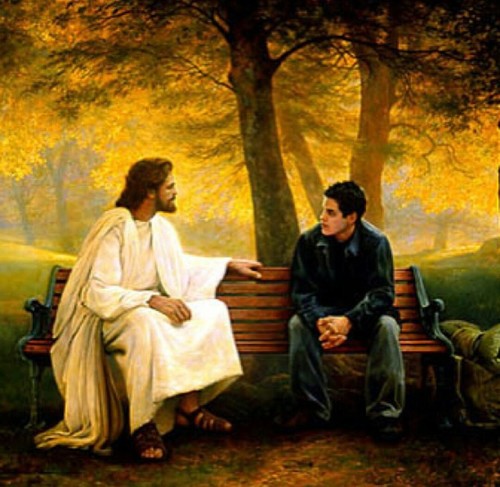
The Downside of a Personal Relationship with God…

I have had working relationships with pastors over twenty-five years , getting to know them pretty well.  I have a pastor in my family.  My best friend is a pastor.  In my experiences with all of them, I have discovered they have several things in common, but let’s pinpoint a specific thing that concerns them all.

How many people show up in the pews on Sunday morning…

Now let’s stop before we get too negative.  [Yes, a comment like that can be negative; I have heard disparaging words that some pastors can be too obsessed with church attendance, so obsessed that they are referred to as “bean counters”.]  But maybe paying attention to attendance is not completely a bad thing.  Pastors can just be concerned about the spiritual health of their congregations and poor attendance is a sign that their congregations don’t value corporate worship.  If no one is coming to church, maybe that is a sign that a pastor is doing a poor job of preaching.  Maybe it is an indication that the church’s approach to worship is outmoded or possibly it could mean that people in general have just lost interest in going to church?   The list could go on and on…

And it does…

Go on and on and on…

In the study of our book Knowing God, J.I. Packer zeroes in on another aspect of this concern.   Maybe some pastors are emphasizing the “personal” nature of a relationship with God so much that they are forgetting that God is majestic.

Let’s be honest here.  In an effort to get more people interested in church, are today’s pastors referring to God too much as a “person”?  Are some of today’s pastors giving the “impression that God is a person of the same sort as we are—weak, inadequate, ineffective, and a little pathetic” [Packer, 83]?  Packer cites a well-respected author [J.B. Phillips] who has written a book entitled Your God is Too Small.  In an effort to get people comfortable with church, are pastors preaching that God is smaller than He really is?

I have already used the appropriate word to refer to God a few sentences back; that word is not weak, inadequate, or ineffective. It is majestic.

Majestic means “greatness.”  When you refer to someone or something as majestic, you are really acknowledging their greatness and your respect for them.  Psalms 93: 1-2 says “The Lord reigns, He is robed in majesty….Your throne was established long ago” [italics mine]. “They will speak of your glorious splendor of your majesty, and I will meditate on your wonderful works” [Psalms 145: 5] [italics mine].  Peter in recalling his vision of Christ at the transfiguration says “We were eyewitnesses of His majesty” [2 Peter 1: 16, italics mine].

Let’s stop before we go too far, before we give the impression that God is distant and uncaring.  He is not distant because He is majestic but He is “far above us in greatness,” and therefore He should be adored, He should be worshipped, He should be praised.  When we make God too small, our faith is “feeble,” our worship is “flabby” [Packer’s words].

It is so common today to hear references to God in everyday talk.  Maybe that everyday talk is an indicator of how we have lowered our ideas about Him.  When a prize is won on a game show, the response is often “Oh my —!”  When the renovation specialist reveals the “do-over” on HGTV, the homeowners exclaim “Oh my —!”  It does not take much for us to invoke our Lord and Savior it seems.   When God is invoked, His majesty is probably not on that person’s mind.

But the God of the Bible is infinite, unlimited in space, time and knowledge.  God is all-powerful.  Packer says that “God has us in His hands; we never have Him in ours” [83].  Granted, God is personal but unlike human beings, God is truly “great.”   Packer urges pastors and parishioners to focus on the Bible.  “In all its constant stress on the reality of God’s personal concern for His people, and on the gentleness, tenderness, sympathy, patience and yearning compassion that He shows for them, the Bible never lets us lose sight of His majesty and His unlimited dominion over all His creatures” [83].

Packer writes that we don’t have to go too far into the Bible to see evidence that God is both personal and majestic.  In Genesis, God deliberates with Himself, He brings the animals to Adam so he can name them, He walks in the Garden of Eden, He calls out to Adam, He comes from heaven to find out how His creatures are doing, and He is grieved by Adam and Eve’s wickedness.  In short, God is not impersonal and indifferent; He thinks, feels, approves, disapproves, and shows interest in man.

But God is also the creator God who brings order out of chaos.  He brings life into being by His Word, makes Adam from dust and Eve from Adam’s rib.  He is the Lord of all that He has made.  He subjects mankind to physical death, flooding the earth in judgement.  He confounds human language and scatters the builders of the Tower of Babel.  He overthrows Sodom and Gomorrah.  He is present everywhere and He observes everything.  Packer writes the name God as El Shaddai “God Almighty.”  “It is not only at isolated moments that God takes control of events, either; all history is under His sway” [Packer, 85].

It is a delicate balance that pastors must find, that God cares for us all, but God is not on our level. 

God is a personal caring God, but God is not a person.  If pastors are emphasizing the “personal” nature of God at the expense of God’s majesty just to get people in the door, they should reevaluate their approach to their parishioners.  God’s word does not support this message.  Maybe the reason this approach is so popular is that it is just people being who they are; Packer calls them “modern people, and modern people, though they cherish great thoughts for themselves, have small thoughts of God” [83].

Maybe modern people really lack knowledge of God’s divine majesty…

The result: “feeble faith” and “flabby worship.”   

Posted in Uncategorized | Leave a comment

God’s Purposes…Have they Changed?

What is the purpose of a person’s life?

This is a common question that many people have as we sometimes consider our place in this world.   We may ask questions like “Why was I born?”   “Why am I living in the world right now?”  “What am I supposed to accomplish in my years on this earth?”

Many of you may have these kind of thoughts [as I do], but let’s take this discussion to a much higher plane.

Does God ever wonder about His purpose? 

Have God’s purposes changed over the years?

In several of my recent posts, I have tried to reflect J.I. Packer’s* arguments that despite human change as the years pass, God has not changed at all.  As humans, we may certainly wonder about our purpose and I have to admit, I have found different purposes for my life as I have aged.  Truly today, I am doing things that I never envisioned doing years ago. 

But I am a man.

God is immutable.  God is divine.  God is God.

When we wonder if God’s purposes have changed to reflect the changing world are we trying to make God human when we should not?  Surely the world has changed as time has passed.  Some would argue that maybe God needs new purposes that reflect what is happening in the world today.

But God is immutable.

He has the same purposes that He has always had since time began.

You might wonder what are the purposes of God?**

One is for us to know Him and for Him to know us.  Nothing we can do is a shock to God, for He is omniscient and omnipotent.  He has complete knowledge and control which extends into the past, is cognizant of the present and extends into the future.  One can turn to Psalm 139 and in those ten verses, one can discern what God’s purpose is when it comes to knowing man.   “Oh Lord, you have searched me and you know me” (verse 1).  “You hem me in—behind and before; you have laid your hand upon me” (verse 5).  Some may balk at the idea that God knows our coming and going, but we need His guidance; we need His help.he second purpose is all about love.  God loves us; He loves us forever.  He expects us to keep His commandments and in doing so, He shows us the way to live the best life we can live on this earth.  Turn to John 1, Chapter 5 “everyone who loves the Father loves His Child as well. This is how we know that we love the Child of God: by loving God and carrying out His commands. In fact, this is love for God: keeping His commands. And His commands “are not burdensome, for everyone born of God overcomes the world.”  Of course, reciprocal love for God is not where this stops; God expects us to love our fellow man, “our neighbors as ourselves.”

The last purpose is all about blessing.   God blesses us so we may be a blessing to others.  To begin the process we must repent of our sins and when we do this, He is ready for us to make a difference in life right now.  He wants to bless us and He wants us to be a blessing to those around us.  Growth in our faith is called discipleship or in the Methodist church it is referred to as sanctification.   As we grow in our faith we should encourage others in their growth.   In times of trouble, we are supposed to support others.  When the time is right and it is needed, maybe we need to challenge others who need some extra incentive to grow or maybe they even need some correction.

God’s purposes have never changed.  He has always sought an intimate relationship with man.   He has always loved us and He has always wanted us to love one another.  He has always blessed us when we are ready to receive His blessing.

Packer cites A. W. Pink regarding the unchanging purposes of God versus man “one of two things causes a man to change his mind and reverse his plans: want of foresight to anticipate everything, or lack of foresight to execute them.  But as God is both omniscient and omnipotent there is never a need for Him to revise His decrees.”  God’s purpose is and always was and always will be to bring man into a full enjoyment of the promised inheritance that He expressed in Hebrews 6: 17-18 “Because God wanted to make the unchanging nature of His purpose very clear to the heirs of what was promised, He confirmed it with an oath.  God did this so that, by two unchangeable things in which it is impossible for God to lie, we who have fled to take hold of the hope set before us may be greatly encouraged.”  God’s intentions have not changed; His purpose has not changed; His eternal plan has not changed. 

As Christians we can turn to Hebrews 13: 8 and read Jesus Christ is “the same yesterday and today and forever.”  Take that and add to it Hebrews 7:25 where it says “He is able to save completely those who come to God through Him, because He always lives to intercede for them [italics and bolding mine].”

Yes, some may question the purposes of God and wonder how His purposes have stood for all eternity.  But when you think about it, rather than this being an excuse not to read God’s word or even to believe The Father, maybe it is really a consolation for all God’s people that He exists to know us, He exists to love us and He exists to bless us.

What a consolation…

*Knowing God by J.I. Packer

**It is very presumptuous to write about God’s purposes, so I went to the “BibleinOneYear website” to access God’s purposes for man and since so many of our purposes overlap with Gods, it felt safe to use the three purposes listed there.  I am not sure any man or woman can “pinpoint” God’s purposes…

Posted in Uncategorized | Leave a comment

Destroying the Straw Man…

Surely the God of yesteryear is not the God of today!

No…I would not agree.

The God of yesteryear is the God of today.

J.I. Packer* sets up a logical strategy called the straw man fallacy.  He begins Chapter 7 arguing that our God of the Middle-Eastern world is a God who functioned only in that context; surely He does not operate the same way outside of the Middle-East.  Surely God’s commandments need to be relaxed because look how life has changed so much today; as a society we are accepting of things that twenty years ago we would have condemned.   Surely God’s life has changed, His character has changed and His truth has changed.

No… no… no… to all three…

Now we come to God’s ways.   Surely the way God dealt with man and woman thousands of years ago is not the way God deals with man and woman today. 

People love to make excuses about why they don’t read God’s word [Old and New Testament] but can we use the excuse that the world has changed and the God of yesteryear has ways that are not relevant today?  We can’t relate to Him anymore, so we don’t get much from His word. 

We can try, but Packer thinks this excuse is not valid.

God is the same God as the God of Bible times.  His ways have not changed.  The way He dealt with man thousands of years ago is the way He deals with man today. 

Some love to point to Genesis as proof that God’s ways are capable of change.  When God was “grieved” about man and woman’s major error in the Garden of Eden, He promised to destroy man and woman but He relented.  Does that show some flexibility, some willingness to have some “wiggle room”?  Does this prove that God changes?  Also, some pinpoint the story of Jonah.   God promised to destroy Nineveh in forty days.  The Assyrians repented and God did not destroy the city.   Surely that proves that God can change and maybe since He altered His intentions about Nineveh, He can change with today’s times.  He can alter those “rules” about sin.

No, God’s ways have not changed.  We think He has because we practice anthropopathism. That’s a big word but it means that in order for man to understand God, we give God human qualities.  We should not do that because God is not like us.  He does not have human finite thought processes.  Using the Garden of Eden example, He obviously did not reverse His thinking on creating man; He planned to show Adam and Eve grace by forgiving them and promising them a Savior, one whose job it is to restore the Kingdom of God.  That restoration process would be costly because the Savior’s blood would prove to be substitutionary.  Jesus’ blood was shed for the sins of man, going back to the original sins of Adam and Eve.  God did not waffle; He is working His plan for restoration. Why can’t we see that?   God has that infinite view, not man’s short-term view.  God is not changing.  He never intended to destroy man after the original sins of Adam and Eve.

In regards to Nineveh, there is no evidence that God changed His ways in dealing with the Assyrians.  He told them to repent and they did.  “If that nation I warned repents…then I will relent.”  From their king on down, the Ninevites all put on sackcloth; they repented.   They all heeded God’s warning and changed.  That’s what God wants from us today.  He wants us to change and He will reward that.

This is not evidence that His ways have changed.

Today, He continues to act toward sinful men and women in the way that He did in the Bible.  Instead of making it harder to understand our Lord, this should make it easier.  He’s consistent.

Packer agrees that our excuses about not reading His word based on the need for Him to change His ways are not valid.  “He shows His freedom and lordship by discriminating between sinners, causing some to hear the Gospel while others do not hear it, and moving some of those who hear it to repentance while leaving others in their unbelief, thus teaching His saints that He owes mercy to none and that it is entirely of His grace, not at all through their own effort, that they themselves have found life” [Packer, 79].

Packer argues that this is not new.   God has always operated like this.  God hates the sins of His people and uses all kinds of “inward and outward pains and griefs” to capture their hearts from this world where compromise and disobedience rule.  He wants His love to cause us to detach from the things of this world and attach to Him.

Adam and Eve were not a lost cause for God.  The people of Nineveh were not a lost cause.  God was in the business of change in those situations; He still is.  Today it is our change that He is interested in, He is not interested in changing His ways for us.  Does our change of heart mean that God changes?  Of course not. If anything, our own salvation points to the fact that God has never changed. 

We are not a lost cause.  I believe this about Him and I don’t believe I am practicing anthropopathism.  His Word is full of love for us.  Read the Bible and discover that.

Packer’s argument in Chapter 7 that there are valid reasons for not reading God’s word due to us not understanding God’s behavior in Middle-Eastern Bible times is not valid.  He makes the argument and then destroys it; it was never really his actual view.  That’s the way the straw man strategy works. We can understand God and His word because God’s life has not changed, His character has not changed and His truth has not changed.

Now we can add to the list: God’s ways have not changed.

*from his book Knowing God

Posted in Uncategorized | Leave a comment

Walking Back the Bible?

Since we are drawing closer to another national election you see it almost every day.  Some politician says something extreme or inaccurate and they have to take great pains to “walk it back” [a contemporary term to denote an apology or at least some clarification].  Ordinary people put things on social media and after considerable thought they decide they should be embarrassed about the post.  They realize their expression does not reflect how they really feel.   Have you ever experienced a time when you had to adjust your thinking because someone presented you with factual information that contradicted your opinion?  You just did not have the whole picture so you began to revise your attitude.

What are we talking about here?

The words that human beings use are very unstable but when it comes to God, His words are not unstable.  Packer writes “The words of God…stand forever, as abidingly valid expressions of His mind and thought.”*

In the previous post, I wrote of the dilemma of the contemporary Bible reader.  Bible times seem so distant that how can one understand the Bible?   As readers we are on the outside, looking in on a middle-eastern world where life seems so strange.  Add to that the timeframe of the Bible; everything happened thousands of years ago.

However, God’s life does not change and God’s character does not change.  Those two factors help us connect to the Bible. 

A third “connection” that helps our understanding is God’s truth does not change.  God’s word in this distant land and distant time is the same word that is being read today.  “No circumstances prompt Him to recall them; no changes in His own thinking require Him to amend them” [Packer, 78].  Isaiah writes “All flesh is grass….the grass withers….But the word of our God will stand for ever” [Isaiah 40: 6-8].  The psalmist says “Your word, O Lord is eternal, it stands firm in the heavens….All your commands are true….You established them to last forever” [Psalms 119:89, 151-52].

There are many Christians who don’t agree with Packer’s stand on God’s word.  Their utmost concern is that Christianity should be used to right the wrong of society, that social justice is a natural application of God’s word.  “Love the Lord your God with all your heart and with all your soul and with all your strength and with all your mind; and, Love your neighbor as yourself” means that contemporary Christians should take the concerns of the downtrodden to heart.  That neighbor needs to be loved, no matter their race, gender, sexual orientation, ethnicity, social standing etc.  They may take it even further. 

Here’s how…

As society changes, it seems like the Bible should change along with society.   Sins that were sins in Bible times are no longer sins for example.  Because they are generally acceptable today, the Bible should change.   Detractors of this position like to throw around some heavy-duty words like “humanistic reinterpretation.”  They may even say that “social justice” Christians feel that Bible believing Christians are “mired in rigid, unenlightened, antiquated thinking….times have changed, society has progressed and the church [and God’s word] must evolve to keep up.”**  They point to words from the Bible like those in Hebrews 4:12 that say “The word of God is alive and active.  Sharper than any double-edged sword, it penetrates even to dividing soul and spirit, joints and marrow; it judges the thoughts and attitudes of the heart.”  Martin Luther once said “The Bible is alive; it speaks to me; it has feet, it runs after me; it has hands, it lays hold of me.”

Sounds like a document that is in flux, wouldn’t you say?

Let’s meditate on the words of the psalmist quoted above: “Your commands are true….You established them to last forever.”

I am sorry but I don’t hear flux.

I hear stability.

I am not going to take pot shots at social justice Christians [often referred to as liberal Christians].  I am glad for these brothers and sisters who are in the world trying to make it a better place, trying to right some wrongs, cure some ills and bring Christianity to those who have the greatest needs.  I am that type of person also in my walk with Jesus.  I am convinced God and His Son Jesus want us to be that type of Christian.

But when it comes to God’s word, I believe that word of Bible times is the word we should believe today.  Instead of us changing God’s word to fit our times, God’s word should change us. 

I am concerned about Bible-believing Christians [of which I am one] who love to say things like “the church is being led into apostasy and error, while the nation is being led into secularism, moral relativism and depravity….The church can only be destroyed from within if we stray from the Scriptures and contaminate God’s truth with world ideas” [Youssef].   Yes, the Bible is a book that speaks out about some practices that are common today, but rather than handwringing and judging our world, let’s try to bring it back in line with Bible practices, because God’s standards are not outdated.  “We need to remember that God still stands behind all the promises, demands, statements of purpose and words of warning that are there addressed to New Testament believers.  These are not relics of a bygone age, but an eternally valid revelation of the mind of God toward His people in all generations, so long as this world lasts” [Packer, 79].

When I write something or say something, it may not be the last statement I make on a subject.  I change and grow with my experiences; I mature as the months and years go by; I learn new ideas as I encounter new material.  That is the nature of a human being.   What I felt twenty years ago may not be what I feel today.

But it does not work that way with God.   His words had meaning thousands of years ago and they retain that meaning today.  That is another bridge to our God, our Father.   Yes, the Bible may have been written about a distant land and thousands of years ago but “The Scripture cannot be broken” [John 10: 35]. 

It is pretty clear…

“Nothing can annul God’s eternal truth” [Packer, 79].

From his book Knowing God 

From the blog post “God’s Word Does Not Change” Dr. Michael Youssef

Posted in Uncategorized | Leave a comment

When You Get Puzzled…

You are convinced that you will encounter God when you read your Bible.  Your pastor preaches on that frequently.  Your Sunday school class has just finished a Christian living book that encourages Bible reading.  You have decided to dedicate yourself to the Sojourners Bible reading plan that you have downloaded from their website.  You have a plan.

You are ready to go…

Then you open your Bible and you begin to read steadily and thoughtfully.

Soon you begin to get puzzled.

Packer writes “It was thousands of years ago, [in a time that was] primitive and barbaric, agricultural and unmechanized.  It is in that world that the action of the Bible story is played out.  In that world, we meet Abraham, Moses and David and the rest, and we watch God dealing with them.  We hear the Man of Galilee, doing miracles, arguing with the Jews, dying for sinners, rising from death and ascending to heaven.  We read letters from Christian teachers directed against strange errors which, so far as we know, do not exist now.”*

It all seems so remote.   Circumstances described may have been relevant to that world but maybe not to this world.  I have been there.  There have been times when it seemed to me like I was on the outside looking in, especially as I bogged down in Leviticus and Numbers.  I had such a hard time understanding why the Jewish people had so many rules!  My attitude is common among Christians today. “Christians seem to resign themselves to following afar off, believing the Bible record, indeed, but neither seeking nor expecting for themselves such intimacy and direct dealing with God as men and women of the Bible knew.  Such an attitude, all too common today, is in effect a confession of failure to see a way through this problem” [Packer, 76].

This raises the sincere question, how do we bridge the gap between Bible times and today?  How do we find a way to connect to our Bibles?   How can we find the intimacy with God that we seek as we read His Word?

Packer says the key is God Himself.  The God they had to deal with in Old Testament and New Testament times is the same God we deal with today: “we could sharpen the point by saying exactly the same God; for God does not change in the least particular.”  What we are talking about is the fact that we believe in an immutable God.

One can find references to this in Psalms, Jeremiah, Romans and Timothy; God “is from all eternity, the eternal King, the immortal God, [He] alone is immortal”  Psalms 90: 2 says “Before the mountains were born or you brought forth from the world, from everlasting to everlasting, you are God.”  Psalms 102: 26-27 states “Earth and heaven will perish, but You remain; they will all wear out like a garment.  Like clothing You will change them and they will be discarded.  But You remain the same, and your years will never end.”  Indeed God is the first and God is the last.

God’s life does not change.  “The God with whom they had to do is the same God with whom we have to do” [Packer 76].

Along with God’s existence not changing, God’s character has not changed.  I [unlike God] can suffer from extreme stress and I can buckle under stress.  I can do something “out of character.”   Life events can shock me into doing something strange for me.  Packer even points to a lobotomy as a means to change our character; certainly brain surgery can alter our character, but nothing can change the character of God.   I am sure I am not the same person I was years ago, and I have seen friends grow bitter as they have been dealt hard life circumstances.  I have seen friends become curmudgeons as they seem to have less control over changes in their lives.  People can grow cynical as their belief systems are challenged.  None of this happens to our Creator.  He is always truthful, always merciful, always just, always good.  

The character of the God we deal with today is exactly like it was in Bible times. 

Packer thinks the name of God reveals so much to us about His character.  In Exodus, Moses encounters a God who says He is “I am who I am,” Yahweh, Jehovah.   This name is a declaration of God’s self-existence and his eternal changelessness, that what He is now, He was and will be.  The God of Exodus 34 is the God we have today: slow to anger, abounding in love and faithfulness, maintaining love to thousands, forgiving wickedness, rebellion and sin.  That God does not leave the guilty unpunished; He punishes the children and their children [from verses 5-7].

Three thousand years ago He told Moses who He was, so it is no wonder that James describes the same God as one “with whom there is no variation or shadow due to change” [James 1: 17].

As we read our Bibles today, the bridge to Bible times is God. As we read our Bibles,  God’s life has not changed and his character has not changed.  As we deal with what seems to be an “unbridgeable gulf” between the men and women of Bible times and the men and women of today, our focus should be on God.

Meditate on the meaning of words.  In reading through a Bible reading plan we get so obsessed with trying to cover so many pages in our daily work.  If the Sojourners Bible reading plan says we have to cover three chapters, we have to cover three chapters and we feel guilty if we fail our daily assignment.   Instead of pushing through “x” number of words, meditate on the meaning of words, especially words which convey special meaning.

Here are five that may merit serious meditation…

“I am WHO I am.”   

From his book Knowing God…   

Posted in Uncategorized | Leave a comment

What Would We Lose?

J.I. Packer* has the impression that the “ordinary” Christian does not have much knowledge of the Holy Spirit.  He comments that many excellent books have been written about God and about His Son Jesus Christ, but few good books have been devoted to the third Person of the Trinity, the Holy Spirit.**  “The doctrine of the Holy Spirit is the “Cinderella” of Christian doctrines.  Comparatively few seem interested in it” [Packer, 68].

Let’s just say that Packer is right.  Maybe this is an element of the Christian faith that is so unpopular that we can do without it.  Let’s take it further.  Let’s just get rid of the doctrine of the Holy Spirit altogether, imagining what the Christian faith would be without It.

Ok, if the Holy Spirit was gone…

What would we lose?

Really…

Packer lays it all out for us.  There would be no Gospel.  There would be no New Testament. 

When Christ left this world, He made a pledge to His Disciples.  He felt He had done His part to bring His Father’s teachings to this world, but His time on earth was over and He had to go to be with His Father again.  He told them to make disciples of all nations; in John 15:27 He says “You will be my witnesses…to the ends of the earth.”  Here is what Packer says about the Disciples: “They had never been good pupils, they had consistently failed to understand Christ and missed the point of His teaching throughout His earthly ministry; how could they be expected to do better now that He was gone?” [69].

How could they spread a coherent message to the world?  How could their witness be more than a “twisted, garbled, hopeless muddle?”

The answer is the Holy Spirit.  Christ sent the Holy Spirit to save them from error, to remind them of what He had already taught them and to reveal to them the conclusions about what He intended them to learn.  “The Spirit of truth comes; He will guide you into all truth.  He will not speak on His own.  He will tell you what is yet to come.  He will bring glory to Me by taking from what is mine and making it known to you” [from the Scriptures in the book of John].

They Disciples relied on the Holy Spirit so much that they became the mouths of Christ.  Packer relates “The Spirit testified to the Apostles by revealing to them all truth and inspiring them to communicate it with all truthfulness.”   From their mouths, from their lives, from their writings, we have the Gospel; we have the New Testament.

Ok, we would not have the New Testament if we did not have the Holy Spirit.  What else would we not have?  Packer says Christians would not have any faith without the Holy Spirit.  Christ told Nicodemus “No one can see the kingdom of God unless he is born again” [John 3:3]. 

The Gospel shines a light on the world, but it says in 2 Corinthians 4:4 “the god of this age has blinded the minds of unbelievers.”  Is that still going on today?

You bet it is…

What happens to unbelievers to make them “see the light?”  If the Gospel is not enough, what will help people see the truth as put forth in the Word of God? 

It is the Holy Spirit. 

The Gospel by itself will not produce results in changing people: “You do not accept our testimony” [John 3: 11].  Packer says it like this: “The Gospel produces no conviction in them; unbelief holds them fast” [71].  What conclusion can we draw from this?  Is the preaching of the Gospel a waste of time?   Is evangelism a fruitless task? 

The answer is no. 

The Holy Spirit illuminates our blinded eyes, restores our spiritual vision and enables sinners to read God’s Word with a newfound sense of truth.

Packer writes “It is not for us to imagine that we can prove the truth of Christianity by our own arguments; nobody can prove the truth of Christianity except the Holy Spirit” [71].  As Christians we think we have to “save” others with our clever presentation of truth, but it is beyond our ability to do this.  The power behind any presentation of God’s truth comes from the Holy Spirit.   The Apostle Paul writes in 1 Corinthians “My speech and my message…were in demonstration of the Spirit and of power, that your faith might not rest in the wisdom of men but in the power of God.”  The Spirit bears witness in this way.  People do come to the Gospel when it is preached, when the Bible is read, when an individual is witnessing to an unbeliever. 

Have you ever been around a “mature” Christian who says the best thing, does the best thing and gets an unbeliever to respond to Christ Jesus?  I have queried them about their power and the response is always the same: “It was not me.”

That means one thing…

It was God working through me…

It was the Holy Spirit…

Let me close this post by summarizing the main points that we give up if we don’t have the Holy Spirit.  We don’t have the New Testament and we don’t have faith.  The Holy Spirit inspired the Disciples to spread the Gospel and write the Gospel.  The Holy Spirit inspires believers and unbelievers alike to have faith in that Gospel by illuminating the meaning of the words.

 In our lives, do we acknowledge the authority of the Bible?  If we do, we honor the power of the Holy Spirit to get the Bible written.

In our lives do we apply the authority of the Bible and try to live our lives according to the Word?  If we do, we honor the Holy Spirit which gave us the Bible.

In our lives do we witness, drawing on the power of the Holy Spirit?  If we do that, our witness will sound authentic, sound powerful.

What would we lose if we did not have the Holy Spirit?

Christians, we would lose all we hold dear.

Embrace the Holy Spirit; draw upon the Holy Spirit; let the Holy Spirit grow you in your faith.

*Knowing God

**For an extensive discussion of a book devoted to the Holy Spirit, see post starting on June 15, 2018, the posts were devoted to Billy Graham’s book  The Holy Spirit

Posted in Uncategorized | Leave a comment

And Our Work Matters…

I believe in God, the Father Almighty,

Maker of heaven and earth;

and in Jesus Christ his only Son, our Lord;

who was conceived by the Holy Spirit,

born of the Virgin Mary,

suffered under Pontius Pilate,

was crucified, dead, and buried;

the third day He rose from the dead;

He ascended into heaven,

and sitteth at the right hand of God the Father Almighty;

from thence He shall come to judge the quick and the dead.

I believe in the Holy Spirit,

the holy catholic church,

the communion of saints,

the forgiveness of sins,

the resurrection of the body,

and the life everlasting. Amen.

There is never a Sunday that I don’t recite the Apostolic Creed in worship in my Church.*  Note the focus on not only the Father and the Son but also the Holy Spirit.  This is not unusual; Packer says “Christians worship the triune Jehovah…Christianity rests on the doctrine of trinitas, the Threeness, the tripersonality of God.”

But Packer’s comments on church practice and layman knowledge point to a lack of focus on the third element of the Trinity, The Holy Spirit, The Holy Ghost, “The Comforter”.  “The average non-liturgical, minister who does not observe Trinity Sunday; never preaches on it.”   “Liturgical ministers devote one Sunday to the Holy Ghost, Trinity Sunday.”  “The average Christian, deep down is in a complete fog as to what work the Holy Spirit does….most, perhaps, do not think of the Holy Spirit at all, and have no positive ideas of any sort about what He does.”

John makes it clear in the first lines of his Gospel that “In the beginning, was the Word, and the Word was with God, and the Word was God.”  That one line of scripture sets the tone for two Divinities at the head of his Gospel.  Follow-up Scriptures make it clear that Jesus is on par with God, but what about The Holy Spirit?

The New Testament refers to the Holy Spirit numerous times.  Jesus (in His last talk to his Disciples) says that He is going to prepare a place for them in God’s house, but there would be a gift of The Comforter [John 14: 16] that would come and help them in their work on earth [He knew He would be gone soon].    This Spirit is the “Spirit of Truth,” “The Holy Spirit.”  John’s Gospel further relates that the Spirit is coming in Jesus’ name, that is as Christ’s deputy.  Just as Jesus came in the name of God, The Holy Spirit comes in the name of God.   Later in John’s Gospel we learn that as the Father sent the Son into this world, the Son is also sending the Spirit into this world. 

Packer says the information that is shared in the Bible makes clear that the Holy Spirit is extremely important and the following relationships are established.  First, the Son is subject to the Father, for the Son is sent by the Father in His (the Father’s) name.  Secondly, the Spirit is subject to the Father, for the Spirit is sent by the Father in the Son’s name.  Thirdly, the Spirit is subject to the Son as well as to the father for the Spirit is sent by the Son as well as by the Father “He breathed on them and said ‘Receive the Holy Spirit.’”

All this is a “setup”.

It is a prelude to saying that all Christians should know how important the Holy Spirit is for their life.  Many of us “profess” trying to lead righteous lives.  Indeed, when we are born again, we are made “right” with Christ; we learn that our sins of the past are forgiven; our present and future sins are covered by Christ’s atonement on the cross.  We are ready to forge ahead in a new life in Christ.

The problem is our efforts to forge ahead can be likened to getting into a boat and trying to make our journey over water toward God.   We should not anticipate an easy trip.  There will horrible moments [storms if you will] and wonderful  moments [smooth sailing].  That is just life.  But on this trip, we need a rudder in that boat, some guiding spiritual principle to help us progress toward our goal.   That rudder is the Holy Spirit, nudging us in a better direction as we move forward.  The Holy Spirit helps us avoid temptation.  The Holy Spirit inspires us to share what we own with those less fortunate.  The Holy Spirit gives us the words we need to speak in those times when we are in the company of seekers and we need to explain our faith.  The Holy Spirit encourages us to take chances with our lives, as we step out by doing God’s work.

If only we would listen.

Sadly the message of the Holy Spirit can be drowned out by the din of the pressures of everyday life.   Sometimes it is our own selfish nature that keeps us from hearing His message.  Maybe our social group is the most important part of our life so we are more intent to “fit in” than we are to follow the guidance of The Holy Spirit. 

In this post, I hope I have expressed the idea that The Holy Spirit is an aspect of Christian faith that all Christians should know about.  Maybe we are sorely lacking in our knowledge of this element of the Triune God.  Once we learn the role of The Holy Spirit in our lives, what Packer says about it will be more meaningful:

“If…the ministry of Christ the Comforter was important, the ministry of the Holy Spirit the Comforter can scarcely be less important.  If the work that Christ did matters to the church, the work that the Spirit does must matter also.”

Much of that work is done through us as the Holy Spirit leads, guides and inspires us every day that we are alive on this earth.

That is our work…

Your work and my work…

And our work matters… 

*This post and the next will deal with Chapter 6 of J.I. Packer’s book Knowing God.  They will deal with the third element of the Triune Jehovah, the Holy Spirit.

Posted in Uncategorized | Leave a comment

Enlarge My Heart…

If belief in the incarnation is the most difficult aspect of Christianity for unbelievers to accept, that is one thing [see previous post, “The Greatest Difficulty”]. But J.I. Packer* looks at the event of the incarnation from another angle.  How difficult was it for God to become man?

It was difficult…

First of all, in the process of becoming man, God took on all the qualities of humanity. [Packer devotes three pages to the theory of kenosis, that Jesus gave up some of His divinity, but our focus will not be on that theory].  Our focus is that God did not give up anything; He added human elements to His divine nature. 

One of the most troubling aspects of His new life is the fact that now He has to deal with the angel who became the devil.   As a human, He had to deal with temptation.   Think about it; in Jesus we have a divine Man who is able to lead a perfect life.   Let’s turn to Hebrews to see what the Bible has to say about this: “He had to be made like his brothers in every way….Because He suffered when He was tempted, He is able to help those who are being tempted….For we do not have a High Priest who is unable to sympathize with our weaknesses, but we have one who has been tempted in every way, just as we are—yet was without sin.  Let us then approach the throne of grace with confidence, so that we may receive mercy and find grace to help us in our time of need.”

For me the key word in Hebrews is the word suffered, just like I suffer when I am tempted.  Jesus did not take His temptation to the next steps, acting on His temptation and then experiencing shame and guilt.   He was strong enough or powerful enough to stop the devil; therefore setting a standard that we can aspire to in our lives on this earth.  However, His standard is so high that we have to admit we all fail [we don’t have divine powers in our makeup].  We turn to Him for grace; He gives it to us because He understands our human weakness and He also understands our aspiration for a better life.  Jesus encourages that with his role model.

Jesus adds humility and obedience to his existence.  Paul writes “Jesus did not cling to His privileges as God’s equal, but stripped Himself of every advantage by consenting to be a slave by nature and being born a man. And plainly seen as a human being, He humbled Himself by living a life of utter obedience to the point of death, and the death He died was the death of a common criminal [Philippians 2: 6-8].

He became the “second” person of the Trinity, and totally submitted to the pleasure of His God the Father.  Packer says He is coequal with His Father in eternity, power and glory; as a man it is natural for Him to find joy in doing His Father’s will.   It goes even further than that.  “In heaven, so on earth, the Son was utterly dependent upon the Father’s will” [Packer, 62].

Could Jesus have acted independently of God?  He obviously had supernatural powers, not ascribed to normal man [e.g. knowing the Samaritan woman’s shady past, multiplying fishes, raising Lazarus from the dead etc.] but He was a man on a mission, a mission that God has ascribed for Him.   Like His ability to conquer temptation, His obedience sends a clear message to manhood.  He willingly did not know when He would return to His father although He could have.  God kept that information from Him and when He asked for a different fate toward the end of His life, He thought that He would have a chance to get that request.  God said no and Jesus accepted “the cup.”  “He fell with His face to the ground and prayed, ‘My Father, if it is possible, may this cup be taken from Me. Yet not as I will, but as You will’” [Matthew 26: 39].

Key phrase in this Scripture for me is “not as I will, but as You will.”

The last aspect of humanity that Jesus added to His divinity is poverty.  Packer writes He had “a voluntary restraint of power, an acceptance of hardship, isolation, ill-treatment, malice and misunderstanding; finally, a death that involved such agony—spiritual even more than physical—that His mind nearly broke under the prospect of it [Packer, 63].

His acceptance of poverty sends a clear message that we are to love “to the uttermost….unlovely human beings.”  He provides hope for a ruined humanity—hope of pardon, hope of peace with God, hope of glory—because of the Father’s will Jesus Christ became poor and was born in a stable [Packer, 63].  Many of us miss this point; that our life could [should?] be a life of love, for the downtrodden, the less fortunate in life.  Truly one does not have to look far to see dire human needs all around us.  Packer provides a stinging rebuke when he comments that most Christians spend their lives trying to build nice middle-class Christian homes, with nice middle-class Christian friends, hoping to raise nice middle-class Christian children.

Jesus spent His life accepting the cloak of poverty so He could enrich the lives of the poor.  He gave them time.  He took on their troubles.  He had care and concern for the less fortunate.  

This is an aspect of the life of Christ that so many of us just can’t seem to adopt.  He intends for us to, but we prefer our comfort.  We don’t want to sacrifice to help others.  We just don’t accept the admonition of 2nd Corinthians 8:9 “You know the grace of our Lord Jesus Christ, that though He was rich, yet for your sakes He became poor, so that you through His poverty might become rich.”

Why would anyone have a chance to be born a man and add deficits to His existence?  All powerful becomes tempted.  Divine becomes humble and obedient.  Omnipotence becomes poor.

To send a message.

“I am human and understand what is like to be a human; but I don’t want humanity to focus on its humanity.  I want humanity to try to be more…”

Psalms 119:32 “I will run the way of thy commandments, when though shalt enlarge my heart.”    

From his book Knowing God

Posted in Uncategorized | Leave a comment

The Greatest Difficulty

“Thoughtful people find the gospel of Jesus Christ hard to believe, for the realities with which it deals pass our understanding”[J.I. Packer, 52].*

One might think that one of the real stumbling blocks is that Jesus hung on the cross and bore man’s sins.  How did He do that and that act impact our sins today?

If that is not it, maybe it is the resurrection.  Jesus rose physically from the dead.  I have read numerous theories calling the resurrection into question—resuscitation after a faint or perhaps someone stole the body of Jesus from the tomb.  There are several rational explanations that do not require faith.

Possibly the virgin birth is a problem for intelligent doubters; they just can’t believe that such a biological event could have occurred.  It is too far from science. 

The miracles seem too hard for many, the walking on water, feeding five thousand or raising the dead.  These are incredible stories for many, too incredible for belief.

But no, the biggest mystery that people cannot accept is not any of the above, it the incarnation.  Christians claim that Jesus of Nazareth was God made man; the second person of the Godhead was born a human without loss of His deity. 

This makes two mysteries that people struggle with, “the plurality of persons within the unity of God, and the union of Godhead and manhood in the person of Jesus” [53].  In John 1:14, it says the “Word became flesh” and that means that there was no deception about this: there was a real baby in that manger, staring, wiggling, making noises, needing to be fed and taught to talk like any other human child.  “Nothing in fiction is so fantastic as is this truth of the Incarnation.”

John says four times in the first three chapters of his gospel that the Baby in the manger was “the Son,” not “a” son.  He is trying to make a point that this Baby was unique, the only begotten, the one and only Son of God. 

Jews, Muslims, Unitarians, Jehovah’s Witnesses are groups that take this idea and posit that the birth of Jesus means that there are two Gods, instead of one.  Packer digs into the Gospel of John to explain this problem and how John confronts it.  The writer John knew that the phrase “Son of God” would cause misleading associations within the minds of contemporary readers.  Jewish theology predicted that the Messiah would be a “Son of God.”  Greek mythology told of many “sons of gods” born between a god and a human.  Neither the Jews nor the Greeks attributed deity to the offspring between a God [for the Jews] and god [for the Greeks] and a human woman.

The famous first eighteen verses of John 1 are written the way they are to solidify the idea that the baby in the manger was God.  “In the beginning was the Word” is a clear statement that when things began, Jesus was there.  “Through Him all things were made; without Him nothing was made that has been made”. 

There is a lot in those words, when you stop and meditate on them.  “The Word was with God” means that the Word has a personality, a power that fulfills God’s purposes and stands in eternal relation to God.

The “Word was God” highlights the deity of Jesus, not only being a human, but also possessing divinity, as God the Father has. 

“Through Him all things were made” is a creating phrase.  Everything His Father has made, Jesus was there creating also.  “All that was made was made through Him” [Packer, 56]. 

“In Him was life” is a phrase pinpointing that Jesus was part of animating life.  Not only was Jesus there when things were made originally, but in the continuing of life in all its forms, Jesus will be there also. He will be involved in future life.

That life was the “light of men” reveals that in giving life, Jesus is giving light to the world.  People who are alive in this world have “intimations of God” and those intimations are due to the work of the Word in their lives, the work of Jesus in their lives.  “Yet to all who did receive Him, to those who believed in His name, He gave the right to become children of God— children born not of natural descent, nor of human decision or a husband’s will, but born of God.”

It is not until verse fourteen that John expresses “the Word became flesh.”  That baby in the manger was none other than the eternal Word of God.  Now as Packer writes, John “has now made it clear what is meant by calling Jesus the Son of God.  The Son of God is the Word of God.  We see what the Word is; well, that is what the Son is.”  Such is the message of the first eighteen verses of the book of John. 

The biggest mystery that people cannot accept may be the incarnation, but as Packer says “once the Incarnation is grasped as a reality, these other difficulties [atonement, resurrection, virgin birth and miracles] dissolve.”

Once that reality is grasped, one can experience the Light, the brightness that emanates from that little Baby in the manger.

From his book Knowing God

Posted in Uncategorized | Leave a comment

Obscuring His Glory…Read His Word…

“Images mislead us, for they convey false ideas about God.” J.I. Packer Knowing God.

I have had this portion of Chapter 4 on my mind so much.  The Second Commandment, that man “shalt not make unto thee any graven image” is the main focus of the chapter and it is a hard idea to grasp, especially for many Christians who seem to need images to know God.

One day, my pastor walked into our prayer group at church and gave me an object, an image of a cross on a prayer coin.  This past Sunday a man came to the prayer rail at church and on the way back to his seat he made a concerted effort to look at the large cross, expended from the ceiling of the church.  When I sing in the choir, a beautiful stained glass window is right above me, a telling of the story of Jesus the Son in glass, with a crib-manger containing straw and a sunflower.  The Greek letter X (Chi) and P (Rho) represent Christ.  A staff representing  shepherds; a star and three crowns representing the wise men.  All images.

Packer knows his view of Christian images of God and His Son Jesus is not popular.  “A steady trickle of letters over the years has urged that my dissuasive from using images of God for didactic or devotional purposes goes too far” [Packer, 50].

People who dislike his position point out that the worship of God requires artistic expression through the visual arts.  It is just like moral expression of Christianity through family love and neighborly love.   The use of artistic images is a natural outflow from worship.  The use of imagination is a part of human nature and God made man to imagine and create (yes, even images of God and His Son Jesus are human creations).  The third argument against Packer is that images do trigger a devotional response, some saying that their faith would not be as strong without them.

His response focuses on the transcendence of God the Creator, who is “mysterious and inscrutable, beyond the range of any imagining or philosophical guesswork of which we are capable” [Packer, 48].  Packer takes Isaiah literally: “For my thoughts are not your thoughts, neither are your ways my ways for as the heavens are higher than the earth, so are my ways higher than your ways, and my thoughts than your thoughts” [Isaiah 55].

Ok, but we are left with a problem.  What do we do when we want to have thoughts of God or Jesus; we would like to have a mental representation?  Where is our source of inspiration about God and Jesus if our images are not good enough? 

Here is the source.

God’s word and God’s word alone.

If one believes Packer is right, that God is not the type of person that we are, “His vison, His aims, His scale of values, His mode of procedure differ so vastly from our own that we could not possibly guess our way to them by intuition or infer them by analogy from our notion of ideal manhood” then what are we to do to get to know Him?

We can’t know Him unless He speaks and tells us about Himself.

He has done that already, through His prophets, His apostles and the words and deeds of His only Son.  Our revelation, our inspiration, our mental stimulation (if you will) should come only from His word, our Bible.  “The positive force of the second commandment is that it compels us to take our thoughts of God from His own Holy Word and from no other source whatsoever” [Packer, 48].

Why does God seem so concerned about people using visible images, concerned to the point that He is jealous?  Packer thinks that manmade images are just “stock-in-trade” representations from a sinful and ungodly world.  Images are a poor substitute for the mental images that can generate from the reading, study and meditation of God’s word.

At the risk of being too simple, let me see if I can explain this idea in another way.  Granted, for many people, reading is difficult.   It requires time to do it.  It requires you to sit down.  It requires concentration.   I was conversing recently with a man who admits to having difficulty sitting in one spot for any length of time.  He can’t rest.  He sees jobs that must be done.  He has to get up and do something.  Reading is just too much commitment to staying in one place.

Tapping into the source that we have [God’s word] takes time and many today don’t seem to have the time to devote to this activity.

What happens when we read?  Our minds are free to imagine. 

Some people would argue that our imaginations are flawed.  Too often a western Christian will imagine a Jesus who looks like us [e.g. white complexion with long hair and a beard] but none of us really know what Jesus looked like.  His apostles don’t tell us; even Jesus’ brother James and Jude don’t tell us.  Actually we are left to our own imaginations.  

Packer’s point is that as we read, God speaks to us through our reading, our minds.  Maybe if our reading moves us emotionally, God speaks to us through our hearts.  This is the purest way to know God, free of images that can get between us and our thoughts about Him.

This example may not serve well, but I am going to use it.  During my lifetime I have read books that captured my imagination.  I have gone to places and I have seen things in my mind.  I have spent time with “real” people; I can describe them, their faces, their height, their clothing, their smell etc.   I have created them in my mind.

I have also seen books turned into movies (as have you).  I don’t know how many times I have gone away from a movie saying “that’s not the way I saw that book in my mind.”  The movie took my imaginings away from me and substituted an interpretation from an actor and a movie director.   The movie got in the way of my own mental creation. 

Even though this is a simpler explanation, I think this is what J.I. Packer is saying in his argument for strict adherence to the second commandment.  Don’t get hung up on images and let them substitute for the real thing…God’s word.  Don’t skip the real source of knowing God, which is the Bible.  Today we have an expression for the activity of not reading a longer book; we say “I’ll wait for the movie.”

Don’t wait for the movie.

Get into God’s word and make your own movie.

Let His word inspire you, shape you, guide you…because it will.  I have admitted above that Packer’s staunch stand on the second commandment has been hard for me, like it is hard for many Christians.  Sometimes I have to supplement my ideas about Packer with outside sources because his book is so challenging.  I ran across a short story in a source* that may be a nice way to close this post.   It is the story of Preena, a young Indian girl who found Christ while living in an orphanage run by missionary Amy Carmichael.  Miss Carmichael had a habit of praying that the Holy Spirit show Jesus to each of the children in her orphanage.  One day Preena received a package from abroad.  She opened it and eagerly pulled out a picture of Jesus.  Preena did not know who it was and she was told it was Jesus.  She burst into tears.  Miss Carmichael was moved.   She thought that the Holy Spirit was involved in this incident.  The crying continued and got even more emphatic.  Eventually she asked Preena what was wrong…why can’t you quit crying?  Preena’s response seems to say it all:  “I am heartbroken; I thought he was far more beautiful than that.”

*from the website  “Is it wrong to have pictures of Jesus?” gotquestions.org

Posted in Uncategorized | Leave a comment