Truly a Miracle…

My wife and I were watching a movie on a streaming movie service last night and the film featured an extremely bright young man [about 12 years old] who said “I don’t believe in miracles.”  When he said these words, I was taken aback slightly.  Those thoughts seemed to be a bit unusual coming from the mouth of a young child.  Yet he seemed very confident that he was right.  I immediately thought that it was a shame that this young child has lost the ability to believe in the Divine intervention of God into the lives of people at such a tender young age.

Then this morning I got up and read about revealed knowledge in Pastor John Bevere’s book Good or God? I began to think about many people in the real world and where they stand on God’s intervention in our world.  The movie was only a movie but today there are many “real” people who are very similar to this character in the film.   They believe that God is no longer in the miracle business and further, God does not reveal his thoughts to man directly.

Revealed knowledge is not what I would call a miracle from God; however, Bevere defines it as “when God shows us something directly” [Bevere, 18].  When you take what he writes earlier in the book about this knowledge “not always [being] clear to our natural thinking, reasoning or senses” and you couple that with the idea that revealed knowledge comes from God to man via man’s heart you begin to understand the meaning.   Another way of expressing this is God communicating directly to man’s Holy Spirit [Bevere, 11].

I know a lot of people who are “good”; I know a lot of people who are Christians.  But I also know that many of these people have serious doubts about “revealed knowledge.”

John Bevere has no doubt that God communicates directly to man.

The whole premise of his book is based on the idea of revealed knowledge and in my opinion, he is fighting an “uphill battle” to get his reading audience to believe like him. 

One factor that stands in the way is science.  The young man in the movie was a budding scientist and his father was a university trained biologist.  There is nothing wrong with that.   I certainly think that becoming educated is a valuable pursuit.  What is a shame is that some scientists seem to believe that to value science means that one should lose their belief in God.

Other factors are the growing unfavorability of leading a Christian life.  One can easily go to sources like “Churchleadership.org” and read statistics about church decline: 4,000 churches are closing their doors annually compared to 1,000 church starts.  Two million seven hundred thousand church members are sliding into inactive church membership annually.   The stats are alarming and they support the idea that the Christian lifestyle is not in style anymore.*   My church is no exception.  Most of the members are elderly [I am 65] and younger members are not sitting in our pews.   My Sunday School class can have 18 people in it one Sunday and then only 7 the next.   Attendance is very sporadic.  There is no sense of commitment to regular church attendance.  All this plays into the idea that church attendance may be valuable for the spread of Christian knowledge and that includes “revealed knowledge.”

We could go further into this complex subject citing the lure of worldly activity.  The golf course or the lake can be more enticing than the church.  I live so close to a baseball/softball complex and most churches would be so pleased if the players and fans would leave the complex and go into church on a Sunday morning.  Most churches would be full.   Again, people are probably not going to be exposed to information about “revealed knowledge” on the golf course, the lake or the ball complex.  The reasons for lack of exposure to church are myriad, but let’s give Pastor Bevere his due.  Let’s assume that revealed knowledge actually occurs.  How can God speak to man directly? 

Certainly a person who has dedicated themselves to reading the Bible can get a word from God.  The Bible is an inspired book and God can certainly communicate directly to a reader if that reader has a receptive mind.  Sometimes even an inspired Christian writer in a Christian book can be used to express Godly ideas that can touch a person’s heart.  Quiet prayer time can yield thoughts from God.   Words from a pastor can be words from God via the pastor’s lips.  Then we have people who claim that God has given them a vision.  Christians can risk losing their friends if that vision is revealed to others, but I believe that some people have had visions or at least clear commands from God through the Holy Spirit. 

Bevere states “Sometimes you may hear a still, small voice in your heart.  Other times you simply know because the revelation was dropped into your spirit.  Other times your heart begins to race as you sense the presence of God as you read Scripture…you know you’ve heard from God, and this revealed knowledge cannot be taken from you” [19-20].

After writing this post, I think maybe I should change what I said earlier.  I wrote above that “revealed knowledge is not what I would call a miracle from God.”

Given today’s climate, let’s revise that statement: “today, revealed knowledge is what I would call a miracle from God.”

For God to get past all the distractions of contemporary life and to find a way to communicate to man…

That is truly a miracle

*Dr. Richard Krejcir “Statistics and Reasons for Church Decline”.

Posted in Uncategorized | Leave a comment

Satan’s Persuasive Strategies…*

Persuasive strategy is a topic that has always fascinated me.

Persuasion is the art of crafting a message that “provides information that will motivate others to do or believe something you want them to do or believe, or to do or believe something with more vigor than at the present” [C. Gruner, Essentials of Public Speaking, 1993].

Pastor John Bevere poses an important question in chapter two of his book Good or God?.

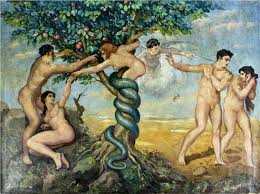
How did Satan persuade Eve to eat fruit from the tree of knowledge of good and evil?

What was his persuasive strategy?

On the face of it, it is amazing that Adam and Eve ate the fruit. They had the perfect life. They had all the food they could ever want. They did not have to work in order to make a living. They lived in the most beautiful setting imaginable. They had peace and tranquility. No sickness! Wow, who would want to alter such a lifestyle?

Yet they were motivated to make a change, or rather [at first] Eve was motivated to make a change.

First of all, Satan employed a persuasive technique that is still powerful today. Eve may have been operating with unclear thinking about the tree. In a previous post, I elaborated on the idea that she felt the “tree” was off limits for fruit and also for touching. God really did not say anything to Adam about touching the tree. His command was all about eating fruit from the tree.

But Satan took that very extreme command about eating and touching and made a big deal out of it. In reality, Eve really had it all. She truly was living a perfect life but amazingly she thought what she had was not enough. Today, we may not live in the Garden of Eden but many of us have a lot going right in our lives [aka “blessings”]. How easy it is for us to ignore the blessings and focus on what we think we lack.

Television advertising uses this strategy all the time. We see products displayed in seductive settings with gorgeous people. We think about our lives and we compare what we have to what we see on the screen. We may have a lot going right in our lives,  but we don’t have what is being displayed. What do we need to do about this?  The strategy is implicit in the advertising.

All we have to do is . . . buy the product.

Satan got Eve to ignore all her ample blessings and think that fruit from the forbidden tree would make her life better. He got her to focus on what she lacked.

Then Pastor Bevere explains part two of Satan’s persuasive strategy: he negates the Word of God. In Genesis 3: 4-5, it says “Then the serpent said to the woman, ‘You will not surely die. For God knows that in the day you eat of it your eyes will be opened, and you will be like God, knowing good and evil’”.

What can we make of this statement? Satan is implying that God knows something that He is withholding from Adam and Eve. God does not want the couple to experience life on a higher level. Eve thinks God is holding out on them. He wants them to stay right where they are when their life could even be better.

What is going on? Satan is making Eve question the character of God. This strategy is designed to undermine values. Pastor Bevere “recreates” Eve’s changing thought process: “Wait a minute. There’s something good and beneficial in that tree, and God’s forbidden it. My husband and I could have a better life. We could be wiser and happier, but it’s being withheld. I thought our Creator was loving and gracious, but in reality, He’s deceptive. He’s hiding something good from us.”

There it is: “I thought our Creator was loving and gracious…He’s deceptive. He’s hiding something.”

God’s character is perfect but for one moment, Eve thought otherwise.

Eve doubted and that led to Adam and Eve eating the forbidden fruit.

Second Corinthians 4:18 says we must “fix our attention, not on the things that are seen, but on things that are unseen.”

Satan got Eve to take her eyes off of the prize, off of the perfect situation she had. She focused on what she lacked. Then she let Satan suggest that God’s character was less than perfect and for one moment she believed that.

Those strategies were enough.

And sin came into our world.

*The comments are based on John Bevere’s book Good or God? .

Posted in Uncategorized | Leave a comment

The Role of Human Communication in the Fall…

It is rare that I get a chance to write about my “specialty”, which is human communication. Now before you jump to a conclusion, what I mean is I have spent years studying human communication. Do I fall prey to making communication errors?

Ask my wife…of course I do.

Pastor John Bevere in his book Good or God? brings up communication in Chapter 2. He contrasts human communication to divine communication. In particular, he calls human communication “communicated knowledge.” Knowledge from God he calls “revealed knowledge.”

In Chapter 2 he pinpoints that human foibles, with communication as a major factor, may have led to Eve making a mistake about that tree, you know that tree of the knowledge of good and evil. God had “revealed” to Adam that he and Eve were not to eat of that tree. Adam “communicated” that idea to Eve.

What if Eve had received that message from God?

Maybe she would not have been swayed by the serpent? Who knows?

But that is not how the story unfolded. Eve possibly was tripped up by human communication errors. Of course, we are still making those today. Let’s dig into the Adam, Eve and serpent scenario.

God told Adam “You may eat the fruit from any tree in the garden except from the tree of the knowledge of good and evil you shall not eat, for in the day that you eat from it you will surely die.” Now that is pretty clear but that is not what Eve heard from Adam. When the serpent quizzed Eve about the tree she said that Adam told her God said they should not eat it or “touch” it lest they die.

Where did she get the idea that God said they could not touch the tree?

I am not a theologian by any stretch, but as someone who has studied human communication, when humans talk to other humans I know that listening is problematic. Eve’s thinking may have been based on poor listening, something which plagues us all, all of the time. Listening experts know that humans have a tough time processing messages due to mental distraction. In other words, we can be so distracted that the message does not even get through. Half the time when we are listening to others, we are in “another world”, thinking private thoughts that have little to do with the message at hand.

Then we have to figure in remembering. We forget so much of a message right after we hear it. Communication experts estimate forgetting rates can be as high as fifty percent at times.

If this is true, what do we do when we pass along messages to others? We know we don’t have all the facts but we pass the message on to others anyhow. Sometimes we invent things to fill in the story [which can be the root of a lot of gossip]. Some people hate to report bad news so they substitute “good news” to make a bad report a bit better.

And then one has to figure in the nature of words themselves. Words are not rock solid bits of information that we hand to other people. Words are fraught with meaning. When Eve said that Adam told her that the Lord told them not to eat of that tree or touch it, that idea may have come from how Adam told her the information. Maybe he used a dramatic word that scared her. Maybe he used an emphatic word indicating God’s authority; must, shall or cannot. When we hear words we often respond with feelings. Feelings vary from one person to the next.

We don’t know exactly what happened but we do know that “shall not eat it” also became “nor shall you touch it.” Eve said do either and she and Adam would die.
We have to use human communication. Without it we cannot share ideas, but human communication can easily become miscommunication and miscommunication can be the basis for making grievous errors.

Pastor Bevere is not merely content in his book to discuss human communication. He wants to go much deeper than that. He wants to use Adam, Eve and the serpent to illustrate how we can value communicated knowledge more than revealed knowledge or knowledge directly from God.

Communicated knowledge is all around us all day long. We spend all our days processing communicated knowledge. Some people pride themselves on their ability to have vast amounts of communicated knowledge in their brains but “revealed knowledge” is more valuable that all the communicated knowledge we can ever know.

For Eve, direct communication from God would possibly have made the difference, but that is not how it happened.

God spoke to Adam and then Adam spoke to Eve.

The message that was passed along may have made all the difference.

Direct communication from God would have possibly solved the problem but it was impossible [not part of His plan].

When God was talking to Adam, Eve was not in the picture. God had not created her yet.

What a shame…

Posted in Uncategorized | Leave a comment

The Quest for Solid Food…

As we close out Chapter 1 in John Bevere’s book Good or God?, I think it is fitting to return to the mysterious idea of discernment.

Author Geri Ungurean defines discernment as “The quality of being able to grasp and comprehend what is obscure; an act of perceiving something; a power to see what is not evident to the average mind.” The definition also stresses accuracy, as in “the ability to see the truth.” Spiritual discernment is the ability to tell the difference between truth and error. It is basic to having wisdom. He goes on to say “I’ve heard it said that discernment is the ability to tell the difference between right and almost right.”

I like that definition because I think it fits Pastor Bevere’s concept of discernment, the key factor in determining man’s concept of good and God’s concept of good. Bevere writes that God’s concept of good is not always clear to our “natural thinking, reasoning or senses” [Bevere, 11]. Bevere quotes Hebrews 5: 11-12, 14: “We have much to say…since you have become dull of hearing.” He is not referring to Christians who cannot hear well any longer. He is referring to Christians who have lost their ability to discern. “For though by this time you ought to be teachers, you need someone to teach you again the first principles of the oracles of God; and you have come to need milk and not solid food.” Instead of growing in their faith, these Christians were stuck. The writer of Hebrews felt they should be able to discern the will of God but he scolded them and said they still needed milk [like babies].

That is where a lot of us are when it comes to discernment. Sadly, we don’t listen to God calling out to us to do His bidding. We are distracted by the siren calls of the world: “what is cool”, our friends, society’s notion of status, etc. etc. We try to do what we think is “good” and miss His higher calling to do the best He has in store for us.

Bevere ends Chapter 1 with the famous passage from Matthew 16 when Peter disagreed with Jesus about His impending death. Jesus said He had to go to Jerusalem and there He would suffer many things at the hands of the elders, chief priests and teachers of the law. He even announced that He would be killed.

Peter said “Never Lord! This shall never happen to you!”

Then Jesus rebuked Peter with the famous words “Get behind me Satan! You are a stumbling block to me; you do not have in mind the things of God, but the things of men.” Peter was worried about his own earthly concerns, when Jesus was telling him this news because God had revealed the information to Him. Of course Peter wants to protect Jesus. He wants him to have a long life, but God has other ideas. Jesus’ death is the fulfillment of scripture. It was part of God’s plan to redeem man, so it had to be. Indeed Jesus was privy to a higher level of spiritual knowledge than Peter.

As we wrap up Chapter 1, it is good to realize that growth in discernment is the purpose of this study. Bevere intends to teach us how to “illuminate” God’s will for our lives through the scriptures. He knows we should respond to the “help” of our Holy Spirit so we will experience what is good for our lives and avoid what will ultimately be detrimental.

Why would we not want to be able to discern to a greater degree than we do? Back in Hebrews the writer says “Solid food belongs to those who are of full age, those by reason of use have their senses exercised to discern both good and evil.”
From the Gotquestions.org website [a source that I often use], there is the following practical explanation of discernment. “When a bank hires an employee, he is trained to recognize counterfeit bills. One would think that the best way to recognize a counterfeit would be to study various counterfeits. The problem is that new counterfeits are being created every day. The best way to recognize a counterfeit bill is to have an intimate knowledge of the real thing. Having studied authentic bills, bank cashiers are not fooled when a counterfeit comes along. A knowledge of the true helps them identify the false.”

This is what Christians must do to develop spiritual discernment. We must know the authentic so well that, when the false appears, we can recognize it.

Indeed it takes time as one dedicates themselves to reading Scripture. It takes dedication as one searches for insight in God’s words. It takes wisdom to apply the truth to areas of life that have been neglected. It takes “hearing” as we receive messages from the Holy Spirit, messages that lead us to the “real” good that God has in store for us.

Posted in Uncategorized | Leave a comment

Which Tree?

Pastor John Bevere in his book Good or God? discusses the way we all get distracted toward the life we really don’t want, you know the life where we are not experiencing all the “divine good” that God has in store for us.

He says “Most Christian people….are deceived by and drawn to behavior and things that seem right, good and wise but are contrary to His wisdom. We are told: ‘There is a way that seems right to many, but its end is the way of death’” [Proverbs 14:12].

Bevere boils it down to choices. God has a choice He presents to us: that we choose the tree of life or we choose the tree of the knowledge of good and evil.

Sounds simple doesn’t it?

Of course it is not and in today’s world it is getting more complicated all the time.

We are constantly bombarded by advertisements which are very clever. The strategy is to get us to buy something we do not need or do something we should not do. That is not new but the pervasive nature of advertising is. We all use the internet and companies track consumer behavior via the keystroke. Interested in buying a mattress? Guess what will show up on your browser page the next time you go to search something? Guess what will show up on Facebook when you log on the next time? Go to Amazon and what will you see on the screen?

You know, mattresses.

Secondly is the influence of our leaders in this world. For the past twenty years or so, one can see that our society is in a slow downward spiral that is leading to more and more uncivil behavior. I know this should not be a factor but when a leader is on television or some other form of media and they say or do something that is crass, that crass behavior impacts others. Maybe it becomes more acceptable for ordinary people to do. It should not work like that, but it does.

One can argue that America is a nation that values the right of expression. The First Amendment guarantees free speech, but at times it seems like there is too much speech. Due to Facebook, Twitter, Instagram etc. every passing thought is posted for the whole world to see. Maybe it makes all of us feel important but is it necessary? Also some people seem to have very little regard for their readers. It is important to consider the person who is reading a post and careful editing is a part of good writing. One does not need to express every thought without careful consideration, but it seems that many do that very thing.

Lastly, Pastor Bevere gets very serious about Christian behavior. He says that many Christians don’t feel they have to be concerned about the choices they make because they are saved. The thought is “I’m saved, headed for heaven, and will not see death” [Bevere, 9]. The way of death in this world is a worry that unbelievers have to deal with. I am a Christian; I don’t have to choose between life or death in this world.

Bevere is trying to communicate to all of us that we do.

We see it in the choices people make every day. The desire to fit it. The desire to be “hip”. The desire for power. The desire for wealth. The desire for knowledge that impresses others. We give in and go for those desires and neglect the life choices that are really important.

We settle for something that seems good but maybe it is not. Maybe it is “of this world” but the values of this world are not what we should aspire to. The tree of life is the right choice. If we choose that tree, we will have a “source of nourishment” that will lead to success, long life, peace of mind and honor.

Sadly, we are seduced to choose from the tree of knowledge of good and evil and people lead lives of toil, stress, unproductivity, sickness, selfishness and other byproducts of slow spiritual death.

Pastor Bevere admits that this is a hard choice: “good and evil cannot always be differentiated on the surface level” [Bevere, 11].

But God wants us to choose the tree of life. He wants to redeem us. He wants us to recover some of what Adam and Eve lost. His wisdom leads to happiness, pleasant living and abundance.

I want all those positive things associated with divine good that Bevere speaks of.

Don’t you look forward to future study of Good or God?

I sure do…

Posted in Uncategorized | Leave a comment

White Hats and Black Hats…

Pastor John Bevere* and my wife have one thing in common:  a sincere appreciation for the life of the late Princess Diana.

He discusses our standard of good and how so much of what we see on television and the movies is devoted to good winning over evil:  “We all grew up watching the good guys go through tough challenges.  The odds were stacked against them and they faced inevitable defeat, often right up to the very end, but suddenly our heroes broke through to victory or justice.  We anticipated and applauded those finales.  We expected good to always win out because after all, God is on the side of good, right?” [Bevere, 3].

From our perspective, it seems easy.  I remember my favorite cowboy shows that I used to watch and the actors’ hats even helped to delineate good and bad.    The good guys wore the white hats and the bad guys wore the black hats.

But is it always that easy?

Pastor Bevere cites the story of the wealthy young leader in the Book of Mark, you know that model citizen who approaches Jesus expecting to be blessed.  He fell to his knees and addressed Jesus as “good teacher” and asked the question “what must I do to inherit eternal life?”

Why address Jesus as “good teacher?”  Well he probably expected to get a positive response.   He did not expect what he got: a correction from Jesus.   Jesus asked the young man why do you call me good?   No one is good except God.

Jesus then talks about the commandments, saying that he should not murder, commit adultery, steal, give false testimony or defraud.  One must honor their mother and father.

That is no big deal, the wealthy young leader had kept those commandments since he was a boy and he told Jesus that.

It is the next statement from Jesus that really draws a line.  “Jesus looked at him and loved him. ‘One thing you lack,’ He said. ‘Go, sell everything you have and give to the poor, and you will have treasure in heaven. Then come, follow me.’

Every time I read this story in Mark, I have the same reaction.

The wealthy young leader became sad and walked away because he had great wealth.  He just could not meet the lofty standard that Jesus had just expressed.

I put myself in the story and I ask myself.  Could I sell everything I had and follow Jesus?   Really?

I don’t think I could.

Besides the wealthy young leader, Bevere uses the life of Princess Diana to make his point.  She lived a life that inspired many people. It is so fitting that he uses her as an example of a good person because this year marks the twentieth year since her death.  In our home, we have recently seen two documentaries on Diana plus a dramatization or two of her life on a streaming movie service.

Obviously she felt she should use her fame to help those less fortunate.  She visited with orphans; she advocated for aids research.  She tried to highlight the plight of the homeless and even walked across a minefield to dramatize the need for landmine removal in war torn countries.  She did not have to do all this charity work; she was a British royal and there were plenty of things she could have done that were less controversial.  In fact, she drew fire from the “Royal Family” because she was in the news too much, supporting causes not approved by the Queen.

Pastor Bevere mourned her death in 1997 like so many in the world did, but there was a slight difference.  He felt deep in his heart that his emotional reaction was not appropriate.   He was putting the label of “good” on Diana and maybe she was not as good as everyone thought.

Recent programs about her life testify to that fact.  She did not just use her celebrity to help the downtrodden.  She also used her celebrity to “thumb her nose” at the Royal Family.  Some will say that is nitpicking and not question what she was doing.   “It was all good” they might say.  Some would say that her love life was justified because she was so miserable in her marriage to Prince Charles, but before she was divorced, she was committing adultery and many in the news media covered it.

Pastor Bevere’s feeling from deep in his heart was God saying “She was not submitted to me.”

Did the wealthy young leader meet the world’s standard of good?  Without a doubt he did.

Did Diana meet the world’s standard of good?  Look at the pictures of the flower tributes at Buckingham Palace following her death.  I think those pictures speak for themselves.   She after all, was the “people’s princess.”

We have just started Pastor Bevere’s book “Good or God” but it is already obvious that he is talking about a standard of good that is more divine that our usual idea of good and bad.

Let’s return to a passage from Genesis that has already been cited in a previous post and I will italicize key words that maybe are taking on a new importance in light of Bevere’s premise: “When the woman saw that the tree was good for food, that it was pleasant to the eyes, and a tree desirable to make one wise, she took of its fruit and ate” [Genesis 3:6].

When Adam and Eve took that bite from the apple they learned a hard lesson.

The world’s standard of good was certainly not good enough…

We live with the impact of that decision today…

Don’t we…

*Author of Good or God?

Posted in Uncategorized | Leave a comment

A Special Grace Gift…

“And when the woman saw that the tree was good for food and it was pleasant to look at, and a tree to be desired in order to make one wise, she took of its fruit and ate” [Genesis 3:6].

This is the main premise of Pastor John Bevere’s book Good or God?.

It wasn’t the evil side of the tree of knowledge of good and evil that drew Eve to sin, it was the “good” side.

Bevere says that the key words good, pleasant and desired touched him the most.

What does he mean touched?

He means the Spirit of God revealed the deep meaning of this scripture to him. In fact, he states that God said to him “There is a good that is not of Me. It is not submitted to Me.”

How could this be?

It is all about discernment, a term that is tossed around in some Christian circles but many don’t really know how discernment works. The dictionary definition says “(in Christian contexts) it means a perception that comes about in the absence of judgment with a view to obtaining spiritual direction and understanding.”

Some readers may have checked out by now, thinking that any perception that comes about in the absence of judgment must be a belief from the “lunatic fringe” of Christianity, but maybe it is not.

Sinclair Ferguson writing on the “Ligonier Ministries Website” [from R.C. Sproul’s ministry] says that discernment is a special grace gift and cites 1 Corinthians 12:10 and Psalms 199:66 as Scriptural support. A discerning Christian is not a judgmental Christian; discernment goes beyond judgment. “It [discernment] involved our Lord’s knowledge of God’s Word and His observation of God’s ways with men (He, supremely, had prayed, “Teach me good judgment … for I believe Your commandments,” Ps. 119:66). Doubtless His [Jesus’] discernment grew as He experienced conflict with, and victory over, temptation, and as He assessed every situation in the light of God’s Word” [Ferguson, “What is Discernment?”].

You might think this is ok for Jesus, but does He expect us to develop discernment?

Yes He does.

It is a level of growth that we can aspire to, reading and studying the Word of God to the point that we can “think God’s thoughts after Him.” Does it come easily? No. Does it come quickly? No. Is it something we can ask for and expect that we can get? No.

It is a special grace gift.

Hebrews 4:13 “Nothing in all creation is hidden from God’s sight. Everything is uncovered and laid bare before the eyes of Him to whom we must give account.” All men will not have that perception but Christians with great discernment can have inklings of this view if they devote the time and effort to really know God.

What is the value of discernment? Discernment can guard us from the false teaching that is so common in the world. Many spiritual leaders would have us believe their message but their word may not really be grounded in God’s word. Ferguson states that discernment can assist in spiritual healing. A Christian with discernment can see deeply into a person’s heart where they are struggling with issues that are damaging their lives. This “heart knowledge” can help another with healing that goes beyond physical healing or psychological healing. The focus is on spiritual healing. Discernment can allow a Christian to truly lead a “free” life. We all know that “things of this world” can bind us but a discerning Christian is not held back in life by worldly concerns. “The zealous but undiscerning Christian becomes enslaved—to others, to his own uneducated conscience, to an unbiblical pattern of life. Growth in discernment sets us free from such bondage, enabling us to distinguish practices that may be helpful in some circumstances from those that are mandated in all circumstances” [Ferguson]. Finally, discernment triggers spiritual development in the Christian. The discerning Christian avoids the frustration of understanding the presence of God in today’s world. This person can see harmony in all God’s work and how His words apply to the world today. This knowledge leads to phenomenal spiritual growth.

In the study of Good or God?, why should we be concerned with this idea of discernment?

Because our author claims it.
When he says “the spirit of God” said to me “There is a good that is not of Me. It is not submitted to Me”, he is talking about receiving a discerning word from God.

We can cast doubt on Bevere’s ideas and label him as a member of the “lunatic fringe” of Christianity, but let’s not do that.

Psalms 119: 125 has the prayer “I am your servant; give me discernment.”

Maybe we should pray that prayer…

And hope for the gift…

Posted in Uncategorized | Leave a comment

When Good is not Good Enough…

Good or God?

Stop for a moment and think about that title.

What is a word you might think of when you think of the word good?

Evil? As in “good versus evil.”
What is author and pastor John Bevere thinking about when he opposes good with God? Well, he gives a hint in his subtitle: “Why good without God isn’t enough.”

As I thought about commenting on this book, I remembered a good friend who suffered through one of the most difficult times of life. This person shared their story with me in a way that was so honest. The pain they were going through was instructional for me. Maybe it will be for you.

They were in a marriage where their spouse paid them little attention, in fact the spouse worked so hard that most family duties were neglected and my friend had to do them all. Could the hard-working spouse have chosen to be involved with the family? Yes they could but they did not [lack of interest, career, selfishness etc. etc.]. This life style went on for many years and my friend never really complained loudly enough for the spouse to hear. All the signs of dissatisfaction were there but the spouse was too busy at career-building to see them.

Let me be clear, my friend was a good person, not much of a church goer or Bible reader and maybe they did not really have a personal relationship with God but they knew right from wrong [they thought]. They reported to me “I was a good person.”

But then in the midst of this disappointing lifestyle came a temptation…a way out, if you will.

Someone else came into the picture, someone who was willing to give all the needed attention that was so desired from the spouse and you know the rest, my friend was involved in a situation that threatened the existence of the marriage.

That’s when they told me “I was a good person but I discovered that good was not good enough.”

That was eye-opening.

Many people live their lives with half-hearted commitments to God, or just vague ideas that all I need to do is be “good.” That will get me through life.

Bevere states that as Christians we should not just settle for a good life; he proposes that we should seek a “God life.” The problem with most of us is that we settle for much less than we should.

What are examples of settling? They are everywhere. Church is open every week and we only attend sporadically. When we attend we don’t even consider getting involved with things like Sunday school, the youth ministry, children’s ministry, the church council or any other needed work that happens in the church. There are many outreach opportunities at your church, where you can have a positive impact on your community but there is just not enough time in the day to do your own work, much less volunteer to help others. We know we should read our Bible but it just sits, gathering dust. There are lots of good books to help us grow our faith but we don’t buy them or read them. Bible study is just not on our radar. Maybe you have “given your life to Christ” and that is great but after that commitment, you have not done anything to grow your faith. Maybe you think you can ride that one day commitment to heaven.

We settle.

Church sometimes “settles” too. In a frantic attempt to get new members, churches do anything to make a new attendee feel welcome. Coffee bars, informal dress, upbeat contemporary music, hymn lyrics shined up on the wall so one does not have to hold hymnals, engaging activities for youth and children. The pastor preaches a message that is very positive. I know I am exaggerating, but I know of one church that got rid of its pastor due to the fact that he preached too much about the consequences of sin.

When you go to some of these worship centers, the focus is not on good versus evil.

Being good seems to be good enough.

As someone who tries to write, I know that readers don’t want to be left with an open-ended story and that is what I did with my friend. Yes, what this person did threatened the marriage but it did not end there. Reconciliation occurred. Growth through the pain happened. In the place of weakness, God produced strength. Instead of a career focus, God showed the spouse that family is the most important job.

Good was not good enough.

The lesson was learned.

God became number one in this story and for my friend that has made a big difference. For the spouse that has made a big difference.

Good without God isn’t enough.

Good or God?

Choose God.

Posted in Uncategorized | Leave a comment

Losing Your Joy…

This is the last transitional post as I prepare to write on John Bevere’s book Good or God. We will begin that book with my next post in two days.

 
In my previous post, I wrote on the phenomenon called social comparison; the idea that some people compare their lives to others. Some people constantly wonder if they are as attractive as others, have as much money as others, are as smart as others and have social lives as vibrant as others’ social lives. The idea is that they think they don’t and they are envious of what they think others have. Living like that can truly spoil your life.

 
Said another way, living like that can “steal your joy.”

 
What can be done about this?

 
One thing that can be done to stop this negative outlook is to admit you have it. So many people are in denial but denying the existence of envy will just keep it alive. To be honest, it is easy to fall into the trap of begrudging other people’s blessings and beauty; it is much harder to admit that envy is weighing you down. You cannot accept that others do have desirable qualities but they also have their share of problems too. No one is without challenges but people who have envy due to social comparison only see the desirable things in another’s life.

 
Of course, none of us have a life that is totally positive.

 
Gratitude helps battle social comparison. It is difficult to be jealous when you have a focus on the things in life that you are grateful for. Envy is a negative outlook that sees only what you lack, the deficits and the disparities between your life and others. Gratitude is an orientation that gets one focused on what is good—the blessings of your life and truthfully, we all have blessings. Gratitude is not “simple-minded, dishonest or forgetful.” Some would say gratitude denies that your life is less than perfect but gratitude does not deny loss, lack or hardship. What gratitude does do is prevent us from totally focusing on what we covet by forcing us to emphasize what is good in our lives.


Beyond gratitude is generosity. Yes, generosity gets us looking beyond ourselves to the lives of others who can use our help. If you have time, money, knowledge, abilities and talents that you can share with others who are less fortunate than you, you begin to see your situation is not that bad. Others have needs that are great and we can help them. In fact, it is humbling to realize we can help others. It is humbling to be able to help those who have been touched with suffering and hardship.


Pastor Rick Warren comments that one of the worst things we can do as Christians is to tell others that we follow Christ and then live a life where we have lost our joy. He says “when God’s children aren’t filled with joy, it makes God look bad. Cranky Christians are a bad witness. They look like they have been baptized in vinegar because they are never smiling. And that makes God look bad.”

 
Why?

 
Because God wants us to be witnesses with our countenance.

 
Romans 14:17 says “The Kingdom of God is not a matter of what we eat or drink, but of living a life of goodness and peace and joy in the Holy Spirit.”

 
Truly the easiest thing of all is to lose your joy.

 
Social comparison is not constructive; it is destructive. Envy is not productive, it is counter-productive. Jealousy is not a characteristic that leads to peace and joy; it just leads to dissatisfaction and dismay.

 
Warren says the easiest thing for us to lose is not our glasses, our keys or our minds.
It is our joy.

 
Don’t let your joy be stolen by social comparison.

 
You might as well learn to love yourself on your own terms. You are the only you that you have. There is no need to compare yourself to others. God has given you what He intends for you to have and He intends you to live a life of goodness, peace and joy.

 
If you claim that you love Him, try to live a life of joy.


It helps to spread His message because it shows that He is at work in your life.


Good for you.


Good for God.

Posted in Uncategorized | Leave a comment

Social Comparison…

This is a transitional post as I prepare to write on John Bevere’s book Good or God.  We will begin that book within the next week.

In a recent news release, it was reported that social media can cause depression.  You might think that strange due to the fact that millions of users are signed up for Facebook, Instagram and Twitter.

The problem resides in the fact that users don’t just go onto social media and keep up with what their friends and relatives are doing; they compare their lives to those they see on social media.  People who post every night parties and frequent trips to desirable locations become sources of envy for those who lead humdrum lives.

The thought that occurs is “I don’t do anything compared to ‘Tom, Dick and Harry’” who are always going somewhere and always doing something exciting.

This brings me to the topic I have wanted to write on for some time, the topic of social comparison and how this can steal the joy of our lives.  In this post, I will explain how social comparison steals our joy and in the next post, I will deal with what we can do to fight this debilitating negative thought habit.

Social comparison is determining our social and personal worth based on how we think we stack up to others.  We can fall into this trap by constantly making judgements about our attractiveness, intelligence, wealth and success.   The problem is we judge ourselves in light of how we perceive others.

Comparison creates competition because we are prone to think of ourselves as trying to be the best in everything.  Our society focuses on being the winner so much that we don’t allow ourselves to feel gratitude for what we have.  We must have the best of everything.  If we don’t perceive ourselves as having the best, we lose the competition and hence disappointment.

If comparison is the thief of joy, jealousy is its companion.  Jealousy is when we get so focused on the wonderful aspects of another’s life that we only see the positive.  No one has mountain top experiences all the time; there are valleys in everyone’s life.  The jealous person has an obscured vision.  They are blind to the pain, the failure, and the flaws in another life.  They ignore the work the other person has done to take that trip or the sacrifice of family time they have made to have that ample salary.  All they see is the end result and they want that same result minus the work.

Comparison creates very unrealistic expectations.  We all have certain God-given skills and abilities and what one person can do is not necessarily what you can do.  We can easily look at the relative ease that someone has as an athlete, artist or public speaker and say “I should be able to do that.”  Maybe you can polish your skills in some areas of your life if you have a vision, specific goals, commitment and a willingness to devote major chunks of your life to practice. That is what it takes to excel in life.  Too often we compare ourselves to others when we shouldn’t.  We don’t have the God-given skill that others do and we don’t have the drive to develop the skills that we have.

Jealousy can make one feel powerless.  If you don’t have a commitment to take action to be better than you are, then envy of another’s talent can leave you with a feeling that you are stuck.  If you think you would like to be a marathon runner but you don’t like running, that is a problem. Also comparing yourself to others can ruin friendships.  Envy of friends can lead to such insecurity that you don’t even want to spend time with them.   To be around them [or to look at their Facebook posts] can hurt your self-esteem so much that the pleasure of their company is no longer a positive.    

Finally, jealously can cause you to want to give less to others.  Envy can cause us to want so much that we become stingy with what we have.  We find ourselves unwilling to donate time or money to a good cause because we need our precious resources to accomplish our own selfish dream.   We can become “miserly” about complimenting others due to the fact that we are experiencing so much jealousy. 

Back to Facebook.  Have you ever withheld a “like” on Facebook because you were jealous?  Have you ever withheld a face-to-face compliment because you were envious of another’s good fortune?

Life is too short to deny others a positive comment.  We all need love, joy, laughter, friendship and peace.  In fact, we can’t get too much of these things. 

There is an expression that seems appropriate here.   We often hear that it is best to be the “bigger person” and do the right thing.   Doing the right thing is not easy.  Sometimes it may involve admitting that other people have accomplished what we have not.   That is not denying our worth; it is just allowing ourselves to affirm others. 

Social comparison is probably inevitable but jealousy, envy and selfishness are not.  Jealously, envy and selfishness are corrosive.   They will eat away at your ability to be content with your life.   You will never be confident if you often have those feelings.  It is not an overstatement to say that social comparison is a thief of your joy.

In the next post, we will discuss what we can do to prevent this.

Posted in Uncategorized | Leave a comment