Soli Deo Gloria

Apologia: “A formal written defense of one’s opinion or conduct.”

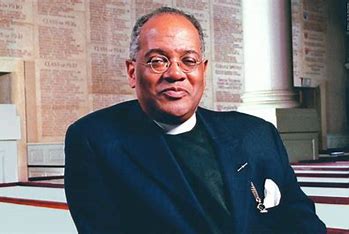
This is the title for the front matter for Peter Gomes’ book entitled The Good Book.

Since I have been a Christian, I have encountered the word apologetics and I know that theologians who reason that Christianity is a “logical” faith are called apologists.   

Gomes introduces the reader to his book and claims that his main intent of the Good Book is to get people to take the Bible seriously.  He does not feel that people should “trivialize” the Bible, nor should they “idolize” it.  Either approach (he feels) will cause the reader to “miss its dynamic, living and transforming quality.” 

For people who need some “spiritual” foundation for a chaotic lifestyle, the Bible can be that foundation but there is  catch:  they have to commit to knowing as much about The Book as they can.  Too often people are too lazy in their approach to God’s word or too “simpleminded” in their understanding. 

Gomes’ Apologia is based on the idea that “true” Christians should have serious consideration for the Bible.  He wants Christians to let it “enter into us” and most especially, he has an affinity for those who have been excluded from the faith because the Bible has been used against them.

He claims to be an apologist for serious Bible reading.

I have to also wonder if he considers himself one of those people who feel they have been excluded from the faith because the Bible has been used against them.  After all, Gomes was a homosexual.

Surely as the pastor to Harvard he found a supportive environment.  Some think of Harvard as a “liberal” stronghold; Gomes himself refers to Harvard as “godless Harvard.”  In my previous post [“Who Was Peter Gomes?”] I stated that that Gomes was a homosexual and for some, there is a feeling that his sexual preference and life occupation are incompatible.  Pastor and homosexual cannot be one and the same.

Or can they?

This is the crux of the argument that is at the forefront of the United Methodist Church today.*  Of course it is much more complex than that.  The guidelines for the UMC are published in what is called The Book of Discipline and the official stance of the UMC regarding homosexuality is that homosexual marriage is prohibited within the church.   Clergy that officiate a same-sex wedding are performing a punishable offense within the church.  Coming out as an LGBTQ+ minister is prohibited and in 1971, the first UMC minister was defrocked for being openly gay. 

The Book of Discipline reads “the United Methodist Church does not condone the practice of homosexuality and considers this practice incompatible with Christian teaching.”   With a statement like that [taken out of context of course] the church has struggled to enforce its own guidelines.  Over the years, clergy performing same-sex marriages have not been disciplined and ministers who have openly declared their homosexuality have not been defrocked. 

As a reader of the Bible I have found support for the stance stated in the Book of Discipline in Leviticus 18: 22, Leviticus 20:13, Genesis 19: 1-11 [the story of Sodom and Gomorrah].  Others point to Judges 19: 22, an instance of homosexual rape.  Of course we have Romans 1: 20-32, 1 Corinthians 6: 9-11 and 1 Timothy 1: 8-15, all New Testament Scriptures that strongly discourage homosexual behavior.

Let’s stop my discussion of the United Methodist Church and its struggle over this issue because I need to refocus on Peter Gomes and how he felt about Christianity and homosexuality.  When he declared his sexual orientation, he “stunned” the Harvard community, but he felt he had to be honest about his sexuality.  He did not lose his appointment as minister at Harvard’s Memorial church.  He merely continued his long career until his death in 2011 at the age of sixty-eight.

In his Apologia Gomes writes about the Christian life.  The Christian by nature does not live a life that is in sync with the world.  “Christians hold allegiance to something out of harmony with it” [xii].  The Christian advances truth not by “postulates, formulas or bone-crushing logic” but in the “living flesh of human beings.”  He points to Jesus Christ as the “ultimate apologist” because His faith led Him to be the sublime example of the best life.  He had the power to be our best human example of godly man. 

Gomes is reading the same Bible I am reading and yet he feels he can live a life that contradicts the Scriptures cited above.  Not only is there contradiction but he calls for a serious reading of Scripture [“My apologia is an argument in favor of taking the Bible seriously”].  Some would say that a serious reader would see that his lifestyle is unacceptable due to a “serious reading” of the aforementioned Scriptures. 

I imagine that Gomes wants the reader to see that he is Christian and his life example is that of an apologist.  His character and actions [public and private] are designed to exhibit Christian principles and therefore further the Kingdom of God. He is much, much more than a sexual preference.

As I have stated, I begin my series about the issue of the role of the LGBTQ+ person in the church with Gomes because his book is the longest of the three** that will be discussed, not because I favor one view over another. However as I read the front matter of The Good Book, I know that Gomes’ plan for his book is to defend his interpretation of Scripture [his “serious reading”].  Even though he does not get into that discussion, he is an LGBTQ+ pastor and he is laying groundwork for that interpretation later on in his book.  Even though he does not hold himself up as a shining example of “an exemplary Christian” it may be implied in his words [or maybe I am wrong in that regard?]. 

Will he successfully defend his position regarding the Bible?  I plan to be as honest as I can be in evaluating his arguments.  Will he successfully defend his position regarding his vocation and his lifestyle?  I plan to be as honest as I can be in evaluating his arguments.

Gomes ends his Apologia with a reference to Johann Sebastian Bach, who used to write the Latin words Soli Deo Gloria on the first page of every composition.  That expression means “glory to God alone.”

I find it interesting that Gomes writes “I adopt his device as my own” [xv].

*I am a Methodist

**Kevin DeYoung, What Does the Bible Really Teach about Homosexuality?;  Preston Sprinkle  People to Be Loved

Disclaimer:  I am a learner like you.  I am not a seminary trained theologian.  I have a PhD in communication but not in theology.  I am a Sunday School teacher.  I do have a “natural curiosity” about my faith.  I want to learn more and through my learning, I want to grow closer to God.  I volunteer in several places at my church but I am not a paid staff member.  Officially, I do not represent the church.  As Thom Rainer would say, I try to be a good “Church Member” but that is really all I am–a member of the church, like you.

Posted in Uncategorized | Leave a comment

Who Was Peter Gomes?*

He was born May 22, 1942 and passed away on February 28, 2011.  He was an American preacher and theologian, a professor at Harvard Divinity School and Minister at Harvard’s Memorial Church, highly regarded as one of America’s great preachers. 

Gomes was born in Plymouth Massachusetts, the only child of Orissa and Peter Lobo Gomes.   His father was from the Cape Verde Islands and his mother was African-American.  He was baptized a Roman Catholic but later became an American Baptist.  He was ordained by the First Baptist church of Plymouth and after a two-year tenure at Tuskegee Institute, he returned to Harvard where he became a professor and minister. 

In 1979 Gomes was listed in Time Magazine as “one of the stars of the American church pulpit”, fulfilling preaching and lecturing engagements throughout the United States and the United Kingdom.  He published ten volumes of sermons as well as numerous articles and papers.  He had two best-selling books, The Good Book and The Book of Wisdom for Daily Living.

Gomes was a registered Republican for most of his life, offering up prayers at the inaugurations of Presidents Ronald Reagan and George H.W. Bush.  According to those who knew him, he was never easy to label.   Conservative evangelicals criticized the liberalism he displayed during his tenure at Harvard’s Memorial Church yet one of his most cherished photos in his office was his picture of the Reverend Billy Graham.

Gomes has stated that “one can read into the Bible almost any interpretation of morality…for its passages had been used to defend slavery, and the liberation of slaves, to support racism, anti-Semitism and patriotism, to enshrine a dominance of men over women and to condemn homosexuality as immoral.”  He once described himself as a “cultural conservative” but in 1991 he “stunned” the Harvard Community and made national news when he came out as a homosexual.  In 1991 the Harvard campus was beginning a long process of understanding the role that gay people have within society and Gomes said “I don’t like being the main exhibit, but this was an unusual set of circumstances, in that I felt I had a particular resource that nobody else there possessed.  I have always been seen as a black man but now I’m seen as a black gay man—the Yankee part, the Republican part, the Harvard type—all that stuff confuses people who have a single stereotypical lens.”

Gomes was highly regarded by many.  He was named Clergyman of the Year by the organization Religion in Life.  He was named “one of the seven most distinguished preachers in America” by Time Magazine .  He received thirty-nine honorary degrees and was an Honorary Fellow of Emmanuel College, University of Cambridge.   Harvard Professor Henry Louis Gates writes “no one epitomized all that is good about Harvard more than Peter J. Gomes.”   William Graham, dean of the Harvard Divinity School says “Peter has been a powerful presence in the University for more than four decades.”  

As I transition from the works of John Stott to the complex discussion of the role of LGBTQ+ people in the church, the first book I will turn to is Gomes’ book The Good Book.  The practical reason is that Gomes’ book is sixteen chapters long and the other two are 10 [DeYoung] and 13 [Sprinkle].**

My denomination is struggling with this issue, with 1,800 churches choosing to disaffiliate with the United Methodist Church over this very issue.***

The goal is to learn, to understand this issue, acknowledging that it is too complex to encapsulate in just three books, but I am going to try anyhow.  My process is to go from one book to another, keeping readers focused on the process by referring to where I am in the discussion.

In my next post, I will begin with the front matter of The Good Book what Gomes calls “Apologia.”

*Peter John Gomes also just happens to be the first author in this new series dedicated to understanding the role of LGBTQ+ people in the church.  Gomes was homosexual.

**Kevin DeYoung, What Does the Bible Really Teach about Homosexuality?;  Preston Sprinkle  People to Be Loved

***as of December 7, 2022…

Disclaimer:  I am a learner like you.  I am not a seminary trained theologian.  I have a PhD in communication but not in theology.  I am a Sunday School teacher.  I do have a “natural curiosity” about my faith.  I want to learn more and through my learning, I want to grow closer to God.  I volunteer in several places at my church but I am not a paid staff member.  Officially, I do not represent the church.  As Thom Rainer would say, I try to be a good “Church Member” but that is really all I am–a member of the church, like you.

Posted in Uncategorized | Leave a comment

Transitioning…

How do I end a series of comments on an author’s work and begin another series?  How do I switch from one book to another or in the case of John Stott, how do I switch from two books to another book?  Since December 2014 (when I started St. John Studies), I have transitioned from one book to another twelve times. 

It is not easy.  Leaving John Stott to go to another book is like leaving an old friend.   There was a time when I truly needed his book Basic Christianity.  Reading his fundamental explanation was helpful since I was a new Christian.  When I was commenting on his complex book The Cross of Christ, I thought it would be good to contrast the complex with the basic.  It worked for me; maybe some readers got something out of this approach too.  I never know.

Now it is time to move on and as I move on, I am taking on a topic that is very controversial today, a topic that is having an impact on my church; what role should LGBTQIA+  people play in the United Methodist Church?

How do I plan to work with this topic?  I hope to have a balanced discussion of these ideas from a “conservative” approach to the topic [Kevin DeYoung] to a “balanced” approach [Preston Sprinkle] to a “liberal” approach [Peter Gomes]. *

The goal is to learn, to understand this issue, acknowledging that it is too complex to encapsulate in just three books, but I am going to try anyhow.  My process is to go from one book to another, keeping readers focused on the process by referring to where I am in the discussion.  At times it may seem like the “liberal” approach gets too much attention, but Gomes’ book is sixteen chapters long and the other two are 10 [DeYoung]  and 13 [Sprinkle].

Right now, people in the United Methodist Church are reacting to this topic by disaffiliating from the UMC because they fear that the church is getting too open to acceptance of the LGBTQIA+ community, but is it?**  Why all the uproar over the topic anyhow?  I had a substitute pastor deliver a sermon before my church and she bemoaned the impact this discussion was having on the United Methodist Church.  I remember her saying how concerned she was because this issue was “breaking” her church.

With this as a background, I will try to navigate through this topic the best that I can.  At times I may touch on some points that are enlightening; at other times I may not do an adequate job.  The latter is not my intent. 

One thing I can say about this issue.  It is on the minds and hearts of many Methodists right now and will continue to be a matter of concern for many days ahead.  Also, it should be a matter that all Christians take up; we need to figure out how we feel about this community of people.  For my church,  the motto for evangelism has been for many years “Open Hearts, Open Minds, and Open Doors.”

Does that motto mean something or is it meaningless?

We will see…***

*Kevin DeYoung, What Does the Bible Really Teach about Homosexuality?;  Preston Sprinkle  People to Be Loved;  Peter Gomes  The Good Book.

**see video:  https://youtu.be/VjydUH-lfDo

*** Disclaimer:  I am a learner like you.  I am not a seminary trained theologian.  I have a PhD in communication but not in theology.  I am a Sunday School teacher.  I do have a “natural curiosity” about my faith.  I want to learn more and through my learning, I want to grow closer to God.  I volunteer in several places at my church but  I am not a paid staff member.  Officially, I do not represent the church.  As Thom Rainer would say, I try to be a good “Church Member” but that is really all I am–a member of the church, like you.

Posted in Uncategorized | Leave a comment

Authentic Slaves of the Father

The date today is January 18, 2023. 

I began writing on the teachings of John Stott on October 25, 2020.  I have never commented on two books by one author at the same time, but I did that with John Stott.  The Cross of Christ was Stott’s crowning achievement, a book highly regarded by theologians, a dense discussion of the symbol at the heart of the Christian faith, the cross of Jesus Christ.  Basic Christianity was a book written early in Stott’s career, a book defining the fundamental claims of the faith.  I found Basic to be a book that dealt with those fundamentals in a solid and intellectually satisfying manner.  I needed that discussion when I became a born-again believer.  Over the past two and a half years, I have written 126 posts on both books, section by section, transitioning from the simpler book to the more complex book until I am where I am today: writing the last post I will ever write about the writing of John Stott.  Stott concludes his book [The Cross]with the seventh affirmation from the Book of  Galatians.  Those seven affirmations were Stott’s way of wrapping up all of the main points of The Cross of Christ.*

The seventh affirmation concerns the cross and boasting [Galatians 6: 14].  The Scripture reads: “May I never boast except in the cross of Lord Jesus Christ, through which the world has been crucified to me and I to the world.”  

What does this mean?  The key word here is boast and we often don’t think of that word in a good light.  In his effort to define it, Stott says we have no English equivalent for the Greek word kauchomai.  He uses the terms glory in, trust in, rejoice in, revel in or live for.  He thinks “to boast in” means to “fill our horizons, engross our attention and absorb our time and energy.”  Paul’s use of boast may mean he feels he is obsessed with something.  Stott then turns to his interpretation of Galatians and states “Pauls’ obsession was with Christ and His cross” [340].  Should Paul be obsessed by the cross?  Stott says that the cross was certainly the most important thought on the mind of Jesus and the cross has always been central to the faith of the Christian church. 

My guess is that Stott believes Paul was justified in his obsession.

Stott presents two reasons he feels that Paul’s obsession is not really harmful.  The cross is man’s way of acceptance with God.  It is the only means we have of standing before a just and holy God.  Some may think  they do so much holy work that they don’t have to rely on Jesus’s sacrifice on the cross, but to trust in our own merits is a mistake.  We can’t earn our way to heaven without God’s grace.    Secondly, to boast in the cross is to see life as “the pattern of our self-denial.”  What this means is that Christ crucified the world when He went to His death [He denied the values of the world [materialism, vanity and hypocrisy].  Jesus preached that we should turn from these kinds of values.   We need to take up our own cross, not live with what Scripture calls “desires of the flesh.”  As He practiced self-denial, we should do likewise.

I find it interesting that Stott makes his closing comments on The Cross in theological order, not chronological.  The cross is the “ground of our justification.”  Christ has rescued us from the “evil of the present age” and redeemed us from the curse of the law.  The cross is “the means of our sanctification.”  We have been crucified with Christ, our fallen nature has been crucified and the world has been crucified to us.  The cross is “the object of our boasting.”  As previously discussed, Paul’s world was “in orbit” around the cross.  “It filled his vision, illumined his life, warmed his spirit.”  Stott writes “our perspective should be the same” [341].

I find it interesting that Stott feels that if the cross is not central in these four spheres to us, “then we deserve to have applied to us that most terrible of all descriptions, ‘the enemy of the cross of Christ.’” [341].   He points to four very negative attitudes we can have: self- righteousness, self-indulgence, self-advertisement and self-glorification.  These personal “distortions” make us enemies of the cross.

Stott turns to Paul and his writings in Galatians because Paul is a devoted friend of the cross.  Stott characterizes Paul as closely identifying with it and suffering physical persecution for it.  In Galations 6: 17 he writes “I bear on my body the marks of Jesus.”

Maybe this is the main point of the whole book [The Cross of Christ ], that as Christians we should bear some wounds and scars.

In that way, the world will know we are authentic slaves of The Father.      

*The last post from Basic Christianity was October 6, 2022:  “Thanks Professor Stott: You Answer so Many Questions.”

Posted in Uncategorized | Leave a comment

Do We Really Want to Crucify the Son of God all over Again?

“I don’t understand what I do.  For what I want to do I do not do, but what I hate to do”  [the Apostle Paul in Romans 7: 15].

Isn’t it interesting to see such a strong man of God saying such things?  He is obviously confused about his behavior.  He has done something that he knows he should not do, but he has done it anyway.

He has sinned. 

Every human being reading Romans 7: 15 should know Paul’s feelings.  We all do what we hate to do from time to time.  We all sin.

It is difficult to read; Paul’s honesty is an honesty we don’t want to admit.  We don’t want to own up to our sin nature, the fact that we have the urge to do what is wrong and when those urges take over, our moral sense gets put “on the back burner.”  We may want instant pleasure (even though it is a sin) and we forget consequences (often the anguish of guilt).   It sounds to me that Roman 7: 15 is written when Paul is in the guilt phase.  Sin has occurred, he reflects back on his actions and he is beating himself up over the fact that he has sinned.

Paul writes to the Galatians “Those who belong to Christ Jesus have crucified the sinful nature with its passions and desires” [5: 24].  What does this Scripture mean?

This is an indication of what Paul wants (in a perfect world).  This is affirmation six of the seven affirmations that John Stott uses to conclude The Cross of Christ.  Man’s sinful nature is the major reason that Jesus came to earth, the major reason he died on the cross. 

This raises the question about what Jesus expects of us.  We did not deserve Jesus’ sacrifice for us but we got it anyway.  We are left to grapple daily with the sins we commit because we are not capable of living a perfect life like Jesus.  Every day I awaken, I have to “die daily” to the sins I have committed the previous day only to live my life (in the new day) finding myself committing more sins.

What the Apostle Paul is calling for is for us to do is try to practice self-control.  Stott says that Paul is concerned with “the meaning of moral freedom” [338].  We do have the capability of making moral choices.  What happens is  we become more focused on “self-indulgence” than “serving each other in love.” 

This is the age-old problem of sinning and our ability to do what is right in the eyes of God.  Many places in Scripture this “battle” is between “the spirit” and the “flesh.”   In my life I can speak to this quite frankly by stating what all believers have to say.  When a person commits to believing in Jesus, the Holy Spirit comes to us to guide us, counsel us and comfort us.  That Holy Spirit is our guide in life.  When Jesus left this earth, He said that He needed to leave so the Holy Spirit could come to every believer.  

Even though this Spirit comes, the old sin nature does not go away.   Believers have habits of sinning that don’t disappear immediately.  They exist beyond our “salvation” experience and they reappear from time to time.  Jesus was the only man who had total control of his sin nature.  Sadly I do not.  In Galatians, Paul describes the contest between sin and Godliness, flesh and spirit. 

When Paul uses the words “crucified the sinful nature” in Galatians 5: 24, those words are not to be taken lightly.  Stott calls those word “an astonishing metaphor.”  Crucifixion was a horrible, brutal form of execution.  What he is saying is that we should not play with sin.  Do not “coddle or cuddle it, not to pamper and spoil it, not to give any encouragement or even toleration.”  He is urging us to reject sin together with all the desires we have that make us want to do it.

Stott continues “Paul is elaborating the teaching of Jesus about ‘taking up the cross’ and following him.  He is telling us what happens when we reach the place of execution: the actual crucifixion takes place” [339].  He cites Luther who writes that Christ’s people should nail their flesh to the cross, for even though it may be alive, it cannot do what it would ordinarily do.  It is nailed to the cross.

When we turn to Paul’s messages in Galatians, we see a powerful man of God urging us to crucify ourselves with Christ by crucifying our sin nature.  We can have freedom from the law by sharing in Christ’s crucifixion and freedom from the power of the flesh by ensuring its crucifixion.  “These two, namely to have been crucified with Christ (passive) and to have crucified the flesh (active), must not be confused” [339].

The struggle continues for us all.  That is the nature of life for the descendants of Adam and Eve.  That is God’s plan for humanity.   

I think Stott writes a very strong thought related to this issue and I will end this post with that thought.  “If we are not ready to crucify ourselves in this decisive manner, we will soon find that instead we are ‘crucifying the Son of God all over again.’” [Stott, 339].

Do we really want to do that?

*see First Corinthians 15: 31

Posted in Uncategorized | Leave a comment

A Most Unpopular Message

Years ago, I was part of a group of men who met regularly to support each other in their Christian faith.  We were all very new to a relationship with Jesus Christ and His God The Father.  The group had a format to follow which included this question: “What have you done during the week so Christ will be better known and loved in your family, vocation, community, small group and Christian community?”  One man in the group always came with a piece of paper.  On that paper he wrote a very long list of things he had done during the week to promote Jesus.

I can only guess how other men felt but I know how I felt.  When he read his list but I felt like a failure because I could not report as many things as he did to promote my Lord and Savior.

My list was short.

Being a “young” Christian, I thought I was going to fail at this Christian “game”.  This guy was working his way to heaven, and I was not going to make it. 

As I recalled this instance [twenty-five years ago], I now recognize the folly of this “worker” for Jesus.   John Stott closes The Cross of Christ with the seven affirmations of Galatians and number five is entitled “the cross and persecution.”  Number five is all about grace and works, the idea that man can “work” his way to heaven.

I find Stott’s approach to this topic very interesting.  He basically says that preaching the cross is preaching the need for God’s grace.  This message is “grievously offensive to human pride” because it tells people like the man in my group (with his long list) that he will never do enough to merit God’s favor.  Even “overachievers” like that guy will have to depend on God’s grace like everyone else. 

In the context of Galatians [5: 11 and 6:12] Paul speaks of the law of circumcision.  He states in these Scriptures that preaching the message of “works” would be popular with people because the need for Jesus’ sacrifice on the cross would not be necessary.  All they have to do to live a righteous life is follow the law to the letter and work hard to follow that law.

In contrast, if he preached the need for the cross [Jesus’ sacrifice and our need for His cancellation of our sins] Paul feels he would be persecuted.  Circumcision is an outward sign of piety but does it really mean that a man is truly devout?  Outward signs are like the “long list.”  Outward signs point to what man can achieve on his own.  Outward signs emphasize human potential or human ability.  “Christ [is only needed] only brought in to boost them [men], and with no necessity for the cross except to exhibit God’s love and to inspire us to greater endeavor” [Stott, 338]. 

Paul is really saying that human beings are rebels against God.  We have that baked into our sin nature.  If we don’t rely on Jesus Christ, we are lost.  We don’t have what it takes to earn our place in heaven, our chance at eternal life with God The Father.  We have to rely on Jesus for that, for the inexplicable gift of grace.  We don’t deserve it but it is the unbelievable gift of the Son of God, Jesus Christ.  The fact that we get this gift and don’t have to earn it is the inexplicable part.

There is no list long enough that any man can produce.  There is no human ability special enough.  We just do not have what it takes to will our way to heaven.

Galatians 5: 11 and Galatians 6: 12 point to Paul’s stand against what he calls “false teachers.”   One of the most egregious teachings is that of “works.”  Stott writes “To preach salvation by good works is to flatter people and so avoid opposition.  To preach salvation by grace is to offend people and so invite opposition” [338].

Peaching works is a way to be popular; preaching man as sinner is a way to be faithful.  Paul preaching man as sinner is very unpopular and it can lead to his persecution.

Preaching works says that man can do wonderful things, things so wonderful that he can earn his way into heaven [thank you very much Jesus Christ; I don’t need You].  Preaching man as a sinner expresses the idea that man must rely on Jesus, for Jesus did what He needed to do to give man a chance to live eternal life.  Jesus knew man is a sinner and he needs help. 

Jesus knew man needed a Savior.

Jesus knew man needed grace.

Unmerited favor for man…

A gift worth dying for…

For Jesus…

Posted in Uncategorized | Leave a comment

I Need a Substitute…

One of the major themes of John Stott’s The Cross of Christ is the idea that Jesus Christ died on the cross for us. 

He was our substitute.  He replaced us on the cross.  He took our punishment.  Sinful man should be hanging on the cross, not sinless Jesus Christ, the Son of the Almighty God, God incarnate. 

Stott closes his book on the seven affirmations of Galatians. The theme of the fourth affirmation [Galatians 3:10-14] is the theme of substitution.

“All who rely on observing the law are under a curse, for it is written: ‘Cursed is everyone who does not continue to do everything written in the Book of the Law.’  Clearly no one is justified before God by the law, because, ‘The righteous will live by faith.’   The law is not based on faith; on the contrary, ‘The man who does these things will live by them.’  Christ redeemed us from the curse of the law by becoming a curse for us, for it is written: ‘Cursed is everyone who is hanged on a tree.’  He redeemed us in order that the blessing given to Abraham might come to the Gentiles through Christ Jesus, so that by faith we might receive the promise of the Spirit.”

Stott says of Galatians 3: 10-14 “These verses constitute one of the clearest expositions of the necessity, meaning and consequence of the cross.”

Zero in on the strong statement “Christ redeemed us from the curse of the law by becoming a curse for us.”  Paul wrote these words and even though many over the years have had a hard time accepting the meaning, A. W. F. Blunt in his Epistle of Paul to the Galatians comments “Paul means every word of it.”  Jesus Christ was our substitute.  He took the curse that we deserved.

The major question is why did God choose to do this; what is His purpose?

Stott gives us three reasons.

First of all, the law is a curse to mankind.  Let’s be honest.  Jewish law was impossible for man to follow.  “No human being has ever ‘continued’ to do ‘everything’ the law requires.  Such a continuous and comprehensive obedience has been given by no one except Jesus. So ‘clearly’ nobody is ‘justified before God by the law’ because nobody has kept it” [Stott, 336].  Theoretically, those who will obey the law will live but in reality, none of us can obey the law completely.  The law does not become a means to save us.  We are cursed by it. 

Secondly, Christ redeemed us from the curse of the law by becoming a curse for us.   The curse of the law is on us…mankind.   He removed our curse by assuming it.  As Stott writes “He assumed it that we might escape it” [336].   Evidence that a person is cursed who hangs from a tree is found in Deuteronomy 21: 23 “You must not leave the body hanging on the pole overnight…anyone who is hung on a pole is under God’s curse.”

Finally, Christ hung on that “tree” that the “blessing of Abraham might come to the Gentiles… by faith.”  Paul moves from language that highlights cursing to language of blessing.  Not only did Christ die to redeem us from the curse of God, but also to give us God’s blessing.   This blessing had been promised to Abraham and it is coming through Jesus Christ.  It is based on faith not the law.  It means we are “justified” or made right with God.  It also comes in the form of the Holy Spirit our Wonderful Counselor, our Advocate,  our Comforter.

This fourth affirmation from Galatians focuses on substitution, the idea that Jesus Christ took my place on the cross.  Let me be honest.  I admit that I am a sinner; I sin every day and often my sins can cause me to have a distant relationship with my Father.  When I dwell on my shortcomings, I can experience guilt, despair and even depression.  This drives me even further from my Savior.  Jesus knows of my sin nature, that it is real and it is recurring.  Jesus knows that I cannot begin to satisfy the Law, which posits that I can live a perfect life because I can satisfy all the rules.  I need a bridge to God, a bridge that is built on the idea that I need to confess my sins.  I  need a bridge to God based on the idea that I need to honestly ask for forgiveness.   I need to walk in forgiveness, I need to walk away from my sins, knowing that God’s grace is real.  He has given me a gift I don’t deserve. 

He substituted Himself for me so that I can walk with Him, I can be made right with Him, I can serve Him even though I am a sinner. 

I can’t speak for everyone, but I need a substitute

Jesus gave me a way to avoid condemnation, a way to feel the love of my Father. 

Posted in Uncategorized | Leave a comment

Getting People to “See” Jesus…

“You foolish Galatians!  Who has bewitched you?  Before your very eyes Jesus Christ was clearly portrayed as crucified.  I would like to learn just one thing from you: Did you receive the Spirit by observing the law, or by believing what you hear?  Are you so foolish?  After beginning with the Spirit, are you now trying to attain your goal by human effort?’’ [Galatians, 3: 1-3].

In this third of seven Galatian affirmations that John Stott uses to conclude The Cross of Christ , we see Paul directly confront the Galatian Christians about the source of their belief.  Stott feels this passage of scripture, along with six others from Galatians summarizes the main points he is trying to make in his book.  He  calls the seven affirmations from Galatians “an amazingly comprehensive grasp of the pervasive influence of the Cross.”

So let’s explore Galatians 3: 1-3.

First of all, Paul’s words in this Scripture are described by Stott as “astonished indignation.”  He calls the Galatians “foolish” for they seem to have forgotten the real source of their faith.  He describes them as “bewitched” and implies that someone has cast a spell over them.  Paul knows he has preached the honest Gospel to them, that Jesus Christ died for them and they need to continue their Christian lives by faith alone.

Instead living by faith and belief Paul, accuses them of “beginning with the Spirit, are you not trying to attain your goal by human effort?”  Are you going back to the past and trying to receive the Spirit “by observing the law?”

Stott writes this whole passage of Scripture is about the preaching of the Gospel.  What are the frustrations inherent in trying to get people to believe?  Scholars believe Galatians was written A.D. 55-57 not long after Jesus was on this earth.  What about the challenges preachers are facing today, trying to bring people to Christ two thousand years after the fact?

What needs to be done to express this life-changing message?

First the cross needs to be “proclaimed.”  The idea of Jesus’ crucifixion should be front and center.

Secondly, the fact should be presented “visually.”  Paul feels that preachers should “draw or paint” the image of Christ on the cross for their audience.  “Paul…likens his gospel- preaching either to a huge canvas painting or a placard publicly exhibiting a notice or advertisement.  The subject of his painting or placard was Jesus Christ on the cross.”  Of course we are not talking about an actual visual image;  we are talking about creating the image with words.  The preacher should be able to make the audience “see” the centrality of the cross.

Effective gospel preaching should proclaim the cross as a present reality.  Paul is trying to bring the past into the present and his task is difficult.   Certainly the Galatians knew of Christ’s sacrifice but none of them were present at the crucifixion.  Today’s preachers have a much harder task, getting people to understand the need for Jesus and their need to accept His loving forgiveness of their sins and His pathway to a better life.   Not only are there present benefits to following Christ to the cross but the benefits are permanent.

Lastly, the Gospel of the cross should be explained “as the object of personal faith” [Stott, 334].  Paul is not imploring the Galatians to “see” the image of Jesus because it is an object to behold.  He wants them to “see” it and put their trust in Him as their Savior.  This is why Paul writes “are you now trying to attain your goal by human effort?”  If you contemplate what was done for you, how can you take credit for your own salvation?  How can you claim it was done by your own work?  How can you say that you attained your salvation by following the law?

What Paul is really saying in Galatians 3: 1-3 is that the Galatians have heard the Word.  They should believe the Word.  They should acknowledge the Source of their belief.  That ultimate source is Jesus Christ and His sacrifice of the cross, but since we are not first-hand witnesses of that sacrifice, we should “believe what you heard.”

If we desire God’s grace, His forgiveness of our sins, and His offer of eternal life.

“I am the way and the truth and the life.”*

It would benefit us all to remember that, even though it is more than two thousand years after the fact.

*from John 14: 6.

Posted in Uncategorized | Leave a comment

He Gives Us All A Chance…

“For through the law I died to the law so that I might live for God.”

As the Apostle Paul writes this line in his letter to the Galatians, the meaning of his words is ripe for Christians.  John Stott concludes his book The Cross of Christ with the seven affirmations from Galatians, seven affirmations that express a summary of what he has tried to write in his whole book about the centrality of the cross for Christian life.

Today we will focus on the meaning of Galatians 2: 19-21 [the second affirmation].

When Paul says he has died to the law why is that so important?  What he probably means is he is dying to Judaic Law, the overwhelming number of binding rules and regulations that Jesus challenged in his life here on earth.   Paul is talking about the grip the Pharisees had on everyday Jewish life by centering their political power on themselves as arbiters of the “rules.” 

When Paul states he died to the law, he is making a bold statement that he is following Jesus and not Pharisaical law.  When he dies to the many rules and regulations, he can live for God.   Essentially Paul is telling us that “The Law” gets in the way of someone trying to live a righteous life.

“I have been crucified with Christ and I no longer live, but Christ lives in me.”  Of course Paul was not actually put on a cross at Calvary with Jesus but when he says he has been crucified with Christ, he is using a metaphor that applies to all Christians.  Metaphorically, all Christians “died” on that cross with Jesus. Our old lives died and our new life with Christ began.  As He was resurrected, we are resurrected.  The law condemns us all, but Jesus came to bear the brunt of our punishment so can we live a righteous life.    Jesus came to provide a better way for us to connect to God.  We no longer have to be perfect by following all the laws of Moses; Jesus knew we cannot meet that standard.  He provides and better and more reasonable way to get close to the Father.  Jesus knew what it felt like to be human and at the same time being God incarnate.  That allowed Him to live a sinless life.  He instructed us in his years on earth.  He acted out what it was like to focus on the real intent of “the law.”   Even though is it not Galatians, when Jesus responded to a Pharisee who was an expert on the law, he got to the heart of God’s laws.  The expert asked Jesus “which is the great commandment in the Law?”  What was intended as a trap for Jesus became an opportunity for Jesus to tell everyone that it is not about obeying 613 commandments and countless interpretations by the Pharisees; it is about getting right with God.   “Love the Lord your God with all your heart, with all your soul, and with all your mind. This is the greatest and most important commandment. The second is like it: Love your neighbor as yourself. All the Law and the Prophets depend on these two commandments” (Matthew 22:37–40).  These words shed light on what Paul is saying when he writes that he has died to the law and is now living in Christ.

Paul is “all in” with Jesus when he writes “I live by faith in the Son of God, who loved me and gave Himself for me.”  Paul knows that Jesus has saved him from his own death on the cross.  Paul knows he deserves to be punished [as we all do].  Stott writes of Paul “(the old, sinful, guilty I) live no longer.  But Christ lives in me.  Or since plainly I am still alive, I can say that the life I now live is an entirely different life.  It is the old I (sinful, rebellious, guilty life) that lives no longer.  It is the new “I” (justified and free from condemnation) who lives by faith in the son of God who loved me and gave Himself for me [Stott, 332-33].

Paul is expressing one the most difficult concepts of Christian life: the grace of God.  Why would God come to earth to live among us?  Why would God take my punishment for my sinful life?  Do I deserve this?  What can I do to repay Him?  I can’t live the sinless life of Jesus.  What am I to do?

Be thankful.

God loves us.  He gives us all a chance for a better life in His actions.  Take His sacrifice and use it.  Try to tap into the Holy Spirit and live a better life.  Believe.  Accept Him into your life.  Let the Holy Spirit guide you.  Know that God understands you and He understands me, that we are human [with a sin nature] but He loves us anyway.  We don’t have to live or die by the Judaic law, for Jesus has come to save us. His sacrifice supersedes The Law.  If we attempt to attain righteousness through the law, we will surely fail.  The law condemns.  Justification by faith in God and His Son Jesus magnifies the  grace of God, declaring that we are saved by His grace alone.

Be thankful.

“For God so loved the world that he gave his one and only Son, that whoever believes in him shall not perish but have eternal life” [John 3: 16].

He gives us all a chance…

Posted in Uncategorized | Leave a comment

I Owe It All To Him

“Grace and peace to you from God our Father and the Lord Jesus Christ, who gave Himself for our sins to rescue us from the present evil age, according to the will of our God and Father, to whom be glory for ever and ever.”   [Galatians 1: 3-5].

These verses constitute the beginning of John Stott’s conclusion for his book The Cross of Christ.  He summarizes all the main points of his previous thirteen chapters and then he focuses on Galatians.

Why?  What is so special about Paul’s letter written to the church at Galatia around 48 A.D.?

First of all, it was Paul’s “first letter” written just fifteen years after the death and resurrection of Jesus so that it was not far removed from Jesus’ actual time on earth.  Secondly, Stott feels that the letter focuses on the cross.  Add to this, Paul feels the gospel message in these scriptures is coming from God and not Paul. Stott refers to the Letter to the Galatians as the “seven affirmations” and he feels there is no more fitting way to conclude his book.

When one considers the “seven,” Stott feels “we have an amazingly comprehensive grasp of the pervasive nature of the cross.”

Let’s upack Galatians 1: 3-5.

“Grace and peace to you from God our Father and the Lord Jesus Christ, who gave Himself for our sins.”  The first words may just be thought of as words of introduction and salutation but Stott says Paul is doing more in this letter.  He is setting up the readers for what he is really going to say. 

The death of Jesus was both voluntary and determined.  What does this mean?  Jesus went to the cross with a sense of free will.  He volunteered for the punishment, but was it a total voluntary process?  Students of Scripture point to Isaiah and say that His end was foretold.  The Garden of Gethsemane moment when He said “Father, if you are willing, remove this cup from Me: nevertheless not My will, but thine be done.”  Jesus accepted His predetermined fate and He went forward with it.  We must remember that He was a man in the Garden, well aware of the pain and suffering which lay before Him.  He had great courage, given to Him by His Father.

The death of Jesus was for our sins.  That in itself is unusual because the sinner is usually the one who dies for the sinning.  In this case the sinless was sacrificed for sinful man.  He took our penalty in our place.

The purpose of Jesus’ death was to rescue us.  Stott calls this rescue “out of the present evil age.”  What this means is that Jesus ushered in a new age, a new relationship, a new covenant that we might live the new life that God intends for us to live.  The Old Covenant is finished, “Behold, the veil of the temple was rent in twain from the top to the bottom; and the earth did quake, and the rocks rent.”  Jesus came for us to have new life.

The present result of Jesus’ death is grace and peace.  Grace is God’s unmerited favor.  Do we deserve to have our sins forgiven?  No.  God forgives anyhow.  Will we continue on with our “badness?”  Yes.  God forgives us anyhow, knowing that we are all flawed, weak individuals prone to temptation, prone to fall, again and again.  Our only hope is to learn from the process of life, learn from the failure, learn from the recovery from sin.  “For the call of God is a call of grace, and the Gospel of God is the Gospel of grace” [Stott, 331].

The eternal result of Jesus’ death is that God will be glorified forever.   “Grace comes from God; glory is due to God” [331].  If there is an ongoing lesson I am learning as a Christian it is this: what we accomplish in this life it is due to the power of God.   When we experience freedom from sin, we should give the glory to God.  When we do a good work, we should do it in His name.  When we have peace in this life, we should give credit where credit is due; give it to God.  Too often I am tempted to give myself credit, but that is folly.  I revert to going my own way.  My independent behavior and weakness are symptomatic of my sinful Adamic nature.  I need to recognize that God has given me the power to do what I can do, give me the wisdom to make good decisions and the peace to deal with the ebb and flow of life.   

I owe it all to Him.*

*The next post will elaborate on Galatian 2:19-21 as I continue with Stott’s “Seven Affirmations” in Galatians.

Posted in Uncategorized | Leave a comment