The Big Picture….

When I first read Basic Christianity about thirty-five years ago, I needed information about my new faith.  I had a serious desire for an orientation because I had only bits and pieces of something that older, more experienced Christians seemed to have.  To use a cliché, I did not have the “big picture.” 

Of course, I caught on quite easily to the idea that I am a sinner and I need a Savior.   Without Jesus Christ and His sacrifice, I knew I had no chance for a righteous life.  God’s grace is a wonderful gift [an undeserved gift]  and as a new Christian, I wondered what I needed to do to earn it [a difficult idea for anyone who cannot accept gifts “without strings”].  I remember the weekend I gave my life to Christ, how excited I was to try to live a different life.  I had no way of knowing what would happen as the years unfolded; you might say I was in “love with Jesus” and that was all that mattered.  I had already fallen in love with my wife and I knew what that was like.  I could not get her out of my mind and every waking moment I thought of her and felt happy.  Then I fell in love with Jesus and the same thing happened.

But there was a problem.  Many, many, gaping holes were in my faith.  I was a church-going child and I was baptized at the age of eleven, but going to church was expected [so I went].  I knew about the Bible and I picked it up a few times to read a verse or two, but I never tried to read it for help, for guidance, for an orientation.  When I became “born again” I did read the New Testament from Matthew to Revelation and I was glad I did.  That “love” reading confirmed that I had made a correct choice to give my life to Christ.  I had a new set of rules to follow, I had a source of help in troubled times, but I still did not have the “big picture.”

Then I opened the pages of Basic Christianity by John Stott.   I was not ready to read the Old Testament at this time in my life but I needed to at least know how that part of the Bible fit in with the “New” part. 

Why was Jesus a sacrifice for sin?  How could a man’s sacrifice be a reasonable thing for humanity to be saved?  That idea seemed so foreign to me, but I did not know much about the Old Testament.

From the beginning, sacrifice was the norm in “the Bible world.”  Abel brought lambs from his flock to appease God and eventually all worshippers of Jehovah brought sacrifices to God.  People built altars, animals were killed and blood was shed long before the Laws of Moses.  After Moses, sacrificial offerings were a regular part of daily life.  Stott writes “Every Jew was familiar with the ritual attached to the burnt offering, trespass offering and their appropriate drink offering as well as with the special occasions, daily, weekly, monthly and yearly when they had to be offered.  No Jew would have failed to learn the fundamental lesson of all this” [Stott, 83].   That fundamental lesson is as follows:  “the life of the flesh is in the blood and that ‘without the shedding of blood there is no forgiveness of sin’” [Leviticus 17: 11 and Hebrews 9: 22]. 

Even though I did not fully comprehend the story of Abraham and Isaac and the lamb in the thicket, that story and many more foretold the coming sacrifice of Jesus Christ.*  The suffering Son of Jehovah would be wounded for the transgressions of others:  Jesus Christ would suffer for us all.  When Jesus began His ministry, He felt that He must do His Father’s will and He went about His business with His sacrificial end on His mind.  Stott writes “He kept moving steadily toward what He called His ‘hour’”[84].  The closer He came to His death, the more He hinted to the Disciples that it was coming even though they did not understand His hints or accept the fact that He was going to die. 

His death and resurrection take center stage in the New Testament.  Stott reports two-fifths of Matthew is devoted to Christ’s last week and death.  Three-fifths of Mark is devoted to this topic.  One-third of Luke is devoted to His sacrifice and John spends one-half of His Gospel on Jesus entering Jerusalem and His ascension into heaven. 

Then we turn to the writing of Paul, the Apostle who never tires of reminding  us that Jesus died on the cross for all of us.  “The Son of God…loved me, he could write and and gave Himself for me, and therefore, far be it from me to glory except in the cross of our Lord Jesus Christ.”   Peter writes about the sacrifice of Christ in his writings.   Paul’s Epistle to Hebrews states “Christ has appeared once for all at the end of the age to put away sin by the sacrifice of Himself.”  Finally in Revelation, Jesus is seen as the Lion and the Lamb and countless angels sing His praises “Worthy is the Lamb who was slain, to receive power and wealth and wisdom and might and honor and glory and blessing” [Revelation 5, 6 and 12].

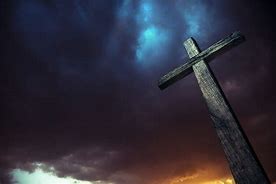
When I gave my life to Christ thirty-five years ago, I had no notion about what some theologians call the “scarlet thread” that stretches all the way from Genesis to the final chapter of Revelation.  I knew the cross was significant [even unbelievers know that].  Crosses are all over churches, crosses appear around believers’ necks and they adorn the gravestones that mark our final resting place. 

One can surely say that the cross is the symbol of Christianity.**

Stott writes “the Christian faith is the ‘faith of Christ crucified’….There is no conquest without the cross.  There is no Christianity without the cross.”

Want an orientation to the Christian faith?  New to the faith and needing some guidance, some basic information about your newfound beliefs?  Turn to the cross.  Recognize that it is central to the whole faith.  On that cross of wood, Jesus gave His life for you and for me.

That is the “big picture.”

*Zechariah, 13: 7;  Mark 14: 27;  Daniel 9: 25;  Isaiah 53;  Luke 24: 46.

**Just read any of  the posts for Stott’s The Cross of Christ beginning November 1, 2020.

Posted in Uncategorized | Leave a comment

Not Understanding God’s Gift to Us…

 Basic Christianity:  Part Three: Christ’s Work…

Since I have finished commenting on Chapter 8 of John Stott’s The Cross of Christ, it is now time to swing back to his book Basic Christianity.

The timing could not have been any better for I intend to post on April 14th, three days before Christians celebrate Easter.  When we were discussing Chapter 6 in Basic, the whole chapter revolved around the idea of sin.  When we sin, we alienate ourselves from God, we become enslaved to sin and we become so selfish that we find ourselves in conflict with others and also God.

I love the way Stott begins Chapter 7: “Christianity is a rescue religion.” 

Is that not what Christ does when He goes to His death on the cross?  He rescues us from our sinful nature.  He gives us a chance for the best life we can have on this earth.

“You shall call His name Jesus, for He will save His people from their sins” [Matthew 1: 21].  “The Son of Man came to seek and to save the lost” [Luke 19: 10].  “The saying is sure and worthy of full acceptance, that Christ Jesus came into the world to save sinners” [1 Timothy 1: 15] and “We have seen and testify that the Father has sent His Son as the Savior of the world” [1 John 4: 14].

Does that sound like a rescue religion?  It does to me.

Stott discusses the first goal of rescuing humanity, the one we celebrate this Sunday.  We celebrate Jesus’ resurrection from the dead.   Just as Jesus is resurrected from His undeserved death, we can also be born again from our sin burdens if we have faith in God.  We can become new people in Christ because He bore our sins.  He took our punishment.

We have all heard these words so much.

It is fundamental, basic…

But when I was a “new” Christian I was not sure about the significance of this act.  I just lived my life but I knew I was doing things that were not the best.  I put career over God, career over my spouse and career over my son.  That’s how I operated.  I had fallen into some bad habits.  I had weaknesses in my moral life; I had mastered the art of presenting a public persona to the world but behind that public persona was a very different person, someone who had serious character flaws.

Whereas The Cross of Christ is an extremely dense look at the centrality of the cross for Christian theology, Basic simplifies, Basic helps the new Christian get oriented to his or her new religion,  Basic takes what theologians have debated about for centuries and makes it understandable.

There is nothing more basic than the idea that Jesus came to save us from our sins, to show us how to live a better life.

Another basic idea is the fact that Jesus is the reconciliation between sinful man and a Holy God.

Jesus serves as the bridge.

Jesus is the lifeline that God throws to all of us.

Stott writes about what the Apostle Paul says about this “It is quite clear where this reconciliation comes from.  God is its author he [Paul] says and God was in Christ, reconciling the world to Himself” [Basic, 81-82].  Most beginning Christians are not ready to wrap their minds around the idea that God gave Himself to propitiate Himself,  but that is what happened.  God needed to be appeased and He sent His own Son [a part and parcel of His own being] to do the work.   “God so loved the world that He gave His only Son, that whoever believes in Him would not perish but have eternal life” [John 3: 16].

Propitiation does not seem “basic” and for many it can seem insane, so many  new Christians dwell on John 3: 16 because it is easier to understand.

Another word that Christians hear a lot is atonement.  Stott writes that atonement “denotes either an action by which two conflicting parts are made ‘at one’ or the state in which their oneness is enjoyed and expressed” [82].  This is not made by our effort; God makes atonement for us through the sacrifice of our Lord and Savior Jesus Christ.  The Apostle Paul says “We have received this gift.”  As I commented on alienation, enslavement and selfishness leading to conflict in Chapter 6, atonement cancels out those problems.  “Sin caused an estrangement; the cross, the crucifixion of Christ, has accomplished an atonement.  Sin bred enmity; the cross brought peace.  Sin created the gulf between man and God; the cross bridged it.  Sin broke the fellowship; the cross has restored it” [Stott, 82].  Many give their lives to Christ and take a worker attitude into their new religion; that is ludicrous because the gift is too great.  None of can ever do enough to say we earned the sacrifice that Jesus made for us.   We can never repay the debt.

This Sunday is a special day, a day preceded by horrors too great for any human being to bear, but instead of focusing on the horrors, we should focus on the victory.  “Jesus’ resurrection proclaims His victory over sin and death.  Jesus was crucified, died, and was buried. Then He rose back to life, proving He is who He says He is and that He accomplished what He came to earth to accomplish.  Jesus Christ is fully God, fully human, and our only Savior. It is because He is risen that we can trust in His sacrifice for our sins and receive new life in Him. His resurrection also demonstrates that His promise to resurrect us one day will come true.*”

It is spring, a time of new life as trees begin to leaf out, flowers begin to pop through the soil and yards turn from brown to green.  Easter is a time when we celebrate the new life that Jesus has given to us. As you read Paul’s letter to the  Ephesians [2: 1-10] he describes God’s great gift “And you were dead in the trespasses and sins in which you once walked, following the course of this world, following the prince of the power of the air, the spirit that is now at work in the sons of disobedience among whom we all once lived in the passions of our flesh, carrying out the desires of the body and the mind, and were by nature children of wrath, like the rest of mankind.  But God, being rich in mercy, because of the great love with which He loved us, even when we were dead in our trespasses, made us alive together with Christ—by grace you have been saved— and raised us up with Him and seated us with Him in the heavenly places in Christ Jesus, so that in the coming ages He might show the immeasurable riches of His grace in kindness toward us in Christ Jesus.  For by grace you have been saved through faith. And this is not your own doing; it is the gift of God, not a result of works, so that no one may boast.   For we are His workmanship, created in Christ Jesus for good works, which God prepared beforehand, that we should walk in them.”

The timing for this post could not have been any better, a “Basic” explanation of the significance of Easter right before Easter.

The death of Christ and His resurrection. 

He begins anew.

And we can too…

*Why Do We Celebrate Easter?”  Gotquestions.org website accessed 4/13/2022

Posted in Uncategorized | Leave a comment

“For my thoughts are not your thoughts, neither are your ways my ways,”

When someone tells you that they hate you, tell them you hate them too.  When someone assaults you, assault them back.  When you experience dishonesty, tell a lie to match the lie that you hear or go even bigger…tell a more outrageous lie.

These are the behaviors that we are taught.  Strike back, leave no challenge unchallenged, respond to fire with some more fire.  Don’t turn the other cheek and offer it to your attacker for them to hit.  Hit them back on their cheek…harder!

I write this and then I think about Jesus, about the lessons He taught and how He behaved in His short life on this earth.  I think about His encounter with Satan in His days of fasting after His baptism, His days in the wilderness.  Satan tempted Him with promises of magnificent power several times but each time Jesus told Satan to go away.  Could Jesus have deployed angelic assistance in ridding Himself of Lucifer, showing He had all of the power He needed.   Of course He could but He did not.  I think about Jesus in the Garden of Gethsemane, when He questioned God about His impending death, asking if this cup [suffering and death] could be avoided.  God offered no reprieve and Jesus accepted His fate with the simple words “Thy will be done.”   He knew His punishment was not deserved.  When Pilate asked Jesus if He was the king of the Jews, Jesus responded “It is as you say.”  When Pilate asked Jesus if He knew of the things that people were saying about Him, Jesus said nothing.  Again He could have protested; He could have asked God for help.  He knew what He had to do and He quietly did it.

When someone hits you, hit them back…harder!  That rule hardly applied to Jesus.  Turn the other cheek, do not be vengeful, let go of offenses and extend grace to others.  Those were some of His humble, peaceful lessons for righteous living.

Why?

We have considered in recent posts the messages that the cross communicates about God.  I commented on John Stott’s idea that the cross reveals God’s glory.  I wrote about the cross as a revelation of God’s justice and last week I wrote about the cross as a means to communicate God’s love.

Today we wrap up Chapter 8 in The Cross of Christ by discussing how God reveals His wisdom and power in Jesus’s time on the cross and it is very hard to understand how He does this.

The confusion is caused by God’s and Jesus’ rejection of the world’s standard for wisdom and power. 

How is it wise for Almighty God to send His “Son” [Himself] to earth to suffer ignominious suffering and death on the cross?  Would it not make more sense for Jesus to be born of royal parents in some palatial setting?  Would it not make more sense for Jesus to be schooled in the finest schools and grow up to be a powerful leader who clothed Himself in the most expensive and ornate armor, picked up a bejeweled sword, and marched at the head of a huge army.  He would then rid His native land of Roman oppression in a series of magnificent battles.  He would be the mightiest warrior of them all.  He would be idolized by all in His world.

Instead, God’s unusual plan was the opposite of this.  Jesus was born in a stable, lived an ordinary life as a carpenter’s son and learned carpentry as His trade.  He had a divine knowledge of Scripture [no training needed] and surrounded himself with very ordinary men who believed in His improbable mission to save mankind.  He had none of the trappings of power or status.  Today powerful people would have to have the latest designer clothing, several ultra-expensive automobiles and multiple mansions [worth millions and millions of dollars].   Jesus said “The foxes have holes, and the birds of the air have nests, but the Son of Man hath nowhere to lay His head.”

What is God trying to tell us with this scenario? 

John Stott seems to think that worldly trappings of power are folly; power really does not come from “things” or from flamboyant acts.  Power comes through humility, servanthood and human weakness.  “The gospel of the cross will never be a popular message because it humbles pride of our intellect and character”[221].   We don’t understand this wise approach to God’s plan on this earth: “God deliberately chose what the world regards as foolish and feeble people in order to shame the wise and the strong; He chose even the lowly, the despised and the nonexistent to nullify what exists.  His goal in this was to exclude human boasting” [221].  He was sending the message that God engineered the salvation of mankind; it was not done by mankind alone.  It was God [in the form of Jesus] who united humans to God, bringing justification, holiness and the promise of redemption.  “Therefore, as the Scripture says, if anybody boasts, he must boast neither in himself, or others, but in the Lord alone” [221].   If any Christian bears good fruit, they should not take credit, but give the glory to God.  As I have written in other places*, “It is not me” would be the appropriate response to someone who asks how you did something beyond your normal means, for God has used you to accomplish His tasks.

“The foolishness of God is wiser than human wisdom and the weakness of God is stronger than human strength.”**   When Jesus went to the cross He turned earthly conceptions of wisdom and power upside down.  If we cling to human conceptions of wisdom and power we will never understand what wisdom and power mean to God.  We are easily tempted with the earthly promises of fame, power, wealth and the good life but those will not give us the life we really seek, a life of righteousness, a life devoted to God. 

Our Creator has the power and wisdom to satisfy our longing hearts.  “Jesus is the bread that will satisfy our hunger.  He is the living water that makes us thirst no longer” [Pieter Theron***].  Ordinary human existence would tell us to look to things we can see, taste, feel or smell but those “things” will soon enslave us.  Human objects of power will become idols and we can easily become addicted to the outward signs of earthly status.

It is so hard to comprehend but in Jesus’ dying, we have a chance to live.  We know that the Apostle Paul preached that dying daily to our sins leads to a life with Christ.  He knew that if we turn to the power and wisdom of God we have a chance to celebrate a new life that is free of the burden of sin, a new life extended to us by God’s grace alone.  We don’t have the wisdom and power to do this on our own.  He makes us new creatures through His love.

I close this post with words from the Apostle Paul who summarizes the message of the cross [regarding wisdom and power] in First Corinthians 18-25:  “For the message of the cross is foolishness to those who are perishing, but to us who are being saved it is the power of God.  For it is written, ‘I will destroy the wisdom of the wise; the intelligence of the intelligent I will frustrate.’  Where is the wise person?  Where is the teacher of the law?  Where is the philosopher of this age?  Has not God made foolish the wisdom of the world?  For since in the wisdom of God the world through its wisdom did not know Him, God was pleased through the foolishness of what was preached to save those who believe.   Jews demand signs and Greeks look for wisdom, but we preach Christ crucified: a stumbling block to Jews and foolishness to Gentiles, but to those whom God called, both Jews and Greeks, Christ the power of God and the wisdom of God.  For the foolishness of God is wiser than human wisdom, and the weakness of God is stronger than human strength.”****

*for example March 18, 2022 in St. John Studies.

**from First Corinthians 1: 25.

***Grateful acknowledgment or additional discussion goes to Pieter Theron, “The Cross in the Power and Wisdom of God” accessed on April 4, 2020.    

****First Corinthians 1: 18-25 [bolding, italics and underlining mine].

Posted in Uncategorized | Leave a comment

One of “Those Words”

Love is one of “those” words. 

What I mean by calling love one of those words is that love is a connotative word.  Our language is full of connotative words, words which have some emotional association.  There will be some literal meaning in connotative words but the meaning goes far beyond the literal; connotative words imply other meanings, suggest other meanings.  Some words are more denotative, which is the opposite of connotative.   For example, “paper” is denotative meaning a material manufactured in thin sheets from wood pulp, used for writing, drawing, printing or as wrapping paper.  Both kinds of words are extremely useful for communication between human beings but when you say love, the response you may have to the word love is very different from the response you may have to the word paper.

As I continue to comment on John Stott’s “Revelations of God” [Chapter 8]*, I will be dealing with God’s revelation of love.

“For God so loved the world that He gave His one and only Son, that whoever believes in Him shall not perish but have eternal life” [John 3: 16].

I don’t know of any piece of Scripture that is quoted more than this one and when one really looks at each word that the Apostle John uses in this Scripture, the whole idea revolves around love and sacrifice.  Stott writes “The value of a love-gift is assessed both by what it costs the giver and by the degree to which the recipient may be held to deserve it” [Stott, 210].   When I have given my girlfriend and eventually my wife a gift [sometimes more than I could afford] I was trying to communicate love for her.  The gift symbolized love.  I believed she deserved it.   She is a wonderful person, someone special in my life.  I cherish her friendship and want her to know how important she is for my life.

Since I am commenting on Stott’s Chapter 8, I am focused on God’s revelation** as He acts in our world.  “Just as human beings disclose their character in their actions, so God has showed Himself to us in the death of His Son” [Stott, 200].   What has God revealed when we really think about John 3: 16?

I have had experiences in my life when I questioned God’s love for man, when I was in the midst of my own personal tragedies, when I see natural disasters, when I see reports of hunger and poverty, when I see man making war against man.  My question has always been the same:  how can a loving God allow this to happen?

There is no easy answer to these type of question.  I have grown enough in my faith to believe that God can take any situation and use it for His glory.  I don’t have to know how He can do it; I have grown to believe that He can do it and He will do it, to bring glory to His Kingdom.

What can we point to as evidence of God’s love for us?

First of all, God gave His Son to die for us.  Jesus was the Messiah, the Anointed One and when we turn to Roman’s 5: 10, we see that the death of Christ is “the death of His Son.”  Stott writes that God could have sent a man to us as He sent the prophets to Israel.  He could have sent angels to us as He did in several places in the Bible.  Instead He sent His own Son, “eternally begotten from His own Being.”  It gets lost on most of us but He was really giving Himself to us.  What would it have meant if He tried to save us with a third party?  “Since love is in its essence self-giving, then if God’s love was seen in giving His son, He must thereby have been giving Himself” [Stott, 209].

God’s actions speak louder than His words.

Secondly, God gave His son to die for us.  It would have been wonderful enough for God to have given Jesus (and so Himself) to become flesh and to serve for us on earth, but He did much more.  The King of all Kings emptied Himself of all His glory and became a servant.  The King of all Kings went through torture when He did not deserve it and when He could have stopped it.  The King of Kings in the form of Jesus bore the sins of man and felt forsaken from His Father, being separated from God by sin.   The irony of all this is that the “Man” on the cross did not deserve any of that; we are the one who did the sinning and He was the ones who did the dying. “For the Sinless One to be made sin, for the Immortal One to die—we have no means of imagining the terror or the pain involved in such experiences” [Stott, 210].

God’s actions speak louder than His words.

Lastly, God gave His Son to die for us.  Stott refers to Romans 3: 23 where Paul describes humans as sinners, “failures who have missed the target and who invariably ‘fall short of the glory of God’” [Stott, 210].  The criticism continues when he calls humans “ungodly” for we do not give God the glory due to His name and we don’t have fear of God before our eyes [Romans 5:6 and 3:18].  We are God’s enemies due to our rebellion, rebuffing His love and being defiant of His law [Romans 8: 7].  The last word he uses is “powerless.  We have no power to save ourselves, we are helpless creatures.  Someone much more powerful than man must be willing to die for our righteousness.  Die for us Jesus did, God did.  Thanks be to God!

God’s actions speak louder than His words.

Now after examining the idea of “God gave His Son to die for us” we return to the idea of love.  Is His commitment to man, His sacrifice of His Son enough for us to say that He demonstrated His love for us?  What can we say about God’s love?  Is it revealed?  Is it shown?

Often we hear the cliché  I have already used three times: “Actions speak louder than words.”  My field of expertise is human communication and it is a well-known fact among people who study communication that seventy to ninety-three percent of all messages are nonverbal [a word for visible, outward action].  If you want to get someone to think you love them, tell them; if you want to get someone to believe you love them, do something for them that communicates that you love them.  In other words, act out your love in a visible, outward way.  Another cliché is “talk is cheap.”  It is easy to speak your love, but it is much harder when you are called on to demonstrate it. 

What did God do for man?

He acted on His love for man, He did something visible, and He demonstrated His love.

He revealed His true feelings in Jesus’s death on the cross.

Thank you God…

For loving me.

*Chapter 8 is entitled “The Revelation of God

**See “It Was Not Me,” March 18, 2022,  St. John Studies.

Posted in Uncategorized | Leave a comment

Theodicy: A “New” Idea [Not Really]

One of the most uncomfortable feelings I ever have is when I am teaching a Sunday school class and I introduce a new term to Christians and they wonder whether it is “legit” or not.*  The looks of consternation are disconcerting.  The mumbling among the class sounds unsettling as indeed they may be feeling “unsettled;” their response is certainly unsettling to me!  Recently I have been teaching a class on angels and I introduced the term “beatific vision,” actually a theologian on a video used the term and I followed up on his use of the words. 

The idea was new.

They were not sure…

It seems that the more I study my faith, the more I encounter more complex terms that are used in theological circles, not layperson circles.  Another such idea is theodicy.  Theodicy means the vindication of divine goodness and providence in view of the existence of evil.

A brand new idea?

The term may be new but I bet the simple meaning of the term is not.  Theodicy is the idea that the innocent suffer and the wicked seem to flourish.  My Grandmother Hattie was an avid watcher of her daily “soaps” [a reference to daytime dramas].  I would drop in and visit with her and I got accustomed to some of the characters on her shows; every “soap” had squeaky clean characters and horribly filthy characters.  And yes, it seemed at times as if the wicked people were winning in the game of life.  Grandmother would always say to me about the evil people; “Don’t worry, they will get their ‘comeuppance.’”  She had faith that good would rule in the end and the evil people of the world would be punished.

In Chapter 8 of John Stott’s book The Cross of Christ he explains the way the sacrifice of Jesus on the cross is a “word” as well as a work [essentially what does the sacrifice reveal about God?].   We have already commented on Jesus’ sacrifice as “the glory of God”** and now we turn to the sacrifice as a revelation about the justice of God.  In many places in the Old Testament it is difficult to parse out God’s justice.  Stott points to Abraham’s anguish about the destruction of Sodom and Gomorrah; it would seem that he has some serious concerns about The Lord’s justice when he says “Will not the Judge of all the earth do right?” [Genesis 18: 25].  Of course there is a whole book of the Old Testament devoted to theodicy, the Book of Job.  Why does Job have to suffer so much?

How do we reconcile such instances when good vs. evil seem so out of balance?  Stott writes that some answers come from two ideas: the final judgement of God and the judgement of God that has already taken place at the cross.

The final judgement is like Grandmother Hattie’s “comeuppance.”  Stott writes that it can be very tempting to follow the ways of the evil person if they are prospering.  Turning to Psalm 73, the psalmist admits that being evil may be ok;   that “envying their freedom to sin and their immunity to suffering, he had almost turned away from God…more ‘brute beast’ than godly Isarelite.”  What is not considered is the day of “final judgement” when they must account before God for all the acts that they have committed.  God has the last say.

A more complex notion is the sacrifice of Jesus to assuage all sins, yes, even those of evil people.  “The reason for God’s previous inaction in the face of sin was not moral indifference but personal forbearance until Christ should come and deal with it on the cross” [Stott, 204].  Stott points to the Apostle Paul’s writing in Roman’s 3: 21-26 because it sheds so much light on this idea:  “Righteousness from God comes through faith in Jesus Christ to all who believe.  There is no difference, for all have sinned and fall short of the glory of God, and are justified freely by His grace through the redemption that came by Jesus Christ.  God presented Him as a sacrifice of atonement, through faith in His blood.  He did this to demonstrate justice, because in His forbearance He had left the sins committed beforehand unpunished—He did it to demonstrate His justice at the present time, so as to be just and the One who justifies the man who has faith in Jesus.”

This writing emphasizes the complex notion that for some, maybe God is letting sinners off too easily.  That He should not be so lenient with evil people.  Here one can only say that all humans sin.  Some seem to sin more than others, some on a grand scale.  What happens when a sinner truly repents and comes to dedicate their life to Christ?   Sins are forgiven, small scale and large scale.  It matters not to God.  Jesus talks about the joy He feels when a lost lamb is found.  He tells the story of the son who sins and returns home to a joyous father.  The worker who begins work late in the day makes as much salary as the early worker.  It does not matter to God if souls are saved.

It is also very difficult to understand God sacrificing Himself to save man.  This is another difficult idea for Christians to understand.  The biblical concept of propitiation relates to God’s righteousness being completely satisfied by the death of Christ at Calvary, thereby enabling Him righteously to save sinners who place their faith in Christ.  To appease Himself, God sacrificed Himself, all on behalf of man.** * “By bearing Himself in Christ, the fearful pealty of our sins, God not only propitiated His wrath, ransomed us from slavery [to sin], justified us in His sight and reconciled us to Himself, but thereby also defended and demonstrated His own justice.”

Are evil people punished, people who do not repent of their evil and ask for forgiveness?  Yes they are.  Stott writes “If God does not punish sin, He would be ‘unjust’ to Himself…He would cease to be God and we would cease to be fully human.  He would destroy Himself by contradicting His divine character as righteous Lawgiver and Judge, and He would destroy us by contradicting our human dignity as morally responsible persons created in His image.”

But if man will turn to God, He will experience forgiveness for his sin.  That is what God wanted eventually.  The function of The Law in the Old Testament is to condemn, but when Christ came to earth, the unrighteous have a chance to gain righteousness. 

If we submit to Him.

Receive His forgiveness

Become a member of His kingdom.

Is this human justice?  Not at all.  It’s God’s justice and at times we might not understand it, just like some of my Sunday school class members don’t understand beatific vision or theodicy or propitiation.

But we should all be thankful, for because of God’s loving mercy, we all have a chance…  

*I am not an ordained pastor or hold a Ph.D. in Theology.  I have a Ph.D. in speech communication

** see “It Was Not Me” March 18, 2022.

***Propitiation is discussed numerous times in this blog.  For additional discussion go to the search feature and type in propitiation.

Posted in Uncategorized | Leave a comment

“It Was Not Me.”

Before launching into Chapter Eight of The Cross of Christ (entitled “The Revelation of God,” I think it is important to orient ourselves to where we are in the overall book. 

John Stott says the “heart of the cross” is the fact that Jesus Christ substituted Himself for us on the cross.  His self-sacrifice and His self-substitution made all the difference in the life of man, but what did He accomplish with this act?

In Chapter Seven I commented on one accomplishment: “The Salvation of Sinners.” 

Now we turn to another accomplishment: He discloses Himself or reveals Himself [hence the title of Chapter Eight is “The Revelation”].

“Just as human beings disclose their character in their actions, so God has showed Himself to us in the death of His Son” [Stott, 200].

How hard could this be?  Have we not already discussed this ad infinitum? 

In some respects maybe some of us have looked at this sacrifice and we have drawn our conclusions.  “Let’s move on” some might say.  “I understand this already.”

But let’s dig a bit deeper at how Jesus came into this world and how He left it.  That is the confusing part.

It is all about glory.  Glory?

We gloss over that part because it is so hard to comprehend. 

What is a definition of glory?  Definitions are “high renown or honor won by notable achievement” or “magnificence or great beauty” or to “take great pride or pleasure in”.

As a “baby” born again Christian, I don’t know that I even wondered how a Divine infant born in a stable could constitute a “glorious” entrance into this world as a human being.  I am not sure that I also considered a gruesome death on a cross as a glorious way to exit this earth.  Like many, I focused on the active ministry of Christ and all the wonderful things He said and the miraculous things He did.  At that time in my spiritual growth I sought consistency and I thought I found it.  That was good enough for me.

Now I wonder if I really found answers in the “easy” information that I digested at that time.

As one really considers some of the messages of Jesus, they can be pretty confusing at times and in many respects, they seem to “turn this world upside down”.  One can turn to the Sermon on the Mount and analyze His admonitions and be quite perplexed if you take them literally.  The “poor in spirit” will experience the kingdom of heaven [what about all of us who are not downtrodden?  Do we have a chance?].   The meek will inherit the earth.   What about those of us who are not meek; after all, meekness is not valued in the world today is it?  When others insult you, persecute you and say evil things about you, you will be blessed.  In our world, insult is met with counterattack; to “turn the other cheek” is never encouraged as a strong move.  Then I turn to the Apostle Paul in 2nd Corinthians 12 when he says “But He [God] said to me, ‘My grace is sufficient for you, for My power is made perfect in weakness.’ Therefore I will boast all the more gladly about my weaknesses, so that Christ’s power may rest on me.”

No piece of Scripture has meant more to me in recent years than Paul’s words in 2nd Corinthians.  For in those words, I began to understand the Divine concept of glory.

Jesus used the word glory several times on the brink of His crucifixion.   When some Greeks asked to see Him in His last days He responded “the hour has come for the Son of Man to be glorified.”   When Judas left the last supper and went out into the night, Jesus said “Now is the Son of Man glorified and God is glorified in Him.”  When He began His prayer in the upper room with His disciples, He used the following words “Father the time has come.  Glorify your Son, that your Son may glorify You” [John 12: 20-28].

Glory?

What is God saying when He puts His only Son in this world to have Him suffer such an ignominious end?  Stott feels that the message is this:  to be a Christian, one must humble oneself.  To be a Christian one must give of oneself.  It was necessary for the Lamb of God to take the world’s sin on His shoulders.  It was necessary for the Good Shepherd to lay down His life for His sheep. 

Stott quotes John Calvin on this matter:  “For in the cross of Christ, as in splendid theatre, the incomparable goodness of God is set before the whole world.  The glory of God is set before the whole world….If it be objected that nothing could be less glorious than Christ’s death…I reply that in that death we see a boundless glory which is concealed from the ungodly.”*

Still it is hard to understand how this crucifixion could be considered a glorious end to Jesus Christ’s life on earth

I return to the words quoted above from the Apostle Paul:  “My power is made perfect in weakness.”  Weakness is not a quality often desired in our world today yet when Jesus went to the cross, He did not strenuously object to the improper charges brought against Him.  When He went to the cross, He did not ask for protection from an army of angels.  How many times do you recall someone saying my goal in life is to be “weak”?  If we take the world’s view, Jesus’ attitude is totally wrong.  However, to be a believer is to not be part of this world.  Again Paul writes in his letter to the Philippians “But our citizenship is in heaven. And we eagerly await a Savior from there, the Lord Jesus Christ, who, by the power that enables Him to bring everything under His control, will transform our lowly bodies so that they will be like His glorious body” [3: 20-21].   Then why weakness? 

Countless times God shows His power through the use of the most unlikely people to do His work.  Old Abraham becomes the father of Israel despite his advanced years.  Arrogant Samson is given the Holy Spirit so much that he selflessly rains down destruction on himself and the evil Philistines.  Moses is the coward and murderer who leads the Israelites through their most perilous times.  Peter the impulsive Disciple becomes a bold leader for the early church.  All these people have serious imperfections; serious weaknesses: yet God chose them for a reason.

God is sending a message to you and to me.

“Look what I can do.  Look what can be done with the lowest people on the face of the earth.”  When a person with weakness performs mighty deeds, one has to wonder where they get their strength, their wisdom, their perseverance. 

The simple answer is, they get it from God.

God does not expect us to do great things alone.  He expects us to turn to Him and ask for His help.  If our reasons are pure and our acts further the work of His Kingdom, you can expect that He will help you.  In fact, you can count on it.

I know a pastor who preached a powerful and inspirational sermon at her father’s funeral.  As I heard her words, I kept asking myself how she could stand up at a moment like this, much less lead a church full of people to see Jesus Christ in her comments.  After the service, I had a moment to ask her how she rose to the occasion and I will never forget her response.  Like my understanding of Paul’s words in 2nd Corinthians, her words helped me so much: “It was not me.”

I was thunderstruck but years later I still know this was a turning point in my understanding of God’s glory.  Yes Jesus’ death was not “glorious” in a worldly sense.  My pastor’s preaching was not “glorious” in a worldly sense.

It was the SOURCE OF POWER to do the undoable that was glorious.  She could have said, “I am a wonderful writer of sermons, I am extremely strong because I work out all the time or I have a very stable emotional makeup but she didn’t.  She said “It was not me.”

It was God almighty doing His work in this world.

Showing the power of humility and the power of selflessness.

Using my pastor…

*from John Calvin. Commentary on the Gospel according to St. John

Posted in Uncategorized | Leave a comment

“Worth the Effort”

At times it is best to be honest or maybe a better way to express this is, we need to be frank.  In this context “frank” is best defined as “direct in speech or writing, especially when dealing with unpalatable matters.”

We prefer the easy way.  We would rather not make the effort.

Before I go too extreme I have to admit that sometimes we do need easy answers to our questions.  When I first read John Stott’s book Basic Christianity in the mid-1980s I needed basic, easy information about coming to Jesus Christ.  He provided what I needed.  I could not have understood his book The Cross of Christ at that time in my life.

Now The Cross is less intimidating and with my growth in my faith, my study of the Bible, my study of other spiritual growth resources, I can understand it more.  At least I think so.  The “proof is in the pudding” so to speak. 

If I can explain Stott’s more complex ideas to you (the reader of this blog) than I have accomplished  my purpose.

But as I travel through each section of each chapter of The Cross, something else is happening:  I am growing too. 

Stott published a small booklet entitled Your Mind Matters in 1972.  In that booklet he makes the case that Christians should be challenged to use their minds.  We should not always seek out “easy” answers.  In his booklet he argues that we were created to think, we should attempt to understand God’s thoughts as much as we can, we benefit from the renewing of our minds, and we will be judged by our knowledge or lack thereof.

He has a point.

I like a challenge; maybe you do too.

As we turn from Basic Christianity to Chapter 8 in The Cross of Christ, we leave the basic answers of one book and turn to complex questions and complex answers in the other. 

It won’t be easy, but I am convinced that it will be worth the effort.

Posted in Uncategorized | Leave a comment

“I Sin Frequently”

On February 10, I began a series of discussions about the consequences of sin based on Chapter 6 of John Stott’s book Basic Christianity.  Since then, I have commented on how sin alienates us from God, sin enslaves us to sin and sin encourages us to be so selfish that we find ourselves in conflict with others and God.

When I began this series, I introduced it with a post entitled “Social Comparison: A Waste of Time for the Christian.”  I conclude this series with a post designed to give the reader some answers about sin, for you see I have a problem with it.

For you see, I sin quite frequently.

And yet I call myself a believing Christian [a note for all you folks who are really “into” social comparison, I have broken a cardinal rule of living the Christian life].  I readily admit to having a sin problem.  I am not trying to present a Christian façade.

What am I going to do?

That is what this post is all about.

I have been reading a very good book by the Franciscan Priest Richard Rohr where he makes a statement that riveted my attention: “Jesus is never upset at sinners (check it out!); He is only upset with people who do not think they are sinners.”*  Christians who refuse to accept their own darker moments of sinning don’t understand God’s message.  God knows we are all destined to fail at “spotless living.”  If God had wanted a perfect man or a perfect woman, He would have created automatons instead of human beings with the power of choice.

Let’s begin there.  All of us sin [even though some don’t want to admit it].

As we have referenced alienation from God, enslavement to sin and conflict with others born out of our own selfishness, let’s admit that these “consequences” are really not pleasant.  Most people would prefer not to live life like this.

What do we do to avoid it?

First, we must be honest and accept who we are (I think I did that above).  I have accepted Christ in my life already (anyone who has read my blog will know that).  Now I have to admit that I don’t have the power to sin less by my own power.  So many people today turn to gimmicks, expecting some self-help guru or some huckster’s device to rid them of their troubles.  Some think that they can rid themselves of sin with sheer will-power.

I am here to tell you, none of this will work.

What we need is not will power but a “higher” power, the power of God and His Son Jesus Christ to help us with our sinning.  In particular we need the power of God’s Holy Spirit working in our lives.  God’s design is for the Holy Spirit to flow out through me to others.  I have been locked in a battle with sin for many, many years and I have never made any headway against sin on my own.  Any progress against sin has been made possible by the power of God working in me through the Holy Spirit.

“You, however, are not in the realm of the flesh but are in the realm of the Spirit, if indeed the Spirit of God lives in you. And if anyone does not have the Spirit of Christ, they do not belong to Christ.  But if Christ is in you, then even though your body is subject to death because of sin, the Spirit gives life because of righteousness. And if the Spirit of Him who raised Jesus from the dead is living in you, He who raised Christ from the dead will also give life to your mortal bodies because of His Spirit who lives in you. Therefore, brothers and sisters, we have an obligation—but it is not to the flesh, to live according to it.  For if you live according to the flesh, you will die; but if by the Spirit you put to death the misdeeds of the body, you will live. For those who are led by the Spirit of God are the children of God” Romans 8: 9-14.

The Bible is not an easy read, but what the Apostle Paul is telling us is that when you accept Christ into your life, the Spirit gives you a chance to have a victory every once in a while over the problems we all have with sin.  We still have “mortal bodies” but we can begin to have a power that can diminish our sinning [our flesh] and reveal our Spirit-filled goodness [“put to death the misdeeds of the body”].

Will we fail from time to time even though we are attempting to “live in Christ?”

Yes…

When we dedicate ourselves to Christ, we may see some changes that are instantaneous, but other habits are extremely hard to break.  Improvement is a journey, a process.  We may prefer to pray and the sin goes away immediately but it will not work that way most of the time.  For example if you stand in judgement of people that you find “stupid,” that sinful judgement may not go away quickly, especially if you have had it in place for your whole adult life.  You know it is wrong but certain people’s actions trigger that response.  God will not force you to get rid of these thoughts, but over time, if you keep asking Him for help, He may see fit to give you Holy Spirit power over the sin and it may go away.

In the meantime, we need to repent of the sin.  When I write the word repent, I mean that I am truly sorry that I have sinned.  Going through the motions of saying “I repent,” knowing that I intend to sin again is not really repenting.  If I am truly sorrowful, God will cleanse me of my sin.  Note that I did not write “rid me of my sin.”  I  may indeed fall again.  Romans 3: 23 “For all have sinned, and fall short of the glory of God.”  Falling short is so common in life but God may have an eventual victory plan for some of our sins.  I have to wait for this victory.  It will come in His time, not mine. 

I want the Holy Spirit to minister to my needs.  I  need forgiveness.  Too many times in my life I have wallowed in guilt as I have not been quick to accept God’s forgiveness.  God does not want me to be defeated by sin.  He has much bigger things for me to do with my life.  To stay defeated is to give in to the dark powers of evils, to prefer alienation, enslavement and selfishness to freedom from some sins.  I have written this before but He wants us to “get back up, dust ourselves off and try to move forward.”

The Holy Spirit gives us the grace to move forward, the strength and ability to resist temptation in the future.  It will not be by our willpower that we will do this; we know we won’t be able to resist temptation on our own.  Christians know they  are not alone in the world anymore.  We have God to help us.  We have the Holy Spirit living in us to help us with temptations.  God does not expect us to clean ourselves up so we can prove to others that we are “good” Christians.  God does not expect us to be good enough so He can love us and accept us.  “No temptation has overtaken you except what is common to mankind. And God is faithful; He will not let you be tempted beyond what you can bear. But when you are tempted, He will also provide a way out so that you can endure it” [1 Corinthians 10: 13].

Sins have one purpose.  They exist in my life to convince me that I need Jesus Christ.  I need His understanding, I need His forgiveness, and I need His advocacy on my behalf at the right hand of God as I live my life and face God’s judgement.  John Stott writes “We shall never put our trust in Christ until we have first despaired of ourselves” [80].  Jesus says “It is not the healthy who need a doctor, but the sick.  I have not come to call the righteous, but sinners, to repentance” [Luke 5: 31-32].

“When we have realized and faced up to the seriousness of our illness will we admit our urgent need for a cure” [80].

Remember, I sin quite frequently.

My only hope…

Help me God!  Help me Jesus!  Holy Spirit, do a work within me!

*Richard Rohr  Falling Upward, 59.

Posted in Uncategorized | Leave a comment

Consequence Number Three: Conflict with Others

When I was a baby, I reportedly had a visit from my great aunt Effie Thompson.  According to family legend, this wise, venerable lady leaned into my bassinet and declared “his ears are close to his head; he is going to be selfish.”

When I was told this story later in life and I understood it, I was a bit uncomfortable.  I did not really want that “selfish” label attached to me.

But there it was.

One of the most common expressions that you will ever hear a Christian say is “I am putting God first.”  We are prone to counsel other Christians to “make sure God has first place in your life.”

But today, are we really successful in doing this?

Where does this idea come from?  Most point to Matthew 22: 37 when Jesus boils down all the commandments to “Love the Lord your God with all your heart and with all your soul and all your mind.”  He said this is the great and first commandment and the second is “You shall love your neighbor as yourself”.

So there we have an order.  God first.  Neighbor second.  Self third.

These words do not bode well for all the selfish people of this world.

In our world today it seems to me that selfishness is the norm; caring for God and others is the exception.

John Stott, in his book Basic Christianity, writes that selfishness is very related to consequence number three of sinning because selfishness is the root cause of consequence three.  The consequence I refer to is “conflict with others”.

When we put self first, neighbors second and God last, we find ourselves always trying to manipulate others to get what we want.  We never do anything that needs to be done because someone else needs help; we are always looking for credit for good deeds and some angle where we can profit from our “generosity.” We don’t really care about others; if they have a problem, that is too bad.  This shows a lack of empathy.  We are conceited; our opinion is the only one that counts and it should be valued above all others.  We are not willing to share.  We cannot accept criticism.  Lastly, we believe our needs are the most important and they have to be met before others.*

One can look at this laundry list of selfish characteristics and see that selfishness can cause conflict.  Stott says that selfish people do not find it easy to adjust to others.  They either despise them or envy them; they have feelings of superiority or inferiority. 

This makes life so hard because relationships with others are complex. It takes constant work to have good communication between parent and child, husband and wife, family member to family.   In order to have a livelihood, good relations between employer and employee must be maintained.  Stott goes on to state that juvenile delinquency is caused by selfish children who put their needs above society’s.  Divorce is common because marriage partners are not humble enough to admit fault in the relationship.  “Whenever couples have been to see me because their marriage was threatened, I have noticed that each tells a different story—a story sometimes so different that one would not guess they described the same situation unless one knew” [Stott, 78-79].

As I consider Jesus’s “greatest commandment,” I am reminded of some key communication concepts that aid in being less selfish.**  One is other-centeredness.  This is the opposite of self-centeredness and is based on the idea that to be an effective communicator we need to be aware of the needs of others.  The more we can anticipate those needs and meet them, the more we will be liked, we will achieve success in our relationships and have others around us who are happy and therefore we are happy.   Another key idea is self- awareness.  If a person is self-aware, they are prone to “take stock” of their behavior and can adapt to various communication contexts.  Selfish behavior is not appropriate for most settings.  People do not like it.  No one likes to be manipulated or overlooked; no one likes to spend time with a conceited person. Yet people who lack self-awareness cannot monitor their selfish behavior.  It emerges from them naturally and it can easily spoil communication with others.

Stott says the “human sin of self-centeredness is the cause of many of our problems.  It brings us into conflict with each other.  If only the spirit of self-assertion could be replaced by the spirit of self-sacrifice, our conflicts would diminish.  Self-sacrifice is what the Bible means by ‘love’.  While sin is possessive, love is expansive.  Sin’s characteristic is the desire to get; love’s characteristic is the desire to give.

Let’s go back to Matthew 22: 37 and consider the Scripture more.  If we put God first in our lives as Christians, everything else will fall in place.  There was a time in my life when I knew I had to make a financial commitment to my church, but I did not have a habit of doing that.  In fact, I did not tithe at all.  I felt like my family needed every penny just to pay the bills; we did not have any extra money for God.  It was not long after I made a commitment to follow God that I encountered the idea that Christians are expected to give one tenth of their income to the church.  One can research this topic and find all kinds of opinions on tithing, but instead of doing that, let’s just say that the church encourages Christians to share what they have with those less fortunate.  In tithing, we support the church and its programs that are in place to help the world. 

It is an unselfish act.

I remember when my wife and I decided to tithe.  I don’t want to sound too “supernatural” but we soon found that we could tithe and still do well.  Did lack of selfishness pay off?  Let’s not say that because it would send the wrong message about tithing.  What did happen is that we supported the church and did not lack for anything.  I am reminded of the Old Testament story of the Prophet Elijah who visited the home of a poor widow who was down to her last meal which she was preparing for herself and her son.  Elijah sensed her concern that there was not enough food for her visitor.  After this meal, there was no more food and she faced the possibility of starvation.  Elijah told her to feed him with a loaf of bread and there would be more for herself and her son.  Indeed there was, for the woman and child never lacked food from that point on: “the jar of flour was not used up and the jug of oil did not run dry.”*** 

Stott says that humans need a lot of help with selfishness.  It is our nature to be selfish, to put ourselves above others and above God.  “What man needs is a radical change of nature” [79]. 

Most of us do not live the “ideal” Christian life.  We fall far short of selfless service to God that flows from our love for Him and all His people. 

To live that kind of life we need to pay attention to the needs of others, we need to take stock of our behavior.  If alienation and enslavement are consequences of our sinning, conflict with others is a dire consequence also.

What does Stott say is the root of most conflict?

Selfishness…

“Man cannot work it within himself [to go from self to unself].  He cannot operate on himself…he needs a Savior” [Stott, 79].

*From The Learning Mind Website “Selfish Behavior: 6 Examples of Good and Toxic Selfishness” accessed on March 3, 2022.

**I hold a Ph.D. in interpersonal communications from the University of Kentucky, 1993.

***from 1 Kings 17

Posted in Uncategorized | Leave a comment

Consequence Number Two: Enslavement

I am going to be honest.  There are some subjects that are terribly hard to discuss.

The fact that human beings can become slaves to sin is one of them.

Most of us don’t want to even consider we are slaves to anything.  We prefer to think we have some control over life.  However, if we are slaves, we have little control.  If we are slaves, we are the legal property of another and we have to obey their commands.

In the previous post I wrote that alienation from God is one consequence of sinning; now we learn that enslavement can be another.

It says in God’s word that one of the most egregious things about being a human is that we are in a constant battle against the power of sin.  To be a human being is to be in a “natural state” of sin.

John Stott* refers to this problem as “bondage to self.”

He thinks of this consequence as an“inwardness.”  “It is more than an unfortunate outward act or habit; it is a deep-seated inward corruption.  In fact, the sins we commit are merely outward and visible manifestations of this inward and invisible malady, the symptoms of a moral disease” [75].

This is harsh language for us to consider, especially for human beings who don’t want to own up to the fact that they sin at all.

Also some are confused by the Apostle Paul who opens Romans by saying that he is a “slave of Jesus Christ” [Romans 1: 1].  Paul begins the Book of Titus declaring himself a “slave of God” [Titus 1: 1].  James opens his book the same way, declaring that he is “a slave of God and the Lord Jesus Christ” [James 1: 1].

Many hate the idea of being a slave to sin, but also does that mean we have to be a slave to Jesus?  I can imagine that many say “I don’t want to be a slave to anyone or anything”.

Jesus tells the self-righteous of His day [the Pharisees] in John 8: 34 “Truly, truly I say to you, everyone who commits sin is the slave of sin.”  In Mark 7, 21-23, Jesus speaks to ordinary man’s nature by saying “For from within, out of the heart of man, come wicked thoughts, fornication, theft, murder, adultery, coveting, wickedness, deceit, licentiousness, envy, slander, pride, foolishness.  All these evil things come from within, and they defile a man.”  Stott cites the Apostle Paul who has a similar list in Galatians 5: 19-21; Paul refers to deep-rooted sin as “the flesh.”  “Because sin is an inward corruption of human nature, we are in bondage.  It is not so much certain acts or habits which enslave us, but rather the evil infection from which these spring.  So many times in the New Testament we are described as ‘slaves.’  We resent it but it is true” [Stott, 76]. 

I have a very good friend who went through a serious time in her life as she struggled with sin.  She was doing things that she said were “out of character.”  It was a long process but eventually she found her way to Jesus where she came to Christ in repentance, she received forgiveness for her sin and experienced the power of the Holy Spirit which came to live within her.  One day she reflected back on this period of “out of character” sinning.  She told me that she felt that she was a good person when sin reared its ugly head.  Goodness was going to be strong enough to ward off sin.  It wasn’t.  She needed more.  She needed Jesus.

It is by the power of Jesus that we throw off the shackles of sinning and take on the title “slaves of righteousness.”  We no longer belong to ourselves or as I quoted Stott, we no longer are in “bondage to self,” we belong to Jesus and our main desire in life is to do things to please Him.  We have a desire to obey Him and as we do that, we experienced some freedom from habitual sin.  in John 8: 36 it says “if the Son sets you free, you will be free indeed.”

We live in an age of “self-help.”  Many think that we can will ourselves to do anything.  The problem is that we have “high ideals but weak wills.  We want to live a good life, but we are chained in the prison of self-centeredness.  However much we may boast of being free, we are in reality but slaves….It is no use giving us rules of conduct; we cannot keep them.  Let God go on saying ‘Thou shalt not’, yet we shall to the end of time” [Stott, 77; italics mine].

We just can’t do better with sin all by ourselves.  We need a Savior to help us.  Even with that Savior, we can only “do better”, because we never will live a sinless life.  The Apostle Paul writes of this extensively in Romans.  His words ring so true when he wonders why he can’t do what he wants to do; he does what he does not want to do instead.  Even though we are set free from sin, we still live in a world where sin is ever-present.  From time to time, we will fail.  If we are truly believers, our resolve to sin no more will grow as we live our lives.  We are the adopted children of God and He will save us from the pull of sin.  This seals us in Christ as a pledge of our inheritance as God’s children.  As Christians we are supposed to grow in faith and come to live with God more and more each day.  As a muscle develops as it is worked out, our faith will become stronger as we use it and we will be able to resist sin, not give into temptation and live more and more by the word of God.  Our habitual sins become more obvious to us and we realize that they alienate us from a relationship with God.  We begin to love God so much that we don’t want to hinder our communication with Him.  Sin can certainly get in the way of communicating with God. 

The Apostle Paul admits the struggle with sin but turns the struggle over to Jesus in these words:  “Wretched man that I am!  Who will deliver me from this body of death?  Thanks be to God through Jesus Christ our Lord!  So then, I myself serve the law of God with my mind, but with my flesh I serve the law of sin.  There is therefore no condemnation for those who are in Christ Jesus.  For the law of the Spirit of life has set you free in Christ Jesus from the law of sin and death” [Romans, 7: 24-25-8: 2].

Paul can’t do it on his own.  We can’t throw off the shackles of sin on our own.  We need a Savior.  We can read books until we go blind.  We can listen to lectures until we have maximum knowledge.  Relying on mind power or “goodness” power pales in comparison to the power of sin.  We need Spirit power.  Only Spirit power can help us gain freedom from sin. 

Yes, Christians say they are “slaves of righteousness,” and that word slave seems pejorative, but if this kind of slavery leads to freedom from sin and a stronger relationship with all-powerful God, I choose to be a slave to righteousness. 

Let my life be an effort to please God because in that effort I will gain strength over sin and demonstrate that I no longer have sin as my master.

I have my loving God as my master.

That’s what I truly want…

Posted in Uncategorized | Leave a comment