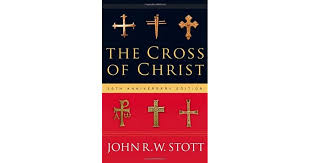
Consequence Number One: Alienation

“I know there are consequences for our sinful actions but is it possible to escape the consequences if we start living differently?”  from “B.L.” to Reverend Billy Graham

“Sin is a terrible and destructive thing, and sometimes we have to pay the consequences for our foolishness and rebellion against God.”  Reverend Billy Graham’s response*

In Chapter 5 of John Stott’s book Basic Christianity, we discussed the fact and nature of sin, its universality and every one of God’s guidelines for human behavior, also known as The Ten Commandments.  God has certain expectations for every one of us and sometimes we fail to live up to His expectations.

Human beings have a sin nature that stems from Adam and Eve in the Garden of Eden; we have a “bent toward” doing wrong.   Stott writes at the beginning of Chapter 6, “We should like to leave this distasteful subject [sin] and pass on immediately to the good news of Christ’s salvation, but we are not ready to do so.  We need to grasp what the results of sin are before we can appreciate what God has done for us and is offering to us in Christ” [Stott, 71].

What he is really saying is we need to pause and consider the consequences.

“Is sin really so serious?”

It depends…

How do you handle alienation from God?  How about bondage to self or maybe conflict with others?

In this post we will concentrate on alienation from God.

Let’s be honest, if all of us have a sin nature, we all sin [duh!].  I admit it and depending on the nature of the sin, I can feel so guilty that I feel cut off from God.  I can’t pray to Him.  I can’t hear His voice.  I don’t notice His presence in my life.  My highest destiny [says Stott] is to know God, to “be in personal relationship with Him.  Our chief claim to nobility as human beings is that we were made in the image of God and are therefore capable of knowing Him” [71].

“Personal relationship” is a comforting phrase but many misunderstand what it means.  The idea sounds like God and human beings can be best buddies but that is not quite correct.  God is a righteous Being, infinite in His moral perfection.  The Bible is full of instances when humans tried to physically approach God but it was not really possible.  Moses hid his face, Job sees God and despises himself, Isaiah has a vision of God and feels lost, Ezekiel received a vision of God and fell on his face, Saul of Tarsus was blinded by God’s bright light on the road to Damascus and John on the Island of Patmos describes God having eyes like a “flame of fire.”

Stott writes “If the curtain which veils the unspeakable majesty of God could be drawn aside for a moment, we too should not be able to bear the sight” [73].

The problem is that sin cuts us off from a perfect, all powerful God.  Too many pastors preach that God is love and neglect to say that God hates sin.  God despises sin in every form and that is what we do.  Let’s return to some of the writings of Billy Graham.  “We live in an age when sin is winked at; where God is indulgent, softhearted and tolerant of those who break His commandments.  People find it difficult to believe that God hates anything, much less sin….Some people may be pretending that sin doesn’t exist, but sin is present all around us.  When left unforgiven, sin sends men and women into a timeless eternity in Hell.”**

Stott agrees: “Hell is a grim and dreadful reality.  Let no man deceive you.  Jesus Himself spoke of it.  He called it ‘outer darkness’ because it is an infinite separation from God who is light” [Stott, 73].    There is no need to let sin get this far, so far that we turn our backs on God and we act like we are not committing sin when we are, so far that we know we are sinning and cannot talk to God in prayer.  Many of us have had first-hand experiences where we knew that God was with us, times when we could see His power at work in our lives but I have also had times when I felt so wretched that I could not speak to Him due to the guilt I was experiencing.  I need to own my sin so I will not feel alienated from God.  Stott writes “Until our sins are forgiven, we are exiles, far from our true home.  We have no communion with God.  In Biblical terms, we are ‘lost’ or ‘dead’ through the trespasses and sins which we have committed” [74].

Ok, if we are bound to sin, what are we going to do when it happens?  God can use anything to teach us, even our experiences with sin.  God’s ways are not our ways; He is truly beyond human understanding.  Some of my most important lessons are from healing and restoration brought about by owning up to my sin, repenting from my sin, seeking forgiveness and asking Him to heal me and restore me.  At times like these, my relationship with my Lord has been restored and I feel His love for me.  It says in Romans 5: 8 “God demonstrates His own love toward us, in that while we were still sinners, Christ died for us.”

From my discussion of The Cross of Christ we understand that we have a chance to get right with God and that chance comes through our acceptance of Jesus as our Savior.  That is our reconciliation with Him.  We cannot get “closer” to God without that sacrifice of His Son taking responsibility for our sin [a responsibility that He did not need to take for He was sinless].  Jesus broke down the sin barrier between God and man, that sin barrier that was symbolized in the construction of the Tabernacle and the Temple; the shroud that separated the inner Holy of Holies from the outer Holy Place.  No one could pass into God’s presence except the High Priest, but when Jesus went to the cross, that barrier was torn in two and man could pray directly to God without a High Priest intermediary.

Why would we want to be alienated from our Father when we can have direct access?  It is hard to explain but it may have something with that phrase that I quoted from Reverend Graham: “sin is present all around us” and we get weak and give in to it.  We forget what is important, we get tempted and we don’t have enough mindfulness to stave off bad behaviors. 

When we are reconciled with God and have a relationship, He restores our souls, He brings peace into our lives and we experience the joy of a lifted sin burden, a canceled debt.

Let me ask one simple question.

Who would not want that?

I do…

*Billy Graham died on Feb 21, 2018.  This information was obtained from his newspaper column based on his writings.

  ** from the writings of Billy Graham “God does not take sin lightly”

Posted in Uncategorized | Leave a comment

Social Comparison: A Waste of Time for the Christian

Social comparison is a term that emerged from the study of social psychology in the 1950’s.  Social comparison is what we do when are trying to get some sort of evaluation of our station in life.  We compare ourselves to others to see how we “stack up.”  Should we do this? Probably not.  When it happens, we discover there are always people who doing more than we are doing, accomplishing more than we are accomplishing, or we think they are more gifted than we are, so why go through all the frustration of comparing ourselves to the “more” people?  Conversely there are always people who are doing less than we are doing.  I used to joke that when I am having a “down day,” I would turn on the Jerry Springer Show where I could find Mr. Springer shining the light on folks who were having a difficult time in their lives [unsure about the paternity of their child, involved with an unfaithful significant other, indulging in some sexual orientation other than heterosexual].  Let’s go no further.  You get the picture.  My joke was at least I was not one of Jerry Springer’s people!  Why be elated because we are above the “low bar” that some people set.

Do Christians indulge in this social comparison thing with other Christians? 

You bet they do…

Here is how it works. 

“Am I where I should be in my walk with Jesus?”

We compare ourselves to people we admire, people who seem to have it all together, people who say they read the Bible all the time, never miss Sunday school or church, volunteer for everything going on at church, are reputed to tithe large amounts of money and most importantly they have a “pious” attitude when they are in the presence of others.  We think they are “super Christians.”  We think we pale in comparison to them and it causes us to question our qualification for even referring to ourselves as Christian.

Then we look around and see individuals who are struggling; they don’t darken the door of church much at all and their problems are well known.  Maybe they have a family member who is dealing with substance abuse.  Maybe they have been accused of criminal activity or possibly they just don’t have enough acting ability to fake “pious.”  They just seem weak in their faith.  So we fall into the trap of judging them as “less than” us.   I once heard a self-righteous friend refer to this “type” of Christian as a CINO [Christian in name only].

Social comparison is very real.  It keeps us from searching for an authentic version of ourselves.  We think we have to copy someone else in order to be real.  We measure our own effectiveness by looking at the accomplishments of others.  If we are capable of buying what others buy, eating what others eat, wearing what others wear, we are ok.    All of us have holes in our soul and instead of trying to be authentic with God, we play games with the many others around us and we copy what they do, even in our walk of faith.

This is such a waste of time.  Only God knows our hearts, and only He knows whether a person has sincerely put their faith in Christ as their Lord and Savior. Jesus warned, “Do not judge, or you too will be judged” [Matthew 7:1].  All human beings are capable of doing great good in this world but they are also capable of doing great evil.  Judging others (in my mind) is a great evil. 

Regarding where we are in our walk, since October of 2020 St. John Studies has been a study in extremes.  Beginning in October of 2020, I began commenting on one of my favorite writers John R. W. Stott.  Early in my life as a Christian, I discovered his book Basic Christianity; depending on where a person is in their life, Basic may be perfect for them.  The Cross of Christ is a different matter.  That book is dense with theological discussion as Stott explores the many meanings of the cross for the life of the Christian.  Needless to say, it is not a book that I would have appreciated in my early life as a Christian.  I would have not understood it or appreciated it.

This brings me to this point: what can the readers of this blog get from this discussion of extremes?

Some readers will enjoy the straightforward discussion of the fundamental ideas of the faith that can be seen in Basic Christianity.  I needed that information when I was a seeker.  As a new Christian, I entered a different world and I did not understand all that was happening.  I had little idea about my new commitment and how to move forward with my life.  I was confused about where I was going to get the power to be the person I felt I needed to be.   John Stott broke all of this down in his little book.

Other readers have known The Lord for many years.  They are beyond the beginning stages of their faith commitment.  As the Apostle Paul says, they began with a diet of milk but now they are ready for meat.  They realize that the cross is a multifaceted symbol that is the most significant sign of an ancient act and is relevant today in contemporary faith.  As I am challenged to discuss The Cross of Christ, they are ready for consideration of Stott’s topics and they are ready to understand the book and also my comments.  It really does not matter to me; it is just my prayer that you get something you need, wherever you are.

We are all on the “pathway” of the Christian life and wherever we are, the main point is we are hopefully trying to grow in righteousness.  I use the word righteousness to mean the state of life where we have faith in Jesus Christ and we are growing through that faith.  We cannot be righteous on our own.  The Apostle Paul states “Therefore no one will be declared righteous in God’s sight by the works of the law; rather, through the law we become conscious of our sin” [Romans 3: 20]. 

As I wrote above about social comparison, I alluded to how we compare ourselves to others in the secular realm and in the realm of faith.  In either area, it can be a fruitless exercise as we come to realize that it does not matter where another person is in their walk of faith.  God knows how authentic a person really is; no one else can know.  We only make guesses.   

But I also want to point out that as we move from The Cross to Basic, we move from Chapter Seven of The Cross that is entitled “The Salvation of Sinners,” summing up what Christ accomplished by His self-sacrifice.  I wrote about Stott’s ideas on reconciliation, that man needed to be reconciled to God through Christ’s sacrifice on the cross.  In Basic we are in Chapter Six entitled “The Consequences of Sin.”  In upcoming weeks, we will explore the price we have to pay when we stray away from God for we know that God takes sin seriously. 

There are consequences for our sinning and they are very real.  Are they any other person’s business?  Not really.  They are between you and God.  We are human.  We know we will sin.  When we do, we know we need to turn to God and confess our sin.  We know He will restore our souls and bring peace and joy into our lives. 

As we accept His gracious mercy, we move forward in life, trying not to repeat our sinful acts. 

That is growth in Christ [not social comparison].

It is between you and God, not you and other humans.

You and God…

That is all…

Posted in Uncategorized | Leave a comment

The Shrine, The Market, The Law Court and Now, The Home….

On January 6, 2022 I began a discussion of Chapter Seven of John Stott’s The Cross of Christ.  Chapter Seven is entitled “The Salvation of Sinners” and it is the first of three chapters designed to sum up what Christ accomplished by His self-sacrifice.

On January 6, I commented on Stott’s ideas on propitiation, on January 13, I focused on redemption, on the twentieth and twenty-seventh I explained the idea of justification.  Today we come to the last idea on salvation.

The idea of reconciliation.

I think it a bit odd that Stott has used images to explain his ideas;  propitiation is the shrine, redemption is the market, justification is the law court and reconciliation is the home.  These images structure Chapter Seven in the Cross of Christ.

I have not addressed the use of images before but when it comes to reconciliation, the idea of “home” is very useful and some would say appropriate.  People who sell property know the connotation of words, especially the words house and home.  Many words have feelings associated with them, some more than others.  A house connotes a structure, a box that people live in for shelter from the elements.  A home is more than a structure; it is where life occurs, where memories are made, where people go to get comfort not only from the home itself but also from the people who are living in the home.  

Reconciliation is restoration.  After a fight between two people, if there is a restoration of positive feelings between those people we call that reconciliation and they may desire to be in each other’s company (maybe in a home).   Reconciliation can come after a period of alienation, where people are alienated from each other.  As we read the Bible, most theologians would say the Old Testament is the story of man’s alienation from God due to his sinning.   From Genesis (when Adam and Eve introduce sin) to Malachi, God is trying to find a way to reconcile with man.  It is only when Jesus makes His sacrifice do we see some reconciliation.

Stott says that the positive benefits of this reconciliation are overwhelming. 

First of all, man is adopted in the family of God.  Stott calls this “the emergence of a single, new, unified humanity.”  Former enemies [e.g. Jews and Gentiles] are reconciled to God and to one another.  “They are now fellow citizens in God’s Kingdom, brothers and sisters in God’s family.”  Stott writes “This complete equality of Jew and Gentile in the new community is a ‘mystery’ which for centuries had been kept secret but which now God had revealed to the apostles, especially to Paul, the apostle to the Gentile (Eph. 3: 4-6)” [Stott, 192].

Secondly, the reconciliation we can experience due to salvation gives us access.  What that means is we can have what Stott calls “active communication” with God, essentially we can pray directly to Him.  For Jews of Jesus’ time, the act of personal prayer directly to God was unknown.  The chief rabbi in the temple prayed for all the people but people were not encouraged to pray directly to God.  It is only when Jesus died on the cross that the “veil” in the temple was torn from top to bottom which signified that communication between God and man could happen.  Note that it was torn from the top to bottom, not from the bottom to the top as a man would tear it.  Ephesians 3: 12 states “we may approach God with freedom and confidence.”  Hebrews 10: 19-22 says “Since we have confidence to enter the Most Holy Place by the blood of Jesus let us draw near to God with a sincere heart in full assurance of faith.”

The third and possibly greatest benefit of reconciliation is man’s chance to become the “righteousness of God”.  When Jesus went to the cross He was punished for our sinning.  In this process man received the gift of standing righteous before God.   I have to admit that this seems too good to be true, but it was necessary for reconciliation.  Sin was/and is the major barrier between God and man and despite God’s many admonitions in the Old Testament; man was never able to control his penchant for sinning.  Are we able to lead sinless lives after we acknowledge God’s effort at reconciliation?  Are we able to turn our backs on sin after we understand Christ’s sacrifice for us?  The answer sadly is no, but God knows we can’t lead sinless lives and He loves us anyway.  He knows we don’t achieve perfection: “For all have sinned and fall short of the glory of God.” ( Romans 3:23).  I think it is telling that Stott quotes Martin Luther who is writing to a monk who is is distressed about his sinning: “Learn to know Christ and Him crucified.  Learn to sing to Him and say ‘Lord Jesus, you are my righteousness, I am your sin.  You took on You what was mine; You set on me what was Yours.  You became what You were not, that I might become what I was not.”

In many respects man cannot grow in righteousness until there is reconciliation with God.  After that happens, our lives can benefit God here on earth if we follow Him.  Stott says “If God is the author and Christ is the agent, then we are the ambassadors of reconciliation” [198].   God has taken His steps toward us and Jesus has served as the sacrifice in our place but not only do we need to come to be saved, but our human actions can inspire others to come forward also.  It is humbling to think that we are the personal envoys of Jesus Christ but we can be if we try to live a righteous life.   All Christians are called to speak on Jesus’ behalf as He makes His appeal through us.  Stott says “It is remarkable that the same God who worked ‘through Christ’ to achieve the reconciliation now works ‘through us’ to  announce it” [198]. 

As we close our discussion of Chapter Seven we return to those images of the shrine, the market, the law court and the home.   All four images were used to highlight the “substitutionary” sacrifice of Christ.  Romans 3: 25 says “God presented Him as a propitiatory sacrifice, through faith in His blood.”  In Him we have redemption through His blood” [Ephesians 1:7].  “We have now been justified by His blood” [Romans 5: 9] and “You who once were far away have been brought near [i.e. reconciled] through the blood of Christ” [Ephesians 2: 13].  This is wonderful news people, and as God’s witnesses, it is our work to express it to people who need to hear it. 

May God extend His grace to us as we try to do His work.

Posted in Uncategorized | Leave a comment

Ok I’m Saved but What About My Predilections?

In the post “Justified… ‘Accepting Membership in THE Club’” [January 20, 2022]  I admitted I had more questions about my “new life” so as promised, I will continue discussion of justification in this post. 

By way of review, justification is to be made right with God or as many prefer to say, “to be saved.”  That happened to me as I recount on 1/20/22 but I have also made reference to this event several times in this blog [just type “being saved” on the search bar]. 

After being saved, I had to “reenter” the world which means I had to find a way to operate as a baby Christian in an environment  that was not on the same “wavelength” as me.  I was trying to find my way with new values, new commitments and a newfound love for my Savior.  Others did not have that attitude; in fact, some seemed opposed to the new David.  They were the same; I was the one who had changed.  Family members did not know what to do when I droned on about Jesus.  Friends continued in their habits of behavior even though I was trying to change my habits [more in tune with “Christian” values].  Work continued on with secular interests, not spiritual [college teachers have never been encouraged to elaborate on their faith, except those professors in the Religious Studies Department]. 

And most importantly, I still had my old sinful predilections [what a nice sounding word for something so bad]. 

I write all this to introduce the biggest question I had after I was saved.  What was I to do when I continued sinning?  I was saved but sinning had not gone away.

John Stott* refers to this problem when he writes “We put on Christ’s righteousness like a cloak which conceals our continuing sinfulness….Are you not claiming to be changed when in fact you are not changed?  Is not your doctrine of ‘justification by faith alone’ a thinly disguised free license to go on sinning?” [185].  

I have known many Christians over the years and some don’t worry about this; they answer this concern by responding “once you are saved, you are always saved” no matter what you do.  Others are “saved” and that is the end of their worries about their Christian life.  They don’t seem interested in doing anything better [they are made right with God and that is enough]. However, I have to admit that I don’t know peoples’ hearts; only God does.  These are only my suspicions.

What I am getting at is the idea that If “once saved always saved” is true, does that mean we can live our lives any way we want to? 

My experience tells me that the answer is yes.  Jesus sacrificed Himself for us sinners, knowing that we would sin after we received Him as our Savior, BUT a person who has truly received Christ as his/her Savior will not want to continue their ways of sinning.  Accepting Christ into your life is a transformational experience [you are a new creation in Christ].  “Therefore, if anyone is in Christ, the new creation has come: The old has gone, the new is here!” [Second Corinthians 5: 17].  When God justifies sinners, He is not declaring them perfect.  He is saying they are righteous [free from the penalty of their law-breaking].  Jesus has borne the penalty for their law-breaking.

IF the transformation is truly a transformation, over time a man or woman will make an effort to live a better life.  Jesus refers to people who have faith in Him as people who bear fruit.  Over time there will be evidence of God working in your life.  The wonderful metaphor of fruit is that God is the vine, we are His branches and when we perform righteous acts, we bear good fruit (visible acts of good work).   Stott cites Titus 2: 14 and 3: 8 that transformed Christians are “eager to do what is good,” eager to devote themselves to good works [i.e. fruit production].  By these signs, we will see evidence of Christian transformation.

This is a trite expression but Christian transformation is “a process.”  It does not happen overnight.  It is naïve to expect instantaneous change from merciless sinner to Godly person.  In real life, we make two steps forward and three steps back but God expects that and Satan wants us to give up, turn our back on God and quit trying to be a better person.  In my experience,  I had a mentor who told me to claim God’s grace, repent as sincerely as you can and get up off the ground [so to speak].  He will forgive you and help you move forward again.  Romans 3: 23 says  “for all have sinned and fall short of the glory of God” and we always will; it is in our sin nature [thank you Adam and Eve]. 

Many years ago, I read a Christian author who touched my life with a metaphor that worked to explain things for me.**   He told of his family’s cottage on a lake and how every summer they went to spend time there.  His dad had a chore that had to be performed every summer; rocks needed to be removed off the bank leading down to the lakeshore.  Every summer the rocks that could be seen would be dug up and hauled off.  The problem was after staying away for a year, erosion would reveal new stones as soil washed down the bank; the author’s family would return next summer to see more stones that had to be removed.  The Christian’s life is like that rocky bank.  As we live life, we see things that need fixing, habits that we need to break, problems that need to be addressed.  We are always working to make things better.  We know that we will never get things perfect but we attend to the flaws that need improvement because we have a heart that leads us to do that.  Being saved makes us want to try to do better.  Being saved makes us want to produce fruit.

In my January 20, 2022 post about accepting membership in “THE Club,” I made reference to my Methodist faith and the use of the grace words [prevenient, justifying and sanctifying].  Prevenient means that God loves us and gives us His grace before we make our decision to declare Him our Savior.  Justifying is to be saved.  Sanctifying grace is the path we can take after we accept Christ as our Savior, God transforming our lives into the likeness of Jesus.  He transforms our heart, transforms our actions and transforms our relationships.

If we believe in Him.

If we listen to Him.

If we allow the changes to occur.

There is nothing that says we have to be transformed.  In fact, we can stay just as we are after we are saved.  God will still love us and forgive us our sins.  However many Christians who feel a great love for God are listening to Him as He communicates to us via our Holy Spirit.  He  wants us to “grow in the grace and knowledge of our Lord and Savior Jesus Christ” [2 Peter 3:18].  We are told in Romans 8: 15 that we are adopted into His family.  Rather than making life decisions to please ourselves we want to make decisions to please God [Second Corinthians 10: 31].

If we are justified in Christ, we have a personal relationship with Jesus and by faith in Him we have a chance to live a better life.  Stott says we are members of the “Messianic community of Jesus.”  If we are in Christ and therefore justified “we are also the children of God and the true (spiritual descendants of Abraham)….this new community—which Christ gave Himself on the cross to create—is eager to do what is good” [Stott, 188-89].  Will we sin?  We do, even after we have come to know Christ, but Christians do not have a desire to persist in sin.  Whenever we do it, we grieve and repent “for the whole tenor of our life is against sin and toward holiness.”***

*From his book The Cross of Christ                                                                               

**I apologize, I will never forget the metaphor but I can’t remember the author and where I got the metaphor.                                                                                                   

***  from  “The Challenge of John” in John Stott’s Through the Bible Through The Year , 158.

Posted in Uncategorized | Leave a comment

Justified…”Accepting Membership in THE Club”

The Christian “club.”

Every “club” has its own unique language.  I always went to church as a child.  My parents made the effort to take me there.  They took me to Sunday school to learn about Jesus.  I was baptized around the age of ten.  It was expected.  I did it, but I was not in the “club.”

I never received my membership in the Christian “club” until I was born again…

Justified.

I was “justified” when I was forty-seven.  I have written about being born again many times on this blog.  It was  dramatic.  Being dramatic, it is memorable.  It was my initiation into the Christian “club.”

I am seventy now and I am well-versed in the language of Christianity.  Over the years, I have made an effort to learn the “lingo” because I just love to learn.  I like studying the Bible, reading about the Christian life, and I still teach [from full-time teaching at a college in 2014 to teaching an adult Sunday school class today].  Most of my friends are Christians so I hang around folks who speak Christian language.  I am very active in a Methodist church.  I have kept my faith in God these past twenty-four years.  John R. W. Stott writes about “The Salvation of Sinners” in chapter 7 of his book The Cross of Christ saying “the salvation of Christ is illustrated by the vivid imagery of terms like propitiation, redemption, justification and reconciliation.”

I have commented on propitiation and redemption.  Today’s post will be a discussion of Stott’s ideas and my ideas about justification.

Another word for justification among evangelical Christian circles is the word “saved.”  When someone “finds Jesus” they are “made right with God.”  They “come to the altar” and confess their sins.  Their sins are wiped away as God extends His grace to them; they emerge from the experience as a “babe in Christ,” one who must be nurtured in their new-found faith so they will turn from the destructive nature of life [sinning] to what is good [a life in Christ].* 

When I “emerged” from my justifying moment I went back to my Methodist church and I began to learn that Methodist theologians like to toss around terms like “prevenient grace,” “justifying grace” and “sanctifying grace.”  Of course I did not know what those terms meant.  I was a babe in Christ.  I just knew that something had happened to me and I felt I was on the road to a new life but I certainly did not know the terminology of Christian living.

Justification or justifying grace was hard for me to grasp until one day I had someone explain justification as being made “right” with God, like what a computer does to the margins of writing when a writer composes on the screen.  The margins are justified, or made right.  Everyone has a way of understanding and that was mine.  I finally had a metaphor for justification; I understood it.

But my questions about justification did not just stop there.

How did I deserve to be justified?  Why would God save me?  What had I done to deserve this “new life”? 

Christians told me, you did nothing to deserve being saved.  God saved you because He loves you; He has always loved you even though you may not have loved Him [I hadn’t].  That revelation was hard to deal with; in our world of payment upon receipt, I could not understand “free”.

Now I felt that I owed Him something.  He had given me something, something I did not deserve so He must expect me to repay Him.

Ephesians 2: 8-9 “It is by grace you have been saved, through faith—and this not from yourselves, it is the gift of God—not by works, so that no one can boast.”

I encountered Christians who did not seem to understand this Scripture.  Their orientation was working to be good, working to repay God, working to earn their future spot in heaven.  I encountered another term—“legalistic.”  I began to try to figure out that word since more mature Christians seemed to toss it around so much regarding these “workers.”  A life in Christ is not a competition, where we all try to compile as many Godly deeds as we can.  When we get together, the one with the longest list of Godly deeds wins the title of Brother/Sister Super Christian.  It does not work that way.  It is ludicrous to think we can work to repay God for His grace.  We did not deserve it; He gave it to us.  We should just be thankful.

I encountered “babes in Christ” like me who were struggling with their newfound experiences.  They knew that their internal life had changed but when they looked around them, the world had not changed.  “Do not conform to the pattern of this world, but be transformed by the renewing of your mind. Then you will be able to test and approve what God’s will is—His good, pleasing and perfect will” [Romans 12: 2].  I felt called to live a different life, a better life, a life more dedicated to Christian values, but I found myself surrounded by people who thought I had lost my mind.  I was in love with Jesus, but sadly I found myself in the minority in my world.  I knew I had to change my ways but old temptations were still in my life.  I felt the pull to return to the mistakes of the past.  Those were the mistakes that led me to the altar, as I tried to give them to God.  He forgave me and I emerged from my experience washed clean of my sins.  Old habits are hard to break; new habits are not in place.  New language is not in place; old words are still ingrained in one’s vocabulary.

I heard about the “old man.”  That expression became a way to describe the sinful habits that still have a hold on us.  They don’t go away immediately when we are saved.  They are still there.  One Christian mentor told me we stuff “the old man” in a bag and carry him on our backs; at times the old man escapes from the bag and we find ourselves falling back into sin.  That is normal.  That is to be expected.  It is a common experience among babes in Christ.   I needed that bit of wisdom; I needed that metaphor to help me understand what I was going through.  I needed to begin to understand that if I could hold onto my faith that I was no longer in this world; I belonged to another world.  Jesus told Pontius Pilate that “My kingdom is not of this world. If my kingdom were of this world, my servants would have been fighting, that I might not be delivered over to the Jews. But my kingdom is not from the world” [John 18: 36]. 

I began to understand that when I was justified I became a member of God’s kingdom, which is “not of this world.” I began to realize that my new citizenship is in heaven. “But our citizenship is in heaven, and from it we await a Savior, the Lord Jesus Christ” [Philippians 3: 20].   It says in Titus 3: 7 “so that, having been justified by His grace, we might become heirs having the hope of eternal life.”

John Stott describes justification in these words “When God justifies sinners, He is not declaring bad people to be good, or saying that they are not sinners after all; He is pronouncing them legally righteous, free from the liability of the broken law, because He himself in His Son has borne the penalty of their law breaking.”

The journey of the Christian life begins with justification.

Nicodemus (the well-known Pharisee) questioned Jesus about what a man must do to be close to God and Jesus replied, “Truly, truly, I say to you, unless one is born again he cannot see the kingdom of God”  [John 3: 3].

Justification is the start of the Christian life, but it only begins there.  There are many more things to happen in a life with Christ.

I had many more questions about justification and my new life.

(“More Questions” about justification to be continued in next week’s post)

*Asterisks denote common Christian idioms.

Posted in Uncategorized | Leave a comment

The Redeeming Lamb

“The word redemption means ‘to purchase.’ When Jesus died for our sins, He paid the price that satisfied the demands of God’s holiness.  The price of this redemption was the blood of Jesus (1 Peter 1: 18-19)”  [Elmer Towns, Bible Answers for Almost all Your Questions].

That’s Christianity 101 isn’t it?

If propitiation in the previous post was hard to understand, surely redemption is much easier.  Nevertheless, John Stott feels redemption is the second word that explains the role the cross has in the salvation of mankind.

Redemption is not a concept that was uncommon in Old Testament times.  There were laws for how property had to be handled as well as animals.  Property should not be removed from family ownership.  “Kinsmen redeemers” could purchase land back for a family if hardship allowed it to go to public sale [e.g.  Boaz in the Book of Ruth].  Firstborn male livestock belonged to Yahweh but animals could be bought back if the owner had the money. They could be redeemed.

But what about man?

It sounds strange for us to say that we need to be redeemed like property or animals, but it is all about our problem with sin.  Stott writes that the “human plight from which we cannot extricate ourselves and which makes it necessary for us to be redeemed is … our transgressions or sins.  The Old Testament gave man The Law but in the New Testament, The Law is seen more as a curse than a blessing.  New Testament writers in Galatians, and 1 Peter refer to The Law as an “empty way of life handed down to you from your forefathers” [3:13 and 1: 18].  Man was held captive in the prison of Divine judgement with no way to get out. 

The New Testament leaves no doubt that the price that was paid for our freedom from sin was Jesus Christ.  He is the ransom that was paid.  He came to earth to show us a new way to live; that was God’s only way to help us to understand a holy way to live.  His use of The Law and Divine judgement put man in an endless cycle of man’s sinning, God’s judgement, man’s repenting, man’s receiving forgiveness and man sinning again.  There was no way to break out of this cycle, until Jesus Christ.

Stott speaks of the costly price that Jesus had to pay and the Bible’s use of the imagery of blood.  “It was not with perishable things such as silver and gold, that you were redeemed,….but with the precious blood of Christ, a lamb without blemish or defect” [1 Peter, 1: 18-19].  Stott points to the writer of Hebrews who used so much sacrificial imagery, emphasizing that Christ was “victim as well as priest.”  “He entered the Most Holy Place once for all by His own blood” [Hebrews 9: 12].  Many would say that the use of blood signifies death but instead, it might refer to the use of the word blood in the Old Testament.  One can turn to Leviticus and see passages that refer to the “life of a creature is in the blood” or the “life of every creature is its blood.”  Deuteronomy 12: 23 states that “the blood is the life.”

Stott writes “Blood shed stands, therefore, not for the release of life from the burden of the flesh, but for the bringing of an end of life in the flesh.  It is a witness to physical death, not an evidence of spiritual survival.”  When we take Holy Communion and drink “Christ’s blood” we appropriate the benefits of His life laid down for us.  We benefit from His redemptive efforts. Jesus did something for us that we could not do for ourselves.  He sacrificed Himself for human sin.  For the first time, sinners had hope and they felt they could have fellowship with The Holy Father.  The burden of Divine Judgement was lifted. 

The last emphasis in understanding redemption is the idea that man was ransomed.  As in Old Testament Law, the redeemer of the property or animals had proprietary rights over his purchase.   In essence, Jesus had “lordship” over both Church and Christians because he bought us with His blood.  How does this fit in the big picture of life?  This should motivate us to live holier lives.

I am reminded of key verses in First Corinthians that say “Your body is a temple of the Holy Spirit, who is in you, whom you have received from God?”  When Paul admonishes us to flee from sexual immorality, he is basing his plea on the doctrine of the human body and who owns it—God and Jesus Christ.  “You are not your own; you were bought at a price.  Therefore honor God with your body.

Our body has not only been created by God and God’s spirit dwells within it, but we have been bought by Christ’s blood.  We all know what it is to be a slave to sin.  We all sin and we know that sin drives a wedge between us and God.  Stott writes we have been “bought by Christ, we have no business to become the slaves of anybody or anything else.”

Redemption has allowed us freedom, true freedom.

We can cast off the shackles of sin for we are now slaves of Christ.  He has come to destroy the power that sin has over us.

The Lamb of God, the Lamb without blemish. “The Lamb of God who lifts up and carries away the sin of the world” [John 1: 29].  “The redeeming Lamb praised by the multitude because He was slain and by His blood, redeemed unto God’s people of every kindred, tongue and nation” [Revelation 5: 8-14].

Posted in Uncategorized | Leave a comment

Praise Him, Worship Him, Walk in Faith…

Last week I wrote about “transitioning” from John Stott’s basic book aptly titled Basic Christianity back to The Cross of ChristThe Cross is not a basic book, but a deep discussion of the meaning of the cross for the Christian faith. 

Chapter Seven is entitled “The Salvation of Sinners” and it is the first of three chapters designed to sum up what Christ accomplished by His self-sacrifice.  After seven, Stott discusses the idea that God reveals Himself to man through the cross.  After eight, Stott argues that God overcomes evil though the cross.

Stott writes “It would be hard to exaggerate the magnitude of the changes that have taken place as a result of the cross, both in God and in us, especially in God’s dealing with us and in our relations with Him.  Truly when Christ died and was raised from death, a new day dawned, a new age began” [Stott, 165].

In an effort to further explain Stott’s organization, Chapter Seven breaks down salvation with four words: propitiation, redemption, justification and reconciliation.  In the upcoming posts, I will look at each word as it relates to the salvation of man.

Propitiation is something I have written about before.*  It is a core idea in J.I. Packer’s book Knowing God .  I have used the word in my adult Sunday school class and no one had heard of it before; it is not a word that is used by Christians in normal conversation.  Stott says to “propitiate” someone is to appease or pacify their anger or wrath, which raises the question, why would our Father be angry?  Propitiation and wrath don’t seem to go well together and it is that notion that has led some theologians to reexamine this word in regards to a purpose for Christ’s going to the cross.  Stott does a “deep dive” into the writings of Professor C.H. Dodd, summarizing his objections to the notion of God’s wrath by looking at his objection as a linguistic interpretation.** 

By refuting the work of Dodd and others, Stott makes the case that propitiation is the proper word for Christ’s sacrifice.

We think of wrath or anger in human terms and we know that our anger can burst forth in uncontrolled expressions.  Stott says God’s anger is never “irascible, malicious, spiteful or vindictive.  His anger is neither mysterious nor irrational. It is never unpredictable, but always predictable, because it is provoked by evil and evil alone” [italics, bolding and underlining mine].   God’s anger is “poles apart” from ours.  What provokes human anger is most often injured vanity, but that never provokes God.  Evil brings out the wrath of God.

If God’s wrath is an appropriate response to man’s evil, let’s get more particular about what man has done to appease that wrath.  In the Old Testament, human beings used animal sacrifices mostly to satisfy God’s anger [sometimes a grain offering was required].  The idea is that God provided people all of the animals so the sacrifice of an unblemished animal was a divine gift to God to appease His wrath.  Their intention was to get The Lord to act graciously toward His sinful people.    With Jesus, the sacrifice was much more complicated because Christ died for us because God loves us.  Of course, Jesus is God’s Son sitting at the right hand of God the Father.  Stott describes this situation in these words: “God does not love us because Christ died for us.  Christ died for us because God loved us.  If it is God’s wrath that needed to be propitiated, it is God’s love that did the propitiating” [Stott, 172].  Theologian P.T. Forsyth writes “God’s feeling toward us never needed to be changed.  But God’s treatment of us, God’s practical relationship to us—that had to change” [Forsyth in Stott, 172].

As we examine a Divine Human as sacrifice, it is much different that sacrificing an animal or some grain.   Stott points out that God offered Himself in the sacrifice of His Son.  The irony is [that in offering His Son] He was giving Himself.  To pacify His own wrath, He gives Himself as a sacrifice. 

That is profound and it is so complex that many Christians have problems understanding.  It is at the heart of why many feel unworthy.  God’s Son [God Himself] bore His own wrath on the cross at Golgotha and freed man from divine anger and judgement.  We deserved to be on that cross, not Jesus and we know it.   God, in His holy wrath, needed to be propitiated.  God Himself chose to undertake the propitiation and God Himself in the person of His Son died for our sins.  He took the initiative to change His relationship with man when He took our place and died for us.  Stott writes “There is no crudity here to evoke our ridicule, only the profundity of holy love to evoke our worship” [172-73].

Only God could do this, stand in for us, stand in for Himself, take our place, suffer this death, and the consequences of our sin.  We are left with awe that God put forth this perfect example of divine love [Stott refers to it as “holy love”].

If we could understand the mind of God we would understand how someone could do so much for us.  Being human, we feel we have to repay the debt but it is a debt that is too big to be repaid, a standard of behavior that Jesus set that is too high for us to reach, so we wander through life trying to do the best we can, sinning and falling short of the glory of God.   Knowing we need punishment but finding that He still loves us, He extends His grace to us when we don’t do what He expects us to do.  He understands us and forgives us when we fall, asking us to get up and try again to live a life with Him.   We don’t understand God. We try so hard to understand Him, but He is not of this world. Through our own understanding, we simply cannot comprehend God’s love.

The bottom line…our lack of understanding and sometimes failure to appreciate His sacrifice leads us to the feeling of unworthiness.  God’s ways are not our ways and that is humbling.  No matter how hard you try it is hard, to comprehend the sacrifice that God made for you and me.  We could not do it and would not do it.  After so many efforts in the Old Testament to make man understand that he should fear God [respect God], He chose to try another way.

We are left with questions about what to do when we begin our relationship with God.  I have followed Him for twenty four years and know I will never reach an acceptable level of behavior.  Does He expect that?  He may hope for it but He knows me, all my flaws and all my shortcomings. 

What am I left to do?

Praise Him.

Worship Him.

Walk in faith and do the best that I can do.

*see posts for Feb. 25, 2020; March 4, 202; March 17, 2020; April 1, 2020; April 8, 2020; May 21, 2020; May 22, 2020, September 2, 2021 and September 9, 2021.

**pages 167-170.

Posted in Uncategorized | Leave a comment

Transitioning…

It has been one hundred and ten days since I have commented on John Stott’s book The Cross of Christ.

For all those days I have been writing every week on Chapter Five of Stott’s book Basic Christianity.

The title of Chapter Five is “The Fact and Nature of Sin” and after beginning with four posts on the nature of sin, I launched into posts on The Ten Commandments because Stott discussed each of The Ten Commandments in Chapter Five [figured I could not “gloss” over them].   Maybe by now we have covered the topic of sin [it has not been my most popular topic].

I have a long history with John Stott.  Basic Christianity was first published in 1958 and I picked up a copy in 1976.  It sat on my book shelves until the time it was needed, around the time I transitioned from a sometimes church attender and lukewarm Christian to a born again believer.

I don’t want to belabor the point, but this book was a “Godsend” [note the capital G on this expression].  I needed it.  I hungered for basic information about the adventure I was on.  No one ever told me that I could have a life centered on a faith in Jesus Christ.  No over ever told me that my mission in life could be bringing glory to God through my worship of Jesus Christ. 

Back then I just did not understand what “being a follower” meant.  I was a baby Christian.

John Stott’s little book was so helpful.

Now since I have finished Chapter Five, commenting on sin and all the commandments, it is time to return to a very different book, John Stott’s The Cross of Christ.

The Cross was first published in 1986, twenty-eight years after Basic.  Unlike Basic Christianity, it is not a book dedicated to explaining the fundamental ideas of the faith. 

I am not the same person I was after I came to Christ many years ago.  To use Christian parlance, my walk with Jesus has been steady with the ups and downs of life, but I can truly say on December 28, 2021 that my belief is strong and still growing.  I have weathered several crises and several mountaintop moments over my years as a believer and I have found that my faith and God’s providence have brought me through all those, that God has manifested Himself in my moments of despair and joy, and He has guided me to where I am today.

All praise to Father God.

But this week it is time to return to The Cross.

Recently I have spent some time reading some writers commenting on the times we are living in, some referring to them as postmodern times.  I hate to use such broad terms but “big-picture” comments on society call for big words, sweeping generalizations.  Today it seems that many people are skeptical about institutions like the government and the church [or any over-arching institution that proposes to make “sense” of this world].   Many people today reject the idea that anyone or anything can have “absolute truth.”  If people reject the notion of absolute truth, they certainly will reject The Bible and the church.  Personal feelings are highly regarded over beliefs that could cause us to share common bonds.  There is a suspicion of reason and instead of looking for “rock hard” answers, people seem happy to live in a relativistic world where we just make up the rules as we go.

These are not easy times for Christians.

In fact, some theologians [I have read] refer to these days we are in as “post-Christian.”

What does this mean?  The faith values of Jesus Christ no longer guide the vast majority of people.   People regard the values of the world or the values of the culture above the values of God.  God has lost His monopoly as a dominant factor in society.

Well, here we are.

Maybe these writers are correct.

We are here in this world and even though it may not be as “friendly” to Christianity as it once was, we are living in these times never-the-less.  I recently enjoyed comments from a pastor from Portland Oregon who felt compelled to plant a church in the Portland area [Door of Hope].  Josh White is from Portland and he knows that we are living in Post-Christian times; many regard Portland as a very forward thinking city [some refer to it as Post-Christian].  He even had a Post-Christian attitude toward the church for many years.  I was impressed as he spoke of his faith, his hardcore effort to reach out to the unchurched, his ministry to people who have been rejected without judgement and his careful walk with Christ surrounded by people who are quick to cry “foul,” you vengeful Christian!

He admitted that his church was a “work in progress” and when he admitted  how tough it was to pastor in Portland, he said something very interesting, something that struck me. 

In all the criticism he faces, in all the skepticism he encounters and in all his efforts to reach the folks who say they do not need Jesus, he has one most powerful image that he clings to, that guides him, that inspires him to never give up.

The Cross of Christ.

Not the book but the sacrifice that God made for you, for me and all the skeptics in our postmodern world.

Posted in Uncategorized | Leave a comment

Christmas

This day, this night, the Light comes.

Christ came into the world for you–and you came into the world for Him.

The world will be still tonight.

There will be lingering. Longing. We will long for this wonder to go on. One Christmas candle will flame in the quiet. This cannot fade–none of this can ever fade. “For unto us a Child is born, unto us a Son is given (Isaiah 9: 6). God is with us.

God stays with us.

The Christmas candle burns hot, gives its light, give its Light–and the world lights up, and Christmas goes on forever now.

Christ, the always Gift for all our days.*

from The Greatest Gift Ann Voskamp, 258-59.

Posted in Uncategorized | Leave a comment

I Want What You Have…

“My neighbor has the most beautiful car I have ever seen.  Why Lord can’t I have a beautiful car like that?  Don’t you love me as much as my neighbor?  My neighbor just went on a beautiful vacation in Cancun [I saw the pictures on Facebook].  Why won’t you give me a vacation like that Lord?  I know you love me as much as you love him.  My neighbor has an extremely beautiful wife.  Why is my wife not as beautiful?  Oh Lord, give me a woman who has an appearance that is as stunning as her so I can enjoy life with a woman just like that.

Commandment Number Ten: “You shall not covet.”

Whereas several of the Ten Commandments deal with overt sinful actions that man can commit, number ten concentrates on the feelings that we have prior to taking sinful action.  When Jesus warned that man should not look on a woman with lust in his heart, He was warning that feelings can lead to the sin of adultery.  Like Commandment Seven, number ten is a feeling that can lead to many types of sin.  Coveting is a sin that Stott writes about with these words:  “Covetousness belongs to the inner life.  It lurks in the heart and mind.  What lust is to adultery…covetousness is to theft” [Stott, 69].  

John Stott has listed The Ten Commandments and commented on each one in his book Basic Christianity.  Why?  A new Christian needs to understand the role The Commandments play in the Christian life.  The Commandments are the standards of behavior by which we are measured.  In past posts I refer to them as the “guardrails” of the Christian life.  Indeed they are “basic.”

One may wonder if coveting ranks up there with “Thou shalt not kill” but one can examine this commandment and see the dangerous nature of covetousness if it is allowed to go unchecked.  The Apostle Paul likens covetousness to idolatry.  Instead of being content with the possessions we have, we idolize the possessions of others.  At the root of this form of idolatry is envy, a sin which (once it grabs a person) can lead to worse sins.  When one is envious of the neighbor’s ownership of a beautiful car, resentment can begin and eventually lead to hatred of the neighbor.  When one is envious of the neighbor’s car, this can lead to unlawful accumulation of funds in order to purchase a similar car.   Envy is a form of self-love and the more a person becomes obsessed with their “neighbors” possessions, the more they become unhappy and discontent.    I would imagine that God could foresee a society full of envious, malcontented people who are pushing themselves to the point of committing all types of sin to achieve materialistic goals.

Again, what is the basic idea of Christianity that new Christians should focus on?  God is the only thing that will make us happy or content.   Material goods that we don’t have are distractions from the way God wants us to live.   Think about the following words in First Timothy 6: 6-8:  “You gain a lot when you live a godly life. But you must be happy with what you have.  We didn’t bring anything into the world. We can’t take anything out of it.  If we have food and clothing, we will be happy with that.”  True happiness lies not in the things we can attain; true happiness is in the personal relationship we can have with God through Jesus Christ. 

Why does the Bible focus on not coveting a neighbor’s servants or a neighbor’s ox or donkey?  Those examples seem so irrelevant for today. Believe it or not both examples can be relevant to today’s world.  Can you imagine going into your friend’s house and it is spotless.  Your house is comparable and it is also clean but you have to work hard to keep it that way.  As in Bible times, today the measure of a person’s wealth is the ability to afford servants.  If your friend can afford a housekeeper, wouldn’t your own life be easier and your home cleaner if you had a housekeeper?  You certainly would not have to work so hard.   Now you think that you have to have a person to help you keep a clean house.  You are now not as happy with your home as you once were because having “help” is the new standard of a good life.  You have to keep up with your friend; you have to have a “servant.”  Today this is often referred to as “keeping up with the Joneses.”

Maybe coveting an ox or donkey would be comparable to today’s vehicles but probably in Bible times the accumulation of such animals meant a lot more.  Oxen could plow the ground to grow more crops and oxen could assist humans in the harvesting of crops.  Donkeys were used as pack animals by traders and merchants.  In Bible times, they were a steady source of revenue because owners could rent them out to others.  The ox or donkey represents livelihood.  If you were satisfied with your life, you understand that you have no need for more oxen or more donkeys. “Today, coveting a neighbor’s ox or donkey may sound something like this:  ‘Why does he get all the breaks?  I work as hard as he does, but I get nowhere.  If I just had what he has, I could do better, too.’”* Second Thessalonians 1: 5-6 says “We cannot love and serve our neighbors if we are jealous of their station in life.  Coveting another’s livelihood can result in believing that God is not doing a good job caring for us, as we accuse Him of being unfair in the way He has blessed someone else.”

As we get to the end of this commentary on all ten of The Commandments, Stott refers to them as an “ugly catalogue of sins.”  Some of them are outward but some are inward.  We may think those “inward” sins are not such a big deal; God does not see those things.  But God does see all our sins.  It is written in Hebrews 4: 13 “Nothing in all creation is hidden from God’s sight. Everything is uncovered and laid bare before the eyes of Him to whom we must give account.”  God sees us as we really are and the Ten Commandments expose our sin.  At times it seems hopeless as we feel unworthy in light of God’s standards.

Truly we have to pay a price for our rebellion against God and we will return to that thought when we discuss Chapter Six in Basic Christianity, a chapter entitled “The Consequences of Sin.”

For now we know that “Moses came down from Mount Sinai with the two tablets of the covenant law in his hands, he was not aware that his face was radiant because he had spoken with the LORD”** but he carried in his arms commands for us all to follow, standards we have to meet, “guardrails” that keep us going safely down the road of life. 

We don’t have to heed those commands.  We can do what we want.  However, I contend that we need guidance in life, that none of us knows all the answers about how to behave in this world.  I contend that we need to be held to a higher standard than the standards of this world.  God gave us the Ten Commandments for a good reason and that reason is that He loves us and as His followers He wants us to play a positive role in our lives here on this earth. 

He loves us

We should love Him.

Let’s not think of His commandments as restrictions; let’s think of them as guidance for the most successful life we can have on this earth.

*  “Covetousness”  from the Gotquestions.org website accessed on 12/23/2021.

**Exodus 34: 29

Posted in Uncategorized | Leave a comment