Blogging has been a real adventure for me. When I started writing on January 6th, 2015 I began with a discussion of a book by Kyle Idleman Aha: The God Moment that Changes Everything. I remember the book and the discussion: Idleman tries to express the idea that we have moments of great spiritual awakening, moments of great honesty about our relationship with God which should lead us to action. The book was full of examples and testimonies which can communicate good messages to folks that do not want a “weighty discussion.” My blog posts reflected that.
Since 201,5 I have discussed other books that reflected my interests and maybe even my growth as a Christian (see Ongoing List of Books Discussed). Then in October 2020, I felt a need to return to an author who meant so much to me in my “baby days” as a new born-again Christian: John Stott. His book Basic Christianity was seminal in my early deepening faith, but instead of returning to BC, I chose his book The Cross of Christ. The Cross is the opposite of Aha. Instead of a simple messages supported by example and testimonies, The Cross is a book that discusses the centrality of the cross in Christian faith. It is packed with theology and at times “above my pay-grade” [to use a cliché in order to describe my intellectual inadequacy.]
After starting the book, I decided that a return to Basic Christianity may be good too, so I decided to do two books at the same time: two books, same author, one book very dense and one book simpler and more “basic.” I have never discussed two books at the same time.
My intent is not to confuse followers of this blog as I switch from one book to the other. I thought it would be interesting to compare Stott’s writings and offer my comments on a “heavier” subject and then turn to a lighter, more straightforward topic.
At this point we are returning to The Cross of Christ. I have commented on Chapters One through Three in Basic. I have commented on Chapter One through Four in The Cross.
Stott has discussed in great detail the central importance of the cross for Christians. He has also discussed the purpose of the cross in His plan to save man [with a heavy emphasis on the need to sacrifice His only Son Jesus Christ]. Indeed Chapter Four of The Cross is all about the need for Jesus to die so man can be forgiven.
We are now ready for Chapter Five, entitled “Satisfaction for Sin.”
*Interregnum technically means a period or pause between successive periods of governmental affairs; in this case a pause between books to reflect…
If you have been a believer in God and His Son Jesus Christ for any reasonable length of time, you have been encouraged to read The Bible.
My history of Bible reading has been circuitous at best; maybe a better word is haphazard.
That is not unique.
Many Christians have a strange relationship with God’s Word. We claim it as “our Book” and in many homes there is a Bible, but it winds up being a token, an ornament, a revered object that is never touched.
I have always enjoyed reading and as a young person I felt that The Bible was a “foundation” book, something you build your life around but I never really made much effort to read it, much less study it. That foundation stuff was all talk.
I had the usual excuses: “It is too long,” “It does not have much relevance for today’s world,” “I just can’t understand it”…
Then something happened.
I had a turning point in my life and I found that I needed answers. My old ways were not working anymore. I knew I needed something new, a better way. For the first time in my life, I knew I needed to make choices that were more God centered, more spouse-centered, more family-centered, more church-centered. I knew I needed to find a way to be a better man.
I found that my initial answers were in the Gospels.
I remember it like it was yesterday but it was twenty-three years ago. I had just returned from an Emmaus Walk.* I had a deep spiritual experience on that walk. I learned a lot, and when I came home, I had an overwhelming desire to learn more. I tore into the Gospels.
I went from someone with minimal exposure and minimal interest in The Bible to someone who literally hungered for The Word. I read The Book like it was a very engaging novel, turning page after page, feeling like it was written for me, speaking to me. As I read, I remember saying to myself: “Why has it taken so long for me to read God’s book!”
Reading The Bible like that was a unique event and I don’t know that I will even have that experience again, but I have continued reading God’s Word over the years and each time I have encounter The it I have learned more.
John Stott’s book Basic Christianity was a book I read to supplement my hunger for Christ and his book touched my heart as well. As a born-again believer, of course I knew about Jesus but did I really know Him? Some would say the Bible is all you need, but I needed additional information to fill in some of my blanks. In Chapter Three of Basic , Stott introduces the character of Christ to the new believer. He thinks that in order to know Him you need to look at what He thought about Himself, what His friends thought of Him, what His enemies thought about Him and finally what we can see as we look in the Gospels. Stott writes “we do not need to rely only on the testimony of others; we can make our own estimate” [42-43]. In fact he states that the writings of the evangelists are so good that “the picture of Jesus…is a comprehensive one.”
If we read these writers, what kind of man do we see?
For the most part, the writings cover the three years of Jesus’ adult ministry; there are only small glimpses of his boyhood years. Luke describes the child Jesus as “developing naturally in body, mind and spirt, growing in favor with God and man.”
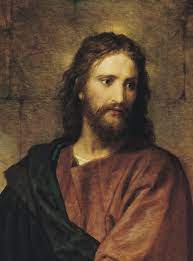
The adult Jesus must be described as a fully developed “God-Man.” John Stott’s words about Jesus as revealed in the Gospels are like poetry and my summary will not “do them justice”, but Stott says of Jesus that this special Man is indeed “beyond our reach.” He believed His own teachings but He was not a fanatic. His doctrine was not popular but He was not an eccentric. Make no mistake, He was a man: He got tired, He slept, He ate and drank like other men. He felt love and anger, sorrow and joy. He was fully human, yet He is not “mere Man.”
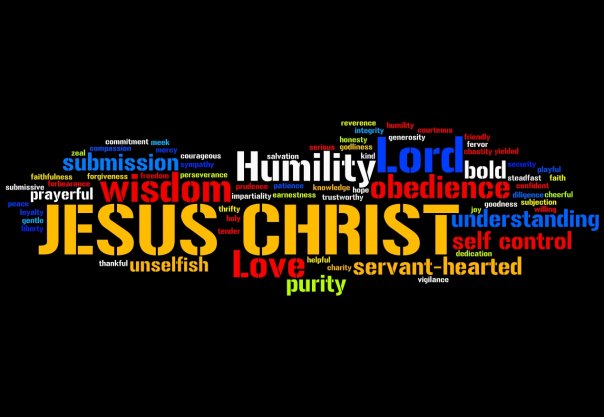
He was confronted with numerous trials and tribulations. Some worshipped Him like a hero and wanted to make Him King. Some feared Him and wanted to take Him by force and shut Him up. He upset the power structure of His society; the Pharisees and Sadducees were constantly trying to trick Him into committing blasphemy. Despite the temptations to be self-centered and self-serving, He never was “pompous.” “There was no touch of self-importance about Jesus. He was humble.”
He preached self-sacrifice and He lived it. He knew He was Lord of all, yet He showed the world how to be a servant. He knew He was going to judge the world, but He stooped to wash the feet of His disciples.
He had almost no possessions, none of the comforts of His time. He had no home. Although He could have spent His time with the wealthy and powerful, He spent his time with fishermen and tax collectors. He touched the outcasts of His society like lepers and harlots. He gave more than He received; healing, helping, teaching and preaching. He preached love for others and showed that love meant putting yourself last. Why was this His message? He knew that He represented God; He was God in the flesh. As a role model He epitomized selflessness and love because God is love.
Again Jesus knew He was Lord of all, yet He allowed Himself to be despised and rejected by His own people. He was misunderstood and misrepresented and became a victim of man’s tendency to be prejudiced. He played into the vested interests of the power structures of the day. He did not have to suffer the death that He did but that was His Father’s plan and He knew it. He had to give Himself up for man so our sins could be forgiven through His sacrifice. “He gave His back to be flogged, His face to be spat upon, His head to be crowned with thorns, His hands and feet to be nailed to a common Roman gallows. And as the cruel spikes were driven home, He kept praying for His tormentors, ‘Father forgive them; for they know not what they do’” [Stott, 44].
He could have retaliated against His detractors and taken total control of His destiny. He was God in human flesh. He had complete mastery which allowed Him not to grow resentful or irritated. He had self-control beyond a mere human mortal. He was on a mission to fulfill the will of God. He did not seek His own will or His own glory. He was not living on this earth for His own pleasure.
When I turned to the Gospels for answers to my questions about life, I was hoping to get solutions to my problems, inspiration for my life and guidance for how to behave. What I got was a glimpse into the life of a special Man, a God-Man, the Son of the Living God, Jesus Christ. As Stott writes, the Gospels give us an ample opportunity to form our own judgement about Jesus, indeed “we can make our own estimate.”
Over the years as I have continued to read and study the Bible I have marveled at the Man–Jesus Christ. Where I have failed, He succeeded without blemish.
Truly “such a man is altogether beyond our reach.”
* The Walk to Emmaus (also known as the Emmaus Walk) is a three-day retreat where pilgrims are given a basic course in Christianity. It includes singing, learning, praying, and small-group discussion focused on fifteen themes shared by Emmaus leaders.
In Chapter Three* of his book Basic Christianity, John Stott is trying to introduce Jesus Christ to people who really don’t know Him well. In the previous post entitled “The Character of Christ,” I commented on Stott’s argument that Jesus’ character was revealed by what He did. What do we do when we meet someone? We watch how they behave. Some people listen to what someone says about their own behavior, but the most believable indicator of a person’s character is what they do.
In essence, we have a man who behaved like He was sinless. He met the temptations that we all face in life and He did not give in to them. In short, He truly lived a righteous life.
Now it is time to turn to two more sources of revelation of Jesus’ character: what His friends thought about Him and what His enemies thought about Him. Think about how we judge people in your life. In making a judgement about someone, would we not consult friends and enemies of the person in question?
What did His friends think about Jesus? One would expect that they would be biased in favor of Him. What did His enemies think about Him? Likewise one would expect that they would be biased against Him.
The bottom line is that we need to come to some conclusion about someone we don’t know; we need to make an attribution. What if someone is a “new” Christian, maybe someone is seeking answers to life questions, trying to deal with life’s problems. Who is this person that everyone calls Jesus? Can they really help me?
Stott writes “it may be thought that the Disciples of Christ were poor witnesses…they deliberately painted Him in more beautiful colours than He deserved. But in this the Apostles have been greatly maligned. Their statements cannot be so lightly dismissed” [Basic Christianity, 39].
Why is that? How can he support their positive evaluations?
One reason is the closeness of the Apostles with Jesus. Think about it; for three years they ate together and slept together. They often found themselves in the same cramped quarters. They operated Jesus’ ministry from the same common treasury. Did they ever have moments when they did not like each other? Of course they did, but they never wrote down any account of Jesus having the sins that they did. When we spend countless hours with other people their quirks can lead to a “falling out” but the Apostles never found themselves at odds with Jesus. Even Jesus’ “inner circle” of Peter, James and John don’t reveal His shortcomings.
Secondly, all of the Apostles were Jewish, a people steeped in Old Testament doctrine. As Old Testament believers, they knew that man was a sinner [Stott calls this concept the “universality of human sin”]. To call someone like Jesus sinless is a giant leap for the Apostles: they are going against Scripture like “Everyone has turned away, all have become corrupt; there is no one who does good, not even one” [Psalm 14: 3]. “We all, like sheep, have gone astray, each of us has turned to our own way; and the LORD has laid on Him the iniquity of us all” [Isiah 53: 6]. They had strong Old Testament teaching and they were turning against it.
Thirdly, the testimony from the Apostles was more powerful because it was indirect; Stott calls their remarks “asides.” They don’t come right out and claim sinlessness for Jesus; they call Him the “lamb without blemish or spot.” John declares that all men are sinners, but if we say we have no sin, we are liars but “No guile was on Jesus’s lips.” The Apostles did not set out to prove that Jesus was without sin. They discuss other subjects and toss in the sinless comments.
But if we consult the Apostles and find support for a sinless Jesus, surely we can find some strong negative comments that would discount this idea if we look at the words of His enemies. We know His enemies watched Him and they tried to trick Him when He spoke. It almost seems to be a universal rule that if you can’t establish facts to attack someone or employ some type of logical argument, then “slinging mud” will be good enough for some. One can turn to the Gospel of Mark and find four such criticisms hurled at Jesus.
Blasphemy was one of those charges because Jesus said He could forgive man’s sins. This was “Divine” territory, so the religious leaders felt that forgiveness was God’s work alone. In doing this, Jesus was supremely arrogant.
Secondly, Jesus spent time with sinners. He ate with tax collectors and allowed harlots to approach Him. Pharisees would never dream of this: Stott writes “[A Pharisee] would gather his skirts around him and recoil from contact with such scum. He would have thought himself righteous for doing so, too” [41]. The Pharisees could not appreciate the grace and tenderness of Jesus.
Thirdly, Jesus’ religion was “frivolous.” He did not fast; He liked to eat and drink. They even went so far as to call Him Christian life [surely a glutton and a drunkard. Jesus was full of joy and they could not understand that joy is a sign of righteous one of the fruits of the Spirit].
Jesus was a Sabbath-breaker. He healed people on the Sabbath. This put Him in opposition to the Pharisees who had extensive rules about what could or could not be done on this special day. Did Jesus intentionally flaunt the rules of the Sabbath? Stott does not think so for He was submissive to the law of The Lord, but Jesus felt that the Sabbath was made for man and He thought of Himself as Lord of the Sabbath. He claimed the right to set aside the many false traditions if need be. In Luke 14: 5 we see Him ask a question which highlights this attitude. “Then He asked them, ‘If one of you has a child or an ox that falls into a well on the Sabbath day, will you not immediately pull it out?’” Remember He was surrounded by hateful, powerful religious leaders who saw walking through the cornfield plucking an occasional kernel as reaping and threshing.
Who are we going to believe about the character of Jesus? When Jesus was on trial for His life, His enemies stepped forward to hurl false accusations against Him. They tried to impugn His character but anyone in the crowd could see that His enemies were trying to maintain their own power. Pilate could find no fault with Him. Herod could find no fault with Him. Judas the traitor returned his thirty pieces of silver to the Pharisees because he knew Jesus was innocent.
I agree with Stott, that mudslinging was the best that His enemies could muster.
In the end however, even His detractors gave in to declare His innocence.
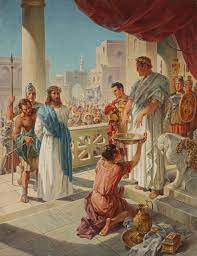
Pilate went so far as washing his hands so he could be seen as “innocent of this man’s blood.”
The penitent thief on the cross told the other thief “this man has done nothing wrong.”
The centurion at the foot of the cross declared “Certainly this man was innocent.”
The people who knew Him best…
The Apostles who lived with Him and His enemies who watched every move He made, looking for a mistake…
And they found none…
*Chapter Three “The Character of Christ” is in “Part One: Christ’s Person.”
As I turn from Stott’s analysis of how man and God handle sin and forgiveness in The Cross of Christ [Chapter Four] I refocus our attention on Stott’s book Basic Christianity [Chapter Three]. I don’t want to spend much time comparing the two books, but The Cross [published in 1986] is considered by many as Stott’s magnum opus, “a work of a lifetime” and Basic Christianity is a “classic” first published in 1959 that introduces people seeking a Christian faith to the introductory ideas of Christianity. I believe that there is great value looking at both books at the same time for John Stott helped me greatly when I pulled his book off my shelf when I was a seeking, young believer. Now as I have believed for many years, his words still inspire me even though they are more complex [he admits to “torturous theologizing” in The Cross].
Let’s return to the simpler ideas of Basic as Stott tries to introduce us to Jesus Christ, the person. He has discussed the claims of Christ [Chapter Two] and now we are introduced to the character of Christ [Chapter Three].
I had several outstanding Christian mentors when I came to believe in Jesus many years ago. One man inspired me with his words but also with his deeds. He felt that it was important to not only witness with words but also to “walk out” those words by acting on faith. Do the work of the Christian. I remember one day when he loaned me some of his writings about his faith. I remember seeing one page of handwritten advice in particular. Keep in mind that at this time in my life, I was looking for answers and I had gone through forty some-odd years of floundering in life, deciding what to do by calculating how my choices would benefit me. In other words, I was an extremely selfish individual. The world revolved around me and I did not spend much time considering the needs of others.
That one page offered simple statements but they spoke to me, they nudged me, they guided me. “Life is about choices.” My mentor went on to explain. We are all faced with choices and when we decide what to do in life, do we do what Jesus would want us to do or do we do what we want to do? Some choices are big and some are small, but they all count in life.
I know that I am entering the world of “platitudes” but here we go. Many are concerned with reputation and that is important but what is reputation? It is what other people think about you. Reputation is earned by the acts that you do where other people “see” those acts and they come to some conclusion about you as a person based on what they see. Character is what you do when no one is watching, those acts that truly reveal who you are because no one is judging your behavior. Character is the core of who you are, your moral fiber. When under pressure, a person makes serious choices and those types of choices reveal character; the greater the pressure, the more character is revealed.
Stott is trying to introduce the seeker to the person of Jesus Christ in Basic Christianity and he spends a chapter looking at the character of Christ.
He uses the Pharisee who gives an arrogant thanksgiving prayer in the midst of the Temple. He stands in the most public place and declares “God I thank Thee that I am not like the rest of men.” He was really saying that he was better than the ordinary folk who were present. He lived a better life, he prayed better prayers, he knows the Tanach [Old Testament] better than everyone else. His prayer was a public display designed to enhance his reputation.
Jesus knew his prayers were just words, the Pharisee was not actually “walking out” his faith.
So we are faced with the basic question: what clues do we have about the character of Jesus Christ? He claims to be the Son of God but does He do anything to bolster that claim? How did Jesus confirm His character without falling into the same trap as the boastful Pharisee?
Stott points to two things that Jesus does that reveal character. One instance was with the woman who had committed adultery. She was dragged before a mob that was ready to stone her to death and Jesus met the crowd with a challenge: “Let him who is without sin among you be the first to throw a stone at her.” They considered His words and gradually the crowd dispersed for no man could cast a stone. Jesus stayed with the woman because He did His Father’s will. He was not there to kill the woman; He was there to forgive her.
Jesus did not attempt to place Himself in a “moral category” above everyone else. He did not draw attention to His sinlessness. He did not have to, because it was so obvious to those around Him. It could be summed up in these words from Stott: “He lived a life of perfect obedience to His Father’s will. ‘I always do’ He said, ‘what is pleasing to Him.’” He did not need to draw attention to Himself and He did not need to draw attention to the sinful nature of man. He came as the Shepherd, to seek and save man. We are sick with sin and He is the Doctor who has come to heal us. As we live in the darkness of our shortcomings, He is the light of the world. He knows His mission, that He will end up shedding His blood that we can be forgiven. Stott writes that Jesus knows He is unique but He does not have to shout it out to the world. It will be revealed by how He “walks out” His faith.
He is a man and He is tempted, but He does not sin. He never confesses His sins and never asks for forgiveness. He tells His disciples to confess but He does not need to do that. He does not exhibit signs of moral failure. He never feels guilt or “estrangement” from God. When He is baptized by John the Baptist, Jesus does this to fulfill His righteous obligation, not because He needs to be cleansed from His sins.
Stott writes of a young pioneer missionary named David Brainerd who served among the Indians of Delaware at the beginning of the nineteenth century. He died at the young age of twenty-nine, but he left many diary writings where he poured out his heart about his love for Jesus. He loved his work and it was difficult. Stott describes his life: “He gave himself without reserve to his work. He travelled on horseback through thick forests, preached and taught without rest, slept in the open, and was content with no settled home or family life. His diary is full of expressions of love to ‘my dear Indians’ and of prayers and praises to his Savior.” But his diary also had passages where he confessed his moral corruption, his lack of prayer and love for Christ. He called himself a “poor worm” a “dead dog” and an “unspeakably worthless wretch.” Why was he so hard on himself? Why did he have moments of spiritual weakness?
Stott says it best: “He simply lived near Christ and was painfully aware of his sinfulness.”
Jesus lived near God and showed no sign of moral discontent.
Was Jesus perceptive? Stott writes “He knew what was in man. Often it is recorded of Him in the Gospel narratives that He read the inner questionings and perplexities of the crowd… Ostentation and pretense were an abomination to Him.” That’s why He could not bear the public display of religiosity that came from the Pharisee in the temple. How could Jesus be so perceptive about others and yet not be self-aware. The short answer: He was self-aware and He saw no sin in Himself.
Why do we have such a sense of “falling short” when we try to make the best choices in life, not only those public choices where we may enhance our reputation but also those private choices that reveal character. Stott likens this to the sense of awe that a scientist must feel when she appreciates the mysteries that await her discovery. They more she learns, the more she realizes what she does not know. The more the Christian grows in Christlikeness, the more he knows there is still a “vastness of distance” which still separates him from Christ.
This may sound discouraging, for many of us have this inborn need for perfection but we must let that go, for we don’t have the power to reach the level of perfect living that Christ revealed. All we can do is try to do the best we can, follow the example of Jesus, listen to the Holy Spirit and try to “walk out” our faith, remembering that the most revealing test of our faith is when no one is watching us and we still do what is right.
Stott closes his comments on what Jesus thought about His own character with the words “Jesus Christ, who lived more closely to God than anybody else has done, was free from all sense of sin” [39]. As we compare ourselves to Christ, we need to constantly remember that He was living life on a completely different plane than we are. To put it plainly, (using a sports metaphor) “He was on a different playing field.”
Truthfully as we live more closely to God and His Son Jesus Christ, we know we are not free from sin, but we should not despair. We should also not fake perfection and we should also not make arrogant public pronouncements of how proud we are of our growth toward sainthood.
“Life is about choices.”
Some choices are bigger and some are small, but they all count in life.
I am going to write a statement that is extremely elementary.
Man struggles with the problem of sinning.
Yet in Chapter Four of John Stott’s book, the title is “The Problem of Forgiveness,” which explores man’s sinning from God’s perspective.
Can we say God struggles with the problem of man’s sinning?
As humans we try to deny that there is a “God problem” with sin. We act like sin is a word that has lost its meaning in our world today. So if we are not worried about sin, why should God be concerned? We blame anyone or anything for our sinning. Sinning is not our fault so why should we worry about what God thinks? Eventually we may grow to accept responsibility for our sinning and when we do, we do the opposite of ignoring it or denying responsibility for it, we wallow in our guilt, going straight to absolute conviction [Stott writes that we become “sin-sick”]. Sounds like man is bi-polar.
By this point I begin to think that Stott has written all around the idea of “The Problem of Forgiveness;” he has indulged in what he calls “torturous theologizing” and his chapter has turned more toward man and less toward God.
Remember, Chapter Four was intended to discuss the problem that God has in forgiving man, not the problem man has in accepting responsibility for sin. From God’s point of view, He is perfection. For God, forgiveness can seem impossible because He is righteous and when He chooses to forgive human sin, He chooses to accept unrighteous human behavior. Why would a righteous God do that?
As we wrap our discussion of Chapter Four, let’s return to addressing this problem from a Divine perspective [if any human being can begin to understand a Divine perspective].
I recall a sermon I read many years ago as part of an American literature course in college, a sermon so powerful that it was included in our anthology of early American literary works: it was entitled “Sinners in the Hands of an Angry God” and it was written by Jonathan Edwards. In this sermon Edwards delivers a “fire and brimstone” message, that man is wicked, sinful, and deserving of judgment and that judgement will indeed come if man does not repent. God’s wrath is like black clouds hanging over the heads of Edward’s congregation. The clouds are full of storms, “big with thunder,” and ready to burst forth upon his congregation at any moment. The year was 1741.
I ask myself how would a congregation handle this type of message today?
The answer is not well!
Here is how I justify my comment “not well.” It is all focused on one word—wrath.
As believers, Christians today have a hard time accepting the fact that we worship a God who can feel wrath toward us. Wrath can be a synonym for anger and for us, it can be described as “arbitrary, and uninhibited…a spasmodic outburst, aroused by pique and seeking revenge” [Stott, 107]. I would add words like irrational, uncontrolled, and furious.
Here is where we have a problem with wrath: it comes from our efforts at anthropomorphism. As human beings we have this tendency to attribute human characteristics to God when we should not. God is God. God is not human. Genesis 1:27 says “So God created mankind in His own image, in the image of God He created them; male and female He created them.” I interpret this to mean that we may have some qualities which allow God to work through us. It does not mean that God has our human qualities e.g. human wrath.
We should not take Genesis 1: 27 and “create” a human God.
Stott points to the folly of this activity using what he calls “vivid metaphors.”
The first metaphor is “height.” We can look at our expressions toward God like “the Most High God.” He has sovereignty over all nations, the whole earth and all gods. He has a throne of grace, which makes Him “high and exalted”. Earth is His footstool. All these expressions are not literal, but are designed to give God a sense of what Stott calls “transcendence.” He is above the concerns of this earth. “When thinking of the great and living God, it is better to look up than down, and outside than inside ourselves” [Stott, 108].
The second metaphor is “distance”. God is away from us. We dare not approach too closely. Moses was told to keep his distance from the burning bush. Israel’s worship arrangements with God separated Him from worshippers with the inner part of the Tent of Meeting off limits to all but the High Priest. No one was allowed in the inner sanctuary on pain of death (except that priest). Israelites were told to keep a thousand yards away from the ark in Joshua 3:4. Stott writes that it is clear that “sinners cannot approach an all-holy God with impunity” [109]. They must keep their distance.
The third and fourth metaphors are “light and fire”. God is light and God is a consuming fire. Bright light can be blinding. Our eyes cannot endure its brilliance. The heat of fire can destroy anything. In First John, Hebrews, Deuteronomy and other places in the Bible, God is referred to as a God of Judgement who uses fire to consume His enemies.
The most dramatic metaphor is “vomiting”. That truly is a violent image. The Canaanites had disgusting practices, so God had the land of Canaan “vomit out its inhabitants” and He warned the Israelites that if they did those practices, they would suffer the same fate. In the New Testament, Jesus threatens to “spit” the lukewarm Laodicean church people out of his mouth, but the Greek word literally means to vomit. The picture may be disgusting but the idea that God cannot tolerate sin is clear. He has to rid Himself of people who cannot follow His laws.
I can understand man’s efforts to bring God down to a human level, to make Him more accessible, more approachable, but the fact of the matter is this. He is not on our level. This cannot be seen more clearly than when we consider God’s wrath. When we commit sin, we should “tremble before God” and admit that we deserve hell. Indeed we are “sinners in the hands of an angry God.”
Today we have grown accustomed to the kind of God who is what Stott calls “easygoing…tolerant of our offenses, gentle, kind, accommodating.” Our God has no violent reactions to our sinning. Maybe the church has lost the vision of how majestic God is. “In public worship our habit is to slouch and squat; we do not kneel nowadays, let alone prostrate ourselves in humility before god. It is more characteristic of us to clap our hands in joy than to blush with shame or tears. We saunter up to God to claim His patronage and friendship; it does not occur to us that He might send us away” [Stott, 110].
What we need to have as we conclude our discussion of Chapter Four is something akin to a balance regarding God. There is such a thing as “gravity of sin” in man and “majesty” for our Lord and Savior. Just because God forgives our sins does not imply that His majesty is diminished. Our failings do not reflect poorly on Him. We cannot bring God down to our level or raise ourselves to His level. This is a mistake we make when we attribute human characteristics to an Almighty God. “So God created mankind in His own image, in the image of God He created them; male and female He created them” should not be misinterpreted to allow us to feel we can sin and feel ok about it.
We can’t.
Anthropomorphism is something that we should not do to God. Just because we don’t get too angry about the sins of man does not mean that the sins of man don’t provoke the wrath of God.
Stott ends Chapter Four with words from Bishop B.F. Westcott: “Nothing superficially seems simpler than forgiveness,” whereas “nothing is more mysterious and more difficult.” God demands respect from us as humans, but God also respects Himself.
When we continue discussing The Cross of Christ in Chapter Five, we will consider what God requires of us for us to be forgiven.
Some kind of satisfaction is necessary, “Satisfaction for Sin” is the chapter’s title.
More “tortuous theologizing?
We shall see.
* Addendum: My first post on The Cross of Christ made reference to John Stott’s book Basic Christianity so I am going to insert comments on that book in between posts on The Cross… I think readers may find this approach interesting. For my opening comments on Basic see the post “Studying Stott Again” on October 25, 2020. I have never worked on two books at a time but now is the time to do that. In my next post we return to commenting on Basic Christianity Chapter Three “The Character of Christ.”
It was 1971 and I was enrolled at college. I was an impressionable, inquisitive young guy from a rural upbringing, seeking an education and enjoying exploring ideas that were new to me. My college had a movie theater where they screened films that were a bit out of the “mainstream.” My girlfriend and I would often go see some of those films; I recall one that made a distinct impression on me because of its portrayal of lawlessness: A Clockwork Orange. In this post, I won’t synopsize the film to any great degree, but one can view it and see that it was a controversial depiction of a group of ruthless, young, British men who wreaked havoc on their world. In the context of 1971, many complained about the film’s violence, language and sexuality. By today’s jaded standards, many may judge it less harshly. Like many at that time, I remember reacting to the film with dismay but I looked beyond the obvious shock factors of violence, language and sexuality. I was disturbed by the main character Alex because he and his cronies committed crimes with impunity, absolutely enjoying their attacks on defenseless people. No one seemed to have any conception of remorse. Eventually Alex is forced to change his behavior, but it is not by his own choice.
Today I recall the experience of viewing A Clockwork Orange in the context of John Stott’s discussion of “True and False Guilt”, a section of Chapter 4 in his book The Cross of Christ. Stott’s whole chapter considers how man handles sin. He has already written that man makes the effort to ignore sin [we just refuse to think about it, much less take responsibility for it]. He has already discussed that man tries to blame sin on factors outside of his control [eg. genes, social environment, parents etc]. Now Stott is ready to discuss what Alex and his cronies don’t feel: they don’t feel they are sinning and they don’t feel guilt for what they have done. “If human beings have sinned (which they have), and they are responsible for their sins (which they are), then they are guilty before God” [Stott, 98].
As I approach this discussion, it seems to me that Stott is trying to make a case that Christians are bi-polar. We either deny the existence of sin or rationalize it away or we go the opposite direction: we become obsessed with sin and guilt.
“Christians have often been criticized (not least evangelical Christians) for continuously harping on sin, for becoming obsessed with it in our own lives, particularly in our evangelism, for trying to induce in others a sense of their guilt” [Stott, 99]. I know this may be hard for some to swallow, but is the role of the church to induce guilt? Does the church exist to convince us we are “sick,” and after conviction, we need the church to get over the sickness of our sinning? This makes Christianity the medicine for the “sin-sick.”
For many, this approach is anathema: how could anyone look at the cross of Christ and see anything other than forgiveness of sin? How could anyone look at Christ’s sacrifice and think of our shame? We caused Him to go to Golgotha? Aren’t we supposed to focus on the glory of what He did for us?
Stott writes there is such a thing as a “morbid, overscrupulous conscience.” In these cases it may be unhealthy to insist on the gravity of sin. Some are already holding themselves too responsible for their actions, maybe even feeling bad about evil they have not done.
They are suffering from an extreme responsibility toward sin and they are living miserable lives.
Let’s try to find a middle ground.
All of mankind suffers from what I call the “bent toward” sinning. We can’t help it. God has given us all the freedom to choose our behaviors. In some cases, it all boils down to this: we either sin or don’t sin and we get weak from time to time and are tempted to sin. We just do it.
We all know that Adam and Eve disobeyed God in the Garden. He gave them freedom to choose their acts with one limitation. They must not touch the fruit of the tree of knowledge of good and evil. We could analyze what triggered their weakness all day: was it curiosity, was it the quest for power, was it pride, was it simple disobedience? The fact of the matter is that they could not follow God’s rules. They ate the forbidden fruit. In Chapter Four, Stott writes that Adam and Even could have denied that the sin existed [that snake just told us what to do and we were simply following his direction-that is not sin]. Maybe God has made us with fatal flaws; it is not our fault that we have defects due to poor manufacture.
No, it was their fault and we have been able to choose sin over righteous behavior since their grievous error.
What must we do when we commit our own grievous errors?
Wallow in guilt?
That is unhealthy. Wallowing does not lead to God’s forgiveness. Wallowing does not allow us to enter the joy of His salvation. Wallowing does not allow us to grow into more complete human beings, healthy human beings. “A full acknowledgement of human responsibility and therefore guilt, far from diminishing the dignity of human beings, actually enhances it. It presupposes that men and women, unlike the animals, are morally responsible beings who know what they are, could be and should be, and do not make excuses for their poor performance” [Stott, 102].
The church does not exist to make us “sin-sick.” The church exists to provide a means to escape the sickness we feel from guilt. The law that condemns us becomes God’s good gift because it sends us to Jesus Christ to be justified. Jesus says in Mark 2: 17 that He comes to this world to help “tax collectors and sinners”: it is not the “healthy who need a doctor but the sick. I have not come to call the righteous, but sinners. With this in mind, do we begin to see the church taking on the role of helping people with their sickness, alerting them to their maladies so they can turn to the Great Physician?
As part of his discussion Stott references C.S. Lewis who agonizes over “The Humanitarian Theory of Punishment.” In his discussion Lewis “bemoans” the modern tendency to concentrate on criminal reform and deterrence instead of grappling with the link between punishment and justice. “When we cease to consider what the criminal deserves and consider only what will cure him or deter others, we have tacitly removed him from the sphere of justice altogether; instead of a person, a subject of rights, we now have a mere object, a patient, a ‘case.’”
Spoiler Alert for A Clockwork Orange
That is exactly what happens at the end of Stanley Kubrick’s film. At the end, Alex is caught and is forced to undergo some form of aversion therapy. The government made him into a person who hated violence so much that he could not be violent even if there was a need [e.g. to defend himself from evil assailants]. He was “cured” against his will, what Stott calls put on “a level with those who have not reached the age of reason or those who never will; to be classed with infants, imbeciles and domestic animals.”
No we don’t need to wallow in guilt. We don’t need to take on responsibility for acts that we do not commit. We don’t need to think of the Christian church as an institution that makes us feel “sin sick.”
We need to take our punishment, however severe. We need to take it because we deserve it. We need to take it because we “should have known better.”
Stott says we need to be treated “as a human person made in God’s image.”
Chapter Four of John Stott’s book The Cross of Christ is entitled “The Problem of Forgiveness” and the emphasis should be placed on the word problem. He begins his chapter setting up his main discussion points and states in his introduction that it “should be” difficult for God to forgive man’s sins. We have a perfect God and His perfect Son who were the instigators of the process of forgiveness and they decided to make ultimate sacrifices. God is righteous and for forgiveness to occur, He chose to excuse “unrighteous” human behavior. God also chose to give His Son to man so His Son would be killed, atoning for mankind’s sins. The Old Testament atonement of men sacrificing unblemished animals and “first fruits” to God was not good enough. God determined that there must be a Divine Human sacrifice. Of course Jesus was the One who had to undergo a painful torture and death, a conviction and sentencing He did not deserve. He had done no wrong.
Talk about problems. None of us can understand this from a Godly point-of-view but I guess if I were God, I would have problems with it. I am not sure man deserves all this.
Stott’s first point is why should God sacrifice so much for humans who don’t think that sin is big deal? They don’t understand “The Gravity of Sin.” In man’s mind, sin is no longer relevant. We don’t acknowledge it or talk about it and we don’t need anyone to save us from it. God’s laws seem old-fashioned. In our own self-centered world view, we can now be autonomous beings, independent of God.
Let’s add a second problem to the mix: the problem of “Human Moral Responsibility.” We exclaim is it fair to blame human beings for their misconduct? If the problem of sin cannot be dealt with by ignoring it, Stott says let’s say that God’s judgement is just not fair.
I have bad genes which predispose me to sinning. I have a hormonal imbalance that causes me to feel negative thoughts which lead me to perform negative actions. I have inherited a temperament from my father or mother [or both] which causes me to do bad acts. My parents failed to teach me right from wrong. My education did not prepare me for righteous living. I come from a neighborhood that is full of criminal activity; I had to learn to sin to survive on the streets. The list goes on and on.
Reasons that God’s judgement is not fair…
Look closely at all of my examples. Are they reasons or are they excuses for sinning? Stott writes “We accept the concept of diminished responsibility, but not the total dissolution of all responsibility” [94]. The reason we won’t go all the way into “I can’t help myself mode” is that we just can’t accept the idea that we are automatons. We like our ability to make free choices except when it leads us to sin. Stott admits “we are conditioned by our genes and upbringing, but the human spirit (not to mention the Christian mind) protests against the reductionism that declares a human being to be nothing but a computer” [95]. Within what we call “reasonable limits,” we like being free agents making choices and when we make bad choices, we may even feel sorry because we know we could have behaved differently. We may even engage in justification behavior, trying to persuade others to excuse our bad behavior. We want them to understand our point of view. Maybe our argument is “diminished responsibility.”
Can we turn to the Bible to support this view? Of course we can. One can point to the Book of Genesis and the doctrine of original sin. The very nature that we have all inherited from Adam means that we have a “tainted” nature that leads us to sinning. Jesus says in Mark 7: 21-23 that “from within, out of men’s hearts” evil thoughts and actions come. Jesus describes a sinner as a slave to sin (John 8: 34). Even after Jesus dies to liberate us from sin, we are not rid of the idea of original sin. Paul in Romans 7: 25 states: “So then I myself in my mind am a slave to God’s law, but in the sinful nature a slave to the law of sin.”
Does this sound like we have something that can diminish our responsibility for our actions?
Maybe…
Stott feels that original sin does have power over us, but it does not destroy our responsibility to make righteous choices. God is patient with us because He knows how we are formed. He is slow to anger and does not treat us as the sinners we are, but He does not absolve us completely. Scripture treats us as responsible human beings. In the Old Testament books of Deuteronomy and Joshua, man must choose between life and death, good and evil, living God and idols. Scripture “exhorts” us to be obedient and declares our punishment when we are disobedient. We don’t get a “diminished responsibility” pass.
Jesus was well aware of man’s ability for choosing sin over righteousness. In Matthew 23: 37 He declares to the people of Jerusalem “I have longed to gather your children together, as a hen gathers her chicks under her wings, but you were not willing.” He was really saying that people were strong-willed and unable to make the right choice. He says in John 5: 40 “you refuse to come to Me.” Inability to commit to Christ is not based on some environmental factor or some genetic force; people are “choosing” not to come to Him even though they have human flaws.
Emil Brunner from his book Man in Revolt emphasizes our responsibility as an indispensable aspect of being human. Man must be seen as a “thinking and willing being,” responsible to God. The choice to believe is “not…a task but a gift …not law but grace.” The choice to be responsible is a sign of belief, a sign of love. Brunner states that responsibility is not just an attribute of human existence, but is the “substance” of human existence. It “contains everything… [it is] that which distinguishes man from all other creatures.” Brunner goes even further on the importance of human responsibility: “if responsibility be eliminated, the whole meaning of human existence disappears.”
That is a strong statement. That indeed is a problem!
Ok, we have not been very successful in dodging responsibility for our actions. Genetic influences cannot be blamed or inherited temperament. Poor upbringing won’t absolve us of our sins; neither will poor educational preparation. Pointing to the social environment won’t even help, so where are we?
We fall back on Adam and the idea of original sin in The Garden, but even that won’t work. Stott writes [has the] “fall seriously weakened humankind’s responsibility? Are we responsible for our actions any longer? Yes, we are. Man never sins purely out of weakness, but always also in the fact that he lets himself go in weakness.” Stott is very clear when he writes “even in the dullest sinner there is a spark of decision.” He goes so far as to declare acts against God “defiant rebellion” [Stott, 98]. It seems that all of our weak-kneed defenses for dodging responsibility do not work.
I know it shows my age, but I am reminded of a popular sitcom from the 70’s entitled “Sanford and Son.” In the show, Fred Sanford [comedian Red Foxx] experienced times when he made mistakes and had to own up to his errors. Of course, the bigger the mistake, the more it was hard to accept blame. When all else failed, he faked a heart attack and declared he was going to see his deceased wife: “I’m coming to see you Elizabeth. This is the big one!” That was his way of deflecting responsibility for his actions.
Stott says of course we would all like to “shuffle off our responsibility” for our own wickedness but we can’t do that. Man is responsible for his own sin. It does not work to ignore the need for forgiveness by acting like sin is not a “big deal” anymore. In this discussion, avoiding responsibility for sin is not a better strategy.
Stott uses Emil Brunner to close this section of his discussion of the problem of forgiveness and it is easy to see why.
Brunner’s statement is so strong.
Brunner writes “No fate, no metaphysical constitution, no weakness of nature, but himself, man in the centre of his personality is made responsible* for his sin.”
These are statements that someone says when they are trying to take responsibility for their bad acts.
I don’t like to make general comments but…[here comes one]…today many people just don’t seem to be able to take responsibility for anything that reflects negatively on them. In the context of The Cross of Christ, John Stott is concerned about Jesus dying on the cross to atone for man’s sins. With today’s attitude toward sinning, what is the purpose for Jesus’ sacrifice? In a world where few people seem to be willing to admit that they sin, why is it a big deal that Jesus died for us sinners?
We can find multiple examples today of people who just don’t want to say they ever do anything wrong. Others are unwilling to own up to their actions, preferring to blame others, the “circumstances” or even the influence of popular culture. The media is full of examples of people who are accused of committing crimes and they hire the best defense attorneys they can and totally deny any wrongdoing.
Stott makes a good point…
Why be concerned about Jesus dying on the cross to atone for man’s sins when man does not think he is committing sin?
That is a bold question, but let’s add a strong statement to the question [this one from Stott]: “The word sin has in recent years been dropped from most people’s vocabulary. It belongs to traditional religious phraseology which, at least in the increasingly secularized West is now declared by many to be meaningless” [Stott, 90].
Where has sin gone? Stott refers to Karl Menninger’s book Whatever Became of Sin? to come up with three possibilities. Menninger says that “many former sins have become crimes” so the responsibility for dealing with them has gone from church to state, from priest to policeman. Others have “dissipated into sickness” so punishment has been watered down to treatment. Finally responsibility for sin has been transferred to society or what Menninger calls “collective responsibility.” In my mind that is the “everybody’s doing it” defense. If everyone is doing it, it must be ok.
This is a far cry from Stott’s early discussion in Chapter Four of The Cross of Christ. There he took the attitude that sin is extremely serious.
Again, where has sin gone?
Nowhere… It is alive and well and a part of our world today.
For some insight, let’s look at the origin of God’s laws. Maybe we think that God’s moral law was established for God alone. It was not. It was also established for man. God made us in His image so the requirements of His law were created with us in mind. Stott explains that there is a “vital correspondence” between God’s law and man, so when we commit sins we are not only sinning against God, we are sinning against our “highest welfare.”
What is the root of man’s rebellion?
The short answer is our own self-centeredness.
Man should be centered on God but instead of humbly acknowledging the debt we have to our Creator, we would love to say that we are independent. “We have rejected the position of dependence that our createdness inevitably involves and made a bid for independence” [Stott, 92]. Worse than that, Stott says that man claims autonomy, which is a position that is reserved for God alone. It says in Romans 8: 7 that “Sin is not a regrettable lapse from conventional standards; its essence is hostility to God.” This self-centeredness is what Stott calls active rebellion against God. “It has been described in terms of getting rid of the Lord God in order to put ourselves in His place in a haughty spirit of Godalmightiness” [92].
Stott quotes from the Swiss Theologian Emil Brunner: “Sin is defiance, arrogance, the desire to be equal with God,….the assertion of human independence over against God” [from Brunner’s book entitled Man in Revolt].
Sin has gone nowhere. It is here. Maybe what we have forgotten is the serious nature of sin or maybe we just don’t want to acknowledge the serious nature of sin. Stott refers to King David and his many Psalms of regret; he often cries out to God in the pain and agony of his guilt. No greater example occurs than his pain over his sinful lust for Bathsheba. He not only committed adultery with her but arranged for her husband Uriah to be in a dangerous position on the battlefield. With Uriah out of the way, he has a chance to have Bathsheba all to himself, but he also had the guilt of great sin on his heart. Psalms 51: 4 states “Against you, you only I have sinned and done what is evil in your sight.” Sin is there with David and he acknowledges it. He boldly declares “I have done wrong! This is my fault! I have sinned!” He knows it was God’s laws that he has broken and he has offended his Lord.
That same guilt that David was feeling is here today…alive and well.
Maybe what we really don’t want to admit is that sin is serious, what Stott calls “the gravity of sin” [92]. That reluctance has led to its omission from the vocabulary of today’s world. Stott paraphrases Menninger [quoted above] when he pleads that the word “sin” needs to be reinstated into our vocabulary. Sin is real and we need to admit it. Sin cannot be dismissed as merely a cultural taboo or social blunder. It must be taken seriously. Menninger has criticism for preachers who “soft-pedal” sin: “The clergyman cannot minimize sin and maintain his proper role in our culture” [from Whatever Became of Sin?].
Menninger uses harsh words for sin like it has an aggressive quality, a ruthlessness, it alienates and it is an act of rebellion. God is defied, offended and hurt. He writes “to ignore this would be dishonest.”
Man needs to understand the gravity of the sinful act.
Man needs to admit responsibility for sinful actions.
If we cannot confess our sins, we will never be able to do anything about them.
Stott ends his discussion of the gravity of sin with the following words from Menninger: “the reinstatement of sin would lead inevitably to the revival or reassertion of personal responsibility.”
“Against you, you only I have sinned and done what is evil in your sight.”
Strength comes from honesty. Forgiveness comes from honesty. What we need to realize is that before honesty and strength and forgiveness one must also have humility.
Maybe that is the problem; humility today is in short supply.
* Addendum: My first post on The Cross of Christ made reference to Basic Christianity so I am going to insert comments on that book in between posts on The Cross… I think readers may find this approach interesting. For my opening comments on Basic see the post “Studying Stott Again” on October 25, 2020. I have never worked on two books at a time but now is the time to do that. Now we return to commenting on The Cross.
Chapter Three of John Stott’s The Cross of Christ* promises a “look below the surface,” in fact that is what he entitles his chapter. As we leave Basic Christianity and return to The Cross, we recall the previous in-depth discussions of the highly symbolic acts in the upper room [“Remember Him” posted on St. John Studies on February 10, 2021], the Garden of Gethsemane [“What Will Our Acceptance of God’s Will do for Us?” posted on February 17, 2021], and when Jesus cried out on the cross [“Eloi, Eloi, lama sabachthani?” posted on February 24, 2021]. Stott begins Chapter Four of The Cross of Christ with an apology. He apologizes for complicating everything with “torturous theologizing;” he apologizes for Chapter Three.
This past Sunday April 4th 2021 was the celebration of Easter, the culmination of the forty day Christian season of Lent. Of course most Easter services were marked by joy, beautiful music and jubilation. Christ rose from the dead! Christ conquered death! Jesus died on the cross forgiving man’s sin! Whoa…
Jesus dying on the cross was the method God utilized for His forgiveness of our sins? Jesus had to go through all that pain and misery for us? Could God have taken another route?
Some may wonder why God brought about man’s forgiveness this way? God has the power to forgive us without all that suffering doesn’t He? The agony of Christ on the cross seems so incongruent with the joy of the season. Why didn’t God allow man to forgive other men for sins without all that pain? Stott writes “Why can’t God practice what He preaches and be equally generous? Nobody’s death is necessary before we forgive each other. Why then does God make so much fuss about forgiving us and even declaring it impossible without His Son’s sacrifice for sin?” [Stott, 89]. God expects us to be generous with other people regarding their sin; He expects us to forgive others. Why is our own forgiveness impossible without the sacrifice of His Son?
This is a good point that Stott wants to explore in Chapter Four, “The Problem of Forgiveness.” “This insistence that the death of His Son is essential for forgiveness “sounds like a primitive superstition that modern people have long discarded” [89].
But let’s stop and consider God’s attitude toward all this. Let’s be humble and admit that it is highly unlikely that we will understand “God’s attitude” but Stott is willing to try [is he about to do more “torturous theologizing”?].
First of all, we must consider the seriousness of sin. When a Christian simply states man should forgive other men their sins and leave it at that, is that enough? Jesus did teach us to pray “Forgive us our sins, as we forgive those who sin against us.” But what does that mean? It is a simple act? Is it an adequate act? Is this prayer admonition on par with what God intended when He had His Son go to the cross for our sins? Is God’s act similar to man forgiving other men their sins or is God doing much more?
Stott thinks God’s forgiveness is much, much more. Jesus is saying to man that it should not be impossible for us to forgive others; He clearly states: as we have been forgiven, it is essential for us to forgive others. “He was not drawing a parallel between God and us in relation to the basis of forgiveness” [90]. To do so is to take a very shallow view of sin. What Stott is essentially saying is that God looks at sin on a much higher plane than we do. “We are private individuals, and other people’s misdemeanors [against us] are personal injuries. God is not a private individual however, and sin against God is much more than just a personal injury. God is the Maker of the laws we break, and sin is rebellion against Him” [Stott, 90].
Man is fallible but we know that God is perfection. Every man knows that human forgiveness can be hard in certain circumstances but God’s forgiveness seems almost impossible for us to accept. This raises a problem because it is a common idea among Christians that God is love, but too often we think of this “God is love” statement in terms of human love and not Divine love. Maybe God’s love should be referred to as “Holy Love.” Yes God cares for all of us including those who sin, but God is being asked to forgive sinners and at the same time preserve His holiness. His task is much more complex than human forgiveness.
Stott feels that this is the basic idea that makes the cross necessary. God is accomplishing at least two purposes when He forgives. God is choosing to save man and is maintaining His righteousness at the same time. I don’t know how many times I have heard Christians say that “Christ paid the penalty for our sin. He took our judgement in order to bring us the forgiveness we did not deserve.” Are those sentences being said without a thorough analysis of their import? Do Christians say them because they “sound Christian?” Have they become meaningless catchphrases?
Stott thinks they may be…
He intends to carefully consider the careful balancing act that God has to perform. He knows that sin is a serious rebellion from God’s laws and at the same time a majestic God has chosen to forgive that serious rebellion. To do so he will examine the gravity of sin, human moral responsibility, true and false guilt and the wrath of God. In the rest of Chapter Four, Stott says “We will see ourselves successively as sinful, responsible, guilty and lost.” This will not be an easy discussion. It will not be a pleasant discussion. It will test our integrity.
At the end of the chapter, we may again feel we are victims of torturous theologizing but maybe we will have more appreciation of what we just experienced this past Easter Sunday. Maybe we will have some small inkling of what Easter means from God’s perspective.
Maybe, just maybe, we will really benefit from trying to understand that perspective…
Why did Jesus have to die on the cross?
It had to be that way…
* Addendum: My first post on The Cross of Christ made reference to Basic Christianity so I am going to insert comments on that book in between posts on The Cross… I think readers may find this approach interesting. For my opening comments on Basic see the post “Studying Stott Again” on October 25, 2020. I have never worked on two books at a time but now is the time to do that. Now we return to commenting on The Cross.
I spent my teaching career instructing people about how to communicate better. My favorite class to teach was a course entitled interpersonal communication, which is the study of how humans talk to each other on a one-to-one basis. That course had a serious consideration about how we build our beliefs about the world, how we come to see the world as we see it. Our belief system is what we are often trying to communicate to other people because it is a fact that no two people have exactly the same system, no two people see the world the same way.
But how do beliefs come about? There are many complex answers to that question but one I tried to illustrate in my class was inductive reasoning. My course was not a philosophy course or a logic course so I tried to come up with examples that were practical and easy to understand. For inductive reasoning I used the example of coming to the conclusion that you are late to work through the process of induction. Here is a sampling of how it went: you go to bed at night and in the middle of the night the electricity goes off and your electric alarm clock stops functioning [fact 1]. As you awaken in the morning you notice the alarm is off and that the sun is up higher than it should be for your normal awakening time [fact 2]. As you feel some sense of urgency, you begin to rush to get ready for work and you head to the car [stay with me here in order for this make this example to work]. You have been so rushed that you have ignored your phone and you left it in the house when you left. Your car clock has been off since you had that battery malfunction last week. You head down the road wondering if you are late. On the corner you pass a little market and they have an illuminated clock on the outside; you glance and see that it shows you are very late [fact 3]. You keep driving until you get to a stop light where the video billboard on the right shows the time and it confirms the illuminated clock [fact 4]. You continue driving to work and see the parking lot full of cars; your car is one of the last ones to get there which is not normal [fact 5]. You conclude that you are indeed late for work.
This is a building of facts that occurs until you are ready to make what is called an “inductive lead” or what some people commonly call a conclusion [a belief, not an earthshaking, long-lasting belief, but at least a more comprehensive conclusion].
Let’s take this simple belief-building basis and apply it to the dramatized claims of Jesus. In his book Basic Christianity John Stott tries in chapter two to make the case that Jesus is who He has said He is. His contention is that if a person feels a need to become a Christian they must accept that Jesus is the Son of God. . Stott has already argued in chapter two that Jesus claims to be who He is using “self-centered” statements, imputing powers for Himself and connections to God that no other man has tried to claim. Jesus instructed His Disciples that He was God’s Son using parables [Stott calls these “direct claims”]. Then he writes that Jesus proves His identity by “indirect claims” or statements that He could forgive sins, He was the “bread of life” and He came to judge the world.
Let’s apply inductive reasoning to Stott’s last argument for Jesus’ divinity in chapter two. Let’s examine what Stott calls Jesus’ “dramatized claims,” the miracles He performed while He was living on earth.
In my totally fictionalized example above, it took five facts for a worker to realize he was going to be late for work. How many miracles will it take for you to consider that Jesus is indeed God?
A miracle is “an event that involves the direct and powerful action of God, transcending the ordinary laws of nature and defying common expectations of behavior.”* Jesus performed many miracles to help others, to glorify God and finally, to prove who He said He was—the Son of God. When He calmed the storm in Matthew 8, the Disciples were amazed and exclaimed “What kind of man is this? Even the winds and waves obey Him?”
The Gospels list a multitude of miracles dedicated to healing others, feeding people, nature miracles [e.g. calming storms], miracles with fishing etc. In the book of John, this Disciple admits that Jesus did more miracles than are recorded: “Jesus performed many other signs in the presence of His Disciples, which are not recorded in this book…Jesus did many other things as well. If every one of them were written down, I suppose that even the whole world would not have room for the books that would be written” [John 20:30 and 21:25].
Stott writes that Jesus’ miracles occurred more for their spiritual significance than their supernatural character. He calls them “acted parables”, “His claims visually” or “works that dramatize His words.” By far, Jesus’ miracles revolved around healing but even those miracles rarely centered on the simple alleviation of physical suffering. The miracle of healing for example points to a larger truth, that Jesus is the Son of God who had authority over suffering, disease and death.
The miracles themselves were “I AM” declarations, essentially saying to the world I am who I say I am. Even Jesus’s first declaration of divinity came with the miracle of turning water into wine at a wedding reception. At first glance this may seem inconsequential, a sincere effort to help the wedding host avoid embarrassment, but as we look deeper, it may be interpreted as more than that. Stott says the stone water pots at the wedding location were full of water that was supposed to be used for Jewish purification rites. Stott writes “This is the clue we are seeking.” The water stood for the old religion, water and purification being essential to Old Testament teaching. The wine that Jesus furnished stood for the religion of Jesus Christ, who came to the earth to supersede the Old Laws. Even in this initial miracle Jesus was signaling that He has come to establish a new order.
Another miracle that Stott mentions is the feeding of the five thousand. On one level Jesus is alleviating hunger in a large crowd of people with a scant supply of food. On the other hand, He is claiming to satisfy the hunger of the human heart. The morning after feeding all the people, they were looking for Him and He was not impressed with why they sought Him. “Very truly I tell you, you are looking for Me, not because you saw the signs I performed but because you ate the loaves and had your fill” [John 6: 26]. Were they looking for another free meal? I think Jesus suspected as much. They did not see the intent of the miracle. Jesus meant for people to see His miracles as dramatic signs that His teachings were true; they were proof that He was indeed who He said He was. He wanted the people to see beyond the loaves and fishes. He wanted them to see that He was the Bread of Life, something greater than mere sustenance.
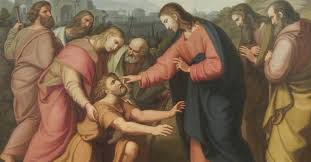
He opened the eyes of the blind man to give him sight but also to illustrate that He was the “light of the world” and all men should open their eyes to see and know God. He brought Lazarus back from the dead to claim “I am the resurrection and the life.” Lazarus’ body symbolized more than just a body; his body symbolized the life of the soul.
How many miracles does one have to read about to accept that Jesus is who He said He was? It took five facts above for the worker to realize that he was late. Some eyewitnesses may have only required one, a cleansed leper, a deaf and mute man healed, a demon cast out, or a cut off ear repaired. Jesus performed His many miracles for as Stott writes “men [who] are spiritually hungry, blind and dead, and [to show that] only Christ can satisfy their hunger, restore their sight and raise them to a new life.”
It is important to note that Jesus never performed a miracle to show off. He never performed a miracle too compel submission. The purpose of miracles was not for His own selfish gain.
As we bring chapter 2 of Basic Christianity to a close, we are back to where we began. A basic concern for anyone who wants to be a Christian is dealing with Jesus as real or Jesus as imposter. Did Jesus attempt to gain authority over men when He did not deserve it? Was He just mistaken about His identity and suffering from a delusion? His claims for identity were based on what He said about Himself, His direct connection with God His Father, His indirect claims for divine responsibilities and finally His miracles.
Skeptical people may always be skeptical. They may always find explanations that will deny facts. I don’t need an alarm clock. I have a natural way of waking up. The sun in my bedroom is an aberration, maybe I have just never noticed it before. That clock at the market is wrong; they never have it set accurately. The video billboard is wrong because it was affected with the power outage also.
Making an “inductive leap” varies from person to person. Five facts may do it for someone but someone else may take fifteen. Some people are so stubborn that nothing will make them believe. Then we have people like “Doubting Thomas” who observe miracle after miracle and will not declare Jesus’ identity until some irrefutable dramatic moment. It took Thomas to be in the presence of Jesus after His death. He had to touch His crucifixion wounds to move him from doubter to believer crying out “My Lord and my God!” That was when Thomas made his inductive leap.
The dramatized claims of Jesus may make the strongest case for His identity because they “show” His power over this world, a power that is not of this world.
They show that Jesus has…
The power of God.
They show that Jesus…
Is God…
*Miracle facts are from the gotquestions.org website from articles like “What Were the Miracles of Jesus?”
*My first post on The Cross of Christ made reference to Basic Christianity so I am going to insert comments on that book in between posts on The Cross… I think readers may find this approach interesting. For my opening comments on Basic see the post “Studying Stott Again” on October 25, 2020. I have never worked on two books at a time but now is the time to do that.






 St. John Studies