“Who Shall Separate Us From The Love Of Christ”

The final verse…

Romans 8:31, Romans 8: 32 and Romans 8:33…*

Three Scriptures that J.I. Packer has used to conclude his book Knowing God

Now we discuss the fourth scripture. 8:35:  “Who shall separate us from the love of Christ? Shall trouble or hardship or persecution or famine or nakedness or danger or sword? As it is written: ‘For your sake we face death all day long; we are considered as sheep to be slaughtered.’  No, in all these things we are more than conquerors through him who loved us”…

Packer’s focal point of the Scripture is this: “Who shall separate us from the love of Christ?”.

The short answer to the question is no one shall.

I had an unusual experience just last night.  I belong to a book club at my church and we were discussing  the book  Silver Sparrow by Tayari Jones.  One of the main ideas of this novel is that we all need love and in the case of this book, the main characters [two girls] need love from their earthly father.  I was facilitating the discussion of the book and I happened to be the only man in the room.   I asked this question: “How important is it for a girl to have her father’s love”?   I asked all the women in the room to respond.  All of them expressed the fact that they did not have enough of that love or attention from their fathers.  Almost all of them said “he was working too hard, he was too tired or he did not have time to attend to my needs.”  One woman said “It is so important for a girl to be loved by her father”.

We all need to be loved.  We all need unwavering love.

Packer discusses an image of a woman who is blowing on thistledown.  As she blows on the plant she is saying “He loves me—He loves me not,” hoping that the last remaining thistle will be on “He loves me.”   This presents a view that God’s love for us is uncertain.  It may be or it may not be.

But God’s love is not like human love.  Human love is not guaranteed to fulfill anothers’ needs.  What is served up may not be enough.  “Divine love is a function of omnipotence, and has at its heart an almighty purpose to bless which cannot be thwarted.”  This divine love is love from God and love from his Son, Jesus Christ: “[God and Jesus] are one in loving sinners, and also that the love which elects, justifies and glorifies is love ‘in Christ Jesus.,’ love knowable only by those to whom Jesus is ‘our Lord’” [Packer, 275].

This love that the Apostle Paul writes about in Romans 8: 35 is love that saves.  This divine love is the love that sinners experience when they declare that Jesus is their Lord and they are made right in their life by their declaration.  At that point God’s love is immutable; “nothing can at any time part us from that love or come between us and the final enjoyment of its fruits” [Packer, 275]. 

What Paul is saying is two-fold.  First of all, God is our keeper.  As we declare our love for Him, He holds us fast.    It says in First Peter, 1: 5 “[Christians] are kept by the power of God through faith unto salvation.”  Packer says “the power of God keeps them believing, as well as keeping them safe through believing.  Your faith will not fail while God sustains it; you are not strong enough to fall away while God is resolved to hold you” [Packer 275].

That’s security.  That’s affirmation.  That’s assurance of God’s love.

Secondly, Paul is saying that God’s love is adequate as our end.  Human love relationships are ends in themselves, “having joy in themselves.”  Our relationship with God is more; the loving relationship with Our Father fulfills us to a higher degree.  Packer writes that loving God will mean that we are “fully satisfied, needing and desiring nothing more.” 

Paul is attacking the idea that Christians going through hard times can feel they are experiencing God withdrawing His love.  When unknown things occur, when we are facing an uncertain future, when “cosmic forces” intervene which we cannot master, it is human nature to have fear.  It is also human nature for us to admit that fearful times can take a toll on our relationship with God.  When undergoing tough times some people draw closer to God; whereas others ask “why me?” and fear that God no longer loves them, maybe He is even punishing them.   Paul is fighting this latter tendency in his words: “I count everything sheer loss, because all is far outweighed by the gain of knowing Christ Jesus my Lord, for whose sake I did in fact lose everything.  I count it so much garbage, for the sake of gaining Christ….All I care for is to know Christ, to experience the power of His resurrection, and to share His suffering, in growing conformity with His death, if only I may finally arrive at the resurrection from the dead….I press on, hoping to take hold of that for which Christ once took hold of me….forgetting what is behind me, reaching out for that which lies ahead, I press toward the goal to win the prize which is God’s call to the life above, in Christ Jesus” [Philippians 3: 8-14].

Why do we choose to love God?  We are dedicating ourselves to “perfecting” our relationship with Him.  Packer writes “How could it be otherwise, when it is a love relationship?”

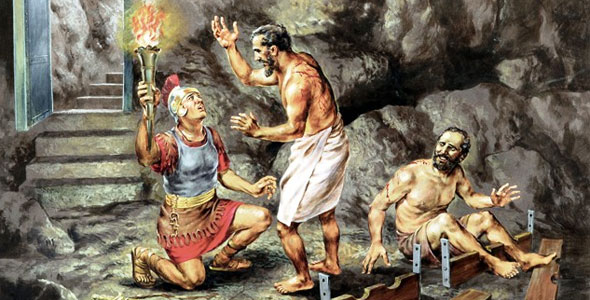
I recently taught a Sunday school class on God’s unshakable promises and my focus was on God’s promise to protect us from evil.  The point of my class was that God has conquered satan and it says so in His word.  I asked the class if they really knew the significance of the common Christian sentence “We are more than conquerors.”  [Note the sentence is in Romans 8: 35, the Scripture for this post].  My point was in the context of God’s victory over satan but “We are more than conquerors” can also apply from the fact that nothing can separate us from God’s love.  When we have fear, we need to know that we have a loving God who cares for us.  Packer uses the example of Paul and Silas in stocks in the Philippian jail.  They could have bemoaned their fate, saying that God had deserted them, He no longer loved them, that their situation was evidence that God put them in a horrible position. 

What did they do?

They began to sing.

They were more than conquerors.

They knew that God’s sovereign love is never withdrawn from Christians who really believe. 

“Who shall separate us from the love of Christ?”.

No one…

*for discussions of 8:31, 8:32 and 8:33 see previous posts on St. John Studies:  “A String of Beads”, The Cost, The Effectiveness and The Consequences” and “Be Assured…It is God Alone”

Posted in Uncategorized | Leave a comment

Be Assured… It is God Alone…

“What, then, shall we say in response to these things? If God is for us, who can be against us?”  Romans 8: 31…

“He who did not spare His own Son, but gave Him up for us all—how will He not also, along with Him, graciously give us all things?”  Romans 8: 32…

Who will bring any charge against those whom God has chosen? It is God who justifies.  Romans 8: 33…

J.I. Packer closes his book Knowing God with four verses from Romans.  After discussing the implications of Romans 8: 31 and 32 in the two previous posts, it is time to comment on his use of Romans 8: 33.

It is a very personal verse since it deals with an idea that all Christians struggle with—assurance.  When Christians give their lives to Christ, they are “made right” with God, their sins are forgiven and they are “born again.”  Christians who are born again want to make the effort to live their lives for Jesus as much as they can. 

What does all of this mean?  Some Christians may take their salvation for granted.  In my Bible I have the date March 1, 1998 which is the date I got out of my pew and walked to the altar of my church.  I gave my life to Christ that day.  I could list other important dates where I felt the pull of Christ on my life, dates that proceeded March 1, 1998.  My salvation was a process, a life changing process.  In those days, I knew I needed to change; I needed something more in my life.  I needed to have guidance, inspiration and discipline.  I was lost. 

Gradually God began to make sense.  He provided answers that I sorely needed.  I felt peace for the first time in my life, lasting peace.  The more I learned about God, the better life felt.

I was ready to make a commitment.

I have never taken my salvation for granted.

In my early “born again” days, I was the classic new Christian that Paul describes in First Corinthians 3:2: “I gave you milk, not solid food, for you were not yet ready for it. Indeed, you are still not ready.”  I was a baby.  I was super happy because I was in love with Jesus.  I had a new purpose in life, but I was living on milk, not meat.

And I had a problem…

I was still sinning like I did before I was born again. 

That is what Packer addresses with Romans 8: 33.  What was going to happen to me when I sinned and I knew better?  Was God going to take His love away?

Romans 8: 33 is the Apostle Paul’s effort to assure us that God understands our weaknesses and He will not desert us.  Packer thinks the idea is so important for our knowing God that he concludes his book with this discussion.  “There are two sorts of sick consciences, those that are not aware enough of sin and those that are not aware enough of pardon” [Packer 272].  Romans 8: 33 ministers to the latter.  The Apostle Paul knew how hard it was to be joyful when there is fear that justification is provisional, that God is going to declare one day that you are no longer “made right” with Him.  Paul knew that Christians “fail and fall” and memory of sins committed after becoming a Christian are more painful than thoughts about sinning before being born again. 

Paul denied that lapses can endanger our station with God.

First of all, Paul knew that people are not chosen for salvation in a haphazard fashion.  God has a plan when the “merciless sinner” becomes born again.  “Those whom God justifies now were chosen for eternity for final salvation, and if their justification were at any stage revoked, God’s plan for them would be entirely overthrown. So loss of justification is inconceivable” [Packer, 272].

Secondly, Packer points to Paul’s idea of sovereignty in judgement.  In short, this means that God has ultimate power over decisions about salvation.  “God justified you with (so to speak) His eyes open.  He knew the worst about you at the time when He accepted you for Jesus’ sake; and the verdict which He passed then was, and is, final” [273].  When the Apostle Paul wrote Romans, his model for sovereign power was based on the concept of the “royal judge.”  The Royal Judge had all the power of the legislature, the judiciary and the executive and when the judge made a judgment about a person, they became that person’s “champion and protector.”  Our Sovereign God justifies us and maintains that justification.  Packer goes further:  he says God intends us to enjoy our justification in full.  No one can question the decision.

Third, lest we forget, we have a powerful intercessor who is working on our behalf.  Jesus Christ is sitting at the right hand of God interceding for us.  Christ died and was raised from the dead for us and this act was designed to save us from condemnation.  Jesus bore the penalty of our sins.  He was our substitute.  Packer writes “[Paul expressing] the idea of Christ condemning us is absurd….He died…He rose and was exalted…Now by virtue of His enthroned presence at the Father’s right hand, He intercedes with authority for us…Shall He now condemn us?” [Packer, 273].  Christ is our mediator who loves us and gave Himself up for us.  He wants us to enjoy the “full fruits” of redemption.  “The idea [of our Mediator condemning us] is grotesque and impossible” [273].

To know God is to know that He is our sovereign protector.  He is for us, so why fear anything?

To know God is to know that He gives us all that we need and we should not want more than He provides.  He graciously gives us all things.

To know God is to know that He gives us salvation and once He gives that, He does not take it back.  Who will bring any charge against those whom God has chosen? It is God who justifies. 

Be assured…

It is God alone…

Posted in Uncategorized | Leave a comment

The Cost, the Effectiveness and the Consequences

In the previous post*, I discussed “If God is for us, who is against us,” the idea that if God is on our side, no opposition can crush us.  That is thought number one of J. I. Packer’s “four final thoughts.”

Final thought number two is “No Good Thing Withheld.” 

Not only can no opposition crush us, but with “No Good Thing Withheld” he is stating that God gave up all for us.  He gave His Son for us and He is holding nothing back in the good things that He is capable of giving us.

All of the four final thoughts come from the Apostle Paul’s ideas as expressed in Romans 8 and the starting point for Packer’s conclusions are verses 38-39: “I am convinced that neither death nor life. . .nor anything else in all creation, will be able to separate us from the love of God that is in Christ Jesus our Lord.”  Packer says that we as Christians need to meditate on verses 38 and 39 and realize we are “more than conquerors” and our God is more than adequate.

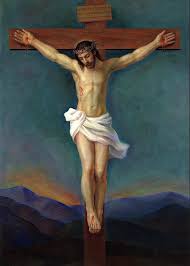
The “no good thing” final thought comes from Romans 8: 32: “He who did not spare His own Son, but gave Him up for us all—how will He not also, along with Him, graciously give us all things?”  This Scripture focuses our attention on the costliness of our redemption.  As you consider the sacrifice that God made in giving His only Son for our sins, you begin to realize that God’s love for us has no limits.  Packer describes this act in these words: “If the measure of love is what it gives, then there never was such love as God showed to sinners at Calvary, nor will any subsequent love-gift to us cost God so much”[Packer, 264].  Sometimes Christians have a feeling that God has a limit on the gifts He can give us.  Seriously consider the cost of our redemption through the death of His Son Jesus Christ and as you do, you will conclude that none of us should ever limit how much God can show His love for you and for me.

Besides the cost of God’s sacrifice of His Son, Packer also wants to emphasize the effectiveness of God’s gift of redemption.  The death of Jesus Christ is the basis of God’s forgiveness of man but we don’t really receive that forgiveness unless we have faith in God.  Here is where many of us get confused, that there is some quid pro quo arrangement with God.  We won’t receive any gifts from God unless we give God a gift [our faith for example].  Nothing could be further from the truth.  Packer writes “psychologically, faith is our own act, but the theological truth about it is that it is God’s work in us: our faith and our new relationship with God as believers and all the divine gifts that are enjoyed within this relationship, were all alike secured for us by Jesus’ death on the cross” [Packer, 265].  The cross is often our focal point in God’s eternal plan to save us but we don’t have to give God anything or show God anything in order to receive His loving gifts.  Of course we focus on the removal of the “sin barrier” which is Jesus atoning for our sins [wow, what a gift!].   But think about the beauty of the process of becoming a believing Christian: one is called, one is justified and then one leads a life that glorifies God.   One can say about God, how shall [not will] He not give us all things because the sacrifice of His Son opens up the doors for us to be given all of His gifts. “The saving purpose of God, from eternal election to final glory, is one, and it is vital for both our understanding and our assurance that we should not lose sight of the links that bind together its various stages and parts” [Packer , 265].  If God’s pursuit of a relationship with man is the story of Christian history, effective is the word I would use to describe how God has brought that all about.

If you thought Packer’s discussion of the cost and the effectiveness of God’s gifts to us is a bit dense, he really presents challenging material about the consequences of God’s gift of redemption.**  Maybe you are thinking that this gift with no “strings” is too good to be true.  Maybe you are thinking that I am not sure I am “believing” enough.  Maybe you have times when your faith is a bit shaky due to temptations from the world.  God has given me faith but is it growing?  What we are really looking for is assurance.

Packer writes a lot about this in his final thoughts, but to synthesize his thinking, he feels that God is very serious about the First Commandment: “thou shalt have no other Gods before you.”  Some might say that this is what He demanded of the Israelites who lived in a polytheistic culture, but Packer says that today’s Christian lives under the same commandment. 

What does this mean for today?

We are to live the life of a “pilgrim,” a temporary resident of this earth.  We are to be willing to give up material wealth and the security it provides.  We must be willing to carry our cross daily.  We are called to be meek people.  We are called to be sensitive to the plight of others.  We are asked to be ready to suffer indignity for our faith as those around us in today’s world will turn a cold shoulder, show us contempt and disgust.

Sound hard?

It does.

“Do we live it? [the kind of life that Christ calls us to]. Well look at the churches, observe the shortage of ministers and missionaries, especially men; the luxury goods in Christian homes; the fund-raising problems of Christian societies; the readiness of Christians in all walks of life to grumble about their salaries; the lack of concern for the old and lonely and for anyone outside the circle of ‘sound believers’” [Packer, 269].

God says “thou shalt have no other gods before you.” 

What Packer says God is really saying is that I am all you need.  I am adequate.  You need not fear accepting responsibility for those less fortunate, I will help you.  You don’t have to have all those trappings of material security; they distract you from Me.  I am all you need.  Don’t worry about all those social conventions.  Follow Me and you will be fine.  Don’t worry about fitting in. 

Then come the words from Packer: “Now let us call a spade a spade.”  The Apostle Paul in Romans 8 is saying that we are not believing God for enough.  “The name of the game we are playing is unbelief.”  When we don’t take God at His word, it is us showing our shaky faith.  If God denies us something we think we need, we moan.  Faithful people see that God really is making room for other things He has in mind.  We can find ourselves stuck in a static faith that is too culture-based.  We think we are worth what we are worth because of the things we possess.  Our possessions are our security.  Our possessions become our God.

Instead of taking that risky, costly move that God is calling you to do, we hold back and cling to the things of this world.  On one level, we know God has the strength and wisdom to do anything.  On one level we know that God has overall plans for our ultimate good.  On one level we know that God is constant in His love for us, but we hold back anyhow.

If we would only believe “he will give us all things” Packer writes “one day we shall see that nothing—literally nothing—which could have increased our eternal happiness has been denied us, and that nothing—literally nothing—that could have reduced that happiness has been left to us.”

Are there consequences of accepting God’s gift of redemption?  There are.  But as human beings we don’t need to be that concerned about counting the cost.  Consequences is a word that sounds negative but in this case it is not.  Our God is a good God and He loves you and me.  The consequences are good consequences. 

Let me close this discussion with wonderful concluding words from Packer:  “Your God is faithful to you, and He is adequate for you.  You will never need more than He can supply, and what He supplies, both materially and spiritually, will always be enough for the present” [Packer, 271].

*the post “A String of Beads” September 15, 2020, St. John Studies.

**The consequences section of this post is long but Packer really has an extensive discussion of his third point.  I tried to be as succinct as possible but I would refer the reader to pages 266–271 for his more developed explication of the consequences of God’s gifts to us.

Posted in Uncategorized | Leave a comment

A String of Beads

Four final thoughts…

J.I. Packer opens his book Knowing God with a warning.  My book “at best is a string of beads: a series of small studies of great subjects.”  He is humble about his undertaking, the writing of a “treatise on God.”  He hopes his work coalesces into a single message about God and how Christians live their lives.  As I transitioned from a previous book discussion and moved into Knowing God, [on April 22, 2019] I opened with an illustration he borrowed from another author:  there are two types of Christians, ones who theorize about their faith and ones who walk out their faith.  The theorizers he calls “balconeers” because they are high above the street looking on at the walkway “commenting on the way that travelers walk” below.  The ones on the walkway are “travelers” going from one place to another, trying to figure out how to walk in God’s world.  He intended Knowing God to be a book for travelers.

Indeed as I have worked through his book I feel I have been on a journey.  The book has challenged me.  Along my way I have learned so much about God.  I have been humbled as Packer exposed the weakness of my knowledge, my true lack of communion with Him.

As we head toward the final pages, Packer wants to leave us with four final thoughts.

The first thought is one I have written on before: “If God is for us, who is against us.”  This Scripture from Romans 8: 31 is the first closing idea in his book.

Why did Packer pick Romans 8: 31 as a final idea, so important that it concludes his book?

He says that Paul writes about God in this way to announce that He will always be our sovereign protector.  No matter what we encounter in life, He will always be there.  The Bible is full of examples of God showing His protective nature for those who follow Him.* 

It is a matter of “covenant commitment.”  What God says in Genesis 17 is of maximum importance.  “I am God Almighty;…I will establish my covenant between Me and you…to be your God and the God of your descendants after you….I will be their God….You must keep My covenant [verses 1, 7-9].  “God is for us” is covenant language.  What Romans 8: 31 means is that God is going to uphold and protect His people when circumstances are threatening.  Packer describes Romans 8: 31 this way: “The simple statement ‘God is for us’ is in truth one of the richest and weightiest utterances that the Bible contains” [262].

Paul knows that the Christian life is a struggle at times, obstacles come against all of us which can make our lives a challenge.  Paul knows firsthand that people make fun of Christians, express displeasure for the Christian faith, or even get hostile toward believers.

As in the previous post, he implores believers to THINK!**  Opposition is real and if you do not acknowledge it, you will have problems maintaining your faith in God.  He is begging us to be realistic. 

But also he is begging us to think about our Protector.  Should we be afraid of our detractors?  Paul says “You need not be, any more than Moses needed to be afraid of Pharaoh after God said to him, ‘I will be with you’” [Packer 263].  You need not be any more afraid than Hezekiah was when the King of Assyria had a huge army coming against him.  Hezekiah acted on the faith of the words recorded in Second Chronicles “Do not be afraid…because with us is the Lord our God to help us to fight our battles” [32: 7-8].

What should we do when we are in our time of troubles?

First of all, we should praise God’s word.  No matter what we encounter in life, God’s word tells us that we will be ok.  We don’t have to indulge in “theological fantasies” because we have evidence to the contrary.  Founding our lives on the Bible is a mark of a true believer.  Secondly, we must pray.  This is communion with God and it is essential for all believers.  The person who declares they are “Christian” but never prays does not tap into the greatest power source to help us when we are troubled.  Finally, the Christian who is beset with problems should “pay his vows”, which means express thanksgiving for God’s protection in difficult times.

We truly have an awesome God, one who looks out for us every day, all day long.  He never forgets His promise to the faithful.  As Romans is from the New Testament, one can turn to Psalm 56 to see the same ideas expressed in the Old Testament.  When the psalmist complains that his back is to the wall, he knows that God is there for protection.  Again the phrase “God is for me” shows up in verse nine.  When you read this Psalm, this troubled man knows that God has not forgotten or overlooked his need.  He has confidence that when he cries out, God will turn his enemies back and there is no need for panic.  “When I am afraid, I put my trust in thee….In God I trust without a fear.  What can flesh do to me?” [verses 3-4].  Packer says it this way: “[Whatever] may [happen] to the psalmist from the outside, so to speak, in the deepest sense nothing can touch him, for his real life is the inward life of fellowship with a loving God, and the God who loves him will preserve that life whatever happens” [Packer, 262].

We all know the Christian life is difficult at times.  We think thoughts that are far from edifying.  We say things that we wish we could take back and we do things that are sinful.  Yet we are supposed to summon the strength to continue our walk with the Lord no matter what we do, no matter what others do to us.  You might say we need protection from our detractors and we need protection from ourselves.

With Romans 8: 31 Packer says we have all that we need.  That’s why he calls the Scripture “rich and weighty;” the Apostle Paul is telling us to hold onto the idea that God is always for us.  We have a sovereign protector who is forever giving us what we need.

We don’t have to fear anything.

Our faith does not have to crumble when we sin, for God gives us His grace.

Turn to God and experience new strength for the fight.

“If God is for us, who is against us.”

Indeed…

*Abraham, the nation Israel, Jesus, a sinner who is raised from spiritual death to spiritual life etc.

**September 7  “Possess Your Possessions” from St. John Studies.

Posted in Uncategorized | Leave a comment

Possess Your Possessions

Many years ago, the teacher of my adult Sunday school class brought a hatbox to class.  Maybe that is why I remember this so well.  Not too many people today even know what a hatbox is.  This was no ordinary box; it was very rigid, made out of very strong paper-based material [stronger than cardboard].  It was circular with a top that fit very tight.  The best word to describe it was “fancy.”  You might say that the box was truly designed to protect its contents, to keep an expensive hat from being crushed or soiled, to keep it in its original form.  My Sunday school teacher taught that day on claiming the gifts that God has given us.  His whole theme was that we go through life in this world and never really open our box of gifts.

I have commented on Romans as the book of the Bible that is the “High Peak of Scripture.”  Study of that book will yield much fruit for the Christian.  I have commented on Romans 8 as the “High Peak of Romans.”  Understanding that chapter in that book is seminal for the Christian who really seeks the most precious nuggets of the Bible.*   In the last chapter of his book Knowing God, J. I. Packer is trying to make the case that our God is adequate.  He is there to meet our earthly needs.  He is there to give us all the gifts that we need to live the best life we can live…right now.

In Packer’s words, the Apostle Paul in Romans “wants us to possess our possessions.”

Psalms 73: 24-26 says “Whom have I in heaven but You?  And earth has nothing I desire besides You.  My flesh and my heart may fail, but God is the strength of my heart and my portion forever.”

This is a very strong statement. 

Packer uses Psalm 73: 24-26 and then asks the question:  “What then shall we say to these things?  He asks that question in what he calls a hortatory manner, not a word I use very much.  Hortatory in preaching means that the preacher makes a statement which is designed to call the congregation to action, to get them to respond.  The pronoun “we” is used by Packer with a very serious purpose.  Paul lays it all out for you; what are you going to do?  How are you going to respond?  What kind of life are you going to live?

He wants his readers to respond by “possessing their possessions.”

Open your box.  Live your lives using God’s gifts.

Paul is writing to the people of his time period but do his words ring true for us today?  He calls on his contemporary Christians to think and apply the facts that he is expressing to their lives.  Packer writes that Paul knew two things about the Christian life:  first all, Christians who are serious about their faith should be committed to “all round righteousness.”  They are seeking to do the will of God, “no halfway measures.”  Secondly, if a Christian is serious about their faith and becomes committed to all round righteousness, they will experience “material hardship and human hostility.”   Packer refers to Acts 14:22 when Luke says “We must go through many hardships to enter the Kingdom of God.”

How do we live through these hardships?  One response is to “trim one’s spiritual sails” or just settle for less.  God may be calling you to do more, but we can meet hardship by doing less.  Maybe doing less will make life easier.  Another response is to practice “universal obedience.”  Packer writes that this is a Puritan concept that amounts to being strong in the face of problems: “swimming against the world’s stream all the way.”

Paul knew that when problems come, something happens to all of us.  We resort to emotional thinking.  Problems can cause panic, frustration, fear, doubt etc. etc.  Paul is exhorting us to think instead of feel.  Think about what we know about our God in the Gospel.  Think against your emotional feelings.  Packer writes “let evangelical thinking correct emotional thinking. 

We know these things to be true through the Gospel.  1. If you love God and accept your Christian birthright, you will have peace.  2. If you love God you will have hope.  3.  If you love God you will have joy.  These are the gifts in every Christian’s hatbox; peace, hope and joy.  All we need to do is pull them out of the box and they are ours. 

Sounds easy, doesn’t it?  Paul appeals to our rational brain, not our emotional brain.  Argue yourself out of the gloom of life.  If you have unbelief, be truthful about it and own up to it.  Lay it before God and He will help you overcome unbelief with faith.  Talk yourself out of letting problems control you.  Let God control you.  We have an indwelling Holy Spirit that insures that we have a chance to be God’s beloved children and heirs [we all know that heirs can inherit the gifts of the estate].

It is not that easy really because the emotional brain does take over from time to time.  That is the popular message of the world.  Even counselors urge us not to develop a habit of being negative about our feelings.  Feelings exist and sometimes they rule us.  That’s ok.   Counselors teach that we must accept feelings, validate them and allow them to emerge so they can be building blocks to stronger relationships.  Some people are told they need to express feelings because they can block taking action in a person’s life.  Others think that feelings are the springboard to action, the motivation for us to accomplish life goals.

Paul just does not go there.  He is trying to tell us “Think, Think, Think” what the Lord has given you!  You don’t have to live a miserable life here on this earth, letting your emotions control you.  With that kind of overemphasis on emotions, life can be miserable.  I have heard of some who feel like life is a veil of tears.  Heaven is where God’s gifts are; surely not here on earth.  Rather than enjoying God’s gifts here on earth, these people look forward to heaven and slog through life here on earth.

“Earth has nothing I desire besides You.”

Where is the strength in Psalm 73: 24-26? 

God is adequate.  He has all that you need to live your best life now.  Think!  Think!  Think!

Open your hatbox…

Possess your possessions…

*  “The High Peak of Scripture”  St. John Studies, August 26, 2020 and “The High Peak of Romans” St. John Studies,  September 1, 2020,

Posted in Uncategorized | Leave a comment

The High Peak of Romans

Adequacy:  the state or quality of being adequate; sufficiency for a particular purpose.

In J.I. Packer’s book Knowing God, he has painstakingly taken us through chapters dedicated to “knowing our Lord” [part 1], “beholding our Lord” [part 2] and now we are in the last chapter of his book where he has written at length about “if God is for us, who can be against us”?  In fact, this verse from Romans 8: 31 may be the inspiration for the section three title of his book [the final section “If God be for us”].

His final chapter of section three is entitled “The Adequacy of God.”

Is God adequate?  I think about the word adequate and I wonder if it is enough.  Is God more than adequate?  Fully sufficient comes to mind.  Ample is a good word.  Maybe abundant should apply or even liberal or copious.  Is “adequate” adequate?

But no, Packer prefers that word:  adequate.

In my previous commentary, I reflected on Romans as the “High Peak of Scripture”*  He admits that some would object to taking the short cut to the heart of Scripture just by the study of one book of the Bible.  They feel that reading the entire Bible is the only way to really know God.

Now Packer goes even further in “cutting to the bone” of the Bible:  he says Romans 8 is the “high peak of Romans.”

Can we study, meditate, think deeply or focus on one chapter of one book of God’s word and say that is enough to prove the adequacy of God?

He attempts to make the case that we can; sort of.

The reason that I use the phrase “sort of” rests on the idea that some conditions have to be met before we arrive at Chapter 8.  Actually those conditions are dealt with in the chapters that are written before Chapter 8.

First of all, we have to come to grips with the fact that all of us are lost and helpless sinners.  We cannot overcome this “sin” problem on our own.  We need a power much higher than us to help us with our struggles.  We need God.

Secondly, we must believe in the promise [the covenant] that God made with Abraham and its fruition in the life, death and resurrection of Jesus Christ.

Thirdly, we should understand that the Apostle Paul’s words in Romans about his war with the spirit apply to all of us.  When he bemoans the fact that he lives in an earthly body and says “I do not understand what I do. For what I want to do I do not do, but what I hate I do [Romans 7: 15] he is speaking of the battle that we all experience daily.

What is the true springboard to what Packer calls the seminal chapter of the Bible?  Here is that “springboard.”  “Who will rescue me from this body that is taking me to death?  Thanks be to God, who does this through our Lord Jesus Christ” [Romans 7: 24].

This is radical…

In Paul’s lifetime context, the law was supposed to be the way to righteous living.  After all, the law was the Jewish way to God.  But Paul writes the words that shock the world: the law is the source of sinning

Paul explains law stirs up the impulse to disobey. How can that be?   The more human beings try to follow a rigid path to righteousness, the more they find they cannot go far enough.  There is no such thing as human perfection and if a “righteous” man thinks he is doing well in holy living, he is sure to fall to the sin of pride [among many other sins].  Paul is just being brutally honest when he pens the words “I have the desire to do what is good, but I cannot carry it out….For in my inner being I delight in God’s law, but I see law at work in the members of my body, waging war against the law of my mind and making me a prisoner of the law of sin at work within my members” [Romans 7: 18, 22-23].  Packer says Paul has shared very personal information about himself but he has also spoken for all of us.  We all struggle with this.  We all experience failure and guilt as we try and try and always fall short.  “For sensitive Christians, therefore, who know that God hates sin, to be diagnosed by the law is a miserable and depressing experience” [Packer, 257].  Paul knows that he cannot leave this discussion here.  He has to hold out hope for his readers. 

Romans 8 explains we don’t have to perfect; we don’t have to live a miserable life of trying and trying and trying and failing. 

Here is why God and His Son Jesus Christ are “adequate.” 

God’s grace is adequate.  We have guilt born out of our sin, we face death due to our pitiful behaviors, and we even experience terror as we compare our holiness to the holiness that God expects.  All this causes us to feel weak, to feel despair and unable to pray.  Life can be “meaningless and hopeless.”

Jesus Christ has come so we can live by faith, not the law.  Indeed we can live a righteous life with no condemnation [God knows our human limitations and He still loves us].  God has also given us the Holy Spirit to guide us through our life on earth so He is never far away.  We can consider ourselves adopted into the Divine Family of God [in which Jesus is the firstborn].   Instead of failure and guilt, God has given us security: “a status, plus a dynamic, plus an identity, plus a safe conduct….[this] is more than enough to support a Christian whatever his trouble” [Packer, 258].

Adequate, fully sufficient, ample, abundant, liberal, copious…………..

Let’s not stop with thinking about the gift that we have been given.  Paul calls on his readers to go from gift to Giver.  His theme according to Packer is “the adequacy of the God of grace.”  God becomes as it is written in Genesis 15:1 “your shield, your very great reward.”

Why is Romans the “High Peak of Scipture?”  Why is Chapter 8 the “high peak of Romans?”

Have you ever heard the phrase “saving grace.”  That is what we can begin to understand when we study Romans Chapter 8

Packer and God’s words say it best: “If verses 1-30 [of Romans 8] are saying ‘You guide me with your counsel, and afterward you will guide me into glory’ then verses 31-39 are saying, ‘Whom have I in heaven but you?  And earth has nothing I desire besides you.  My flesh and heart may fail, but God is the strength of my heart and my portion forever’” [from Packer, 259 and Psalms 73: 24-26].

This is the adequacy of the God of grace.

*see August 26, 2020  St. John Studies.

Posted in Uncategorized | Leave a comment

The High Peak of Scripture*

The Bible, the Holy Book of Scripture, the love letter from God…

The Bible is the most published book in the world.  Look at the number of Bibles sold.  In the past fifty years, 3.9 billion copies have been sold.  The next most published book sits at 820 million and the third most published book has 400 million in that fifty year span.**

Even though it sells the most, many think it is one of the most difficult books to read.  Parts of it seem to be confusing, especially if we try to read it without some guidance*** from others.  Parts of it seem boring, especially books like Leviticus and Numbers (all those detailed laws!).  Bible reading can get stale; familiar parts can get too familiar and readers can go on “auto-pilot” as they read.  Bible reading can also be intimidating.  The Bible is a pretty imposing collection of God’s Words.  How can I wrap my mind around God’s message to man?

J.I. Packer has a suggestion.  If you struggle to read the whole Bible, read the part of the Bible that sheds light on the entire Scripture.

He writes that Bible readers need to concentrate on one book:  Paul’s letter to the Romans.

Packer is not trying to encourage laziness or make life easier for all of us; he is trying to make the point that our God is truly adequate: God is capable of meeting all our needs.  “All roads in the Bible lead to Romans, and all views afforded by the Bible are seen clearly from Romans, and when the message of Romans gets into a person’s heart there is no telling what may happen” [Packer, 253].  Romans is a powerful exposition of the role of God in man’s life.

He tries to make his case by asking what do you look for in the Bible?

“If we are wise, we will have our eyes open for several things and Romans is supreme on them all” [Packer, 253-54].

Christian doctrine:  doctrine means the teaching or explanation of the Christian message of the Gospel and the faith that flows from that Gospel.  The idea of God is the main theme of the Bible, but not everyone is sure about the meaning and significance of sin, the law, judgement, faith, works, grace, creation, redemption etc.etc.  Yes, these ideas matter and sometimes Christians take them for granted or just skate through life hoping no one asks them a fundamental question.  Also, Christians don’t always agree on doctrine.  This past week for example I have heard three Christians ask the same question:  Why do we have so many denominations?  Why don’t we have just one church?  The quick answer is that all churches do not agree on the details of doctrine.  Even though every Christian does not agree on what I call “secondary” aspects of doctrine, we are all bound together by belief in God the Father, the Son and the Holy Spirit.  We are all in agreement on the sinful nature of man and our need for God’s grace.  Jesus Christ came to this earth to make it possible for us to have a relationship with God through His death and resurrection and to show us how to extend God’s love to other people.

Bible as a book of life:  Packer writes that all of us need explanation about how to serve God.  All of us need explanation about how to find God, especially in times of tribulation.  Paul gives us not only exposition in his book, he provides examples (many of them personal examples) of his struggles with sin, grace and faith.  Packer writes that the book of Romans is the “fullest cross section of the life of sin and life of grace, and the deepest analysis of the way of faith, that the Bible gives anywhere” [Packer, 254].

Bible as the book of the church:  What is the church?  Packer relates that the church is “the true seed of faithful Abraham, Jew and non-Jew together, chosen by God, justified by faith and freed from sin for a new life of personal righteousness and mutual ministry” [Packer, 254].  Many outside of the church don’t understand this but the church is really the family of God.  It is a community of people who are trying to carry out the work that Christ intended us to carry out, the work that can help redeem the world.

Bible as a personal letter to His children:  You can read Romans and feel its unique power to reach within you and search out your soul.  We all have our sinful habits and attitudes, a penchant to be hypocritical, a tendency to be self-righteous and a need to rely on self [not God].  We all have moments of unbelief, moments of frivolous behavior, and half-hearted attempts at repentance.  We get caught up in the world; we get fearful, depressed, conceited and insensitive.  Romans has it all, just as we have it all, but Romans also has “joy, assurance, boldness, liberty and ardor of spirit which God both requires of and give to those who love Him” [255]. We need truthful balance; man is not all devil and not all angel.

Yes, we can all agree that Romans encapsulates many things: doctrine, book of life, book of the church and personal letter, but not everyone appreciates a short cut.  Packer writes that getting to the top of Mount Everest can be accomplished more than one way.  Some think the thrill is in the climb, the long slog up the mountainside.  These people feel that the impact of Romans depends on what has gone before, the diligent dedication to years of Bible study  If a reader digs into the Bible as a whole, the more they will appreciate the intellectual problems of being a Christian that Paul presents in Romans.  The morality of the Christian life will be more appreciated, the “weakness and strain” of being a faithful follower of God will be felt.  Indeed the “long slog” through the Bible will allow you to get even more out of Romans.  Others may just need that short cut to the top of the mountain; standing on that spot at the summit is enough to stimulate Christian growth and encourage further study.  Packer likens a close reading of Romans to a helicopter ride to the top of Everest, skipping all the arduous work to get there.  He argues the result may be the same.

Why concern ourselves with long slogs or short cuts?  Should we care that a Bible reader starts at Romans and even stays there for some time?  Might they deepen their faith and understanding more than a person who tries to read the whole of God’s word?

The end result could be a deeper understanding of the adequacy of God.  Martin Luther writes that Romans is the “clearest gospel of all.”  John Calvin states that “If a man understands it [Romans], he has a sure road opened for him to the understanding of the whole scripture.”  William Tyndale describes Romans as the “light and a way in unto the whole scripture.”

Let Paul usher Scripture into your life with his letter to the Romans.

The high peak of scripture.

*explaining how important knowledge of Romans is, is Packer’s way of beginning his last chapter in Knowing God, entitled the “Adequacy of God.”

**  “The Ten Most Read Books in the World”   From the “Business Insider” website accessed on August 24, 2020.

*** devotion guidance, online guidance from a Bible scholar, book guidance from some respected Bible scholar etc.

Posted in Uncategorized | Leave a comment

The Unreality of Religion

I found myself in the parking lot of church talking to my friend, someone I have known for thirty years.  I know he has struggles, long term struggles that he thinks disqualify him from joining a church, attending a church or even going in the door for one visit.  I will never forget what he told me that day.  “I am not good enough; all you people in church have your act together and I am not in that category.  I am just not good enough to go in there.”

I did not have the words to convince him otherwise.  He turned his back on his faith, whatever faith he had.  It is not for me to know his level of belief, only God knows that.  What I do know is that he is suffering from what J.I. Packer calls “the unreality of religion.”  He assumes that all people who go to church are “lilly white,” “pure as the driven snow,” righteous people who are truly on their way to heaven.  He believes he is nothing like those people sitting in the pews.

I found myself in his company at a later time hoping to nudge him toward going to church where I hoped he would find God in some form or fashion.  More importantly, I hoped God would help him with his problems, because all the things he was doing himself were leading to failure.  He knows I go to church and he knows I have a personal relationship with God.  I told him of one of my long-term struggles, just to let him know I am not “lilly white.”  I still go to church, sinner that I am.

The reality of religion is that all God’s children make mistakes.  They always have and they always will.  Packer cites four clear-cut examples from the Bible.  God promised Abraham a son, but God made Abraham wait awhile. Abraham got impatient (like all of us do from time to time) and he got Hagar pregnant and they had Ishmael.   God was not happy.  He did not talk to Abraham for thirteen years, but eventually Sarah had a child (God fulfilled His promise on His timeframe, not Abraham’s). 

Moses felt great empathy for his people as they endured slavery in Egypt.  He was a powerful person in the Egyptian hierarchy and could have a positive impact for his people.  Instead of waiting for God to show him the way, Moses killed an Egyptian taskmaster and found himself banished to the desert for decades.  He went from high ranking government official to lowly shepherd.

David was plagued by errors, spying on Bathsheba, seducing her, having her husband killed, neglecting his family etc.  He felt remorse for his individual sins but continued to sin, ramping up his guilt to the point that he felt distant from God.

Jonah got specific instructions from God and instead of doing God’s bidding, he ran in the opposite direction and you know…he found himself inside of a great fish.

These people were people of The Lord, but all of them made huge mistakes.

All people make mistakes, some of them huge.  Even those people sitting in the pews of the church. 

I have been an adult Sunday school teacher for many years and I taught out of a book by Jerry Bridges entitled Respectable Sins: Confronting the Sins We Tolerate.  That was one of the hardest books I have ever used in class as all of us squirmed through every chapter.  We struggled through discussions of anxiety, frustration, discontentment, unthankfulnesss, pride, selfishness, lack of self- control, anger, judgmentalism,  envy.  You get the point.

All God’s “righteous people” [teacher included] were in the same category of those who wanted to stone the woman accused of adultery.  “He that is without sin among you, let him first cast a stone at her.”  The crowd melted away.  The message was clear.  “Judge not, that ye be not judged.”  After that book, we knew we would have dispersed with that self-righteous crowd.

People who are looking from the outside of our churches suffer from unrealistic beliefs about religion and sometimes those inside of our churches do too.  I have tried to put on the mask of righteousness in church, realizing deep inside that it was only a mask, a veneer that covered my real penchant to sin.  Christians who give their life to God suffer from the need to be something they cannot be—sinless.  They have Bibles but they don’t meditate on the meaning of the stories of Abraham, Moses, David and Jonah.

God restored Abraham eventually; he became the founding father of the Abrahamic religions, the keeper of The Covenant.  Moses (with the help of God) developed the confidence needed to lead his people out of Egypt.  David repented of his lapses and grew close to God.  Jonah cried out to God in the belly of the whale and lived to fulfill his mission in Nineveh.  God used these men who made great mistakes.

God’s people need to realize that God can do wonderful things out of our mistakes.  Packer cites the expression “It is said that those who never make mistakes never make anything” [Packer, 252].   I have made many bad choices in my life and I have suffered agony from those choices, but as time has passed I see why I went down the wrong path.  Failure is a hard way to learn lessons but sometimes the best lessons are learned when we experience the deepest regret.  Packer writes these episodes of sinning are when we begin to know God’s grace, “we cleave to Him in a way that would never have happened otherwise” [251].

“Unreality of religion is a cursed thing.”  Unreality of religion is the curse of the kind of teaching that Packer has challenged throughout his book Knowing God.  It certainly was a curse for my friend who sat on the outside of church looking in, but it is also a curse for church-goers who sit in the pews trying to be something they will never be—sinless. 

For people who believe that church people are too good for them, get real.  Church people are people with as many burdens as those not in church.  For church people who strive to be perfect and earn their place in the pews, relax, you will never achieve that perfection.  You may become experts in covering up your sins, but the sins are still there. 

Packer writes words of advice directly to all these folks: “Is your trouble a sense of failure?  Go back to God; His restoring grace waits for you…God uses our sins and mistakes to this end.  He employs the educative discipline of failure and mistakes very frequently.”

At the end of our sinning He is there, extending His loving hands to pick us up and send us on our way, hopefully with a more realistic attitude toward religion and toward ourselves.

Posted in Uncategorized | Leave a comment

Paul’s Source of Strength

Sometimes our problems exist for a reasonably short season and then they improve or go away.  Sometimes our problems last for what seems a lifetime, what I call a long-term problem.  I have had such a problem.  Over a period of approximately fifty years,  I have had what I will refer to as a “life challenge” and I have tried and tried to make it go away.  I have prayed countless prayers, I have tried psychological “tricks” or motivations, I have tried self-disclosure to support groups and the list goes on and on.  Nothing worked.  When I turned to God, I tried numerous approaches, praying many different kinds of prayers, feeling guilt and remorse, seeking forgiveness, receiving forgiveness and then returning to the same old problem.  When I was born again, I thought the trouble would go away but it did not.  I have written many times on this blog about how we can “find Jesus” but the same old troubles follow along behind us after our born again event.   That is what happened.  After giving my life to Christ, I moaned and moaned to God about why He did not take away my problem.

 He chose not to.

Until one day.

He led me to Second Corinthians Chapter Twelve.  I was very familiar with this chapter; in fact I had spent a lot of time thinking about the meaning of Apostle Paul’s words, about his “painful physical ailment which acts as Satan’s messenger to beat me and keep me from being proud.”  Paul says he prayed to God three times to take this ailment away and God’s answer was “My grace is all you need, for my power is strongest when you are weak.”  Paul then writes he is content with weaknesses, insults, hardships, persecutions, and difficulties “for when I am weak, then I am strong.”

I found Second Corinthians when I was in the midst of another painful time for me, bemoaning the fact that I had grown weak and indulged in my long-term “problem.”  However, this time was different.  I sensed something was changing this time.  I don’t know where that feeling came from, but I just felt that I was on the verge of taking a new road in my life.  That change began to happen when I was sitting in a pharmacy and as I was waiting for my prescription to be fille.   I looked on the floor and I saw a small slip of paper.  On that paper was 2nd Corinthians, 12: 10.

I knew this specific verse, in fact I had meditated on it many times in the past, but feeling so downtrodden at this time, I saw the words in a different way.  I was stunned.  That’s why I had suffered so long.  That’s why I could not overcome my problem.  God was using it to draw me close.

I still wanted it to go away, and for the first time in fifty years God was going to put this problem behind me.

This day I knew God was giving me strength that I had never had before.  Deep within my being, I started saying new words to myself.  I had kept a big journal of my efforts to stop my problem and it was a record of periods of success and colossal failures.  The main thing is that it was a daily reminder of the fact that this problem existed, that it was a theme of my life, that it owned me.  I got the strong feeling that the best thing I could do that day was shred my journal, and when I did that, new thoughts kept coming up in my mind.  “David, you no long have this trouble.  You are better than this problem.”

It was a major change.  After fifty years, God took away my “long-term problem.”

I knew it was gone…

I don’t miss it.  I know it had to happen on His time, in His way.  It was not me doing this; it was Him.  I had struggled with this long enough.  It was time for God and me to close the book on this struggle.

J.I. Packer* writes that “God does not shield us from assault by the world, the flesh and the devil, nor by protecting us from burdensome and frustrating circumstances, nor yet by shielding us from troubles created by our own temperament and psychology; but rather by exposing us to those things, so as to overwhelm us with a sense of our own inadequacy, and to drive us to cling to him more closely” [250]. 

In other words 2nd Corinthians 12: 10.

So much of the Bible is God telling us that He is strong; He is a firm defense and a refuge for us in our times of trouble.  We are the weak ones, trying to find our way out of problems, but we fail to find the “right road” out of our quagmires.

We live in a culture where pride is lauded.  It is not appropriate to admit our weakness; that makes us look small in the eyes of others.  When Paul writes “keep me from being puffed up with pride,” he is saying that admitting weakness is his way to lean on God.  “God wants us to feel that our way through life is rough and perplexing, so that we may learn thankfully to lean on him” [Packer, 250].

For so many years, I feel I did not approach my problems properly.  I had a prideful attitude that I could conquer my troubles.   I had too much self-confidence, too much trust in myself.  When I turned to God, I moaned and moaned, asking for forgiveness, knowing all the time that I would return to my problem in the future.  I was not truly repentant. 

What Packer says about this is that most of us need to learn to “wait on the Lord.”

We push, we pull, we weep, we wail, we gnash our teeth and nothing happens.  When will God step in to rectify our troubles?  When He wants to, when the time is right, when we have suffered long enough. 

As we wait for resolution, we must get the most benefit we can out of the wait.  We can draw closer to God and we can have periods of unbelievable strength as long as we know where that strength comes from.  It does not come from us; it comes from Him.

Paul gives credit where credit is due: “For when I am weak, then I am strong.”

He knew where his strength comes from.

It came from God………

Posted in Uncategorized | Leave a comment

His Wonderful Wonderful Grace

Recently, I have posted on “inward trials.”  J.I. Packer writes that when Christians have problems, they should rely on their faith to get them through their trouble.  Sadly, many don’t know how to apply the sacrifice that Jesus made to their life challenges.  Packer lists three themes of the Christian faith that should make all the difference: “justification by faith through the cross, new birth through the Spirit and new life in the power of Christ’s resurrection” [Packer, 244].  He says that Scripture is full of truth that will heal a person’s soul, but many Christians misapply that truth.  Misapplication can do more harm than good.  He extends the healing idea by using the metaphor of the Bible as a pharmacy.  If an ill-informed Christian drinks iodine instead of dabbing it on a wound, we all know the result.  More damage will be done than good.

What is the root cause of this misapplication?

Packer describes it this way: “Christians lose sight of grace.”

To understand this specific cause, let’s start with a solid definition of grace.  In the New Testament, grace means “God’s love in action toward people who merited the opposite of love.  Grace means moving heaven and earth to save sinners who could not lift a finger to save themselves.  Grace means God sending His only Son to the cross to descend into hell so that we guilty ones might be reconciled to God and received into heaven” [Packer 249].

Who are these people?

They are you and me.  All of humanity.

Who are these sinners who could not lift a finger?

They are you and me.  All of humanity.

Yes, we are the guilty ones and if you think you aren’t, you are proving by your attitude that you are.  We can’t help it.  We are burdened with original sin, the innate tendency that we all inherited from Adam when he failed to lead a sinless life in the Garden of Eden.  We have to have God’s help to deal with our burden of sin; we have to have His grace.

Here is the “bottom line:” every day we live, we need grace because every day we fall short of the standard set by God and His son Jesus Christ, in other words, every day we all sin.

Here is where we can lose sight of grace.

God does not expect us to “get it right” all the time.  He knows we are not capable.  Where we fail as Christians is that we assume He expects perfection and we don’t see that God’s grace can lead to growth. 

The first mistake is the Christian who professes his faith and then feels that the profession is enough.   I don’t know how to label this mistake.   It is fine to feel that your salvation is not going to be taken away.  There is security in that and we all need some sense of security.  However, there is a big assumption in this idea that God is never going to demand more of us.  We are ok the way we are and we don’t have to change.  We have achieved enough perfection.  We don’t have to do more to further God’s kingdom here on earth. 

This mistake leads into the related problem of the Christian who lives life by going through the motions.  He goes to church, he tithes, he attends Sunday school but when there is a need to step up and volunteer, don’t call this guy.  He had done his duty and that is enough.  Sometimes I feel this type of Christian is not really taking his faith seriously; he does not know that God expects more than just cursory actions.  When a need arises, God wants us to step up and live out our faith.

Maybe I do have a label for these people: Christians in name only.

They are skating their way to heaven.

They lose sight of the growth process in the doctrine of grace.  When we have what Packer calls “indwelling sin,” we are supposed to grow through grace.  Too often [as in previous posts] indwelling sin will stop a Christian in their tracks or put a Christian on the endless treadmill of life, you know sinning, regretting, asking forgiveness and then sinning again.  They don’t realize that God’s forgiveness or grace means that our daily sins are covered.  God does not want us to repeat them over and over; He wants us to know that He understands our “innate tendency.”

What is the purpose of Grace then?  It is to restore  our relationship with God.  God wants to live in fellowship with us and if we don’t understand the power of grace, we can easily feel so downtrodden by our sinful ways that we can never know God better over the time we live our lives on earth.   We begin to feel distant from Him because we are unworthy.  When Paul says in First Corinthians 15: 31 that “I face death every day–yes, just as surely as I boast about you in Christ Jesus our Lord” what does he mean? He is not referring to a literal death; he is referring to his need to die to his daily sin.  He is “resurrected” every day by God’s grace. 

Packer writes that “this is what all the work of grace aims at—an ever deeper knowledge of God and an ever-closer relationship with Him” [249-50].  Grace is God’s way of drawing us sinners closer and closer.

We all struggle with inward trials.  The point is that when they occur, our faith should help us through the trying times.  When I wrote about how some pastors oversell being born again on July 13th, it was really about how naïve “newborn” Christians think that professing their faith means a life on “easy street.”  Nothing could be further from the truth.  To borrow a cliché, the rain of life falls on the “saved” Christian and the unsaved unbeliever alike.  There is no reason to be disillusioned with a “new” faith just because hard times continue after a profession.  When I wrote about how Christians feel “substandard” when they sin on July 21st , these are Christians who don’t understand that God knows we are sinners and He does not expect us to be perfect.  He expects us to turn to Him for help when we fall short.  Due to our innate bent toward sinning, we cannot erase the permanent stain of sinning from our being.  We can’t work our way to heaven.  We have to accept our limitations.  We have to rely on God and get closer to Him.  That is how sanctification occurs; the growth of our faith and the transformation of the believer.

We grow through His wonderful grace, His wonderful wonderful grace.

Posted in Uncategorized | Leave a comment