Getting to the End…

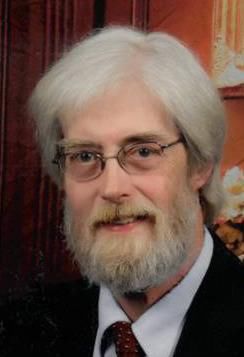
Image result for john allen of hopkinsville, ky.


I try not to get too personal in this blog; it is supposed to be dedicated to my thoughts about a book rather than my thoughts alone.

My wife says “David, you have to get to an end with this book about helping the poor, our neighbors. It is too hard on you and your readers.”

She is right.

I have been blogging since December 2014 and I have not dealt with a book like this before. Oh I have had moments of lack before, moments when I felt like I was not doing what I should be doing but this book has been non-stop guilt trip. Pastor Mark Labberton has made me feel sadly lacking every time I have posted on his book.

I should feel that way.

When I began working with The Dangerous Act of Loving Your Neighbor I dedicated my comments to John Allen. John was a close friend and his death shook me. I had known him for about twenty years and I knew he was in bad health these past few years and at times I wondered about him.

I wondered why he did not take better care of himself.

He did not want to.

I wondered why he took time to care to help the poor.

Now I know why.

He knew the meaning of “love your neighbor as yourself.”

People says things like a person’s life inspires me to do better and in John’s case, I do feel like I should help less fortunate people in our society. But following his death with blogging on The Dangerous Act of Loving Your Neighbor has really impacted me.

My wife is my editor. I don’t put anything up on my blog that she has not read and she has witnessed my struggle. She has witnessed it in my words. She knows I lack.
I have to finish the book. I will write only one more post on it after this one. Pastor Labberton’s thoughts about “moving day” do bear comments so I will close with “moving day.”

John left behind a wonderful wife and I know her pretty well; not as well as John. I think John’s death is still very much a part of her life and it will be for some time. Grief is a slow, slow process and it takes its own time to work its way out. Sally, I know you will one day get beyond the sadness and bewilderment. God has plans for you; I know.

Months ago, I knew I wanted to take a prayer from the book and directly quote it on the blog. This post is the post for that prayer. It is so meaningful for me and maybe it will be for you.

“Lord open and soften my heat today. You have been so generous toward me. May I give out of all I have and even out of what I think I don’t have. Help me to see and respond to my neighbor as you do. Use and meet me as I walk down the street, stand in line, engage with friends who live on the street, in the classroom where I tutor, as I wait at the Social Security office for an elderly friend who is difficult to be with or as I write to my city council representative about the crack house I know about. Use my gifts and life as I am working, playing, relaxing. Take my time. Take my money. Take my power. Take my powerlessness. Take my weariness. Take my fears. Take my tongue. Take my questions. All that I have and all that I don’t have are in your hands.”

Thank you for this prayer Pastor Labberton.

Thank you for your life John Allen.

Thank you God.

Posted in Uncategorized | Leave a comment

Learning the Language of God’s Heart

Image result for languages

It was a minor dilemma. My son married a wonderful Colombian woman. So a few years ago, my wife and I had an opportunity to go to Colombia South America for Christmas. We did not know Spanish and we knew we would be surrounded by native Colombian Spanish speakers. We were wondering how we would survive the week with the minimal Spanish we knew, a week staying with her Mom and Dad who were not very fluent in English, a week where there would be countless gatherings with her very large, affectionate Colombian family.

Needless to say, we made an effort to learn what we could before we went. We studied out of a Spanish grammar book and I began to use Rosetta Stone for South American Spanish.

Our efforts paid off, not because we were good speakers. We weren’t. The family just appreciated that we were trying to speak their language. We grew to really like them and they seemed to like us.

But it was a stressful week. I kept an open mind because I knew I was an American visitor in a Colombian culture. I did not want to take my American cultural views and try to assert them in a very different environment. Some Americans do this type of thing, expecting the whole world to copy American ways. It was not like that for me. I tried to adapt and assimilate as much as possible. It was hard at times. We did not want to offend; we just wanted to relax as much as possible and have a good time.

Pastor Labberton speaks of learning the new language of helping others. “Like any language learning, it takes practice and review. It will mean awkwardness and failure. It will mean breaking old habits and overcoming embarrassments. It will mean taking risks. It will mean having to admit that the language we are trying to learn is first outside us, and only gradually comes to belong to us” [203].

Why is this important? He says that as Christians we are supposed to be in the business of calling and inviting, comforting and assuring, forgiving and including. All this takes language, a language that we are not used to speaking.

Where do we find this form of Rosetta Stone? Where is this grammar book?
It is in our Bible.

Recently I was counseled by a Pastor who tried to help me with fear. I went to him because I had been feeling some dread about some issues. He said I could pray, I could fast, but most of all I must turn to the word of God. Labberton says “the Bible is the bedrock from which we learn the taxonomy of God’s heart.” To learn the language of God and speak the language of God it is necessary to read the word of God. Like any language, we have to know it well enough to know if it is the voice of God or it is not. Labberton says that people can be “ventriloquists, imposing their voices where God’s belongs.” Learning the language of God is hard work; it takes time and it takes discernment.

The language of God’s heart is a foreign language for us all. None of us are native speakers. We could all do it but we have to want to do it, and for many, it is just too time consuming. We have other interests. We are sometimes just too lazy. Learning God’s language is like learning anything. You have to feel it is needed and worthwhile or you won’t do it.

The irony is that learning the language of God does have a huge payoff. The payoff is that we have a chance to be more fully ourselves as we begin to discern the will of God. Not only do we learn the true purpose of our lives but we begin to see that the purpose God intends for us leads us to true freedom and joy. Many don’t believe this. We need worship to convince us. We need Christian mentors, and teachers. We need to practice our language with others to really make it our own, so that it eventually comes out of our heart.

Labberton states that “the goal of taking every thought captive to Christ means moving toward the Rosetta Stone of the heart of God” [204]. It means looking at those our hearts call “strangers” and hearing in Jesus’ word that we should be calling them brothers, sisters and friends.

It was hard to travel in a new culture, not really speaking the dominant language, but when our trip was over, I felt like we had a successful trip. I did want to return home. I had days of stress trying to avoid horrible mistakes, but as our hosts took us to the airport and we said our final goodbyes, I began to cry. I tried to hold it in; I did not know where it came from, but I got very emotional.

I never became fluent in Spanish but over the week, communication occurred and it was good communication. I knew our Colombian friends appreciated us and I knew we liked them. I wanted to return to America where I was able to function better, but I felt a closeness to our new friends that was hard to explain.

Maybe a new language, a new language from my heart.

Labberton says God’s language takes time. “It starts on our lips, engages our minds and eventually emerges from our hearts” 204].

Posted in Uncategorized | Leave a comment

God’s Transcendental View

Image result for walls dividing people

“God transcendently sees us from a wider vision of why and how we are.”*

I guess it is just human nature, the tendency to emphasize differences between ourselves and others, but I don’t believe that God sees us that way. I believe God sees value in all humans. After all, aren’t we made in His image?

Communication study has revealed the most important factors which make an impression on us as we encounter others. As humans, we jump to conclusions very quickly about other people due to the appropriateness or inappropriateness of their clothing. Body type comes into play next with the lean, muscular build [mesomorph] edging out the tall, less muscular build [ectomorph] and the heavy, less muscular build [endomorph] coming in last. Facial expression is the prominent feature as people draw closer. Positive facial expressions like the smile are much preferred [all features are going up]. Negative facial expressions are not preferred [a frown for example, with facial features going down].

Let’s stop.

Does any of this matter to God?

Not really. Judging people according to their clothing, their body type or their facial expression are concerns we have as humans. I don’t believe this is very important to God. Managing the impression we make on others is a conscious or subconscious process in which people attempt to influence the perceptions of other people about a person, object or event. Many of us try to manage our impressions because we want to be accepted by others or we want to influence others. Maybe we want to create a specific social identity through managing our impression.

If you believe in God, maybe this activity is futile. Labberton says “Our story is not finally our own. Our life is not our own. We ‘live and move and have our being’ because of God. We are the treasure of God’s design” [201].

Sounds like God is truly in control…of who we are.

If God sees through all of the stuff we do to impress others, what should we do? If we dedicate our lives to loving God, maybe we can begin to see ourselves and our neighbors more clearly. “The shadow lines fall in different places. Where there had been only shadows is now sight. What had been hidden is visible. What had seemed small may now be much bigger, and what may have seemed big might now be much smaller” [202]. In essence, we can begin to see the value in others as God sees value.

Differences begin to matter less, efforts at impression management may seem silly and harsh judgement can be abandoned for something more Christ-like…love.
Emphasizing my point of view at the expense of another’s is no longer appropriate. God does not want us to do that. Maybe even today’s focus on diversity is not correct. Emphasizing that culture is not monochromatic may be ok, if it keeps one perspective from overpowering all the others. But focusing on distinctions can draw people further apart rather than together. I believe God intends us to tear down walls of hostility. He wants us to live in peace and mutual respect.

Our discussion of Pastor Labberton’s book is drawing to a close and again his focus is on the similarity we see in all those who confess their love for Jesus.

“When every knee is bowed and every tongue confesses that Jesus Christ is Lord, we will be a community.”

In God’s wider vision, maybe He sees us as a worshipping community, seeing each other as valued children of God, made in His image, loving Him, loving our neighbors and loving ourselves.

Ephesians 2:14 : “ For He himself is our peace, who has made the two groups one and has destroyed the barrier, the dividing wall of hostility…”


*Mark Labberton, The Dangerous Act of Loving Your Neighbor

Posted in Uncategorized | Leave a comment

Should God’s People be Tribal?

Image result for conflict

Words come and go.

By that I mean that the times we live in can create words, the technology, the culture, the politics of the time. Today, America is going through a time when people line up against each other, democrat vs republican, liberal vs conservative, Fox viewer vs MSNBC viewer.

Tribal

That’s the word that is so popular today. The word “tribe” has been around since Roman times. It meant a division within a state. Over time, tribe came to mean a social group existing before the development of a state, distinct people who depend on the land for their livelihood, self-sufficient to the point that they were not part of a national society.*
Today, it has taken on the meaning that a person belongs to a tribe and all people within that tribe are without fault. Folks belonging to other “tribes” are wrong, misguided, dangerous to be around, illogical etc.etc.

Mark Labberton addresses tribes in his book The Dangerous Act of Loving Your Neighbor. He cites Philippians 2: 10-11: “At the name of Jesus every knee should bend, in heaven and on earth and under the earth, every tongue should confess that Jesus is Lord, to the glory of God, the Father.”

Every knee should bend. Did you get it?

There is no group that is right or wrong. God supersedes all the divisions that man creates.

None of us is perfect. None of us have the view that God has. We all get caught up in the happenings of the day. We all forget that for Christians, the name of Jesus is what names us. We forget that our true identity should be all wrapped up in Jesus Christ. For people who don’t identify with Christianity, that is ok. They can claim that their identity is not wrapped up in Jesus and if they are not believers, their point is well taken. But what about the tribes that are occurring today in the Christian community, Christian pitted against Christian according to “tribal guidelines.”

Labberton states “the Jesus of the Gospels transforms lives by truth-telling….The biblical purpose of the revelation of this ultimate reality is not to breed passivity now but to shape life today in light of the fact that this is creation’s kingdom future.” This is the mission of the Christian; to love the Lord with all your heart, soul and mind and love your neighbor as yourself. This tells us what matters in life. Labberton has written a book several years before today’s cultural climate but he states his case in the words: “our mission…distinguishes the tribe from the kingdom” and makes loving God and our neighbors a top priority. This mission helps us “recognize the urgent and define the essential.”

“Tribal” behavior in our culture is a word that has come and I hope the current meaning goes. Life is too difficult for our society to be divided up into pockets of like-minded people who denigrate other groups. I live in a state in the United States that has a motto which encourages cooperative behavior. Kentucky’s motto is “United We Stand; Divided We Fall”. I wonder if the same motto should be adopted by all people in the Christian community.

Hold on, maybe we have a motto already, one that fits perfectly with the first and second commandment.

It is found in John 13:34 and it goes like this: “A new command I give you: Love one another. As I have loved you, so you must love one another.”

Enough said…

*Wikipedia “The history of the word tribe”


Posted in Uncategorized | Leave a comment

God in the Dirt…


Image result for dirt

It’s that time of the year. The days are longer, the temperatures are warmer and the dirt has a rich aromatic smell. I find myself drawn outside, wanting to make things grow in the yard. I want to make things beautiful but to get them beautiful, I have to get dirt and mud all over my legs, arms and hands. I have to get dirty and not mind it.

Pastor Labberton* says as much about the Christian. The Christian has to be able to get dirty and not mind it.

Recently, my adult Sunday school class has been studying the Sermon on the Mount. We often take Biblical occurrences and put a twenty-first century spin on them. I think most of my class envisions Jesus going to the Mount, surrounded by some believers and some curiosity seekers and He is preaching His message to change the world. He speaks with authority which is a surprise. The people do not expect his message to be so strong. “When Jesus had finished saying these things, the crowds were amazed at His teaching, because He taught as one who had authority, and not as their teachers of the law” [Matthew 7: 28-29].

Then Jesus came down from the Mount and did something very unusual. He talked to a leper, He touched the leper and the leper was healed. We picture Jesus as a Holy person, special in His words, His appearance and His ways. Yet here He is, touching an untouchable person, crossing the great divide to help one who really needed a healing.

In the process, He got His hands dirty. He behaved in a way that challenged the status quo of His society. Everyone knew not to touch a leper. Leviticus 13 has extensive regulations regarding leprosy, 1, 843 words. The bottom line is this: “Now the leper on whom the sore is, his clothes shall be torn and his head bare; and he shall cover his mustache, and cry, ‘Unclean! Unclean!’ He shall be unclean. All the days he has the sore he shall be unclean. He is unclean, and he shall dwell alone; his dwelling shall be outside the camp.” The life of the leper was the life of an outcast.

When Jesus did this, He was sending a strong message, that if there is a need you should meet it. It is Jesus acting out what He has stated in Luke 14:5. When your son falls in a well or your ox falls in a well, won’t you get it out? The answer is yes, even if it is on the Sabbath.

When the leper approached Jesus, he said “Lord, if you are willing, you can make me clean.” Jesus reached out His hand and touched the man. “I am willing,” He said. “Be clean!” There was no hesitation. Jesus acted.

Earlier in the Sermon, Jesus told the multitude that we are to be holy, perfect as God is perfect. That admonition is such a challenge. Most of us know we fall short of perfect and even if we worked hard to be perfect, what does perfect look like? Perfect looks like Jesus touching an unclean person.

Sunday a lay speaker preached at our church. Over the years she has been on many mission trips to Costa Rica. She has described her trips, the rough terrain, the poverty, the lack of clean housing. She has taken her time to go there to help those less fortunate. She has chosen to leave her clean environment, running water, air conditioning and all the comforts that we have and go to a place where people are struggling to better themselves. Where people have a hunger for God.

Labberton comments on missionaries, feeling that they are not afraid to get dirty. “They encounter God in the dirt of it all. When they show up for forgotten people, it may not smell good. When they develop honest enough friendships in such settings, they learn that the aroma of their own life isn’t neutral or savory all the time either. Sometimes it takes being in the smelliest or dirtiest place to discover human dignity despite our biases. God’s presence amid the poor” [198].

God’s presence amid the dirt.

*author of The Dangerous Act of Loving Your Neighbor

Posted in Uncategorized | Leave a comment

Imago Dei…

Image result for imago dei

As we get closer to finishing the discussion of Mark Labberton’s The Dangerous Act of Loving Your Neighbor, Pastor Labberton begins to call us to imagine what God sees when He looks at us.

Maybe this is the beginning of transformation: “taking stock”.

Maybe for us to adopt God’s view, it can be compared to that sideways look in the three way mirror in the clothing store when we see an angle that is not the straight-on look we are used to seeing. It can be a bit of a shock but it is the truth nevertheless. We are seeing parts that we are not used to seeing and we may not like what we are seeing, but those parts are there.

Labberton has written throughout his book about our distorted view of ourselves, that view that excuses our inaction to help our neighbors, that view that looks right into the mirror and “good Christian” looks back at us when maybe that is not quite the image we should be seeing. The problem is that without the inspiration from Jesus and God, “Left to our own devices, human beings feebly and anemically reflect the heart of God” [Labberton, 191].

Yes, we have reached the point in the book when we have to be honest. Maybe you are feeling like you don’t do enough to help your neighbors. What do you need to do to get that passion for helping others? What do you have to do to have just a small part of the heart of God? What do we need to do to “do justice, love kindness and walk humbly with our God [Micah 6:8]? You see, God’s ways are not our ways; God’s heart is not our heart. Sadly, our heart is horribly distracted by the world; we most often move toward those who have stature and away from those who do not. What can we do to feel the passion and fight the distraction?

Labberton states that first and foremost, we must know that we have a God who deserves to be worshipped and we need to worship Him. Worship of God is a “central catalyst” in making our heart mirror God’s. Labberton says that “placing ourselves in contexts where we deliberately seek God’s transforming, renewing grace is a vital spiritual exercise. [Worship] means the Holy Spirit can come into our hearts and minds, replacing the mirror by which we see ourselves, one another and God” [193]. The new mirror may be more accurate.

The second place to find passion for helping our neighbors is regular reading of God’s Word. God’s Word can do so much for us. It can inspire us, it can inform us, it can regulate our behavior and yes, it can transform us. Labberton writes about the many stories of Jesus’ effect on those around Him, the fact that His Disciples had hearts that were not like His. They were “scandalized, argumentative, embarrassed, clueless, offended, adamant, dismissive, and distracted” [192]. They were just like we are. But what happened to these men over time? Their hearts moved toward the hearts of the powerless, toward giving grace to those who suffered. The woman with the flow of blood got attention, when they really wanted to run on their way. The tax collector’s invitation was accepted even though he was a socially undesirable man. Jesus spoke truth to the scribes and Pharisees because He was redefining what really matters to God in this world, not the countless man-made rules.  But Jesus was stating practical commandments that made sense in the world of His day, commandments that reflected the grace of God.

Worship and study of God’s Word may inspire people who are already Christian but what can we do to get people who are not Christian see our ways and understand? What can we do to help others to transform from our transformation?

It is our actions. The people of God, filled with the Spirit, seeing and naming the world in God’s compassionate ways can take action. It is our service that will convince others that we are “real”.  Becoming people who help those less fortunate is the biggest action we can achieve. This will convince them that our calling is real.

God sees us and says we are “fearfully and wonderfully made.” Imago Dei is at the core of everyone’s life. Imago Dei means that God shines in everyone’s life. It can be the image that we glimpse in the three-way mirror, what Labberton calls the “marker that makes us unmistakably God’s and unmistakably ourselves” [193].

Posted in Uncategorized | Leave a comment

When Suffering Comes…

Image result for when suffering comes


No one wants to suffer…

Yet suffering comes…

Life is going along, you are busy working, feeling ok about yourself, pursing your goals in life, maintaining relationships with friends and family and suddenly loss and pain enter your life.

Yesterday, I encountered a man who knows me and he inquired about my health. He said “I am glad to see you are up and about”. He knew I had one of those “suffering episodes” myself when I had an accident that resulted in serious fractures. I was fine one minute and the next minute I was damaged.

Loss and pain had entered my life.

Then the man shared with me his own episode. He had a horrible motorcycle wreck which put him in the hospital for six months. After being released, he had a long period of physical therapy, where he was confined to a bed and a wheelchair. Eventually he graduated to a walker and then to a cane. When you look at him today, you would never know that he was ever hurt. He is able to walk and functions like a perfectly healthy person.

Then he said something very important.

“I never see anyone now with a wheelchair, walker or cane, I never see anyone struggling with a mobility challenge that my heart does not go out to them. I know what they are going through.”

The Apostle Paul says something that relates in 2nd Corinthians: “The Father of mercies and the God of all consolation, who consoles us in all of our affliction, so we may be able to console those who are in any affliction with the consolation with which we ourselves are consoled by God.” Paul is saying that a life with Christ is not a life without suffering; indeed he affirms that to follow Christ means that we are going to have to take up our cross. This taking up of our cross means that we will suffer along the way. Pain and loss are just part of life.

The big question is, what are we going to do with our suffering?

Pastor Labberton writes about suffering and compares it to the resurrection: “Just as the resurrection teaches us that death does not have the final word, so we can learn in the midst of pain that it does not have the final word either” [188].

God is not only with us in the good times; He is also with us in the difficult times. When suffering occurs, it does not have to make us more alert to God, more awake to His presence and more sensitive to His working. It can easily go the other way. Some lose their faith in God in the midst of suffering. Someone has to be blamed so let’s blame God. The common question many have is “How can God cause this to happen?”

We can debate all day long about God causing suffering and pain. If you are determined to believe that God causes suffering, that is what you chose to believe. However, I would change the word cause to “allow.” God allows things to happen to us because He has plans for us beyond what we can see in the midst of our suffering.

Before we go any further, I don’t believe it is ever a good idea to say to someone who is in the midst of pain and suffering “And we know that for those who love God all things work together for good” [Romans 8:28].

This is a realization that can come later, after time has passed and maybe wounds have healed. Then Pastor Labberton writes that we begin to realize that “what enables us to grow requires having our hearts break. . . .I want to learn from pain what I can, but I do not want to nurse it.”

As Christians, we pray for the cessation of pain and suffering. That is only natural. No one wants to hurt any more than necessary but if God does not take pain and suffering away, then maybe He is using it for a higher purpose. His view is not ours. Maybe He will use it for good in the long term. Maybe He has a plan that is ultimately for our good; we just cannot see it at the time.

John 1 5:14 says “If we ask anything according to His will, He hears us.”

We are so used to thinking that growth only occurs in the good times, but maybe it occurs in the bad. When others have loss and pain, maybe our hearts can go out to them. We can recall our experience and know what they are going through. We can recall our experience and offer them help.

No one wants to suffer…

Yet suffering comes…

The big question is what has God made of your loss and pain?

Posted in Uncategorized | Leave a comment

Confronting

Image result for man in the mirror

December 31, 2017…

I have blogged on The Dangerous Act of Loving Your Neighbor since then. That’s not that unusual. If a book has good content, it is easy to put my own personal “spin” on what the author writes about. Mark Labberton certainly has significant content. But chapter after chapter he keeps repeating himself, driving home the point that as Christians we don’t follow the second commandment, you know that one that comes after “You shall love the Lord your God with all your heart, and with all your soul, and with all your mind.”

These five months that I have written about helping my neighbor, I have had mixed feelings. Maybe if you have been reading some of my posts, you have had some of those feelings too.

Guilt

I have been confronted by my lack of effort to help people who don’t have as much as I do. It is worse than that. I see people who have needs. I hear of people who have needs. I do nothing. Labberton writes about the comfort level that many of us experience. We like our comfort; it insulates us from the anguish that others feel who don’t have enough resources to live. Some don’t have enough food. Some suffer injustice from our legal system and society. Some are used by others and they find themselves at a loss; they don’t know how to extricate themselves from a horrible lifestyle. When he writes about the needs of those in our world and I just burrow down into my comfortable life, closing my eyes to what is right in front of me. . . I feel guilty.

Do you?

Hypocrisy

God sent His Son to earth to show us how to live. During His ministry, He spent time with what we would call the “outcasts” of society; prostitutes, lepers, tax collectors… the list goes on and on. Jesus showed us what to do and He confronted the religious leaders of His day by His actions. They had self-righteous attitudes that kept “certain people” at a distance. Those people suffered subjugation so that the “religious leaders” could be seen as more Godly. Then Jesus arrived on the scene with His message “Healthy people don’t need a doctor — sick people do.” Then He added, “Now go and learn the meaning of this Scripture: ‘I want you to show mercy, not offer sacrifices.’ For I have come to call not those who think they are righteous, but those who know they are sinners” [Matt. 9:12-13]. One of the Pharisees was so bold as to ask Jesus “Who is my neighbor?” He left us with one more crucial commandment: to go into all nations to teach and baptize people [Matthew 28:19-20]. Not just those who think, dress, and act like us. All people, of all nations. As I examine my life and what I do, do I line up with Jesus more or do I line up more with the religious leaders of His day? I am afraid I feel like a hypocrite.

Do you?

I do this from time to time. Maybe you do. I think about my life and I wonder why I have been given so much when others have been given so little. I have had close friends tell me that I worry too much about things I should not worry about. “Just go with it…” or “play the hand you have been dealt” or “chill David, it will be ok” are some of the typical responses I get from friends and family who say I “overthink” things. But what if God has given me so much so I can help others? Am I failing in my mission in life if I am not using what I have to aid those less fortunate? Wealth is not something that comes to a person because they believe in God. God’s faithful people may be rich or poor. Wealth is also not a sign of God’s favor. In Jesus’ time, a rich man’s wealth was considered a sign that God had rewarded the person and poverty was a sign that God was punishing a person for sin. Jesus came to rebuke such thinking. What did Jesus advocate about wealth? Wealth is a gift that is to be used for service to the Lord. Read Matthew 25, 1 Timothy 6, Mark 10 and Luke 3 and see what the Bible says about generosity, the sin of arrogance, dishonesty and greed. Jesus goes further by saying that wealth can be dangerous. We all know the scriptures so I will just use the phrases that we know but many of us fail to heed: the eye of the camel, serving two masters, gaining the world and forfeiting the soul, and storing up treasures on earth. I feel fear that what I have has distracted me from what I am supposed to do. I use my money to make my life easier. I turn my back on the needs of others. I fear I am turning my back on God.

Do you have that fear?

No matter what your station in life, Pastor Labberton says the survival of the fittest mentality greatly influences us. We look after our own survival first. He admits that acknowledging our limitations is a reasonable approach to helping our neighbors. We can only do so much.

I am going to finish my thoughts about Pastor Labberton’s book. It won’t be easy. In fact it will be hard. Poor, poor David.

Thirty-one more pages of confrontation.

Thirty-one more pages of looking into my mirror.

Thirty-one more pages of not liking what I am seeing.

Posted in Uncategorized | Leave a comment

Transforming Grace…

Image result for grace

“Be perfect, therefore, as your heavenly father is perfect” [Matthew 5:48].

Talk about pressure. That’s pressure.

I am going to make some “blanket statements” regarding Matthew 5:48. These kinds of statements always get me in trouble. Notable exceptions to my thoughts exist. Notable people exist and they come forward to poke holes in my statements.

But here they are anyway…

People in American society don’t deal well with the challenge put forth by Jesus in Matthew 5:48. When Jesus calls on us to be perfect, he is reflecting a big goal of God for man and it is what we call a “high bar”. When we think about what God wants, it seems impossible. “How long is it going to take me to get perfect?” “Is there some pill I can take to get that way or maybe some quickie diet that I can start?”

Then it occurs to us that Jesus is not talking about quick; He is talking about a life-long process, for most of us, a lifelong struggle. Pastor Labberton* likes to talk about us getting to the point where we can see the needs of the less fortunate. This new vision does not come overnight, but it stems from a person taking on the title of Christian. Pastor Deron Spoo states that this is just the beginning. “The process of following Jesus daily and allowing His presence to transform our character into something more like His” is the biggest challenge that anyone will ever take on. “The process necessitates a lifetime of labor and unrest. Following Jesus is an out-and-out effort until we drive home the final spike–until we draw our last earthly breath” [243-44]**

It is hard work and let’s be honest; many of us don’t want to work hard. It is a commitment and that is a scary word for many. It also is a frustration because we continually fall short of our goal. One of the most quoted verses of the New Testament comes from Paul in Romans when he says “For all have sinned and fallen short of the glory of God.” That is not a pleasant message. We won’t experience success at this “Christian thing” all the time. We will fail over and over again. Does that sound like something you want to commit to? I don’t know about you but when I think I have made some progress, I find myself falling back into old habits, committing old sins, thinking those same impure thoughts and doing those same ungodly acts.

The only way we pick ourselves up and move forward is the idea of grace and mercy, grace and mercy from our loving Father God.

If I have learned anything over the years, it is that I cannot live this life without God’s tender love. He knows me. He sees my every act. He is aware of my every thought and yet He loves me. When I fail, I am shamed, but he does not want me to remain in a failed state. He wants me to grow closer to Him. He wants me to do what I can do to further His kingdom on earth. He does not want me to grovel and be ineffectual due to my failure. He extends His loving hand to me to pick me up and get me going again.

Grace and mercy…

Labberton says the “only hope for [a] clearer and deeper vision is grace. But we receive such grace usually by acting, asking for it and taking steps to receive it. Admitting our need for a renewed mirror per se does not produce hope. . . .My life has changed and continues to change because of friends and others who are much further down the road than I am. . . .people I know call me into a new and different life.”

It works like that. God alone can inspire us but also God working through people inspires us to be better than we are.

I have been teaching my adult Sunday school class and lately we have been concentrating on The Sermon on the Mount. Jesus says “Blessed are the merciful, for they will be shown mercy.” In Labberton’s book, he wants us to know that Christians need to “pay it forward.” As God shows us mercy, we should show mercy ourselves. Jesus speaks of the man in Matthew 18 who owes a staggering amount of money and his entire debt is forgiven. Despite this awesome act of grace on the part of his lender, he does not extend the same grace to someone who owes him a much smaller sum of money.
Grace seems to do nothing for him. It does not stimulate him to show grace, to grow, to transform from his greedy state.

He is stuck.

I don’t believe God works that way. I need His grace. I can’t follow His path without it. I need to learn to forgive. I need to choose an attitude of less judgement and more generosity. If He is growing in me, I need to understand the needs of others and put my needs aside.

As I get mercy, I need to show mercy.

Indeed, if I can do that, that is transformation, transforming grace.


*The Dangerous Act of Loving Your Neighbor
**Deron Spoo The Good Book

Posted in Uncategorized | Leave a comment

Waiting…

Image result for green

I moved to where I now live twenty-two years ago. It was a big jump. I moved from what I would call a more urban postage stamp yard to two acres in a more rural setting. In my postage stamp yard, I fell in love with the art of landscaping. There I found that I like making beauty with plants and trees. I like the design of landscaping, the theme of it, the joy I feel when I put a growing thing in the ground and then it starts to grow into a bigger, more attractive part of my overall landscape scheme. The plant literally begins to become part of my vision.

But it takes patience, patience that I sometimes don’t have.

When the seasons change, I sense an urgency to get things done. Each day that passes is a missed opportunity if I don’t make a decision about an area in my yard and begin to work up that area; if I don’t get the process of botanical beautification going.
God doesn’t work like that.

Pastor Mark Labberton’s book* at its core is a book about transformation. He calls all of the Christian community to get on board with helping those who are less fortunate. As I have blogged on the book, I have asked myself the same questions over and over again. What is wrong with me? Why can’t I feel a sense of need to help others? I know the needy people of the world are close to my location; why can’t I make a commitment to help them? Why can’t I love my neighbors? Why can’t I love my neighbor as I love myself?

Maybe I need to wait for God to show me; maybe that is how He works.

Labberton states “God does not. . .look at the human situation and see it with the same urgency that we do. We feel justified in crying ‘Fire! Fire!’ but God apparently does not. Our sense of timeliness, whether on an individual or global scale is baffled at times, angered by this approach to God’s part. . . Our instincts are to want God to take large, dramatic steps to eliminate the possibility of need and suffering…God does not work that way.”

God moves from the particular to the universal.

I have asked my pastor what our church can do to get people to come and worship with us, maybe on a regular basis, maybe to become members, active members. I am always bemused at her response. “They will come when their hearts tell them they need to come.”

She is willing to wait for transformation.

Transformation is not dictated by man’s timing. Transformation is dictated by God’s timing.

Labberton has a wonderful grasp of the Bible. Of course I can’t claim such knowledge. He points to humanity and the promise that God made to His people to change the world. He made a promise to Abram that was based on His vision of what man could be. Abram eventually responded by trusting God, and not taking action on his own. He became Abraham and this began the story of a new people. If you know anything about the Bible, you know that this was the beginning of a tediously slow process of transformation. At times the steps forward were totally obliterated by huge leaps backward.

But God has a vision for man. God knows what he is doing. It is man who is confused. It is man who is frustrated. It is man who looks at the clock and says “When? Now! Just do it!”

Isaiah 55:8 is often quoted when we get confused about God. “For my thoughts are not your thoughts, neither are your ways my ways,” declares the LORD.” Indeed we don’t think like God. We can’t. From our perspective we may see need, we may feel moved to act, we may look for a way to change things, but all the pieces of the puzzle are not in place yet. God has not put them there for us.

We have to wait a little longer.

I sit at the kitchen table and the beautiful sun is flowing into the wide back door of my home, warming my back. I have the door open and I can hear the sounds of the world waking up. The many birds are singing their songs. A frog is chirping as he adds his melody to the mix. Outside beckons. The grass is growing, the soil is warming and it is time for things to be planted. I feel the itch to get outside and begin my “botanical beautification.”

I will wait. There are other things that must be done before I get there. It will be ok. God will provide opportunity if I just trust Him.

He is a great God, my God of transformation.

*The Dangerous Act of Loving Your Neighbor

Posted in Uncategorized | Leave a comment