Bridges or Barriers…

Image result for small bridges

Growing up, I listened to a lot of different music: rock, pop, jazz, classical etc. I remember a quirky piece of music that caught my attention, a song that I thought was out of character for the artist, “A Boy Named Sue” by Johnny Cash. The song was popular in 1969; it was written by the poet Shel Silverstein and debuted by Cash in a concert at San Quentin State Prison.

It was a long song that told a story of a tortured young man who was “misnamed” and the effect the name had on his life. After naming his son Sue, Sue’s father leaves home, leaving the boy to grow up getting teased about his name and having countless fights over the years to defend his honor. To avenge this injustice, the young man decides to track down his father, eventually finding him in a bar in Gatlinburg, Tennessee. Upon greeting one another, they have a tremendous fight which ends with father and son pulling guns on each other. The son beats his father to the draw and then the father explains why he called his son Sue: “if a man’s gonna make it, he’s gotta be tough, and I knew I wouldn’t be there to help ya along, so I give ya that name and I said goodbye, I knew you’d have to get tough or die, and it’s the name that helped to make you strong.” The son accepts the explanation and does not kill his father but he is still not happy about being Sue, and vows that if he ever has a son he will call him “Bill or George! Anything but Sue! I still hate that name!”

Describing this song makes me think about the effect that labels can have on people. Pastor Labberton* writes that labels help us “manage the world around us. We name what we see in terms that reflect value, meaning, position, relationship, affinity” [112]. Sue’s father may have had a plan in mind when he gave his son a female name but the father’s label shaped the way others saw the son. Communication research on labels states that names not only shape the way others see us, but they also impact how we act. Adler and Procter** write that people with unusual names “suffer everything from psychological and emotions disturbance to failure in college….Names are one way to shape and reinforce a child’s personal identity.”

Of course names are usually bestowed on children by parents but it doesn’t stop there. All of us “name” people in our world; we have to find words to share experiences so we are all in the business of labeling people, places and things in our world. Problems arise in misnaming or the use of negative labels. We should be very careful about the words we use but often we are not.

Pastor Labberton points to the labels we use as a chief reason that Christians don’t get involved with issues that really need our attention. For example, we hear endless statistics about children being sold into sex trafficking each year. These words don’t seem to be getting a reaction from the Christian community.

Maybe we should hear the words “commodity”, “transaction” or “slave” applied to the children who are trafficked. Would that elicit a response? Maybe not if you don’t have any way to relate to the people who are being trafficked.

How about Mitali?

Mitali is a thirteen year-old who now belongs to her pimp. She has a mother but she hated living with her. One day she felt she could not stand her life anymore so she ran away and started trying to live on the street. With no marketable skill to earn a living and absolutely no support from any family member, a sex trafficker was her only way to stay alive. She became a commodity, a transaction, a slave.

Of course in the opening story about “Sue,” his life is made more difficult because of a label but Labberton thinks the labels we use spur us on to learn more about a problem that needs to be fixed or they repel us and we create distance between us and a serious need. Are the words we use bridges or barriers?

We have to use words; they contain our thoughts. They convey our messages. Yes, they can inspire us to do what needs to be done to change the world or maybe words can be used to distance us from problems that need our serious attention.

Think about it. When we hear words about people who need our help…

Are the words that you hear bridges to action; do we want to get to know the people with problems and do we want to know what we can do to help them?

Or are the words barriers to action; we distance ourselves from people with needs by using vague language? We shrink from their presence and their problems. The words allow us to be apathetic. Here is how it works. We use words so that responsibility is passed on to nameless others.

“Someone should do something for them.”

That someone is not me…


*Author of The Dangerous Act of Loving Your Neighbor
**Authors of Looking Out, Looking In

Posted in Uncategorized | Leave a comment

Until We Can See Clearly…

Related image

What is worship?

For many years I spent an hour in church on Sunday and if I had a good Sunday school teacher, maybe two hours. That was it. Honestly, at times it seemed like it was a duty. Like many kids, for many years I went to church out of this need to satisfy my parents. Then after I left their home to start a family of my own, I was very sporadic in attendance. After having a child, I started attending worship services more regularly for the child, to give him a good “upbringing.” Most of the time I spent in worship, my heart was not in it, much less my mind. I was not really sure why I was there, other than to fulfill some need to please others.

Then I found Jesus.

In the midst of a world-shaking crisis [for me], I quit just knowing about Jesus; I began to know Jesus. I needed Him and He became my Savior. It became a personal relationship.

Worship service then took on a new meaning. I was in love with the Son of God and I had a hunger to find out all I could about Him. I thought about Him constantly; He was the key to dealing with my problems. He was there to help me. Church was where I found information about Him; it was there where I found much needed aid.

I was beginning to transform. Transformation comes in many forms. Sometimes it comes due to a traumatic event, but that is not always the case. God is in the business of changing us one heart at a time and even though God sees us and all that we do, we never really see Him. First Corinthians 13:12 says “For now we see in a mirror, dimly, but then we will see face to face. Now I know only in part; then I will know fully, even as I have been fully known.” I stated that I began to know Jesus. I saw evidence of His power in my life as things began to turn around, as I felt His peace in the midst of the storm, as I saw hope for the future when I thought at the time that all hope was lost.

For me life became hope, hope that one day I would see Him face to face. We all have “to resist the presumption that to name what we think we see when we ought to be clear that to do so requires wisdom we do not have” [Labberton, 102]. It is humbling to admit how dim our vision of God really is but it is part of staying open to what God would have us do in our lives. We need to “look again, to see anew, to pay attention, and to name the truth”[Labberton, 102].

The effort to see what we cannot see may begin with more meaningful worship, but it continues with faith.

A good friend of mine told me that he wakes up in bed every morning and asks God the same question every day: “What would you have me do today Lord?” This is a very open-ended approach to life because one never knows what God has in store for the day. Another friend goes even further; he told me he prays several times throughout his day the simple prayer “God just use me.”

About a mile from my home is a church that sits on a hill. Church-goers have to drive up the hill to get to the parking lot. When worship service is over, they drive back down the hill where they are confronted by a large sign. “You are now entering the mission field.” The point I am trying to make is that corporate worship serves a purpose, but as Labberton says, it welcomes us, forgives and heals us, calls us and then sends us to love out our worship in our lives throughout the week. We live in a world that needs work, lots of work, and to think that sitting in a pew is all that worship calls us to do is robbing you of the full effect of God’s transforming power.

Pastor Labberton’s book* is all about helping our neighbors and part of growing in Christ is seeing the need in the world, the great pain that is in the world. After beginning to see that, the next step is feeling an urgency to do something about it. If we say we cannot see God, it may be more relaxing because we can kid ourselves that work does not have to be done. There is no impetus to make our world a better place. “To see better, even if it is still dimly, is essential to changing the way I live….Especially if I want to live [by] loving God and my neighbor” [Labberton, 103].

What is real worship?

One word answer…

Transformation…

Posted in Uncategorized | Leave a comment

The Right Tools

Image result for tools

Commenting on a group discussion he and other pastors had with African-American men and women, “We saw that night how little and how shallowly we see. Deep pain can be caused by our shallow vision of others.” Pastor Labberton writes about how we don’t often see the “real” person.* When you don’t see the “real” person, you are not likely to understand them and therefore help them. Many times he writes about how we as humans lack empathy. Often times lack of empathy is the root of a lot of misunderstanding and inaction. He says empathy is “our capacity to perceive and at least partially enter into someone else’s reality”[97].

Since my trade is human communication, I want to offer some keys to developing empathy. Maybe this post will shine some light on what can be done to connect people. Maybe in the middle of Labberton’s discussion about what we lack, we can explore what we can have, if we try.

You have to see value in knowing another’s perspective. Certainly people who study communication place a premium value on empathy. Ron Adler and Russell Proctor report that researchers label empathy as the most important aspect of communication competence.**

But what are the foundations of empathy?

Believe it or not, sharing your ideas with others is a basic foundation. To understand someone else, you have to exchange ideas. Someone who is introverted will find it harder to develop relationships with others. Maybe for them sharing is too hard; they don’t think there is value in their thoughts and feelings or they just lack confidence that they can express themselves. But communication researchers have found that sharing begets sharing.

We have found that if information is appropriate [not too personal or private] others will receive it and respond back with information of their own. If the person you are sharing with is someone you admire or desire to have a friendship or relationship with, the sharing you have with them will bond you, a so called unwritten pact will develop between you and them. The information you share could be more private as you continue your relationship. Certainly if you receive personal information from another, it is essential to not share that information if you want to have a continuing relationship. How you handle shared private information is a key to building trust between you and others and we know that trust is a cornerstone to a healthy relationship. Over time, a close relationship will yield more private information as people feel free to put down some of their public façade. The more you bond with someone else, the more you will get to know them on a deeper level.

A second foundational idea is the communication skill of listening. This means giving careful and thoughtful attention to the messages we receive. It is the act of decoding the meaning of others using our minds. The focus is often on the words we hear but that will only get you partial meaning. How a person delivers their message is important too, the tone of voice and their body language.

Too often people get confused about listening; they think that hearing a message is good enough, it is not. It is an old communication adage that people can hear without listening; they do it all the time. To really communicate with someone, you have to put all your mental faculties into the process of understanding another’s message.

This means that a good listener has to fight the tendency to be distracted by internal or external factors. We all have concerns or worries and if we are trying to listen, those thoughts can overpower the message coming from someone else. Sometimes we have messages we want to say back and we practice those messages while we are listening to others. This can interfere with comprehending what another person is saying to us. Environmental distractions can easily take us away from attending to a message, a colorful sight, a powerful smell or a loud sound can interrupt listening. Too often people who don’t know much about communication will say that listening is no big deal; anyone can do it. That is not the case. Many people are horrible listeners, only getting parts of a message, or maybe not any of it at all. One of my feelings about listening is that really trying to listen to someone’s message is one of the best gifts you can give them.

Earlier I wrote you have to see value in knowing another’s perspective. I would go further than that. To have empathy you have to value other people. If you don’t value other people you won’t have empathy because you don’t care about them. Too often in our world we see someone who has no money and dresses in a shabby manner and we discount their value. For some it is skin color. We can’t get past the fact that there are people who have different skin tones. Some devalue certain people based on race. Ethnocentrism is common in our world, the idea that our culture is much better than others. This is a major negative factor as people from other cultures have ideas to express but they are worth little; they are not from “here.”

Certainly, sharing ideas and feelings is essential to getting to know others. Listening means so much to the communication process because the act of listening means messages are being decoded and ideas are being exchanged.

But the real cornerstone of empathy may be the value you place on your fellow human beings. If you value others, you will share your ideas and you will allow others to share their ideas with you. If you value others, you will listen to them, valuing their message enough to work at understanding it.

Pastor Labberton spends so many pages writing about our need to help the poor and indeed the scripture to support his thesis is there.

“He who oppresses the poor taunts his Maker, but he who is gracious to the needy honors Him.”

Certainly getting to know the poor will help you fill their needs. It can be done with sharing, listening, valuing and respecting, all leading to empathy.

*The Dangerous Act of Loving Your Neighbor
**Looking Out Looking In

Posted in Uncategorized | Leave a comment

Coming to America…

Image result for college classroom

We all come to understand the world from our own worldview which is greatly shaped by our culture. Of course the range of cultural differences is greatly varied. When I studied intercultural communication in college, I was struck by how people from different parts of the world view something we all take for granted: communication. For instance, Middle Eastern people in conversation depend on personal scent to facilitate communication. Arabs stand very close to others when they talk so they can get an olfactory sense of who the other person is [very different from America, the culture of mouthwash and underarm deodorant]. Asian cultures discourage the expression of thoughts and feelings. In Japan and China, silence is valued. A common saying is “In much talk is great weariness.” Again, this is very different from our expressive American culture.

When I was given my final degree, I was not sure what I would do in my career but soon after returning to my community college, I knew I could make the most impact in the classroom. However, I thought the chances of encountering many cultural differences would be rare in this small western Kentucky city, unlike the larger city where I went to the university.

Then I encountered Reuben. I was supposed to be his teacher but I think I was his student. You see, Reuben was from Mexico and he was in my interpersonal communications class. When I first saw him in class, I was not sure of his origin but he began to come up after class to talk to me and told me of his home country.
Reuben tried to mix with the other students. He had achieved American citizenship and his English was better than many American students. You could still detect the Mexican accent in his voice.

I remember the first after class conversation we had. He said he was confused by the American students who did not seem interested in doing well on the group activity I gave them. Of course Reuben was in a group with four American students. He described them as “not caring.” He told me he wanted to do the group activity but the other students were not interested in completing it at all. He felt pressure to conform, but Reuben did not like conforming. Reuben was what I called a “go-getter.”

From time to time, we had other conversations and one day he dropped by the office. I could tell he was upset. This was his first semester in college and he seemed to need to talk out a problem so I made time for him. Also I was interested in getting to know his cultural perspective so I listened to his story. Turns out, he was from an extremely poor family. As a child he had four brothers and sisters and a Mother but his Father was gone most of time. His Father was in America working on farms to make money for his family.

Despite his Father’s efforts, life in Reuben’s home was precarious. Many days there was not enough food for the family and Reuben went to bed hungry. His Mom and Dad loved him but Reuben longed for a more secure life, one where he did not have to worry about the necessities of life. This was in the 90’s and immigration was not on the news as it is today. Reuben came to America and his goal was to assimilate. He told me he had a good business sense, making enough money to buy several rental properties and was the proud owner of a nice car. He was amazed at the opportunity afforded everyone in this country and eventually saw college as the next step to improve his life.

However Reuben was in college to study, to learn, to achieve. He was not there to “mess around.” He wanted a better life.

And he just could not understand American students who did not care.

His perspective gave me pause. This young man was so poor growing up and his worldview had shaped him to see our country, our college and my class as a stepping stone to a better life.

By the end of the semester he changed my perspective. I tried really hard not to stereotype but I knew many people who had less-than-flattering words for our neighbors to the south, even in the 1990’s, words like free-loaders, drug dealers, common criminals. Spending time with Reuben would have caused them to question their worldview of people from the Mexican culture.

Ethnocentrism can make working with others difficult and I see it more and more every day in 2018, the idea that our American culture is superior to others.

Yes, culture shapes us. We cannot deny that; sometimes it can close us off to the value of other ways of life, other people who come from different places. We fail to see that another person’s culture can inspire them to achieve. That was the case with Reuben. I have not followed him over the years but I know he graduated with his degree. I remember hearing the Academic Dean at my college calling his name, seeing him walk across the stage to get his diploma [really it was a run rather than a walk]. Reuben was smiling from ear to ear, clutching it like it was the most important document in the world.

To Reuben, it was. I was Reuben’s teacher or maybe it was the other way around.

Maybe Reuben was mine.


Posted in Uncategorized | Leave a comment

Truly Dangerous

Image result for fess parker davy crockett

Raising kids is so problematic. We hear it all the time; children don’t come with instruction manuals. Most certainly, I did not have an instruction manual.

I was a tough kid to handle; scrawny would be the best word to describe me. I did not like food very much and my poor mother would employ all kinds of strategies to get me to eat. She loved me and did not want me to “wither away.” As I sit at my desk writing this, I am very close to an item she used to encourage me to eat, a Davy Crockett bowl. When I was a kid, Davy was extremely popular among the younger set. Fess Parker was Davy and in the bottom of my cereal bowl there he was with his coonskin cap, killing a bear. Mom would say, “Eat your cereal David and you will see Davy Crockett in the bottom of your bowl”. If that did not work, she would throw out the old saw “we will just have to pack up your food and send it to the starving kids in China.” The idea behind this was I obviously did not appreciate the food; so we will send it to kids who do. I was such a picky eater, I know I would have gladly helped her offer, helping her pack it up and take it to the post office.

I never really seriously considered if kids were starving in China. They were so far away. I just thought it was a persuasive strategy, but really there are starving kids everywhere, kids that really appreciate food. The most common place we see them are those gut-wrenching commercials for programs like “Feed the Children.” You know those kids who stare at the camera, looking very thin and often they are obviously dirty. A person doing voice-overs tells of the plight of the children and how for a ridiculously small amount of money you can save a child’s life. You can buy these children some food.

Pastor Labberton writes about the average American who is employed, housed and well-fed. The images on the television are so far away. In some cases they really are. The kids are in Africa, the Middle East or maybe Asia. Have you wondered what you would do if you were face to face with those kids? Labberton writes about traveling to Africa and India and the first impression he had when he encountered starving children. In India, he met them right off the airplane: “No longer mythic, no longer television images. Here were real children in tangible need. It was no guise. I knew, of course that these ones who had staked out the territory of the airport might be pimped, if not enslaved….in any case, they were real children, in real need.”

Right in his face…

There was no television screen between him and the kids, a screen where he could take the remote control and change to another channel. Labberton admitted that even though he could see them, “I could not emotionally access these children all that easily either.” He could not really understand their world. In other words, he could not feel their pain or relate to their situation. Immediately he also realized that they could not understand him: “someone with my skin color, without the wear of the sun, who arrived from somewhere and landed on their terrain like a visitor from space.”

He could give them money but that seemed to be too easy. Those kids needed more than just a handout. That would help their immediate need but for them to have a good life, they needed more and he knew it.

Just imagine confronting some of the starving kids of the world. How would you feel?
Here is the cold hard truth. It is too uncomfortable to have dire need right in front of us. What if Mom said “Ok David, we are going to pack up your food and give it to those starving kids in China and we are going to personally take it.”

It would overwhelm me.

Even one child’s needs would overwhelm me, much less a group. Pastor Labberton writes of the Dalit brothers and sisters who due to the Indian caste system are relegated to cleaning latrines for their lifetimes. He writes of the “land grabbers” in Africa who take the land from an HIV positive mother with children because the society there sees her and her children as having no future, no worth. He writes of the “nobodies” of Thailand, tribal people who have been stripped of their legal identity, not having the ability to own land or have police protection. Most have a life of social, political and economic death in their future. I have heard of the plight of children in Thailand due to the Thailand Methodist mission; starvation, drug running, sex exploitation are common for some of the smallest people in this land.

Just thinking of these situations make me feel so helpless, so sad, so unable to effect any change.

The Dangerous Act of Loving Your Neighbor is beginning to truly be a dangerous book. It calls for a commitment. It calls for more than just a glace and then a look away. It calls for more than a grab for the remote and a quick channel change.

Taking action, getting involved…truly dangerous.

Posted in Uncategorized | Leave a comment

Biblical Insecurity?

Image result for adam and eve

In The Dangerous Act of Loving Your Neighbor, one can easily get lost in the conclusion that all of us have factors in our lives which cause us to suffer distorted outlooks on reality. In essence, we don’t see ourselves as others see us. We all have times when insecurity creeps in, times when we sense we have personal deficiencies. We may try to fill in the gaps, trying to hide what we lack. We may try to project success but we know our façade is not real. Even the person who has the most loving, doting parents will still fall into situations where they lack something they need in life and they will experience nagging feelings of insecurity.

To be honest, most of us may never get over our deficiencies. They may linger for a lifetime.

Is it just part of being human?

Pastor Labberton spends a lot of time writing about our distorted outlook on life, the idea that we view the world through what he calls our “broken mirror”. In Chapter 5 of his book, he turns to the Bible for insight.

At one time, man and woman had no insecurity. The first man and first woman were reflections of God, representatives of God, in control of the Garden of Eden, blessed human beings. They had no shame existing in a world where they had no worries. Their only concern was the choice that God had given them: choose Me or choose autonomy, represented by the Tree of the Knowledge of Good and Evil. You must not eat fruit from it.

Of course there was really no reason to eat fruit from the forbidden tree. They had all that anyone would want but Satan arrived in the form of a serpent to prey on their…you guessed it: their insecurity. Basically he convinced them to rebel against God by making them think they lacked something. Knowledge of good and evil would make them on par with God [of course that is not true]. Why would God’s representatives want to be anything more than what they were?

But they did eat it. Satan said “when you eat of it your eyes will be opened, and you will be like God, knowing good and evil.” They felt they lacked something. They had a deep-seated insecurity and Satan knew that. The serpent told them that eating of the Tree of Knowledge of Good and Evil would give them a better life. They believed the lie. They did not believe God.

Thanks to Satan’s words, they suffered from a horrible distortion about their world. Until he entered the picture, they did not have that. After he convinced them to seize autonomy, they immediately began to suffer. Human relationships were less trusting, symbolized in the immediate shame between Adam and Eve. Suddenly they had a desire to cover their bodies. And for the first time ever, they were ashamed to be in God’s presence, they hid from God, knowing they did something very wrong.
Intimacy was lost due to their sin.

It is not much of a stretch to say that their act destroyed mankind’s relationship with God. Labberton says by “looking at the narrative line of Genesis alone, we find the tragic story of how a distorted refraction of our broken humanity is reproduced again and again”.

The story of man continues in the lives ruined by insecurity. Cain and Abel didn’t see themselves as loving brothers. They saw each other as foes, competitors, enemies. Cain was so jealous of Abel that he wanted to murder him. God said do not give into this temptation but he did. Cain was so insecure.

The youngest son Joseph was the apple of Jacob’s eye so his brothers schemed for a way to get rid of him. They were so blinded by their hatred for Jacob’s “favorite” that they put Joseph’s life in danger. Their insecurity caused them to do what was wrong.

One can make a case that a distorted sense of worth may be at the root of many of man’s problems in the Bible as one can cite case after case of fractured relationships, all stemming from the Garden of Eden.

It is interesting that James 1: 22-25 offers hope for all of us who struggle. Read this Scripture carefully: “Be doers of the Word, and not merely hearers who deceive themselves. For if any are hearers of the word and not doers, they are like those who look at themselves in a mirror; for they look at themselves and, ongoing away, immediately forget what they were like. But those who look into the perfect law, the law of liberty, and persevere, being not hearers but doers who act—they will be blessed in their doing.”

Maybe we have a natural insecurity, born of our sin nature. Maybe we all have a tendency to think too much when we should act. Maybe we should be doers and not hearers.

When a need is presented before us, we need to do it before insecurity creeps into our minds.

Maybe it is in the doing that our insecurities may disappear.


Posted in Uncategorized | Leave a comment

A New Vision…

Image result for a new vision

October 18, 2016

My wife asks me not to dwell on that day, to move on, but that day was an extreme defining moment in my life. On that day, I had the first serious injury to my body and following that injury, the most serious surgery I have had to this point.

Surgery and recovery were hard for me because in a split second I went from a very active, healthy man to an invalid. Post-surgery was difficult because my doctor put restrictions on my life, restrictions I did not like. I had to walk with a walker for three months, not putting weight on my right foot. A wheel chair was my rapid means of conveyance and driving was eliminated totally. I spent all my days in bed or in a chair.
I hated this, but one good thing came out of it: I had time to think.

For the first time in my life, I had so much taken away, things that I took for granted could no longer be done. I had seen others who were struggling with injury or disability and I did not even pay attention to them. I guess I felt sorry for them but beyond that, they made little impression on me. I was healthy and had no problems so why would I dwell on their infirmities?

October 18, 2016 gave me a whole new point of view about life.

While I spent my days in bed and in the chair, I wondered about the next chapter of my life. What would I do if the surgeon was right? I would “recover.” My wife really expected great things of me. She believed I would totally recover and be my old self. However, privately the more I lived those days as an invalid, the more I realized I did not want to return to my old self.

I wanted to be something else. Of course I wanted to walk again, drive again, participate in the normal patterns of life.

But I also prayed for a new vision.

My surgeon could repair my body but he could not give me a vision for the rest of my life.

Before my accident, I was living life at a breakneck pace. I was totally absorbed in my concerns. I was active in my church, but I knew I was too active. When I had my accident, I was very tired from doing too much; some people would describe me as “burned out.” I had talked to my pastor about cutting back on my activity. Little did I know that the prayers for doing less would result in me doing almost nothing for three months.

Today I never see a person who is struggling with mobility or immobilized without a deep appreciation for their condition. When I see someone who has been damaged by accident or disease, I don’t tell anyone, but I cry inside for them. I even offer assistance when I sense they really would like it [I know that many want to fight to do what they can do; they don’t want aid]. What amazes me now is the number of people who are hampered by accident or disease. I never saw them before but it now seems they are everywhere.

Maybe I have that new vision and it is born out of gratefulness for what I have, appreciation for my ability to move, and humility. Pastor Labberton cites Micah 6:8 “To do justice, and to love kindness, and to walk humbly with your God.” I feel those things now as I realize God has transformed me through my experience with immobility.

In The Dangerous Act of Loving Your Neighbor a lot of attention is given to people who have little in life materially, but to be honest, maybe the people who have lost so much of their mobility need attention too. Pastor Labberton shares his personal story about losing his sight due to a bike accident. This accident gave him time to reflect. He writes about wanting to live a life with more truth, love and justice; he writes “Worship must involve practices of daily life that help us rehearse again and again the open, loving, sacrificial heart of our God who sees and hears the needy” [77].

Psalms 139:14 states that God sees us as “fearfully and wonderfully made,” no matter what we have or don’t have.

Maybe that also applies to what we can do or cannot do. God never gives up on us.

If God never gives up on us, why should we ever give up on others?

We shouldn’t.

Posted in Uncategorized | Leave a comment

What We See…

Image result for visual perception trick

The human body is an amazing miracle. When I consider how the body works, I am amazed. It is truly one of God’s miracles.

The human body is so complex that I can point to any number of body parts as wonderful Divine designs, but the eye is my focus today. Matthew 6: 22 says “The eye is the lamp of the body; so then if your eye is clear, your whole body will be full of light.”

It is not much of an exaggeration to state that humans are visual beings. Our eyes take in four million bytes of information every second. When all this data reaches our brains, we immediately start processing it. How we come to understand the world is largely based on how we see the world. Maybe Pastor Labberton is fascinated by the human eye too; it seems so when he writes “As our brain perceives, sorts and analyzes this vast database, so these windows [the eyes] allow a constant stream of information to pour in. From our earliest days, we rely on the flood of information that comes to us through our eyes. The bold and nuanced, the obvious and subtle, present us with stimuli that our eyes receive and send as signals to no less than twenty-four parts of the brain. Our brain processes this information and has the nearly instantaneous capacity to sort and organize, to read warnings and threats, to recognize and stimulate us to a remarkable range of responses” [74].

But here is where things get a bit confusing. Here is where Labberton acknowledges that we don’t all “see” the same way.

Various factors come into play that tampers with how we handle all that information. I remember when I taught interpersonal communications in college. Early in the semester I devoted a unit of the class to helping students understand the very real factors that make for differences in how we “see” the world. I wanted them to learn to hold back on judging others and use interpersonal communication skills to understand how other people can experience the world differently. My point of view was that communication could bridge the gap between people, the gap that naturally exists when some of us are focused on color while others are focused on movement. Some of us are influenced by our knowledge of certain subjects; an auto mechanic can see what is not working in my car while to me it is just a tangle of wires. Tall people view the world differently than short people. Yes [pardon if this sounds sexist] but women experience life differently than men [gender and socialization]. The list can go on and on but you get the point.

None of us is the same.

But how does this relate to the “dangerous act of loving your neighbor”?

Here is the connection. When we see people we can quickly come to conclusions about them. We think we “know” why they are acting the way they are acting when in fact we do not. Labberton states that “sight is not neutral, it is not comprehensive.” Certainly we cannot see or know someone else’s heart. Social psychologists explain that coming to conclusions about people is natural and normal. To really know someone would take an unbelievable amount of time and we don’t have the time so we cut down of “information overload” by categorizing people. Sometimes we stereotype and that is even worse. All people of a particular skin color act a certain way. People with a particular faith cannot be trusted. That really inhibits understanding.

I think what Labberton is trying to express is that we see human behavior and we try to make correlations to a person’s heart and intentions, desires and hopes. He even says “If there were a chest window through which we could see our own and another’s heart, we would be no better off. Because the ‘heart’ we want to see is not visible: The Lord does not see as mortals see; they look at outward appearance, but the Lord looks on the heart” [75].

In trying to help others, their outward appearance can get in the way, making us less likely to help them because we don’t approve of their clothing or their behavior. The fact of the matter is we don’t really know why they are the way they are; only God really knows, yet we are inclined to judge when we really shouldn’t.

When I taught that interpersonal communications class and that unit on “seeing” the world, I used to close the unit with a quote that I would put on a powerpoint slide, designed to get them to think. The quote was from Hugh Prather and it went like this: “You’re wrong means I don’t understand you. I’m not seeing what you’re seeing. But there is nothing wrong with you; you are simply not me and that’s not wrong.”

Even though the human eye is an amazing body part, it is not without flaws. When we see and jump to conclusions we can make serious mistakes, mistakes that can result in misunderstanding when understanding is what is needed the most.

Posted in Uncategorized | Leave a comment

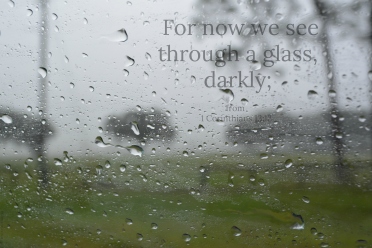
“Through the Glass Darkly”

Image result for the self concept

The self-concept is the relatively stable set of perceptions you hold of yourself.* It can change over time but for the most part it does not. It occurs due to a combination of many factors, but to keep this topic reasonably simple for a blog post, let’s just say it is a combination of biology and socialization.

Each of us is born with a genetic makeup. Studies show that biology accounts for as much as half of communication-related traits such as extraversion, shyness, assertiveness, verbal aggression and willingness to communicate. This is a short list of empirical study results but the bottom line is, how we are made has a big impact on how we see ourselves.

Socialization plays a major role in the shaping of our self-concept. We don’t grow up on a deserted island. We are surrounded by others and life is a constant process of interaction from the beginning to the end. Social psychologists place a major emphasis on “significant others.” These are people whose opinions we value. Life is a constant “social comparison” or a process of evaluating how we stack up against significant others. Am I more stupid or more intelligent, am I more attractive or uglier, am I a success or a failure? It is not good that we compare ourselves to people but we do it anyhow; it is a part of life in a socialized environment. As we mature, we tend to associate with people who are like us. These reference group people support our self-concept and may make it seem more stable over time.

The fact is that we may tend to believe our self-concept is accurate but in fact it may be distorted. There are many reasons for this. A few examples are the failures we cling to even though they are outdated. Critical comments from parents, teachers and employers may be horribly outdated but if they have occurred and have made a memorable impression, we may be in a life-long struggle to be free from their negative influence. Too often we fall prey to unbelievable role models in life. Models who are gorgeous, billionaires who have great success and athletes who accomplish great feats; we think we have to have what they have but we don’t. The problem is that their lives are what we strive for and if we can’t achieve their level of accomplishment, it is a big distortion on the value of our lives.

The list goes on and on but you get the point. Pastor Labberton uses a reference from Corinthians that we see ourselves through a glass darkly, but he goes further and says most human beings suffer from a “narcissistic wound” that is inflicted on us as we develop in our world, as our self-concept begins to be constructed. This wound is a deep-seated sense that few of us really get all of the love that we really need to thrive. It would be ideal to have a life of constant acceptance and love but along our life-span, normal people have bad experiences. We can over-emphasize comments from critical parents, cruel friends, uncaring teachers, demanding employers, or even memorable strangers.
Add to this the complications that can come to us from life. Some of us struggle with poverty. Some of us have disease. Others may have hunger. Still others may feel oppressed and of course some have experiences with people who are violent. Too often we think that life is always full of potential. Joel Osteen encourages us to climb higher up the mountain of success or paint a positive picture on the canvas of our lives but for many, that positive advice is just too hard to engineer.

There are just too many forces working against us.

It would be best if we had accurate pictures of ourselves but we don’t. If we had those accurate pictures, that old expression “what you see is what you get” may apply. But in the light of the subjective nature of our self-concept, Pastor Labberton writes “We look at our reflection all of our lives. What we don’t see is that the mirrors we use are distorted. Misperception starts with our self-reflection.”

If we see ourselves through a glass darkly, how could it be otherwise?

*This post contains information from Ron Adler and Russell Proctor’s book Looking Out Looking In

Posted in Uncategorized | Leave a comment

The Dangerous Act of Blogging on Labberton

Image result for the dangerous act of helping your neighbor

I am going to say something that will elicit very few tears from anyone who reads this blog.

Blogging can be hard.

No one makes me do this. I do it because I like it. Maybe it accomplishes a purpose for some people who read it and if it does, that makes the blog even better.

Now you might think I will list the usual blogger’s laments: it is hard coming up with ideas, sometimes I don’t feel like writing, it is too much pressure to post every day or so, the commitment is killing me.

Those are not problems for me.

Here it is…

Mark Labberton’s book is hard. In the past I have written on books that have positive passages and ideas that are not challenging all the time, but Labberton’s book is a cold, hard look at our failings as Christians. Blogging on Labberton’s book is hard.
Every page screams out “why are you not doing more to help people who have less than you! You know you should as Christians; the Bible tells us to help the poor. Get to work!”

I will be the first to admit that we all sin and fall short of the glory of God, but those sins are sometimes personal and they don’t involve others. The sin of omission is a problem but it can be committed in a way that only impacts the sinner. However, the sin of omission is very evident regarding our help for the poor. In this, we are failing to recognize those around us who are in need and of course if we don’t see them, we are certainly not helping them. We are failing to act. We are omitting something from our behavior that Labberton feels should happen.

My wife is constantly teasing me about my goal-oriented nature. She knows how testy I can get if I have hours and days where I get nothing done. Too often my concerns are personal: I need to get a bedroom painted, I need to rake the back yard, I need to bake a favorite apple pie. Sadly, I don’t have on my list I need to help the poor. I feel bad that I don’t have goals that involve other people.

When I expressed this idea to a friend the other day, the friend tried to console me. She said “some of us just don’t have gifts for helping the poor. Maybe you just don’t have what it takes to aid those less fortunate.” Their words were a good effort but I did not believe them. I know I can do more. They were a “cop out.”

Part two of Labberton’s book is about learning to see and a major part of it is dedicated to how we see ourselves. As I have written in the past, I have always been fascinated by how we come to be the people we are, but when I discuss the self-concept, self-esteem and self-image, I usually think of these ideas in general terms, not how they impact my ability to help others.

Labberton zeros in on how these ideas relate to those in need and how these ideas relate to those who can help those in need—in a word, me.

Ok, maybe the whining needs to come to an end.

I need to recall why I decided to write about this book, this author. This book discussion is dedicated to a friend who died recently, a friend who dedicated his life to helping the poor. He inspired me to write about this book. I watched him spend his time, energy and money to help those less fortunate. I took phone calls from him as he explained the plight of those less fortunate. This person who did not have a bed. This single mother who could not feed her two children. The local homeless mission center that was in desperate need of cleaning supplies; they had nothing to clean it with. The family of four who were so poor that they had no toilet paper. One morning he called to tell me that several families just needed breakfast food, boxes of cereal and milk so they could start their day with something in their stomachs.

I knew he felt a lot of empathy for the poor, but I watched him from a distance. At times, the thought went through my brain that he was a bit crazy in his advocacy for the poor.
Now I am complaining that blogging is hard because the book I am blogging on is hard to write about, the subject is difficult to discuss and I wonder how popular the discussions are. I worry that readers will not want to be confronted with how they need to help the poor?

Then I think about John. Over all the years I knew him, he had his struggles. We all struggle, but I never once heard him say I am too tired to help those who have less than I do.

He could have.

He didn’t.

Posted in Uncategorized | Leave a comment