“Gone to Meddling”

The premise of John Bevere’s book Good or God? is that instead of attempting to seek a higher standard of Christian living, we are often satisfied with less. Instead of seeking God, we are content to just be happy with good. At times, it may sound like he is being “holier than thou” if you know what I mean, but it is probably best to keep in mind that he is merely trying to point out that there is more for us to experience in our lives if we just hold ourselves to a more Godly standard.

Today, he pinpoints three areas of life that many struggle with; anger control, stealing and foul language, three areas of life where we accept the good and don’t try to seek God.

I check out the news three or four times a day. I usually go to a news feed that is generated by a browser. Some of you may do this also. When I read news items, I wonder about the words that headline the reporting. In today’s news feed, the headline is that some political figure goes on television and “owns” another politician. A celebrity is upset about some aspect of their life and they “slam” another person. A well-known person is having a difficult time and “everyone is hating them.” Another individual is “flipping out” about something going wrong in their world. You read the story and sure enough, people are using angry, hateful language. Unfiltered is a popular word today. Instead of stopping and assessing language, too many of us use angry language that causes anger in others.

Paul writes “Get rid of all bitterness, rage, anger, [and] harsh words” [Ephesians 4:31]. James commands “You must all be…slow to get angry. Human anger does not produce the righteousness that God desires”[James 1:19-20]. Paul is even more direct when he says in Colossians “Get rid of anger [and] rage” [3:8].

Why do we excuse angry outbursts when it is clear they are counterproductive for our lives as Christians and so negative for the lives of others? I can only theorize that it is the human need for attention, the anger catches the attention of others and draws attention to us. We need that attention.

What we don’t need is to lower our standards and accept a life that is less than we can have.

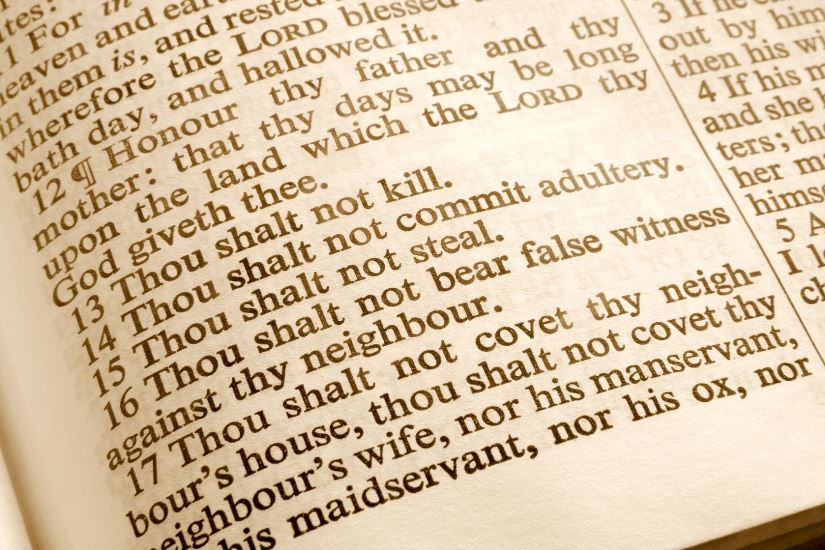
Another example is stealing. Of course “thou shalt not steal” is a Biblical imperative from Exodus that Jewish, Catholic and Protestant theologians have always accepted, but Bevere says Christians are stealing today and finding a way to justify it. We borrow money and don’t pay it back, knowing that we can always declare bankruptcy if we have to. We use our company’s resources for our own personal use, declaring “I am a Christian saved by the grace of God.” People can cheat on their tax returns, thinking nothing of not reporting some of their income. Romans 13:5 says “Pay your taxes.” That is pretty clear. We find ways of justifying our actions by pointing to the public actions of others. Many high profile people seem to steal and think nothing of it. Their standard is lowered, so maybe we can lower ours.

Lastly, the use of foul language is becoming so common. I am not a hard core television fan but when I hear language on television I am amazed at how far we have come in so short a span of time and I don’t mean this in a positive way. If foul language on television is an indicator of how much we are seeking God, it seems we are not. Ephesians 4:29 says “Let no foul or polluting language, nor evil word nor unwholesome or worthless talk [ever] come out of your mouth.” Every television season seems to usher in more shocking language. It is impossible not to encounter this. We don’t live in a bubble. I once heard an expression that when a bad word or a bad thought enters your consciousness, don’t let it stay. When a bird flies over your head [a bad word or bad thought] let it fly over; don’t let it roost. When it roosts, it becomes a part of your life. It works its way into everyday conversation, stories you tell others and jokes you share.

Bevere even takes his own occupation to task. He recounts the story “Recently I sat at dinner with a young couple who oversee a great church. They admire and look up to a certain global ministry. They were given the opportunity to have dinner with one of the organization’s renowned leaders. During the course of the meal, he used hardcore profanity several times” [Bevere, 151].

Some may feel this post may be picky; “holier than thou” is a term I used earlier. Maybe my comments are like the congregant who said of the pastor, “He has gone from preaching to meddling.”

But maybe the attitude should be that anger, stealing and foul language are just like the canary in the coal mine, signs that life is not what it should be. Things are getting dangerous because we have lowered our standards.

We think we are good but really we are not.

We are living by the standards of our world.

We should be seeking God but anger, stealing and foul language are keeping us from His presence.

Posted in Uncategorized | Leave a comment

Liar, Liar

Stop telling lies…

One of the most fascinating aspects of my communication study over the years has been the idea of perception. Perception is essentially a person’s point of view, how they take in information about their world. A lot goes into that point of view. It is how we interpret the world according to our sensory organs, our past experiences, and the context of the perception. The list can go on and on with factors that affect perception. The bottom line is none of us experience the world the same way.

One can make a case that we really don’t lie. We just report to others our unique perceptions. A simple illustration is two pedestrians seeing an auto accident as it occurs at an intersection. One pedestrian is an auto body repair person. When the accident occurs, this person sees the extent of the damage and immediately begins to assess the cost. Maybe they don’t even pay attention to the drivers. The other pedestrian is a pet person. They see a small cat that one driver has tried to dodge. That cat caused one driver to wreck but that is not their utmost concern. They are pet lovers and their heart goes out to the kitty and they look to see if it is ok. Police come onto the scene and question both pedestrians about the accident. What were the circumstances of the car movement? What about driver behavior? Truthfully, the auto body person can only comment on the cost of the damage. That person was not paying attention to the circumstances of the cars or drivers at all. Of course the pet lover did not even attend much at all to the wreck. They were really concentrating on the kitty cat.

When they respond to the questions of the police, are they lying or are they merely reporting their perceptions? Does each person have a different set of facts?

Truly we don’t all see the world the same way. Individuals can have different points of view, “alternative facts” if you will, but this is not really what James is talking about in James 3:14: “Don’t cover up the truth with boasting and lying.” It is not what Paul is saying in Colossians 3:9 when he says “Don’t lie to each other.” These are New Testament “commands” to tell the truth. These are New Testament commands to not lie.

Lying is making up “facts” or telling people something that you know is untrue. This is not the gray area caused by your unique perception. It is speaking words to others to create a reality that is false.

Pastor Bevere in his book “Good or God?” states that contemporary ethics seems to allow for lying behavior. The idea today is that if lying leads to a desired end, then it is ok. He states lying occurs “in government, education, ministry and medicine and among family members and friends. We lie to save face, protect our reputations, propel ourselves to a desire position or expedite a desired end.”

Besides breaking the well-known Old Testament commandment, why is it still mentioned in the New Testament, a portion of the Bible that emphasizes grace? Doesn’t grace “cover” lying. The short answer is no. In this conception, grace becomes a tool to rid a liar of guilt. Maybe what the New Testament writers like James and Paul realized is that Christians can abuse grace when it comes to telling the truth. If we emphasize that we are serving the “greater good,” maybe lying can be justified and what the heck, grace will cover my sin anyhow.

The whole premise of Pastor Bevere’s book is based on getting us to understand that grace exists to empower us to a holier life, a closer relationship with God. Using grace to cover lying is definitely not part of his message.

Bevere also says that lying may just be people trying to speed up the process of getting something done instead of waiting for God to provide. We all know we live in a world that is filled with very impatient people.

More importantly, if lying is accepted as ok, what does this do to us when we are seeking the promise of His presence? I know Psalms is from the Old Testament but what does Psalm 15: 1, 4 mean when it says “Who may enter your [God’s] presence?…[those who] Keep your word even when it costs you.”

The whole book Good or God? is about the need for Christians to choose holiness over goodness. When a person lies it is a sin according to the Old Testament.

It is a sin in the New as well.

“Keep your word even when it costs you.”

Words to live by if you seek to live a holy life…

Posted in Uncategorized | Leave a comment

The Do’s and Don’ts

“The Old Testament is filled with do’s and don’ts, but the New Testament is all about grace” [Bevere*, 146]

Many of you have read the Old Testament, some maybe more than once. It seems true that God told the Israelites what to do and they tried to do it and then they got weak and quit trying. Then they just out and out rebelled, God punished them for their failures, and sometimes the punishment was harsh. They got the message and tried again, only to fail and suffer more.

The New Testament does seem to be a different story. Jesus came to free us from our sin. His life was an acknowledgement that we don’t have what it takes to live a sinless life; we must turn to God for His forgiveness for our sins. However, many New Testament Christians think that the grace that comes from Jesus frees us from the Old Testament focus on commandments. Pastor Bevere says that “It is taught now in conferences and churches that the grace of God frees us from commandments.”

Ironically, Bevere thinks that this type of teaching steers people away from the presence of God and he supports his assertion with the words of Jesus which say only those who keep My commandments will experience My manifest presence [from John 14: 23]. In essence, teachers and preachers who think they are freeing their audiences are actually steering people away from God.

In this post and the next series of posts, I will comment on Bevere’s thought about the commandments of Jesus.

Does “Go therefore and make disciples of all the nations…teaching them to observe all things I have commanded you” sound like a suggestion or does it sound like a commandment? I don’t know about you but when someone starts a sentence with a verb like “go” it means that I have to do something, it sounds like I have been commanded. The apostles gave Jesus’ commandments to us in 1 John 5:3 “Loving God means keeping His commandments.” Paul writes “For you know what commandments we gave you through the Lord Jesus” [1 Thessalonians 4:2]. Paul writes further in Ephesians about not telling lies, controlling anger, not stealing, refraining from using foul or abusive language. These words from Paul sound like “don’ts” to me.

All this raises the question about what a commandment is anyway. We assume that since the Israelites struggled to comply with God’s commandments, they must be impossible to fulfill. Many people think of commandments as rules that hamper life. They put us in a box.

Maybe they don’t…

When I became a driver, my Dad told me I should wear my seat belt. He insisted that I keep it buckled when I was in a car [passenger or driver]. One day I was in a hurry and went through an intersection, turning left on a yellow light. A car opposite me started up quickly and I did not get out of the way. My truck was totaled and I survived. The seat belt saved my life. I thought about Dad’s words and was glad that I did what he told me to do. Instead of dying, I had a chance for more life.

It may be a stretch to compare Dad’s words to God’s words, but maybe Jesus’s commandments are for us to live a better life. When Paul says in 1st Thessalonians “For you know what commandments we gave you through the Lord Jesus”, he follows up those words with “We are expected to keep Jesus’s commandments in order to live holy” [4:2-3]. Peter comments on people who fall away from faith in God in the latter days and credits that fall with the idea that those who fall have “rejected the command they were given to live a holy life” [2 Peter 2:21]. It seems that Jesus has said through His disciples “do what I have told you and you will receive the reward of a holy life.”

In upcoming posts, we are going to be specific about the don’ts mentioned in this post but we should not be disappointed by these “commandments.” If we indeed have a loving Father, maybe He is just telling us how to live full, productive, long lives.
We should not feel disheartened; we have what it takes to do this. We have a divine nature that comes from God and the power of grace to fuel our efforts.

Is the New Testament free of commandments? Of course not, but as my father loved me by telling me how to drive safely, our God [through Jesus and his Disciples] is just telling us how to live a holy life.

Maybe commandments are not really a bad thing at all…

*author of Good or God?

Posted in Uncategorized | Leave a comment

The Spirit is Willing…

Let me pose what we call a “no brainer” to you. You know, one of those questions where you don’t have to think about your response. It would just be yes, a flat out yes.

In John 1:16, Pastor Bevere pinpoints a key verse that he uses to build his case and eventually to ask us his “no brainer.” The verse goes “Of His fullness, we have all received, and grace for grace.” In the original Greek, this verse means the “overflow, or abundance, of what grace does for us is it gives us the fullness of Jesus Christ.”

Then Bevere asks if you had a chance to be experience the fullness of Jesus Christ, would you take it?

A no brainer…

As I wrote in my previous post, Bevere is building on the idea of grace as more than a free gift, salvation, or forgiveness of sins. It is a source of empowerment. Grace as a gift, salvation and forgiveness is wonderful but what is Bevere is right? What if grace is more than that?

Most of us have heard of preachers who have said things like “We are no better than sinners, we’re just forgiven” or maybe this: “We are just unworthy worms.” One of my favorites is “We are humans with a sin nature and bound to it.” These statements are humbling and they may be designed to get us to feel dependent on The Lord for our failings but what if we can move beyond our failings? What if we can tap into a power that allows us to grow as Christians at the next level?

Bevere is not like one of “those preachers” in the previous paragraph. He points to Ephesians 5:30 where we are reminded that we are bone of His bone and flesh of His flesh. He prefers to focus on the statement “Beloved, now we are children of God” [1 John 3:2]. This is empowerment now, not later in heaven. Second Peter 1: 2-3 states “May God give you more and more grace…by His divine power [grace] God has given us everything we need for living a holy life.”

I like to highlight “more and more grace” because I need more and more and when it comes to empowerment, don’t you need more and more also? I don’t want to stay the man I am today; I want to live a better life, a more effective life for Christ. In an earlier post, I cited James 4: 4, 6 when he says “You adulterers! Don’t you realize that friendship with the world makes you an enemy of God?…But He gives us even more grace to stand against such evil desires…so humble yourself before God.” The key words are “even more grace”.

I have spent so many years trying to move beyond my sins. I thought I had the ability to do it on my own. Bevere cites Eliab, David oldest brother who faced Goliath in his own strength. Then we see the humble shepherd boy David who confronted the giant in God’s strength and everyone know that outcome.

Bevere cites Jesus in the Garden of Gethsemane who was in the biggest fight of his life. His flesh wanted out of what His father commanded. Who would want to face what he was about to face? Yet in his humility, he cried out for His Father’s grace to get him through the fight. The disciples failed to even stay awake but Jesus did not fail. His spirit was strong and his body was strong: God strong.

Think about life and the struggles you have. Mine are evident to me. I really want to cast them off. I know the peace that can happen when God gives me the strength to make better choices. I know that sin is a prison and I am the one that walks right into my prison cell. I am weak but my God is strong. I don’t have what it takes for victory but He does. He offers it to me and He offers it to you.

It is not in my strength; it is in my weakness, my humble weakness…that is when God works His miracles.

It is counter-intuitive.

Certainly if it counter-cultural…

But when I am weak, My God is strong…

When I am weak, I feel the power of His grace the most…more and more grace.

Posted in Uncategorized | Leave a comment

Grace…The Fuel

We have been through nine chapters in John Bevere’s book and he has written about the state of Christianity today; his opinion is that Christians are content to pursue goodness and not holiness. He has stated that good is not good enough; we should want more.

He titles Chapter 10 “The Fuel” which makes me think that he is going to say something profound in this chapter and in my humble opinion he does.

It all begins with the idea of grace. If you are Christian, that is a term that means something. But if you are like me, it means that we try and try to live a sinless life and we fail over and over again. But Bevere writes “But then came grace. We couldn’t earn it by good behavior and still can’t. We didn’t deserve it and still don’t. God’s gift completely forgives us and will continue when we fall short” [Bevere, 138].

God asked the Israelites to live a sinless life and the Old Testament is a record of their failure. Jesus and the gift of grace was the New Testament and it solved our problem with sin, or so it seems. I don’t know about you but at times in my life, I felt that grace was a “get out of jail free-card”, you know that wonderful card that comes in handy in the Monopoly game. We don’t have to worry about sin because it is there to save us. God knows we are human.

But isn’t there more to life than the live life, sin, ask forgiveness, repent, grace cycle? Isn’t there more?

Bevere keeps talking about the idea that holiness is the pathway to the presence of Jesus. C.S. Lewis writes “Be ye perfect is not…a command to do the impossible. [God] is going to make us into creatures that can obey that command.”

And it is through that common Christian idea of grace.

Bevere cites a 2009 study of Christians where thousands were asked what grace meant to them. Ninety-eight percent of them said “salvation”, “unmerited gift” or “forgiveness of sins.” It is good that such a high percentage know what grace means but Bevere points out that only two percent know that grace can mean empowerment. We are talking the kind of grace in 2nd Corinthians 12:9 “My grace is all you need, for my power works best in your weakness.” We think of weakness as inability. But think about it; if ninety-eight percent of Christians don’t realize that grace means empowerment, they are attempting to live a holy life on their own efforts. Believe me that the live life, sin, ask forgiveness, repent, grace cycle can be very discouraging. For many it leads to frustration and defeat. Who wants to repeat the same bad behavior?

Let’s drill down on what Paul is saying with “my power works best in your weakness.” Writing about the churches of Macedonia, Paul says the grace of God was bestowed on those churches “that according to their ability, yes and beyond their ability.” That is what this concept of grace means. With this, we can do more than we ever dreamed we could. God can work through us, through our weakness.

It is not often that I quote a lot of words from an author but Bevere’s ideas about grace bear repeating and they lead so well into my next post: “With what we’ve just learned, let’s expand this understanding further. Salvation is a gift of grace. Forgiveness is a gift of grace. Healing is a gift of grace. Provision is a gift of grace. Receiving God’s nature is a gift of grace. Empowerment is a gift of grace. All of these are manifestations of His favor upon our lives, each underserved and unmerited. In regard to empowerment, grace gives us the ability to go beyond our natural ability. We didn’t have the ability to deliver ourselves from hell, grace did. We shouldn’t live in freedom, but grace enables us. We can’t change our nature; grace did. We don’t have the ability to live holy, but grace enables us.”

What an unexpected place to find fuel for our Christian growth toward holiness…grace.

Posted in Uncategorized | Leave a comment

You Are Not Doing It Alone…

All teachers have their tricks; I had a few. We usually “borrow” them from other teachers. One of the “tricks” I used every semester went like this. I would stop class and ask my students to mimic what I was about to do. With great seriousness, I would have them hold their right hands out in front of them and ask them to make a circle with their thumb and forefinger. Then I asked them to look through the circle. After that, I would ask them to pull the circle up above their heads. Then in a firm voice, I said “put that circle on your chin.” At that time [with all their eyes trained on me] I put my circle on my right cheek.

What happened?

Very few students put their circle on their chin. Most put their circle on their cheek, following my action. It was funny to watch a few who actually heard my words; they would move their circles from their chin to cheek and back again. They did not know what to do. But most did not hear my words; they just watched my behavior.

This little illustration was used to make this point: actions speak louder than words.

As Pastor John Bevere begins to close Chapter 9 in his book Good or God?, he tries to be clear about the idea of holiness. He says holiness before God is a two-fold concept.
First of all, we have a position in Christ. What this means is explained in Ephesians 1:4: “Even before He made the world, God loved us and chose us in Christ to be holy and without fault in His eyes.” This is a gift from God. We can never say we earned this position by our behavior.

The second aspect of holiness is the behavior that results from holding this position. Here is where actions do matter. When we say we have dedicated our lives to Christ, we should act like we have dedicated our lives to Christ. We have all heard the cliché “You have to walk the walk, not just talk the talk.”

In First Peter 1, the Bible says “The heavenly Father to whom you pray has no favorites. He will judge or reward you according to what you do. So you must live in reverent fear of Him during your time…” The Christian who proclaims a love for Christ and then lives in willful disobedience should be very concerned. Bevere writes “If we are truly His, we should passionately want to not hurt His heart by living in sin” [Bevere, 133].

Now before going further, let’s stop and admit that living a holy life is hard. Because of how we are made and the influences we have from those in our lives, it is easy to get “off track” and have moments of weakness. Because of our natural tendency to sin, it is hard to fight off temptation. We are not automatons; we react to life around us and some of our behavioral choices are not appropriate.

What must we do to live a life that is holy? We have to rely on the gift of our new nature.

If we truly accept Jesus Christ in our lives, there is a Helper that can lead, guide and direct us away from temptation. That Helper is the Holy Spirit.

For so many years I have struggled with a particular weakness that has been so frustrating. I did things that I knew I should not do. I would then pray prayers of repentance and hope that God would forgive me. Eventually I would have a few days of being able to handle my weakness and then out of left field, I would sin again. This hurt my relationship with God so much as I felt distant from Him due to my disobedience. Why would He not stop me from being tempted? Why did He not take away my weakness?

Maybe it was because He wanted me to do my part in the process of growing as a Christian. Maybe He wanted me to listen to my Holy Spirit, do what the Spirit said and then thank Him for the guidance.

Now that I think back on this, maybe I was being lazy. I thought God should have done all the “clean-up” work. I wanted to be the asker and the receiver. Maybe God wanted me to “act” better for my sake and the sake of those around me. I had declared that I had a relationship with Christ but in times of frustration, I knew that I had heaviness in my heart due to my disobedience. Pastor Bevere knows when he writes about purity, sinless behavior, holiness and upright living that many of his readers will get irritated and say, it is impossible. They realize they don’t have what it takes to change.

It is possible to make progress toward a holier life and Bevere will be discussing that in Chapter 10. How do we make sure our actions are in line with our words?

Lean on the Helper; our Holy Spirit will lead guide and direct.

God wants us to do that; He knows we are weak.

We will always struggle to get our actions to line up with our words…

Without His “Help”…

Posted in Uncategorized | Leave a comment

The Motivation behind sin…

“The motivation behind sin is selfishness. The man who steals does so for himself. The man who lies does so to protect or benefit himself. The man who commits adultery against his wife considers not his wife and children but his own passion. The man who murders does so for himself. The man who disobeys authority does so because he believes he knows better and wants better for himself. The man who pursues popularity and fame does so to appease his insecurity and pride” [Bevere, 130].

Pastor Bevere pretty much lays the blame for most of the sin in the world on selfishness.

Look at the following Scripture from James and pay attention to the word selfishness in the quote: “Why do you fight and argue with each other? Isn’t it because you are full of selfish desires that fight to control your body? You want something you don’t have and you will do anything to get it. …But you still cannot get what you want and you won’t get it by fighting and arguing. You should pray for it. Yet even when you do pray, your prayers are not answered, because you pray for selfish reasons” [from James 3 and 4].

It seems that James regards selfishness as a problem in the world too, wouldn’t you say?

The world is driven by selfishness and so is the believer who is unholy. A person can call themselves “Christian” and be driven to sin due to selfishness. What a person wants becomes a top priority. God calls us to a higher standard but we can easily ignore that call. Paul is an honest man when he says in Romans 7: 15-20 “For what I am doing, I do not understand; for I am not practicing what I would like to do, but I am doing the very thing I hate. But if I do the very thing I do not want to do, I agree with the Law, confessing that the Law is good. So now, no longer am I the one doing it, but sin which dwells in me. For I know that nothing good dwells in me, that is, in my flesh; for the willing is present in me, but the doing of the good is not. For the good that I want, I do not do, but I practice the very evil that I do not want. But if I am doing the very thing I do not want, I am no longer the one doing it, but sin which dwells in me.”

Paul knows what he wants to do. He wants to follow God’s law but he also knows that he falls short and sins. That is what is so good about Paul; he is a writer in the Bible that all of us can relate to. He sins and wishes he did not; he also knows why he sins. It is the fact that he is a man and it is his nature to sin. At least he is not trying to cover up the fact that he is not perfect. Many Christians try to do this, to their own detriment.

Bevere says that the unbeliever is the one who is truly ruled by selfishness. They are enslaved by the appetites of their flesh. They have no Holy Spirit to lead them away from sin any time. They have no ability to live a good life before God. If unbelievers have very strong willpower, they can put on a façade and appear unselfish but make no mistake, they know selfishness intimately: it is the theme of their life.

As Christians, we have something that is helpful due to our relationship with God. We have Jesus Christ. Paul also writes “Since you have heard about Jesus and have learned the truth that comes from Him, throw off your old sinful nature and your former way of life, which is corrupted by lust and deception. Instead, let the spirit renew your thought and attitudes. Put on your new nature, created to be like God—truly righteous and holy” [Ephesians 4: 42-24]. We have a chance to overcome our selfish nature from time to time. As Paul admits, we cannot expect to conquer it all the time, but we have a chance to adopt this new inward nature. We can be a new creation in Christ.

We don’t have to submit to our selfish desires 24/7.

We can go a new route.

We have a freedom which comes from Jesus Christ, a freedom to choose.

We can listen to that Holy Spirit, do what it is urging us to do and live a better life.

Indeed, the choice is ours…


Posted in Uncategorized | Leave a comment

Living for Self…

So much of John Bevere’s Good or God? has been brutally honest.

He is calling for Christians to meet a higher standard, a holy standard and he pulls no punches. He confronts the way we live today, in a culture that encourages all of us to buy what we don’t need and worship the trappings of power, power that we don’t have.

Now he writes about a core problem that is at the base of our struggle to be holy.

Many of us are selfish, at least I know I am.

Maybe Bevere’s ideas make you uneasy. As you read my writing, can you imagine the difficulty I have in commenting on Bevere’s ideas. I live in this world with you. Your temptations are my temptations. Don’t we all fall short of the glory of God?

But let’s return to that core idea selfishness. I have heard that it is a problem I have had for a very long time. There is an old family tale about my Aunt Effie who came into the hospital to visit baby David and Mom. She bent over to look into the bassinette and declared the following: “His ears are close to his head. He is going to be selfish.”

There you have it; selfish from birth.

You see, the problem is that selfishness flies in the face of the Christian lifestyle. If you have met and entered into a relationship with Jesus, you must live for Him, not yourself. Paul writes in 2 Corinthians 5:15: “Those who receive His new life will no longer live for themselves. Instead they will live for Christ.”

Even though the story about Aunt Effie may sound flippant, the story of the rest of my life has not been. For so long, I had the idea that the world revolved around me. Being the oldest son of three boys did not help. Being the child who excelled in school made it even worse. I got a lot of positive attention for my academic skills. My wife joked that if I went beyond my “terminal” degree and took any other graduate courses, she would divorce me. She said this in a joking manner but it really was not a joke. I pursued education at a huge cost and I was so wrapped up in it that I did not pay attention to the sacrifices of others. Along the way, I developed a serious interest in communication and pursued speech communication skills. Not only did I study the subject, I put myself in situations where I had to speak competitively. I got very good at this and the attention just fed my selfishness. Again, this took up a lot of time and money and I paid little attention to the sacrifices of those around me.

Bevere speaks of his marriage as an unselfish relationship and for him it may be, but for me, it was not. I was the first person in my marriage. When he writes “I’ve observed husbands who have little regard for their wives wishes; they think selfishly. They may be technically married, but these husbands and wives are not experiencing close intimacy” [ Bevere, 130]. Those words hit me hard. I know I have always loved my wife but I also know it was not enough. My own needs kept getting in the way. I put my own needs first.
In the Bible, James writes with the same honesty as Bevere. Attend to his words from James 3: “If your heart is full of…selfishness, don’t brag or lie to cover up the truth. That kind of wisdom doesn’t come from above. It is earthly and selfish and comes from the devil himself. Whenever people are selfish, they cause trouble and do all sorts of cruel things.” James goes on to say that there are two kinds of behavior patterns: giving and taking. Taking is selfish, worldly and unfaithful to God. To be a Christian is to know how to give, to consider the needs of others, to meet the needs of others and not always put yourself first.

In my situation, I had to suffer through a serious accident to finally come to grips with my selfishness and see a true example of unselfishness…that example was my wife. She stood by my side one hundred percent as I tried to recover my health. Some of the circumstances of my recovery were very unpleasant but she never complained. She supported me totally.

Today, I knew that I would be writing this post tonight. When I have a difficult piece of writing to do, I have to let is bounce around in my head for a day or two. My wife and I were in the car today, driving toward our home and I turned to her and said “Well tomorrow, it is back to Vanderbilt again. I sure appreciate you going with me. I know some people would say, you are well enough to go alone.” She just snickered and said, “I would never ask you to go alone.” She was giving up her day for me.

She did not have to say “I would never ask you to go alone.” I suspected that she was going to say that. She has proved over and over again that she is a giver, not a taker. She put the needs of others first and rarely puts herself first.

I am trying to learn the ways of unselfishness. I know that selfish behavior is not pleasing to God. Over and over, I read in my Bible that God demands that we be givers. The Bible is a wonderful instructional tool, but we all know that some of the best lessons can also be learned from excellent Christian role models. I am so blessed.

I have an excellent one in my own home…my wife Susan.

Posted in Uncategorized | Leave a comment

“From the Unseen to the Seen”

Sometimes we have those days when nothing seems right.  You may have done something that bothers you and it eats at you.  It is a sin but now it is over.  You can’t undo it and you have asked His forgiveness but it just sets there bugging you, keeping you from enjoying your day, keeping you from effective prayer, giving you the feeling that you are lost.   For me this situation often manifests itself as a yearning to do something but I can’t get started, I can’t get focused.  I am dwelling on the past, a past that I cannot change and I can’t see that the past has probably taken me to where I am now.  And now, I can’t see the new things that God has presented me with today.

Blinded by the past…

And then I read my devotion for the day and it references Isaiah 43:18-19.  The Words of this Scripture are “Forget the former things; do not dwell on the past.  See, I am doing a new thing! Now it springs up; do you not perceive it? I am making a way in the wilderness and streams in the wasteland.”  

What has happened?  

Has God manifest Himself in my life, my everyday, humdrum life?

Maybe.

John Bevere writes about how God manifests Himself in the lives of His followers.  Manifest means “to make clear to the eye or the understanding; show plainly.”   Jesus says that He will make himself known to those who follow Him.

But there is a catch.  I know; you are thinking “there is always a catch!”

Here it is.  You can hear it in the words of Paul from 2 Corinthians 7:1, “…Let us cleanse ourselves from everything that can defile our body or spirit.  And let us work toward complete holiness because we fear God.”

You can know Jesus’ full intention by reading John 14, 19, 21:  “A little while longer and the world will see Me no more, but you will see Me.  Because I live, you will live also.  He who has My commandments and keeps them, it is he who loves Me.   And he who loves me…I will love him and manifest Myself to him.”   Bevere says manifest in this context means the Christian has a chance to gain intimate understanding, knowledge and insight about God…”to bring from the unseen into the seen realm, from the unheard into the heard, and from the unknown into the known” [Bevere, Good or God?, 125].  His manifest presence is accessible to every child of God, but only those who obey His words experience this privilege.

I believe I have experienced His presence in church services, in prayer, while reading His word or just going about an ordinary day.  You may have too.

And yes, I certainly have experienced His presence in the midst of the trials of my life, when I was suffering, when I was overwrought with anxiety and fear, when I was confused and wandering without direction.

At those times, God does not give up on me and he does not give up on you.  He extends His hand to us in grace and mercy.  Because of His Son Jesus, He understands the problems we all face and He desires for us to continue to pursue Him.

This past Sunday, I had another opportunity to teach an adult Sunday school class.   I love my class.  Sometimes we get off track but I work hard to bring them back and Sunday’s lesson was what I call a squirming message.   The topic was “What Keeps You from Reading God’s Word?”  You see, I know that on most Sundays I face some mighty fine Christians who have not had much relationship with The Bible and that is ok.   It is a choice they have made.   They may know that they should read it but things get in the way.   At the beginning of class, I told them all that I wanted the message to be uplifting but at the same time honest.  I asked them this question:  “What gets in the way of reading the Bible?”  They responded to the question and soon the board was full of reasons for not opening the Bible.

Then a man confronted me with this statement.  “David are you saying I am not much of a Christian because I don’t read the Bible?  I think I am a good Christian.”

My reply:  “I know you are a good Christian; you have come a long way but do you want more?”  Like all of us, he has his struggles and at times  [like me], he feels defeated by some aspects of his life that are holding him back.   I felt a strong sense that he [like me] needed to let go of his past.

You see, the past is not our focus.   We truly cannot undo the things we have done, but we can find a way forward if we trust our Lord to guide us.  The dark clouds of the past can be blown away by our simple trust and  our pursuit of God and His ways.  We don’t have to fall into the habits that hold us back…we can see the newness that God will present to us.

Maybe part of that newness may just be the manifestation of God.


Posted in Uncategorized | Leave a comment

Recoiling from Holiness…

“Those who are not holy will not see the Lord” [Hebrews 12:14].

Pastor Bevere begins Chapter 9 in Good or God? with this quote. Then he titles his chapter the “Avoided Truth.”

Why?

Maybe I can explain by constructing a scenario. Let’s say you have a good friend who knows quite a few Christians that you don’t know and he wants to introduce you to his friends. After you meet his friends you naturally have questions; you want to know more about these unfamiliar people. He gives a little thumbnail sketch of each person and for one person [we will call him William], he has these words. Your friend says “William is holy; he is pursuing God.”

Stop for a minute and honestly think how you would respond to someone who is pursuing holiness.

Bevere is honest. He says even mention the word and watch people “recoil” and quickly change the subject. It is not “cool” to be holy; it can really take the fun out of life. Some Christians don’t appreciate someone trying to pursue holiness; it smacks of legalism. To be holy, it must mean that one has to follow a strict set of rules. They may say something like “I’m free and living in God’s grace. Don’t attempt to bring me under the law” [Bevere, 122].

All this just highlights the confusion many of us have about New Testament Christianity.
Bevere is simply trying to clear up the confusion. In short, he says all Christians should be pursuing holiness. We should not recoil and change the subject when the topic of holiness comes up. We should not jump to the conclusion that holiness equals legalism.
All Christians should desire the strongest relationship they can have with the Lord and pursing holiness is part of that. When Jesus was at the Last Supper he said “In a little while the world will no longer see me because I am alive and you’re about to come alive” [John 14:19]. In 2nd Corinthians 3:18 Paul states “All of us who have had that veil removed can see and reflect the glory of the Lord.”

Why would a Christian not want to see God? Why would a Christian not want to experience God’s presence?

Bevere feels that Christians can see God in a way that others in the world cannot. Through prayer, listening to our Holy Spirit, Scripture study and responding to God’s “still small voice,” we can discern that God has a plan for each of us. He wants us to be a part of His Kingdom and even though we may not “see” the Lord, we can know Him personally as we ask His direction for our everyday lives.

It is important to know Him because “knowing Him” allows us to be changed. Change or transformation is what a life in Christ is all about. When we dedicate our lives to Jesus, the process is just beginning. Paul says those who see the Lord “are being transformed into the same image from one degree of glory to another” [2nd Corinthians 3:18].

A sad fact of many who profess to know Christ is that they say they are Christian but they live a life as if they have never met Him. They have never really committed themselves to learning about Jesus; “they love themselves and their money, disobey their parents, communicate in a crude manner, refuse to forgive, seek fame and reputation, betray their friends, love pleasure more than they love God—the list goes on and on” [Bevere, 123].

Paul says “They will hold to the outward form of our religion, but reject its real power” [2 Timothy 3:5]. The power that they reject is the power of transformation.

This is serious stuff because many think they are living righteous lives when in reality they are not. One can attend church, conferences, prayer meetings, Bible schools and small study groups and still not experience God, if character and behavior do not change.
What can we do about this?

Here is a simple answer. Welcome transformation with open arms. Acknowledge that the way you are is not the way you want to be. You want something better. Make learning about God a part of your life and make responding to God’s urgings a daily habit.

If you ever encounter someone who is described as “holy,” I don’t think recoiling is the correct response. Maybe the best response would be to say “cool” or “awesome.” [Of course, we all know that those words are trite and far from adequate]. Bevere has these words from C. S. Lewis at the beginning of Chapter 9 and they may say it best “How little people know who think holiness is dull. When one meets the real thing…it is irresistible.”

Posted in Uncategorized | Leave a comment