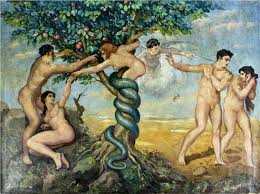
Paul’s Advice…

“All Scripture is inspired by God and is useful to teach us what is true and to make us realize what is wrong in our lives. It corrects us when we are wrong and teaches us to do what is right” [2 Timothy 3:16].

Paul lays it on the line.

What do we have with the Bible? Wisdom, Instruction, Guidance, Words from God.

What do we do with the Bible? Probably not enough.

John Bevere from his book Good or God? gets pretty accusative when he says “You and I must ask ourselves (and answer honestly), do I consistently read my Bible? Do I study it? Do I spend time searching out God’s wisdom for my life?” Can you say “yes”, “yes” and “yes”?

He breaks down Paul’s statement in 2 Timothy to support the case for Bible study.

Point number 1: “All Scripture…” What does Paul mean by all Scripture? Yes, there are many parts of the Bible that human beings don’t like, but does that mean that all Scripture does not come from God. In a recent group discussion about the Bible, it was very evident to me that all people don’t agree on the intent of the Bible. When you try to express human intent for God’s word, does that mean that we know God’s intent? From my graduate school days in the study of English, I recall a literature analysis concept called “authorial intent.” As readers, we are like detectives, always trying to determine what an author means [or intends to mean]. As human beings with very limited intellects [sorry but true] we can take passages about gender, sexuality, forgiveness etc. and twist them to fit our mind set. We may be so good with this that we try to speak with authority. But really folks, who can speak with authority…only God can.

My position is that all Scripture is inspired by God. Has man touched it? Yes, all one has to do is dig into the history of the many Biblical translations and the learned theological councils that determined the Biblical canon and see that man has touched the Bible. However that does not negate the fact that God was there when the translations were done and the councils were being held. His all-knowing hand was on the Scripture to guide man’s efforts. [The Dead Sea Scrolls compared to our translations attest to the accuracy of the translators].

Point number 2: Bevere focuses on the phrase “Scripture is useful to teach us what is true and what is right” [31]. We have to be careful here. We can read the Bible and try to get it to say all kinds of things. This is the nature of words. The meaning of some words is very hard to pin down. We can take God’s Word and make assumptions, express opinions and attempt to reason with Bible ideas but there are always hidden dangers. Just like we can be about the temptations of everyday life, it is easy to veer away from the good that God intends in His word. Bevere takes Eve who lived with God, enjoying the riches of His goodness and the wonder of His presence but she became convinced that God’s wisdom was flawed. Wow, think about it. Eve was surrounded by a perfect environment and in touch with God and yet she fell away from the Lord.

Think about what we have to contend with in our lives today? I don’t want to begin to list the snares that can trip us up. The list would be infinite.

Let’s return to Pastor Bevere’s admonition to pick up the Bible and use it. He calls it a “life instruction manual.” That’s what it is. When we pick it up, read it and study it, we may get an inkling once in a while about what God expects from us. Sometimes we may get more than an inkling. Whatever guidance we can get is worth it. Bevere says we are “living on a corrupted planet and also battling the tempter.” I don’t know about you but I need all the help I can get.

Like Eve, we can fall away from God’s truth. That is the sinful nature of humankind. But what a joy when we can stay strong in the face of evil. What a joy when we are in the middle of tragedy and we can know a peace that others can’t understand. What a joy when we have a moral compass in the midst of an ethical dilemma and we can find answers…

In God’s instruction manual…

Posted in Uncategorized | Leave a comment

God’s Good…

Good or God…

As we continue on in Pastor John Bevere’s book [Good or God?] we drill down on the idea of good.

How many of us even consider that the idea of good would be separate from God? Most of us would not consider that they could be separate, yet that is exactly what Bevere addresses in the beginning of Chapter Three.

What does the word good mean?

Most of us use the word indiscriminately and spend little time thinking about its origin, but “Good” is a word that is based on evaluation. For example, we might declare something good because it is beautiful or pleasing to the eye. We evaluate the idea of beauty as we compare it to other things. Good may mean useful but we evaluate usefulness by comparing something that is useful to things that are less useful. Profitable may be “good” but only as we compare something to less profitable things. [I hate to use the word thing so much but good covers a lot of territory, a lot of “things”].

All this sounds a bit mundane: David is “making a mountain out of a molehill” so to speak. However, when one consults the Bible, God is in the evaluation game. Reread Genesis and note that when God viewed His work at the end of each day, He declared it good. Bevere states “God shared His image and likeness with mankind that human beings have the capacity to make value judgements.” In other words, since God can declare what is good or make judgements, man can too.

There is a big difference here.

God evaluates perfectly.

Man has a distorted perception of this world due to sin.

Pastor Bevere is laying the foundation for the argument that he is making in his book: God’s evaluation is the evaluation that really counts. Mankind’s evaluation can be very flawed.

I was having a conversation with a man the other day. He seems to be a good guy, chipping in to do his part around his house and he is someone who tries to help his neighbors. However there is something about him that may represent what Pastor Bevere is referring to. He has a very strong prideful tendency. He does not want to admit that he has challenges. He does not want to accept help. He does not want to share too much of what is going on with his life. I mention this conversation because this guy may represent so many people who might say “I know what is right for my life and don’t need anyone to tell me otherwise” [30].

I don’t need to be too tough on him. I don’t know him that well and he is not unique. Bevere thinks that this “I know what is right for me” attitude is man’s downfall. My conversational partner’s attitude is representative.

Let’s be plain.

I don’t know what is right for me a lot of the time. I just think I do.

What if God’s plan for me is very different from what I think I should be doing?

What might I do if I get a Divine notion that I am heading the wrong direction? I may change course and redirect my efforts or I may be stubborn and plunge ahead.

Proverbs 16: 25 says “There is a way that seems right to man, but its end is the way of death.”

That, my friends is a warning. Changing course is the wise thing to do. Plunging ahead may be a big mistake. God knows that we are faced with many temptations in this world. The line between good and evil is not as clear as we wish it was. Pastor Bevere says “God warns that there will be ways—behavior patterns, thought processes, beliefs, customs or even traditions—that seem acceptable by our evaluation but will prove faulty in the building of our lives, and will in time take a toll” [30].

The problem is that our society says many things are perfectly ok when they are not. The bandwagon fallacy is alive and well, you know “everyone is doing it”: therefore it must be ok. The result of these poor evaluations and resulting actions may not be felt immediately, but will be felt late in life.

1 Timothy 5:24 states “Remember, the sins of some people are obvious, leading them to certain judgement. But there are others whose sins will not be revealed until much later.”

Good or God…
Who are we going to trust? Do I trust my own judgement about what is the good thing to do for my life? Am I going to let God lead me?

I know what I want to do…

Do you?

Posted in Uncategorized | Leave a comment

Watchman…

This year I have done something I quit doing several years ago. I have gone fishing. I have been three times to the same pond on my brother’s land and I have experienced little success. Literally, I would describe my efforts as “little success.” I have caught twenty-five or so fish but only two of them were “keeping size.” Two fish on two separate occasions.

I am not going to clean one fish and bring it home; too much trouble.

Those two fish went back into the pond.

I decided to reevaluate my fishing strategy. I remember my Dad having success using rubber worms so I went to the local bait store to purchase some.

On the back of the package, I noticed something that made me pause.

“Caution, Sharp Hooks”
Then under that “This product contains lead, a chemical know to the State of California to cause cancer and birth defects and other reproductive harm.”

Wow, I am glad they warned me about the hooks! [Please note the sarcasm]. I guess the California warning is due to the great sensitivity that Californians have about harmful elements.

Anyhow, my little fishing worm lures have warnings.
That is exactly how Pastor John Bevere ends Chapter Two in his book Good or God?.
There is a problem with warnings today.

People don’t want to hear them.

That is one goal for Bevere’s book. He wants to write about what we can do to live the best life we can on earth, but he also wants to warn us about what is not truly good in our life. He says “I want to both warn and teach” [Bevere, 25].

He cites Colossians 1:28 when Paul writes “Him we preach, warning every man and teaching every man in all wisdom, that we may present every man perfect in Christ Jesus.”

Paul tells us that we need to pay attention to the warnings of the New Testament. Bevere says “If we heed them, we will have years of successful living in harmony with our Creator. However, if we ignore or violate the warnings, we too will suffer in a manner similar to Adam and Eve.”

Again, people don’t want to hear warnings. I bought a new bike in 2016 and the owner of the bike store insisted that I buy a bike helmet before I left his store. Some would say he just wanted to sell me a bike helmet. I took it as a warning. Don’t wear a helmet and you are courting disaster. I see bikers and motorcycle riders riding all the time without helmets.

Pastors who preach warnings from the pulpit run the risk of dissatisfying their flock. We live in a world where not only do we not like warnings but we really prefer to have the good news. Some pastors are so worried about negative reaction that every sermon is a “feel good” experience. Maybe the congregation will grow, more tithes will roll in and maybe the pastor’s book will sell better.

I don’t mean to be negative but I know of one local church that tired of sermons of warning and they dismissed their pastor quickly.

The Bible says in Ezekiel 3:17 “Son of man, I have made thee a watchman unto the house of Israel: therefore hear the word at my mouth, and give them warning from me.” Some pastors see their role as the watchman. The Bible says “study this Book of Instruction continually. Meditate on it day and night so you will be sure to obey everything written in it. Only then you will prosper and succeed in all you do” [Joshua 1:8].

Bevere says if we would heed God’s warning we could avoid the many “train wrecks among believers…if individuals had been both taught and warned.”

He finishes Chapter Two with these words: “There is nothing good for you outside of God’s wisdom or Word, nothing at all. If you believe this, let’s go further in our search for the difference between good and God” [Bevere, 26].

Maybe I did not really need the warning about sharp hooks on my fishing lure but I can tell you one thing, those hooks are there. I know; I have hooked myself. There is much in life that I am not aware of. As I continue into Chapter Three, I look forward to learning…

from a watchman.

Posted in Uncategorized | Leave a comment

The Best Book to Read…

One of the things that I do to “pass the time” in my retired life is I belong to a book club.

Every month a member of the club picks a book to discuss and many in the club read it and we meet to discuss the book at a designated time and place.

This month the book is The Year of Living Biblically, a humorous look at a Jewish man [A.J. Jacobs] who wants to be as literal as possible in following the Bible and his book is a record of all the trials and tribulations he faced during his year of living Biblically. 

Why did he do this?   He said he wanted to know if The Word could be followed to the letter and secondly, he wondered if following The Word would bring him closer to God.

He was not very close to God in the beginning of the book. 

He had many, many doubts.

In the book I have been blogging on, Pastor John Bevere speaks of “communicated knowledge” of God [in his book Good or God?].   He also speaks of “revealed knowledge.”  There is nothing wrong with communicated knowledge but this form of knowledge comes from hearing or reading someone else’s statements about what they’ve heard about God.  Communicated knowledge may be accurate or it may be inaccurate. 

Maybe Jacobs was seeking revealed knowledge; he wanted to experience God firsthand.

In his book, he documents his many struggles with communicated knowledge.  He writes about many encounters with people who are all over the Christian belief spectrum.  He admits that he is very confused by people who think the Bible is the literal word of God even though that is what he is trying to do for one year.   For example, he has a very enlightening discussion of Genesis and the Creation account.   He traveled to Petersburg Kentucky to visit the Creation Museum as part of the research he did to write his book.    Before going, he had friends who said things like “those people give Christianity a bad name” and other more hurtful expressions that I will not repeat in this post. 

At the Creation Museum he was in the presence of people who are trying to take the Genesis account literally.   He was trying to live the Bible literally; they are trying to interpret Genesis literally.  They have invested a lot of money to build a museum based on creationism [the idea that God created the world just as He said in the Bible’s first book].

In my opinion there is nothing wrong with that.  Jacobs began to wonder about creationists himself.  When he had conversations with the people running the place [a group called Answers in Genesis] he was surprised by how intelligent they are.

However, it seems that literalists are in the minority today.  A recent Gallup poll on religious values reports that seventy-one percent of Americans today feel the Bible is a Holy Document but only twenty-four percent think the Bible is the literal word of God.  The rest of the Bible believers think the Bible is merely a collection of fables, legends, history or moral precepts. 

It is pretty common knowledge that a copy of the Bible is in almost every household but it is seldom read.  It is encouraging that Americans still think the Bible is the inspired Word of God but even if they believe it literally or maybe not so much, the fact is, Americans are not reading it. 

Lifeway research reports that only eleven percent have read all of the Bible through with nine percent reading it more than once.  Eighty percent have not finished the Bible through one time, with a dismal twenty-three percent admitting that they have not read one word or at best, just a few sentences.

It is no wonder that Pastor Bevere says there are many people who try to flaunt their Bible knowledge but they often misquote God’s word, from “money is the root of all evil” [see 1 Timothy 6:10] to “cleanliness is next to godliness”,  “this too shall pass”, and “hate the sin and love the sinner.”  None of these ideas are even in the Bible.

Bevere says that “individuals who make erroneous comments like this possess communicated knowledge rather than revealed knowledge.”  He goes further by saying “In my experience this communicated knowledge is sometimes more dangerous than the absence of knowledge.”

How can this problem be corrected?

Let’s take that Book that is in almost every house and do something with it.   Eighty-eight percent of American households report the ownership of a Bible and the average household has four Bibles.

A.J. Jacobs may have had a “close encounter” with God before his year of living Biblically was over. I’ll find out when I finish reading the book.  Pastor Bevere almost guarantees it.  In fact, he says the most common way all of us can get a revealed word from God is through our reading of Holy Scripture.

Do you want to have revealed knowledge yourself?

Just pick up that Bible and read.

Posted in Uncategorized | Leave a comment

Truly a Miracle…

My wife and I were watching a movie on a streaming movie service last night and the film featured an extremely bright young man [about 12 years old] who said “I don’t believe in miracles.”  When he said these words, I was taken aback slightly.  Those thoughts seemed to be a bit unusual coming from the mouth of a young child.  Yet he seemed very confident that he was right.  I immediately thought that it was a shame that this young child has lost the ability to believe in the Divine intervention of God into the lives of people at such a tender young age.

Then this morning I got up and read about revealed knowledge in Pastor John Bevere’s book Good or God? I began to think about many people in the real world and where they stand on God’s intervention in our world.  The movie was only a movie but today there are many “real” people who are very similar to this character in the film.   They believe that God is no longer in the miracle business and further, God does not reveal his thoughts to man directly.

Revealed knowledge is not what I would call a miracle from God; however, Bevere defines it as “when God shows us something directly” [Bevere, 18].  When you take what he writes earlier in the book about this knowledge “not always [being] clear to our natural thinking, reasoning or senses” and you couple that with the idea that revealed knowledge comes from God to man via man’s heart you begin to understand the meaning.   Another way of expressing this is God communicating directly to man’s Holy Spirit [Bevere, 11].

I know a lot of people who are “good”; I know a lot of people who are Christians.  But I also know that many of these people have serious doubts about “revealed knowledge.”

John Bevere has no doubt that God communicates directly to man.

The whole premise of his book is based on the idea of revealed knowledge and in my opinion, he is fighting an “uphill battle” to get his reading audience to believe like him. 

One factor that stands in the way is science.  The young man in the movie was a budding scientist and his father was a university trained biologist.  There is nothing wrong with that.   I certainly think that becoming educated is a valuable pursuit.  What is a shame is that some scientists seem to believe that to value science means that one should lose their belief in God.

Other factors are the growing unfavorability of leading a Christian life.  One can easily go to sources like “Churchleadership.org” and read statistics about church decline: 4,000 churches are closing their doors annually compared to 1,000 church starts.  Two million seven hundred thousand church members are sliding into inactive church membership annually.   The stats are alarming and they support the idea that the Christian lifestyle is not in style anymore.*   My church is no exception.  Most of the members are elderly [I am 65] and younger members are not sitting in our pews.   My Sunday School class can have 18 people in it one Sunday and then only 7 the next.   Attendance is very sporadic.  There is no sense of commitment to regular church attendance.  All this plays into the idea that church attendance may be valuable for the spread of Christian knowledge and that includes “revealed knowledge.”

We could go further into this complex subject citing the lure of worldly activity.  The golf course or the lake can be more enticing than the church.  I live so close to a baseball/softball complex and most churches would be so pleased if the players and fans would leave the complex and go into church on a Sunday morning.  Most churches would be full.   Again, people are probably not going to be exposed to information about “revealed knowledge” on the golf course, the lake or the ball complex.  The reasons for lack of exposure to church are myriad, but let’s give Pastor Bevere his due.  Let’s assume that revealed knowledge actually occurs.  How can God speak to man directly? 

Certainly a person who has dedicated themselves to reading the Bible can get a word from God.  The Bible is an inspired book and God can certainly communicate directly to a reader if that reader has a receptive mind.  Sometimes even an inspired Christian writer in a Christian book can be used to express Godly ideas that can touch a person’s heart.  Quiet prayer time can yield thoughts from God.   Words from a pastor can be words from God via the pastor’s lips.  Then we have people who claim that God has given them a vision.  Christians can risk losing their friends if that vision is revealed to others, but I believe that some people have had visions or at least clear commands from God through the Holy Spirit. 

Bevere states “Sometimes you may hear a still, small voice in your heart.  Other times you simply know because the revelation was dropped into your spirit.  Other times your heart begins to race as you sense the presence of God as you read Scripture…you know you’ve heard from God, and this revealed knowledge cannot be taken from you” [19-20].

After writing this post, I think maybe I should change what I said earlier.  I wrote above that “revealed knowledge is not what I would call a miracle from God.”

Given today’s climate, let’s revise that statement: “today, revealed knowledge is what I would call a miracle from God.”

For God to get past all the distractions of contemporary life and to find a way to communicate to man…

That is truly a miracle

*Dr. Richard Krejcir “Statistics and Reasons for Church Decline”.

Posted in Uncategorized | Leave a comment

Satan’s Persuasive Strategies…*

Persuasive strategy is a topic that has always fascinated me.

Persuasion is the art of crafting a message that “provides information that will motivate others to do or believe something you want them to do or believe, or to do or believe something with more vigor than at the present” [C. Gruner, Essentials of Public Speaking, 1993].

Pastor John Bevere poses an important question in chapter two of his book Good or God?.

How did Satan persuade Eve to eat fruit from the tree of knowledge of good and evil?

What was his persuasive strategy?

On the face of it, it is amazing that Adam and Eve ate the fruit. They had the perfect life. They had all the food they could ever want. They did not have to work in order to make a living. They lived in the most beautiful setting imaginable. They had peace and tranquility. No sickness! Wow, who would want to alter such a lifestyle?

Yet they were motivated to make a change, or rather [at first] Eve was motivated to make a change.

First of all, Satan employed a persuasive technique that is still powerful today. Eve may have been operating with unclear thinking about the tree. In a previous post, I elaborated on the idea that she felt the “tree” was off limits for fruit and also for touching. God really did not say anything to Adam about touching the tree. His command was all about eating fruit from the tree.

But Satan took that very extreme command about eating and touching and made a big deal out of it. In reality, Eve really had it all. She truly was living a perfect life but amazingly she thought what she had was not enough. Today, we may not live in the Garden of Eden but many of us have a lot going right in our lives [aka “blessings”]. How easy it is for us to ignore the blessings and focus on what we think we lack.

Television advertising uses this strategy all the time. We see products displayed in seductive settings with gorgeous people. We think about our lives and we compare what we have to what we see on the screen. We may have a lot going right in our lives,  but we don’t have what is being displayed. What do we need to do about this?  The strategy is implicit in the advertising.

All we have to do is . . . buy the product.

Satan got Eve to ignore all her ample blessings and think that fruit from the forbidden tree would make her life better. He got her to focus on what she lacked.

Then Pastor Bevere explains part two of Satan’s persuasive strategy: he negates the Word of God. In Genesis 3: 4-5, it says “Then the serpent said to the woman, ‘You will not surely die. For God knows that in the day you eat of it your eyes will be opened, and you will be like God, knowing good and evil’”.

What can we make of this statement? Satan is implying that God knows something that He is withholding from Adam and Eve. God does not want the couple to experience life on a higher level. Eve thinks God is holding out on them. He wants them to stay right where they are when their life could even be better.

What is going on? Satan is making Eve question the character of God. This strategy is designed to undermine values. Pastor Bevere “recreates” Eve’s changing thought process: “Wait a minute. There’s something good and beneficial in that tree, and God’s forbidden it. My husband and I could have a better life. We could be wiser and happier, but it’s being withheld. I thought our Creator was loving and gracious, but in reality, He’s deceptive. He’s hiding something good from us.”

There it is: “I thought our Creator was loving and gracious…He’s deceptive. He’s hiding something.”

God’s character is perfect but for one moment, Eve thought otherwise.

Eve doubted and that led to Adam and Eve eating the forbidden fruit.

Second Corinthians 4:18 says we must “fix our attention, not on the things that are seen, but on things that are unseen.”

Satan got Eve to take her eyes off of the prize, off of the perfect situation she had. She focused on what she lacked. Then she let Satan suggest that God’s character was less than perfect and for one moment she believed that.

Those strategies were enough.

And sin came into our world.

*The comments are based on John Bevere’s book Good or God? .

Posted in Uncategorized | Leave a comment

The Role of Human Communication in the Fall…

It is rare that I get a chance to write about my “specialty”, which is human communication. Now before you jump to a conclusion, what I mean is I have spent years studying human communication. Do I fall prey to making communication errors?

Ask my wife…of course I do.

Pastor John Bevere in his book Good or God? brings up communication in Chapter 2. He contrasts human communication to divine communication. In particular, he calls human communication “communicated knowledge.” Knowledge from God he calls “revealed knowledge.”

In Chapter 2 he pinpoints that human foibles, with communication as a major factor, may have led to Eve making a mistake about that tree, you know that tree of the knowledge of good and evil. God had “revealed” to Adam that he and Eve were not to eat of that tree. Adam “communicated” that idea to Eve.

What if Eve had received that message from God?

Maybe she would not have been swayed by the serpent? Who knows?

But that is not how the story unfolded. Eve possibly was tripped up by human communication errors. Of course, we are still making those today. Let’s dig into the Adam, Eve and serpent scenario.

God told Adam “You may eat the fruit from any tree in the garden except from the tree of the knowledge of good and evil you shall not eat, for in the day that you eat from it you will surely die.” Now that is pretty clear but that is not what Eve heard from Adam. When the serpent quizzed Eve about the tree she said that Adam told her God said they should not eat it or “touch” it lest they die.

Where did she get the idea that God said they could not touch the tree?

I am not a theologian by any stretch, but as someone who has studied human communication, when humans talk to other humans I know that listening is problematic. Eve’s thinking may have been based on poor listening, something which plagues us all, all of the time. Listening experts know that humans have a tough time processing messages due to mental distraction. In other words, we can be so distracted that the message does not even get through. Half the time when we are listening to others, we are in “another world”, thinking private thoughts that have little to do with the message at hand.

Then we have to figure in remembering. We forget so much of a message right after we hear it. Communication experts estimate forgetting rates can be as high as fifty percent at times.

If this is true, what do we do when we pass along messages to others? We know we don’t have all the facts but we pass the message on to others anyhow. Sometimes we invent things to fill in the story [which can be the root of a lot of gossip]. Some people hate to report bad news so they substitute “good news” to make a bad report a bit better.

And then one has to figure in the nature of words themselves. Words are not rock solid bits of information that we hand to other people. Words are fraught with meaning. When Eve said that Adam told her that the Lord told them not to eat of that tree or touch it, that idea may have come from how Adam told her the information. Maybe he used a dramatic word that scared her. Maybe he used an emphatic word indicating God’s authority; must, shall or cannot. When we hear words we often respond with feelings. Feelings vary from one person to the next.

We don’t know exactly what happened but we do know that “shall not eat it” also became “nor shall you touch it.” Eve said do either and she and Adam would die.
We have to use human communication. Without it we cannot share ideas, but human communication can easily become miscommunication and miscommunication can be the basis for making grievous errors.

Pastor Bevere is not merely content in his book to discuss human communication. He wants to go much deeper than that. He wants to use Adam, Eve and the serpent to illustrate how we can value communicated knowledge more than revealed knowledge or knowledge directly from God.

Communicated knowledge is all around us all day long. We spend all our days processing communicated knowledge. Some people pride themselves on their ability to have vast amounts of communicated knowledge in their brains but “revealed knowledge” is more valuable that all the communicated knowledge we can ever know.

For Eve, direct communication from God would possibly have made the difference, but that is not how it happened.

God spoke to Adam and then Adam spoke to Eve.

The message that was passed along may have made all the difference.

Direct communication from God would have possibly solved the problem but it was impossible [not part of His plan].

When God was talking to Adam, Eve was not in the picture. God had not created her yet.

What a shame…

Posted in Uncategorized | Leave a comment

The Quest for Solid Food…

As we close out Chapter 1 in John Bevere’s book Good or God?, I think it is fitting to return to the mysterious idea of discernment.

Author Geri Ungurean defines discernment as “The quality of being able to grasp and comprehend what is obscure; an act of perceiving something; a power to see what is not evident to the average mind.” The definition also stresses accuracy, as in “the ability to see the truth.” Spiritual discernment is the ability to tell the difference between truth and error. It is basic to having wisdom. He goes on to say “I’ve heard it said that discernment is the ability to tell the difference between right and almost right.”

I like that definition because I think it fits Pastor Bevere’s concept of discernment, the key factor in determining man’s concept of good and God’s concept of good. Bevere writes that God’s concept of good is not always clear to our “natural thinking, reasoning or senses” [Bevere, 11]. Bevere quotes Hebrews 5: 11-12, 14: “We have much to say…since you have become dull of hearing.” He is not referring to Christians who cannot hear well any longer. He is referring to Christians who have lost their ability to discern. “For though by this time you ought to be teachers, you need someone to teach you again the first principles of the oracles of God; and you have come to need milk and not solid food.” Instead of growing in their faith, these Christians were stuck. The writer of Hebrews felt they should be able to discern the will of God but he scolded them and said they still needed milk [like babies].

That is where a lot of us are when it comes to discernment. Sadly, we don’t listen to God calling out to us to do His bidding. We are distracted by the siren calls of the world: “what is cool”, our friends, society’s notion of status, etc. etc. We try to do what we think is “good” and miss His higher calling to do the best He has in store for us.

Bevere ends Chapter 1 with the famous passage from Matthew 16 when Peter disagreed with Jesus about His impending death. Jesus said He had to go to Jerusalem and there He would suffer many things at the hands of the elders, chief priests and teachers of the law. He even announced that He would be killed.

Peter said “Never Lord! This shall never happen to you!”

Then Jesus rebuked Peter with the famous words “Get behind me Satan! You are a stumbling block to me; you do not have in mind the things of God, but the things of men.” Peter was worried about his own earthly concerns, when Jesus was telling him this news because God had revealed the information to Him. Of course Peter wants to protect Jesus. He wants him to have a long life, but God has other ideas. Jesus’ death is the fulfillment of scripture. It was part of God’s plan to redeem man, so it had to be. Indeed Jesus was privy to a higher level of spiritual knowledge than Peter.

As we wrap up Chapter 1, it is good to realize that growth in discernment is the purpose of this study. Bevere intends to teach us how to “illuminate” God’s will for our lives through the scriptures. He knows we should respond to the “help” of our Holy Spirit so we will experience what is good for our lives and avoid what will ultimately be detrimental.

Why would we not want to be able to discern to a greater degree than we do? Back in Hebrews the writer says “Solid food belongs to those who are of full age, those by reason of use have their senses exercised to discern both good and evil.”
From the Gotquestions.org website [a source that I often use], there is the following practical explanation of discernment. “When a bank hires an employee, he is trained to recognize counterfeit bills. One would think that the best way to recognize a counterfeit would be to study various counterfeits. The problem is that new counterfeits are being created every day. The best way to recognize a counterfeit bill is to have an intimate knowledge of the real thing. Having studied authentic bills, bank cashiers are not fooled when a counterfeit comes along. A knowledge of the true helps them identify the false.”

This is what Christians must do to develop spiritual discernment. We must know the authentic so well that, when the false appears, we can recognize it.

Indeed it takes time as one dedicates themselves to reading Scripture. It takes dedication as one searches for insight in God’s words. It takes wisdom to apply the truth to areas of life that have been neglected. It takes “hearing” as we receive messages from the Holy Spirit, messages that lead us to the “real” good that God has in store for us.

Posted in Uncategorized | Leave a comment

Which Tree?

Pastor John Bevere in his book Good or God? discusses the way we all get distracted toward the life we really don’t want, you know the life where we are not experiencing all the “divine good” that God has in store for us.

He says “Most Christian people….are deceived by and drawn to behavior and things that seem right, good and wise but are contrary to His wisdom. We are told: ‘There is a way that seems right to many, but its end is the way of death’” [Proverbs 14:12].

Bevere boils it down to choices. God has a choice He presents to us: that we choose the tree of life or we choose the tree of the knowledge of good and evil.

Sounds simple doesn’t it?

Of course it is not and in today’s world it is getting more complicated all the time.

We are constantly bombarded by advertisements which are very clever. The strategy is to get us to buy something we do not need or do something we should not do. That is not new but the pervasive nature of advertising is. We all use the internet and companies track consumer behavior via the keystroke. Interested in buying a mattress? Guess what will show up on your browser page the next time you go to search something? Guess what will show up on Facebook when you log on the next time? Go to Amazon and what will you see on the screen?

You know, mattresses.

Secondly is the influence of our leaders in this world. For the past twenty years or so, one can see that our society is in a slow downward spiral that is leading to more and more uncivil behavior. I know this should not be a factor but when a leader is on television or some other form of media and they say or do something that is crass, that crass behavior impacts others. Maybe it becomes more acceptable for ordinary people to do. It should not work like that, but it does.

One can argue that America is a nation that values the right of expression. The First Amendment guarantees free speech, but at times it seems like there is too much speech. Due to Facebook, Twitter, Instagram etc. every passing thought is posted for the whole world to see. Maybe it makes all of us feel important but is it necessary? Also some people seem to have very little regard for their readers. It is important to consider the person who is reading a post and careful editing is a part of good writing. One does not need to express every thought without careful consideration, but it seems that many do that very thing.

Lastly, Pastor Bevere gets very serious about Christian behavior. He says that many Christians don’t feel they have to be concerned about the choices they make because they are saved. The thought is “I’m saved, headed for heaven, and will not see death” [Bevere, 9]. The way of death in this world is a worry that unbelievers have to deal with. I am a Christian; I don’t have to choose between life or death in this world.

Bevere is trying to communicate to all of us that we do.

We see it in the choices people make every day. The desire to fit it. The desire to be “hip”. The desire for power. The desire for wealth. The desire for knowledge that impresses others. We give in and go for those desires and neglect the life choices that are really important.

We settle for something that seems good but maybe it is not. Maybe it is “of this world” but the values of this world are not what we should aspire to. The tree of life is the right choice. If we choose that tree, we will have a “source of nourishment” that will lead to success, long life, peace of mind and honor.

Sadly, we are seduced to choose from the tree of knowledge of good and evil and people lead lives of toil, stress, unproductivity, sickness, selfishness and other byproducts of slow spiritual death.

Pastor Bevere admits that this is a hard choice: “good and evil cannot always be differentiated on the surface level” [Bevere, 11].

But God wants us to choose the tree of life. He wants to redeem us. He wants us to recover some of what Adam and Eve lost. His wisdom leads to happiness, pleasant living and abundance.

I want all those positive things associated with divine good that Bevere speaks of.

Don’t you look forward to future study of Good or God?

I sure do…

Posted in Uncategorized | Leave a comment

White Hats and Black Hats…

Pastor John Bevere* and my wife have one thing in common:  a sincere appreciation for the life of the late Princess Diana.

He discusses our standard of good and how so much of what we see on television and the movies is devoted to good winning over evil:  “We all grew up watching the good guys go through tough challenges.  The odds were stacked against them and they faced inevitable defeat, often right up to the very end, but suddenly our heroes broke through to victory or justice.  We anticipated and applauded those finales.  We expected good to always win out because after all, God is on the side of good, right?” [Bevere, 3].

From our perspective, it seems easy.  I remember my favorite cowboy shows that I used to watch and the actors’ hats even helped to delineate good and bad.    The good guys wore the white hats and the bad guys wore the black hats.

But is it always that easy?

Pastor Bevere cites the story of the wealthy young leader in the Book of Mark, you know that model citizen who approaches Jesus expecting to be blessed.  He fell to his knees and addressed Jesus as “good teacher” and asked the question “what must I do to inherit eternal life?”

Why address Jesus as “good teacher?”  Well he probably expected to get a positive response.   He did not expect what he got: a correction from Jesus.   Jesus asked the young man why do you call me good?   No one is good except God.

Jesus then talks about the commandments, saying that he should not murder, commit adultery, steal, give false testimony or defraud.  One must honor their mother and father.

That is no big deal, the wealthy young leader had kept those commandments since he was a boy and he told Jesus that.

It is the next statement from Jesus that really draws a line.  “Jesus looked at him and loved him. ‘One thing you lack,’ He said. ‘Go, sell everything you have and give to the poor, and you will have treasure in heaven. Then come, follow me.’

Every time I read this story in Mark, I have the same reaction.

The wealthy young leader became sad and walked away because he had great wealth.  He just could not meet the lofty standard that Jesus had just expressed.

I put myself in the story and I ask myself.  Could I sell everything I had and follow Jesus?   Really?

I don’t think I could.

Besides the wealthy young leader, Bevere uses the life of Princess Diana to make his point.  She lived a life that inspired many people. It is so fitting that he uses her as an example of a good person because this year marks the twentieth year since her death.  In our home, we have recently seen two documentaries on Diana plus a dramatization or two of her life on a streaming movie service.

Obviously she felt she should use her fame to help those less fortunate.  She visited with orphans; she advocated for aids research.  She tried to highlight the plight of the homeless and even walked across a minefield to dramatize the need for landmine removal in war torn countries.  She did not have to do all this charity work; she was a British royal and there were plenty of things she could have done that were less controversial.  In fact, she drew fire from the “Royal Family” because she was in the news too much, supporting causes not approved by the Queen.

Pastor Bevere mourned her death in 1997 like so many in the world did, but there was a slight difference.  He felt deep in his heart that his emotional reaction was not appropriate.   He was putting the label of “good” on Diana and maybe she was not as good as everyone thought.

Recent programs about her life testify to that fact.  She did not just use her celebrity to help the downtrodden.  She also used her celebrity to “thumb her nose” at the Royal Family.  Some will say that is nitpicking and not question what she was doing.   “It was all good” they might say.  Some would say that her love life was justified because she was so miserable in her marriage to Prince Charles, but before she was divorced, she was committing adultery and many in the news media covered it.

Pastor Bevere’s feeling from deep in his heart was God saying “She was not submitted to me.”

Did the wealthy young leader meet the world’s standard of good?  Without a doubt he did.

Did Diana meet the world’s standard of good?  Look at the pictures of the flower tributes at Buckingham Palace following her death.  I think those pictures speak for themselves.   She after all, was the “people’s princess.”

We have just started Pastor Bevere’s book “Good or God” but it is already obvious that he is talking about a standard of good that is more divine that our usual idea of good and bad.

Let’s return to a passage from Genesis that has already been cited in a previous post and I will italicize key words that maybe are taking on a new importance in light of Bevere’s premise: “When the woman saw that the tree was good for food, that it was pleasant to the eyes, and a tree desirable to make one wise, she took of its fruit and ate” [Genesis 3:6].

When Adam and Eve took that bite from the apple they learned a hard lesson.

The world’s standard of good was certainly not good enough…

We live with the impact of that decision today…

Don’t we…

*Author of Good or God?

Posted in Uncategorized | Leave a comment