Holy Contentment?

Image result for contentment

“I know what it is to be in need, and I know what it is to have plenty. I have learned the secret of being content in any and every situation, whether well-fed or hungry, whether living in plenty or in want.  I can do all this through him who gives me strength” [Philippians 4: 12-13].

“Keep your lives free from the love of money and be content with what you have, because God has said, ‘Never will I leave you; never will I forsake you’”  [Hebrews 13:5].

“But godliness with contentment is great gain.   For we brought nothing into the world, and we can take nothing out of it”  I Timothy 6: 6-7.

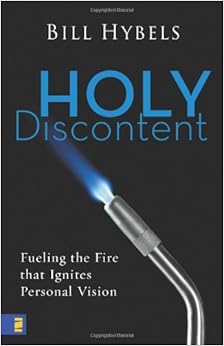
There is a lot to say about contentment in the Bible.  In the book Holy Discontent, Bill Hybels seems to be trying to stir us all to action, maybe the opposite of contentment.   Contentment means happiness and satisfaction.  Some synonyms are gratified, fulfilled, pleasure, cheerfulness.

The big question is…is it ok to be content?

Jesus says be content with the money that you have, be content about your circumstances, be content when your basic needs are met (food, water and shelter).

What’s wrong with that?  What’s wrong with being happy from time to time?  We all know that none of us can stay happy all the time.

I don’t think there is anything wrong with contentment.

So what is Hybel’s beef?  Here it is: “lived out in isolation, it can be lethal.  If you’re not careful, you will become lulled into a state of satisfaction, safety, serenity and you’ll altogether neglect needs in the world that should elicit deep discontent when you see them going unmet.”

The key word is isolation.

Hybel’s gives us a list of serious unmet needs:  the plight of the poor, care for the sick and dying, prisoners who need to be visited, clothing for the naked, care for orphans, communication with the hurting, water for the thirsty, food to the hungry and community to the outcast.

These needs are real.

The contented person who does not look past his own situation [living in isolation] is likely not to even pay attention to these needs.   Hybels knows that these needs may be met one day but it won’t happen with magic.   It will happen with caring concern and hard work from others, hard work from Christians who are called to do such work.

Christian churches have inspirational leaders who encourage members to be involved in this kind of work.   Being a Methodist, I can turn to my church’s founder John Wesley who mirrored the “serve others sentiment” in his words “Do all the good you can. By all the means you can. In all the ways you can. In all the places you can. At all the times you can. To all the people you can. As long as ever you can.”

Be on guard against self-centeredness.  Be on guard against myopia.  Be on guard against self- satisfaction.

It certainly is not a sin to be happy but it may be a sin to turn a blind eye to a demonstrated need that you know you can meet.

This world is full of trouble.  There is injustice to go around for everyone.   People are struggling all over.

Remember God wants to restore his children to a right relationship.  Maybe you are the instrument of that restoration.

Be useful, take the skills the Lord has given you and produce some fruit.  Remember the fig tree that Jesus saw on his way to Jerusalem?  The fig tree was bearing no figs and Jesus cursed it.   The next morning the disciples commented on the fig tree, that it had withered.  It had produced no fruit so it was useless.  It could have produced fruit but it did not .

It was a waste.

Stop for a second and think about that situation for your life.   You have the skills, you don’t use them, you are selfishly content with your lot in life, you ignore the needs of others who really need your help.

Are we being useless?

Is our life a waste?

Maybe we need a little dose of Holy Discontent…

 

Posted in Uncategorized | Leave a comment

Getting Past People That Peeve…

Image result for in process

“Now that I, your Lord and Teacher, have washed your feet, you also should wash one another’s feet.   I have set you an example that you should do as I have done for you.   Very truly I tell you, no servant is greater than his master, nor is a messenger greater than the one who sent him.  Now that you know these things, you will be blessed if you do them.” [John 13].

“Each of you should use whatever gift you have received to serve others, as faithful stewards of God’s grace in its various forms” [1 Peter 4:10].

I am going to write from experience now.  Sometimes other people peeve me.

Generally, I value people.  You might even say I care deeply about people.

But there are certain people I encounter who bother me and I am ashamed to admit that.

Pastor Hybels in his book Holy Discontent writes of common denominators in people who operate with an energy that he says comes from their holy discontent.  As in the previous post, they believe in restoration and the main focus of restoration is people.  Hybels says “This should make perfect sense, since you can’t genuinely align yourself with God’s priorities and then traipse around destroying the crown of His creation, his people” [Hybels, 27].  God cares deeply about people and He is trying to restore a relationship with them.  As His servants, we could have a deep and abiding concern for the protection and development of all God’s people.   After all, we are here to be God hands and feet and sometimes we may even utter something that would benefit someone else’s relationship with God.

Back to the people that peeve me.

Humans are fallible.  One could even go so far as to say that they will let you down.  They behave badly.  They say things that are disappointing.  Their anger can be unleashed on you and your feelings will be hurt.  People can turn their back on you, showing very little compassion for your situation.   Some can be so self-centered that the whole world revolves around them.

This can lead to us finding fault in others.

What can we do about this other than gripe and complain about others.  That is not the holy discontent that Hybels is writing about.  That frustration will lead to a well-meaning Christian doing more harm than good.

He says we need to remember that all people are “in process.”

“If God has His way, every last one of [His people] will be restored, redeemed, remade for His eternal glory” [Hybels, 28].  We need to consider that people who peeve us are just people who are on their way, and where they are right now may not be where they are later.  If we can just get past the aspects of their behavior that bother us and acknowledge the inner person that can emerge with our help, we can serve more people than we think we can.

If we are walking with Christ, we have experienced the freedom from things that have enslaved us.  Our work can be helping others to see that this freedom is available for them.  “You get to be an agent of freedom in the lives of other people.”

People are enslaved to so many things today:  emotional bondage, financial bondage, sexual bondage and the list goes on and on.  They don’t see that the jail cell they reside in has a key that is very handy.  The key that will release them is the truth of a relationship with Jesus Christ.  John 8: 32 says it best:  “Then you will know the truth, and the truth will set you free.”  People can be freed from anything that has them tangled up.

Maybe I need to acknowledge I am a slave to the negative perceptions that I get when I am around certain people.   Maybe I need to pray for God to release me from these thoughts which hamper my ability to be a servant to certain types of people.  As I write about others who are enslaved, maybe I am enslaved also.

Lord, I ask that you create in me a compassion for the difficult people I encounter in my life, so together we can affect positive change in their lives.  Help me to be a servant to as many people as I can, realizing that we are all “in process’.  Help me to monitor my judgmental thoughts so I can be Your servant.

Amen…

Posted in Uncategorized | Leave a comment

Pushing Back on Darkness

Image result for restoration

“Whether you are a high-powered marketplace person, a stay-at-home mom, a full-time student, or something all-together different, you (yes you) can join God in making what is wrong in this world right!”   Bill Hybels from Holy Discontent.

Pastor Hybels is addressing all that is wrong in this world and to be honest, none of us have to look very far to see some things that are very wrong. The wrongness that you just cannot stand any more is your holy discontent.

Let’s focus on the phrase above: “you (yes you) can join God”. So many people may wonder why God has to be part of the effort. Does a person have to believe in God in order to make this world a better place?

The answer of course is no. There are many “good-minded” folks in this world who are trying to improve things with their efforts. But why is Hybels so focused on joining with God to right the wrongs?

Because restoration is what God is trying to do with our world.   God is trying to make what is wrong right again.

From the beginning, He made order out of disorder and darkness and He made humans in His own image. They were supposed to reflect His character. They were supposed to be earthy representatives of His rule and they were supposed to harness God’s creation [the world] in order to produce beauty and order.

We all know what happened.

God had been defining good and evil for man but God decided He would give man a choice in the matter. Man would have a chance to choose good or evil. Enter that tree, you know that tree of knowledge of good and evil.

Man makes that choice, to turn his back on God, to turn his back on a wonderful eternal life.   He does not trust God’s definition of good and evil. He listens to the serpent who promises that consuming the forbidden fruit will really not have any negative consequences.

Of course we are still living with the negative consequences. Adam and Eve destroyed man’s relationship with God and introduced sin into the world.

But God has not given up.

He wants to restore His relationship with man.   He wants to right the wrong. When you feel “holy discontent” you have a powerful partner working with you if you are a believer. Hybels says when you connect with God “it’s as if an enormous wave of positive energy is released inside you. . . .This energy causes you to act on the dissatisfaction that’s been brewing deep within your soul and compels you to say yes to joining forces with God so that the darkness and depravity around you gets pushed back.”

Natural responses to darkness and depravity are apathy, negativity, powerlessness, etc. Many people in this world do not want us taking action to correct things; let’s just roll with it and leave things as they are. Sometimes if muck is all you know, you learn to tolerate muck.

That is not God’s point of view. God wants restoration. I will go even further than that. God desires restoration.

He wants to restore His relationship with man and He wants to restore beauty and order to this world. Hybels says in God’s reality “[the] enslaved can be set free, what is broken can still be mended, what is diseased can still be restored, what is hated can still be loved, what is dirty can still be made clean and what is wrong can still be made right.”

If you have some frustration that is boiling over and you want to take action, it is essential for you to ask for Holy Ghost help if you want to maximize your impact. What is tearing up your heart is also tearing up the heart of God. Instead of just living with things as they are, we can be fueled by our frustration; we can know that with God, better days are ahead. “They [holy discontent people] listen to their soulish instinct inside of them that says life just doesn’t have to be the way that most people experience it” [Hybels, 27].

Don’t get me wrong, much good has been done by people who don’t necessarily believe in God, but if you want to really make a change for the better, join forces with our God who promises restoration.

Restoration is what God is focused on every moment of every day.

“He is working right this minute—even as you are reading this sentence—to call our sorry and broken world back to it’s original beauty and purpose” [Hybels, 26].


Posted in Uncategorized | Leave a comment

Be The Branch…

Image result for a branch with fruit on the end

Frustration…

There it is.  That is what motivates most people to take action.

You see a mess and you just have to clean it up.

You see hunger and you have to feed the hungry person.

You see some horrible injustice and you go on a crusade to correct it.

At the root of all this is frustration. 

Bill Hybels* states that we see something about this world that is broken and we have a burning desire to fix it.

Whoa!  I can’t do this!  The problem is too big!  I don’t have the energy!  I don’t have the financial resources!  I don’t have the “connections” with the powerful people who can help me make a difference!

These are all valid reasons for doing nothing.

But here is where the negatives get overturned.   The frustration does not go away.  The insurmountable task is still there and you want to tackle it.  What do you do?

First of all, stop thinking of all the reasons that you cannot do something.   Surely life can be complex and some problems are so difficult that we don’t see ourselves taking on the task.  Many around you may pour cold water on your ideas.   They don’t have faith in your ability.  “The world” seems happy to just let a bad situation continue.   It is easy to give in and just sit on the couch and ignore a need.  Start thinking of all the reasons that you need to do something.

Secondly, think about what you are going to do and break down what you need to do in manageable steps.   Rushing in headlong can be defeating if you do not have a thoughtful plan.  Frustration may get you started on your actions leading to a change but frustration may not help you if it leads to rash action and stumbles.   If you find yourself stumbling too many times, you will give up on your efforts.

As you begin to tackle a problem, make sure you have little successes along the way and stop and celebrate those successes.  I spend time every day with people at a rehabilitation facility.  I am rehabilitating my own body from an accident.   I see people with disabilities and their problems seem so severe.  I also see people who are suffering from severe obesity and they want to be fit but they are weighing in at three hundred pounds.   How do we rehabilitate?  If you see any improvement at all, make a big deal out of it.  Improved movement in a limb that has been immobile is grounds for a whoopee!  Losing fifteen pounds is a big deal on your way to better fitness.  That does not mean that you need to share everything that happens with everyone.   But note it.  Be thankful for little positive things that happen along the way.  And yes, it never hurts to find a reasonable reward for your efforts.

As you have spent time thinking about your frustration, you should have a goal in mind.  Call it a “vision” if you must.  Cling to that vision.  When things get tough, that vision can keep you going.  You see the problem you are working as solved.   You can see the improved conditions.   You can anticipate the satisfaction you will feel when you know you have brought about change. 

Tap into the power of God.

If you are a Christian and you are frustrated and trying to affect change, you have had God in the process from the very beginning.   Let me tell you, you won’t have the strength or wisdom to pull off your change if you don’t ask God for help.   What you lack, He will deliver.  He is the power behind what you are doing.   You may be the branch that bears the fruit but He is the vine that gives you the energy to produce the fruit. 

When I gave my life to the Lord twenty years ago, one of the most inspirational verses that gave me direction and hope was Philippians 4:13:  “I can do all things through Christ who strengthens me.”  I still think it is one of the most positive verses in the New Testament.    Like every person who faces life, I had my problems, some of them very daunting.  I kept this verse in front of me mentally and physically.   It literally is on my desk in my study. 

Guess what.  I still have problems but I have seen over the years that God can work miracles in this life if you let Him.  If you call on Him.  If you do what He tells you.  If you are the branch and avoid the temptation of taking the credit.

I agree with Pastor Hybels.  Frustration is the key factor that many of us need in order to take action, but frustration will not sustain us as we seek to affect change.  It is the factor that kick starts us.  Without it, we never begin. 

I know this is going to sound strange, but with so many problems in this broken world, thank you Lord that some of us feel frustration.


*author of Holy Discontent

Posted in Uncategorized | Leave a comment

Squeeze That Can of Spinach

Image result for can of spinach

“That’s all I can stands, and I can’t stands no more!”

I admit it.  I have been around long enough that when I hear this sentence, I know who said it…Popeye the Sailor Man, a cartoon that existed in the deep dark past…

As I kid I watched Popeye cartoons.  I was born in 1951 so Popeye had been around for a few years.  The comic strip was created in 1929 and when I was old enough to watch television, Popeye the comic strip was converted to Popeye Cartoons and the show was popular with youngsters.   The cartoons were a little primitive by today’s standards but when you had very little to watch at all, they seemed pretty good.

Pastor Hybels talks about Popeye as a way to illustrate motivation.  The cartoons tended to follow the same pattern over and over.   Popeye had a girlfriend named Olive Oyl and a nemesis named Bluto.   Bluto was a brute and he was constantly trying to steal Olive Oyl away from Popeye.  He specialized in making Popeye’s life miserable.   Despite Bluto’s irritating ways, I remember that Popeye always tried to maintain his composure, allowing Bluto to push harder and harder until he pushed Popeye too far.

That’s when Popeye uttered “That’s all I can stands, and I can’t stands no more!”

If you remember Popeye cartoons, you know the drill.  Popeye would grab a can of spinach and he would squeeze it.   The spinach came flying out the top of the can and right into his mouth. 

Popeye had misshapened forearms anyhow, but when he ate a can of spinach they became huge.   You knew he could do some damage with his arms and he did.   He took out his frustration on Bluto and always won Olive back.

The point of all this is that Popeye did not have a hair trigger temper.  It took a while for him to build up to taking action but eventually he got there, his moment when he could not “stands no more.”

What does it take for you to reach the point of action?

Hybels says it is when we see something that is so wrong we cannot sit idly by. 

My wife is a devoted pet owner.  She has a large heart for animals.  When a news story comes on about animal abuse, I race to the remote control to get the television on a different station.   When an ASPCA add comes on with pets in distress and the request for aid, she has to turn the ad off.   You might say that her love of animals is her passion.   When she sees an animal in distress, she cannot “stands no more.”  We currently have three stray cats in our home.  Several years ago, we took in a stray and her kittens and she had five kittens after she came into our house.   At one point we had nine darling cats in our home.  Thankfully, we got all but three adopted.  For the three that remain, my wife makes sure that  this little segment of the feline population is loved.

Folks, there are so many needs in this world and as Christians, we are called to serve.  Matthew 25 is pretty clear about what we are supposed to do:  The Son of Man will come in all His glory and will say “For I was hungry, and you gave Me something to eat; I was thirsty, and you gave Me something to drink; I was a stranger, and you invited Me in; naked, and you clothed Me; I was sick, and you visited Me; I was in prison, and you came to Me.  Then the righteous will answer Him, ‘Lord, when did we see You hungry, and feed You, or thirsty, and give You something to drink?  ‘And when did we see You a stranger, and invite You in, or naked, and clothe You?   ‘When did we see You sick, or in prison, and come to You?’  “The King will answer and say to them,  ‘Truly I tell you, whatever you did not do for one of the least of these, you did not do for me.’ you, to the extent that you did it to one of these brothers of Mine, even the least of them, you did it to Me.”

This is a call to serve.

Will it take something outrageous for us to act? 

Maybe it will.  Maybe we will have to have a Popeye moment when we can’t “stands it anymore!”

Whatever it takes, the needs are great and they are evident, in the jailhouse, on the street corner, under the bridge, at the mission house and yes, even in the pew next to you at church.

Look, talk to the person with a caring heart, try to determine the need, figure out what you can do and grab a can of spinach and squeeze…


Posted in Uncategorized | 1 Comment

God’s Use for Us…

Image result for the grind

In Holy Discontent by Pastor Bill Hybels, his primary concern is with people who are so discontented with life that they become motivated to change things.

He uses as his Biblical example Moses who was chosen by God to lead the Israelites out of Egypt.

Moses had grown up as an Egyptian but he knew he was an Israelite. He saw his people in captivity building the Egyptian empire as construction slaves.   You know the story.   One day he saw an Egyptian master beating an Israelite slave and he intervened. In the intervention, he began to fight the Egyptian master and he killed him.

Hybels uses this example as an example of someone getting so upset that he takes action.

It’s pretty dramatic. Most of us don’t have a life experience like that.   Most of us don’t get so upset about things that we intervene in the troubles of others. Unlike Hybels, I don’t recall ever seeing a fight where someone is punched or beaten.

Most of us don’t live lives like that. We live lives with much less drama.

Yet the life we lead can cause us to give up.

Hybels focuses on the discontented young Moses; he does not take us further into Exodus when the older Moses declined to be the leader of his people.   God intervened in Moses’ life and told him that he was the designated leader who would lead his people out of Egypt. Moses did not see it that way.   He did not have the skills of a leader or so he said.   He lacked eloquence.   He did not have a leader’s skill set.

Had Moses given up on himself?

Life for all of us can be challenging. You have heard the old cliché: “bad things happen to good people.”   When bad things happen, some just quit trying. Instead of battling back, people just resign themselves to the problems that have come and they give up. Some just fold their hands, resign themselves to the couch and says “let others do it.”   Others just get tired of trying. Maybe things are not easy.   Work is required. The work is done and one expects success, but success is not forthcoming.   You continue working and you see no results. Over and over again the process of getting ahead is a frustrating experience and slowly but surely you begin to cut corners.   You may even cheat a little.   You are satisfied with less and less until you accept things that in the past would not have been acceptable. You begin to evolve into a person who just can’t do what you thought you could do.

You become a Moses who doubted his ability.

I am old enough to see this in my life every day. As one gets into the 60’s decade of life, health challenges can come. People begin to think about retirement, you know that time of life when you begin to reconstruct a life away from employment. Your youthful idols begin to pass away, the musicians and movies stars of your generation, and that is a reminder that you won’t be around forever. These things can be depressing.

You can begin to say “what’s the use?”

Until God intervenes and says “I have something for you to do.”

It may be to volunteer your time tutoring children. It may be picking up litter on the road.   It may be starting up a visitation program at church.   Maybe it will be a stronger commitment like going on a mission trip to aid people in a foreign country.

I am a firm believer that as long as we are alive, God has a purpose for us.

I was in the presence of a dear woman who dedicated her life to furthering The Kingdom. She hosted Bible studies in her home for decades.   She reached out to the unchurched in her neighborhood and in even more extreme places like jail.

Until her body began to fail.

She was bedridden and never got up from bed.

What did she do?

She became a mighty bedridden prayer warrior.

I was with her in her last days.   She was in awful pain but when I met her she began to pray for me.

What would most of us do? Most would not think of others at a time like that.   We would be involved with our own maladies probably.   Not her. She prayed for me.

We do become discontented at times.   Maybe our discontent causes us to act. Maybe you see yourself in the Moses story as he came to the aid of his countryman who was getting beaten. How many of you see yourself in the Moses story of denial, when God says go do this and you say, I can’t, I won’t or I am just too tired.

Drama is good; it catches our attention, but most of us don’t have that much drama in our lives.   We just have what we call “the daily grind.” Instead of letting life get you down, ask God “What can we do today?”

Be ready, He will tell you.

And He expects you do it.


Posted in Uncategorized | Leave a comment

Why Do People Do What They Do…

Image result for holy discontent

In my years of teaching speech communication, one of the most fascinating subjects I taught was persuasion. I would define it as the act of putting ideas into words which, when spoken to a listener, will cause that listener to alter his or her beliefs. The listener may even take action based on the expression of the ideas.

Pastor Bill Hybels bases his whole book Holy Discontent on the thesis that he wants to know what motivates people “to work where they work, volunteer their time to the groups they serve, and donate money to the causes they support” [Hybels, 13].

In other words, he wants to know the root cause of what makes us change or act.

He knows that without motivation, people stagnate; he knows that Christians stagnate.

General theories of motivation state that humans are motivated to acquire basic needs [food, water, air, shelter and sleep].   We are motivated to have relationships with others, especially a member of the opposite sex. We seek status which can be achieved with certain material items.   This means we are motivated to have the items that “build” our self-esteem.   Since most humans are social animals, we want to belong to a group or groups.   We do what we have to do to congregate with others we like.  We want to live in a safe neighborhood, have access to healthcare, steady employment, and protection from environmental forces.   Safety is a prime motivator.  Finally, some will work hard to accomplish what they can in life by reaching their greatest potential, as long as they feel they have the capacity to do it. For example, some individuals may have the desire to be a wealthy businessman, while others may want be a successful musician or an athlete. This motivational factor is called self-actualization.

What is Hybels getting at when he asks the question that started it all: “ Why do people do what they do?”

Why is that so important to him?

He really wants to know what makes a Christian believe.

He really wants to know what makes a Christian take action.

Before I was born again, I thought persuasion and the underlying core idea of motivation was just a way to manipulate people and indeed that could be all it is for some people, but I don’t think Hybels is thinking like that.   He likes seeing people grow and he knows that the best way for them to grow is to feel something deep inside that makes them want to do something different.

Belief in God is a given for the Christian, or so we assume.

It is the taking action part that is hurting today’s church. This lack of action has turned a generation away from active church membership [the “millennials”–ages 18 to 30 year old].   Christian research experts pin down five things that are diminishing millennial participation in church. First, this generation does not just want preaching.   They want to see actions backing up words.   The trappings of a sanctuary are not important; they want to get out and make disciples in the world rather than just sit in a pew and talk about making disciples. To them this is hypocrisy and this generation hates hypocrisy. Secondly, the message of the church should be very plain. Instead of wandering around trying to understand what is going on in church, it should be clear to everyone who comes in the door.   The first-time visitor should know what to do, where to go and how they can “plug into” the church. For the millennial, the church should not be a place for rest, it should be a place for growth.   Church activities should be designed to connect people with God and other church members. Some Millennials want to see church as an opportunity to explore spiritual life on their own terms, free to decide for themselves when to stay on the edges of a church experience and when to fully enter in.  If there is not an opportunity to be the hands and feet of Jesus and put love into action, they lose interest fast. Millennials want to be taken seriously today. They’re not interested in earning their place at the table at some future date; they want a seat there now. Their desire is to be taken seriously and to be given real responsibility. Lack of opportunities for action have made millennials feel no sense of obligation to attend church. Previous generations went to church regardless. At the same time, being an active part of a faith community can provide young adults with exactly the mentorship and guidance they crave from older adults. Millennials know they need mentors and that is where older generation Christians can help grow the church.*

Pastor Hybels is not just focused on “millennials;” he wants all Christians to believe.   He wants all Christians to take action.

He recognizes that the church is not the pastor.

The church is really not just the people.

The core of the church is the burning desire each church member has to believe in God and act on that belief.

This is the core idea of holy discontent.


*From the “Exponential Website”, 2017.


Posted in Uncategorized | Leave a comment

Apathy…Not Bill Hybel’s Premise

Image result for holy discontent

“Apathy is a lack of feeling, emotion, interest, and concern. Apathy is a state of indifference, or the suppression of emotions such as concern, excitement, motivation, and/or passion. An apathetic individual has an absence of interest in or concern about emotional, social, spiritual, philosophical and/or physical life and the world.”*   Apathy can be anywhere.

It can certainly be in the church.

Do you see it in your church?

Do you see it in you as you attend your church?

Some people are motivated to come to a one hour worship service but that is their church activity for the week.   We should not complain; they are there most Sundays. On the other hand, I recently heard a woman announce proudly that she was going to church on Easter Sunday, like that was her major commitment, one church service for the year. A pastor friend told me once that today, a “member” of the church describes themselves as “regular” when they attend one Sunday out of four.

At the risk of sounding judgmental, too many “Christians” do the bare minimum when it comes to church involvement.

Maybe they can’t do more. Maybe they have very busy lives with jobs that demand 10 or 12 hours of work per day. Some people even have to work on Sunday. Maybe they are so elderly they cannot volunteer for strenuous commitments like VBS or baby-sitting on “Parent’s Night Out.” Some are so involved with personal crisis that they need to focus on their own problems, not the problems of others in need.

There are legitimate reasons for lack of involvement.

Then you have regular attenders. Their level of commitment does not show sometimes. You know how it is: one can look pious without giving away a hint at a lack of inspiration. Listening or attending to any message in a public setting is hard and we all know our minds can drift elsewhere.   The pastor is preaching, the choir is singing, the scripture reader is reading and praying and we are daydreaming about lunch, that beautiful golf shot, that ride on the new ATV etc. Sue Allen writes about this worship response in the words “We are Christians and that’s what Christians do. We go to church on Sunday mornings for Pete’s sake. However, if one is not careful, we can be lulled to sleep by the monotony of routine. Unfortunately, we often walk unaware. Shaking hands and greeting one another. Saying “How do you do?” Leaving the church completely unshaken or unrattled.”

This apathetic response is not what Bill Hybels is writing about in his book Holy Discontent. If you want to study a book that is about peace and contentment, this is not the book for you. Hybels wants Christians to do something.   The premise of the book is his search for what makes people do what they do and he is searching for the opposite of apathy.

Allen is very clear about what she feels concerning apathy in the church: “Evil and apathy often work in tandem. The first one wills it while the latter permits it. Evil knowingly and often publicly commits wrong, which may seem incomprehensible. But meanwhile, apathy looks the other way as if nothing ever happened. There is no stirring of conviction or moving towards action. Our problem lies right here in our nothing. . . . Is God calling you to do something that you are avoiding. . . . are you avoiding it because, like me, you simply don’t care?”

A church is a “body of believers” that is united together to worship and do the work of the Lord. There are so many jobs we can do in the church. Too often the attitude is “let the Pastor and the paid staff do it. That’s what they get paid for.”   Too often the attitude is “let the active members do it, you know the younger church members who have the energy to do the work.”   This is the old cliché “eighty percent of the work is done by twenty percent of the church.”

Hybels points his finger directly at me and you and says “God needs you to commit to something!”

Find something that is so bothersome that you can’t stand it anymore.   Find your holy discontent.

Within the limitations of your life, use your God-given gifts to make things better.

Apathy does not come from God. Apathy is a silent killer. Don’t let it become your norm.   It will kill your commitment to Christ.

Actively find what you can do to serve God and do it.

And get ready to grow…


*From Wikipedia “apathy defined”

** Sue Allen “Two Silent Killers of our Faith: Fear and Apathy” Lifeway Women’s Website

Posted in Uncategorized | Leave a comment

What Prayer Means to Me…

Image result for praying

I began on November 10, 2016.

Here it is March 7, 2017.

I began after the presidential election of 2016 for a reason. I had been posting on Adam Hamilton’s book Seeing Gray in a World of Black and White. I began posting on that book on March 29, 2016. That book was so controversial that my mother often asked “Are you having angry people knocking on your door?” After the contentious election, I felt that maybe we needed to study prayer.

Now it is time to leave The God Who Hears by W. Bingham Hunter, to put a conclusion on a book that meant a lot to me.

I am going to get personal in this last day of my comments on Hunter’s book.

Forgive me.

Some of you know I was in the midst of a recovery from the worst accident in my life. I broke my pelvis and had other injuries and my surgeon said “sit and do nothing” for three months.

What a time to study prayer. . .

A perfect time to study prayer.

I had times when I prayed fervent prayers for healing.   I prayed prayers for sleep when I could not sleep due to an inactive lifestyle. I prayed prayers for a cessation of pain as I had days of severe pain, especially in my right leg.   I prayed for strength as I tried to motivate myself to do simple exercises to keep myself from losing all my muscle mass. I prayed for joy when I hit depths of depression looking out the window at other people doing things I wanted to do, simple things like walk, drive a car and mow a yard.

I knew people were praying for me. I received so many cards and letters from my church and friends. The stack was impressive. I got phone calls from people near and far, telling me that they were praying for my recovery.   I got weekly letters from a church in South Carolina, a Methodist Church that had Sunday intercessory prayer meetings for people who needed healing. I travelled to that church in March to attend one of their worship services. I had special visits from friends who grabbed my hand and I held on as they prayed for me.

Not only did I learn a lot from the very dense discussion of W. Bingham Hunter, I experienced prayer first-hand. When I read Romans 12:12, “Be joyful in hope, patient in affliction, faithful in prayer”, I know what it means. Psalm 116: 1-2 took on a whole new meaning for me: “I love the Lord for He has heard my voice; He heard my cry for mercy. Because He turned His ear to me, I will call on Him as long as I live.” Philippians 4:6 says “Do not be anxious about anything, but in everything, by prayer and petition with Thanksgiving present your requests to God.” I know what that means now.

Hunter may have helped a few readers along the way, but he certainly helped me. I began to understand the idea that God sees prayer very differently than man.   I began to understand that very simple prayers are those that just ask for the things we want and I began to grapple with the idea that God knows what I want and need more than I do.   I began to understand the idea that an unanswered prayer is unanswered for a reason. I began to understand the best way to approach prayer is to pray for God’s will to be done, not mine.

Pastor Billy Graham says “Prayer is one of the greatest privileges God has given to us. Why ignore it, or act as if it doesn’t make any difference? If Jesus prayed, shouldn’t we pray also?”

We should.

We should study prayer.

We should appreciate the prayers of others.

I should now pray prayers of thanks for the healing that has occurred in my body. I am not back to 100% but I am so much further along than I expected to be.

I attribute it all to the miracle of healing and the power of prayer.

I work-out every day at a rehab-workout facility.   Yesterday, I was in the heated lap pool doing my daily exercises. I began doing this in January and then I could only do one lap in the pool.   Today I am up to 10. I can feel my strength slowly returning, praise God. As I was in the pool, a crippled man with a walker came into the area. He seemed so feeble and had a very pained look on his face.   As I watched him move, I was truly afraid that he would fall and hurt himself but slowly he made his way into the pool. I continued my work-out and eventually I reached a stopping spot and there he was close by with a question. He asked my age and I said 65. He said he was 67 and he told me about the painful physical problems he was having with his body. I said I knew how to use a walker but I was only on one for three months. He will be on his walker for much, much longer, maybe the rest of his life.

I got ready to leave the pool and go home but I did something out of character.   I turned to him and I said his first name and I said “Tomorrow morning when I get up I will pray for you.”

He simply said “Thank you David.”


Posted in Uncategorized | Leave a comment

Getting Past “Gimme God”

Image result for gimme

I should let it go. I have already announced through my church that we are moving on to a new book: Holy Discontent by Bill Hybels.

But here I go again.

I have wrestled with this post for a couple of days. I usually post every other day. This is the third day after my last writing and I can’t let this go.

On Sunday, I taught a lesson on this topic to my Sunday school class. I don’t know if I did it justice.

Now, I just have to write about it on St. John Studies.

In the back of W. Bingham Hunter’s book, one can find several pages of notes from his text.   As I got close to the end of the book, I happened to turn to page 214 and there it was: a diagram of the prayer-obedience relationship. Notes from Chapter 7.   I just stumbled on it.

I am going to close my comments on The God Who Hears with my thoughts on this relationship and I am going to post my personal thoughts on prayer.

This post and another and I am through.

I promise.

In my Sunday school class [our class name is 2nd Beginnings] I opened the class by asking about the mistakes we all make with prayer. We were able to list many errors we all make but maybe the most common one was described as we treat our Lord and Savior as a “Gimme God.”   God becomes a Santa as we put before Him all the things we want and we expect Him to deliver.

The person who prays to a “Gimme God” may feel like they have a relationship with The Lord, but it is child-like, not mature at all.

All who approach The Lord in prayer have a desire to communicate to Him in love and thankfulness but to just ask for things is not adequate. The question is what can we do to grow in our prayer life?

Here it is: note 7 from Chapter 7 in the back of The God Who Hears.

We may desire to know God and prayer is a wonderful start but it is what I call “one way communication.” We send our messages to God but are we getting messages in return? If one really wants to know God to a greater degree, it is imperative to read His Word.   The Bible is not just any book.   You have heard it before.   It is sacred. It is supernatural. It is holy. Yes. Yes. Yes.

It is all of the above.

We need to pick it up and read it.

What can happen if we seriously desire to know God through His Holy Word? The Holy Spirit will help us understand The Word if we ask for His help. As we experience aid from “The Helper”, our desire to please God increases. The more we read and understand, the more we find ourselves living out The Word in our daily lives.

The seeker of a relationship with God will find himself or herself desiring earthly fellowship with others who are on the same pathway: church, Sunday school class, prayer group, Bible study class etc. Over time one begins to learn from reading and from others who are Spirit-led that God has certain expectations.   Over time one begins to understand a little about the mind of God.

Life is no longer just a series of unconnected events. One begins to see the hand of God in this world. I personally think we make a mistake when we think God only works in “big ways.” You see God in the healing of a cancer patient or you see God in the young man who turns from drugs to a clean life through Jesus Christ.   These things are dramatic and they are “big” but I think God shows up in the sun that comes in the back window on a spring morning, the work that gets done when you don’t think you can do it, or the visit from a good friend when you really need some good news.

As time passes with God, one begins to think after The Father. I hesitate to say that a human can think like The Father but just as one can anticipate the needs of a well-known earthly loved one, one can begin to anticipate what God may want us to do.   As we move from situation to situation in life, it is no mystery about what is expected of us.   We have a good idea about what The Father wants.

Prayer becomes something new. Praying in terms of “God thoughts” is praying according to His will. If we know Him well, this is so much easier.   Luke 22: 42 takes on a whole new meaning “yet not my will but yours be done.”

The strongest prayers are those that are said “in His will.”

The final stage of growth in the prayer-obedience relationship is prayer in accordance with God’s will.

Does this happen quickly?

No.

Is it easy?

No.

Does it take commitment?

Yes.

It is worth it?

That may be the dumbest question. Of course it is.

The Apostle Paul’s words begin to be so much more meaningful: “I urge you brothers, in view of God’s mercy, to offer your bodies as living sacrifices, holy and pleasing to God—which is your spiritual worship. Do not conform to the pattern of this world, but be transformed by the renewing of your mind. Then you will be able to test and approve what God’s will is—his good, pleasing and perfect will” [Romans 12: 1-2].

Good strong relationships don’t just happen overnight. They take work. They take dedication. They take as much unselfish love as we can muster.

Human relationships are based on an exchange of ideas: speaking and listening.

Our relationship with God can be greatly enhanced by speaking and listening. Add in unselfish obedience, adoration and service and what do you get?

The God Who Hears.

Posted in Uncategorized | Leave a comment