The Christian “Big Tent”

Related image

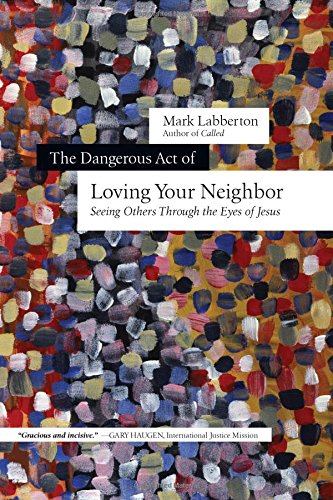
Before we get too far into Pastor Mark Labberton’s book The Dangerous Act of Loving Your Neighbor, we need to talk about the “big tent.”

Sometimes Christians think their view is the majority view in the faith, especially those Christians who belong to smaller churches where shared worldviews are very similar. But there is a problem with that; the Christian faith is a diverse collection of people with different perspectives on how life should be approached.

Everyone knows that America is a “divided” country, with people who have conservative views and people who have liberal views. The divide between the groups seems greater than ever. Nancy Gibbs writes in Time Magazine that we “have deserted the common ground.” She states the obvious: “Civil discourse suffers from the echo…and the chamber which walls us off from diverse opinion, from ideas that might disturb us in healthy ways.” Americans don’t bother to sample diverse news sources. Maybe that is due to our frantic lifestyles so we settle for a cable news snippet, a Facebook post, or a political writer on a website that makes us cozy and we stop right there. We just don’t have time to explore others’ opinions; it is so easy to stop the thinking process and call differing folks bad names.

But how does the Christian handle big topics like social injustice? Do we ignore people who suffer from the ills of our society or do we find a way to address the problem. The Methodist Church is a “big tent” church. Ok, here is an example. Hillary Clinton is a Methodist. George W. Bush is a Methodist too. People who like to label themselves as progressives also claim Christianity as their faith. People who support socially conservative policies claim Christianity as their faith too.

Laying all our differences aside, my Bible teaches me that my God is a God of justice. In fact, in Deuteronomy 32:4 it says “all His ways are justice.” The Bible supports the idea that Christians should be concerned for the plight of the poor and afflicted. It refers to the fatherless and the widow; that is people who struggle to fend for themselves because they need a support system. The entire nation of Israel was commanded by God to care for society’s less fortunate and their failure to do so led to their judgement and expulsion from the land. Jesus says we are to care for the “least of these” (Matthew 25:40). He truly meant that we as Christians should care for the outcasts of society.

Back to that Methodist “big tent.” Methodist historians point to John Wesley and his efforts to visit those in prison. After visiting prisoners, he had a tireless dedication for prison reform. English prisons in the Eighteenth Century were horrid and prisoners truly suffered. Certainly Wesley was a tireless preacher who spent his whole life trying to aid the downtrodden.

Where do Christians get it wrong?

Some Christians have a mistaken idea about economics. There have always been people who have more than others and just because there is inequality of income does not mean the wealthier people of society are inherently evil. They have not necessarily taken advantage of those less fortunate to get their wealth. Some Christians feel social programs are the way to help those less fortunate but often those social programs can create serious problems. For example, some deserving people become complacent in life after receiving benefits and they are no longer interested in seeking employment; they are content to live on whatever the social program is willing to give them.

Some Christians are mistaken and turn their eyes from people in need. They might not feel compelled to help those less fortunate [I have heard too many Christians say things like “those people are just abusing welfare dollars and boy oh boy have you seen what they buy with their food stamps at the grocery”].

As Christians, we cannot turn our eyes from people who are suffering. We are compelled to find a way to aid those who struggle. Surely we have to admit there is tension between a Christian who feels government is the only answer and wealthy people who have accumulated their wealth by exploiting the poor. They are directly opposed to the Christian who is suspicious of “government handouts” and thinks that government benefits should be tied to employment.

Let’s go back to that “big tent.” My God erected that tent and my God says we must find a way to help people who are suffering. When we begin our political debates over assisting those less fortunate we are taking a man-centered approach to social justice. We have deserted the common ground we should have a Christians. If it is giving money directly to a poor person or blessing your favorite charity with a donation, that is good. If it is inviting a neighbor over to have a hot meal when the neighbor is struggling, that is good. If it is investing some time and effort to distribute food to the hungry, that is good. A God-centered approach to love and justice is to show kindness and mercy to those less fortunate.

I suspect that my God, who erected that big tent, has something in common with you.

He’s your God too.

Posted in Uncategorized | Leave a comment

Social Injustice and the Christian

Image result for lady justice

When one is discussing a book with the title The Dangerous Act of Loving Your Neighbor, it goes without saying that the book is probably going to deal with people who are downtrodden, people who have serious needs.

How do people become downtrodden? The pathways to that type of life are as varied as all the humans on the face of the earth. Some find themselves in dire straits due to their own choices, but that is not always the case. Some find themselves the victims of injustice; they suffer due to the injustice of others in power.

That is a tough word…injustice. As a Christian, where do I fit in the picture when my neighbor is the victim of injustice? What should I do? God has total control of our world so why do I have to do anything to correct wrongs that our society has put upon my neighbor? What does the Bible say about correcting societal wrongs?

Well it turns out that there is a lot in the Bible about injustice. The writer of Proverbs says “The Lord detests differing weights, and dishonest scales do not please Him.” As I write this, I am serving jury duty and when I go to the Criminal Justice Center in my community I see a large sculpture of lady justice [Fermida], an allegorical personification of the moral force in judicial systems. Her attributes are a blindfold, a balance, and a sword. Of course the blindfold personifies impartiality, the scales mean that she responds to the weight of arguments pro and con and the sword represents authority. The whole sculpture is to say that individuals who encounter our American justice system are supposed to get a “fair shake.”

But we all know that our worldly justice system can have its flaws.

Isaiah 59: 14-15 says “Learn to do right; seek justice. Defend the oppressed. Take up the cause of the fatherless; plead the case of the widow.” God even says that the Israelites were to “loose the chains of injustice.” All this was written in a time when Judah was struggling under the weight of injustice.

Since Pastor Labberton has written so much about the human heart, it is important to acknowledge that humans do unjust things all the time. We show partiality, we judge others and we just sometimes lack the love God would like for us to exhibit. We exhibit incongruent behaviors. When we make mistakes, we are quick to point out the reasons and we expect others to quickly forgive us. We are not that charitable to others, accusing them of grievous errors and holding them up to harsh judgement. Maybe that is due to the fact that we are mere humans, all falling short of the glory of God.

Maybe the only way to escape injustice is to accept the fact that we are inherently unjust. We are all sinners due to “the fall” so we have no right to claim that we are purveyors of justice in our everyday lives.

What is wrong is to act like injustice does not occur. As Christians, we can turn our backs and say “let God take care of it,” but this flies in the face of God’s idea about social justice. He expects us to care for the poor in an individual way. Each of us is challenged to do what we can to help the “least of these.”

A further challenge is to work through the political system to right some of the wrongs we encounter in life. It seems to me that Christians can lose their way when they are pawns in the games that politicians play, where individuals can get lost in a tangle of policies having to do with political, economic or civil rights. The American Declaration of Independence entitles us to certain inalienable rights but like the criminal justice system mentioned above, our system of democracy has it flaws.

We all turn on our televisions and watch political leaders grapple with large-scale problems but are we to join them in the fray to right society’s wrongs? We can try as long as we realize there is a difference between a God-centered approach to social justice and a man-centered approach to social justice.

Sometimes I supplement the comments I make on certain books with information from Christian-based websites and one of my favorites is Got Questions.org. The author of the article on “What the Bible says about Social Justice” writes “The man-centered approach sees government in the role of savior, bringing in a utopia through government policies. The God-centered approach sees Christ as Savior, bringing heaven to earth when He returns. At His return, Christ will restore all things and execute perfect justice. Until then, Christians express God’s love and justice by showing kindness and mercy to those less fortunate.”

We can all relinquish our responsibility to help those who have suffered injustice to the criminal justice system and let politicians correct the wrongs we see in life. After all, they are in charge of implementing policies that can help large numbers.

I wonder about that attitude. Sometimes correcting injustice is a very personal matter. I may not be able to affect the economic system on a large scale, I can’t give powerless people political power and make serious adjustments to our class system but I can be the heart and hands of God as I help my neighbor in ways that are tangible. When I see need and have the means to help, I can give. When I see a lack of information and I have the information that others need, I can share. When I see someone who just needs love and acceptance, I can give that.

I believe that God expects that of me: “love your neighbor as yourself.”

Posted in Uncategorized | Leave a comment

“Eat Your Broccoli”

Related image

So far, Mark Labberton’s book has declared that the heart is central to a Christian life. If a person is to change and help another [a neighbor], it will require a change of heart for most of us.

Social influences have an impact on all of us; for example, the latest news about Amazon founder Jeff Bezos who recently got the title “richest man on the earth.” The most recent tally has his net worth at 108 billion dollars. We are constantly bombarded by commercials that tempt us to improve our lives by buying luxury products we cannot afford. Just plunk down 80 K for that bright orange Corvette and everything will be ok. I don’t know how many episodes of HGTV I have seen where a young couple decides to go to the bank and borrow a half-million dollars for their “starter” home.

Society provides endless examples of pressure to consume. We see others with ostentatious displays of wealth and we feel we must strive for some level of luxury beyond what we currently have.

Does society provide examples of the need to help our neighbors?

Maybe not so much…

Growing up, I was a super picky eater. I was always a scrawny kid. There were more things I hated to eat than things I liked to eat. My poor desperate mother was beside herself trying to get me to eat anything. At times it appeared I was wasting away. Like so many mothers, she employed that time-worn strategy of guilt. Probably every mom has told their kid “eat your broccoli; think about those starving kids in China.” I remember thinking to myself “Well please take it and ship it to those starving kids; I don’t want it.”

If we succumb to societal pressure to be greedy and self-centered, a counteracting force to combat that is not guilt. Pastor Labberton encourages us to examine our lives and if we see someone who has a need, help them [it’s the Christian thing to do]. However, if we are not geared that way, he does not intend to make us feel compelled to help others due to guilt. “When guilt is the primary outcome sought, it can come close to killing our hearts than transforming them.” Labberton realizes that transformation of the heart is the only way one can learn the ways of the loving neighbor.

Sadly, most of us like stability. This may sound strange but if I have a stingy, selfish nature and I have had it for a long time, I probably want to cling to that because I am so used to my “lifestyle.” To suddenly become generous, helpful and centered on the needs of others will require a major change of heart. In essence, our hearts become hardened due to the habit of living life a certain way. One can turn to Genesis to read the story of one of the most hardened hearts in Biblical history, that Pharaoh who just would not let Moses and the Israelites go. We tend to be like Pharaoh; when we want to change, it is too hard. We revert back to our old ways despite our best intentions.

What is needed?

Pastor Labberton says it takes power, grace and wisdom of the Spirit of Jesus Christ.

It takes self-examination.

It takes time.

It takes forgiveness of others and forgiveness of the self, because attempting to change will be fraught with difficulty. Like any change, there will be more failed efforts than successful efforts. People around you will see your failure and sometimes they will judge. Some of your peers will not want to see change because they have developed habits of seeing your normal behavior and they don’t want to deal with the “new you.” Some may see an unselfish, generous friend as a challenge. They don’t want to compete with a “goody two shoes.” The most difficult task is self-forgiveness, for you may be upset that your efforts are falling short.

Romans 3 offers the hope that you need, “for all have sinned and fall short of the glory of God”. But we know God has extended His grace to us through His Son Jesus Christ. We are justified through our faith in Jesus. We can overcome our sin with God’s help. Yes, our hearts can be changed through the grace of God.

We don’t need to have guilt as our change agent. Maybe you are not where you think you are supposed to be right now. But where you are today may not be where you will be in the future. The Bible is full of people of limited ability and God used them to do wonderful work. He can do that for you.

And He can do that for me.

Posted in Uncategorized | Leave a comment

Construction of a Heart

Image result for construction

It is such a cliché.

It is a new year and in a new year, people resolve to make changes.

I hate to admit this, but maybe I have fallen prey to this type of thinking. Yesterday I set a “benchmark” for my health. I weighed, I took my blood pressure and got my heart rate: 67 beats per minute.

The human heart is a big deal. My 67 beats are important. Pastor Mark Labberton says we use the word heart “about something that seems so central to our life: intimate, powerful, emotional, vulnerable, defining. Whatever we are and whatever we are seeing and doing, our hearts respond to and shape what happens” [Labberton, 19].

It is a metaphor. When someone says that a person has a big heart, we don’t take that literally. When someone says that their heart is broken, we don’t think that anything is really broken. A worker who puts their heart into their work is not really taking an organ out of their body and doing anything with it.

The heart is indeed an organ that is central to everyone’s life and heart is a word we use to describe something that is important to us, a way of discussing what we see and what we feel. Heart can describe how we respond to life.

We may think that our hearts are personal just to us and of course they are, but Christians should consider that our hearts are of immense interest to God. The Bible says our hearts have been made to love God and one need not look any further that the oft-quoted Scripture of Mark 12: 30-31 for confirmation of that. Many read these verses and focus on the heart that is made to love God, but the words have a dual focus: we are to love our neighbors. That flows from our love of God.

How can a guy like me love my neighbor? I am a Caucasian from Western Kentucky, product of a father who was a school teacher and mother who worked various office jobs over the years. By any measurement, I had very loving parents. I lived on a small farm, eleven miles from a small town of three thousand people. I loved going to school; that was an environment where I felt at home so it was natural for me to go to college. I loved English and history and majored in those subjects. The college I attended was mostly Caucasian but there was some diversity. I encountered other viewpoints in my educational experience as I studied with students who were not from my race and ethnicity. I took a full-time job as a college teacher at a community college where I was asked to teach speech communication. I went back to college to take course work and felt so fascinated by this new discipline that I eventually attended the largest university in my state, where I got a Ph.D. in speech communication. I could have taught at other colleges with my new degree but I did not want to. I felt that teaching was my strength, not research, and I liked the part of the country where I was located.

I tell you all this to illustrate where I come from in my life. My “heart” is the heart of someone who lives a pretty privileged life. I have never been poor, I have always been busy in my life with mentally challenging work and I have always had professional associations that were for the most part pleasant.

This is the way I have seen life. Some would say this is how my heart was constructed. It is my viewpoint. The social system that has surrounded me for most of my life has built my heart. I guess I should not feel bad about it. Things could have turned out differently but they didn’t. We are all social beings and as we live life, what we encounter and how we respond to life constitutes our makeup. Pastor Labberton says “we think our hearts are just our own construction. But our hearts are shaped by the cultural and social assumptions around and within them. We hold all of this in our hearts, and our hearts reflect both our own story and our collected stories.”

With this as our foundation, what do we do with our life experience? Do we wall off others we encounter who have lived a life that is very different from us? Do we shrink from opportunities to help others because they are so different from us? Do we denigrate others who have a wholly different life experience from us, casting judgement on them, putting them down and building ourselves up?

It is a choice we have to make. We can try to reinvent ourselves but probably most people don’t really try to do that. Most of us just respond to life as we have lived life, how life has “constructed us.”

Pastor Labberton sprinkles personal stories into his book and he recounts a moment when he read a story to his son about Jesus’ entry into Jerusalem on a donkey. His son’s response to the story was so wonderful, a moment that a parent clings to: he said “Daddy, Jesus is in my heart.”

I know my heart beat 67 beats per minute yesterday and for that I am thankful, but what am I going to do with my life? Am I going to resist loving my neighbors, am I going to express prejudice, am I going to live a life of total self-absorption? I hope not, for Jesus expects me to do more with my life than that.

I am to love Him with all my heart and love my neighbor as myself.

Posted in Uncategorized | Leave a comment

The Ordinary Heart

Image result for the heart on pinterest

The ordinary heart.

Pastor Mark Labberton’s book The Dangerous Act of Loving Your Neighbor says the ordinary heart gets in the way of loving our neighbors, seeing our neighbors through the eyes of Jesus.

The ordinary heart that we all have is not the reason we don’t act to help others as much as the ordinary heart gets used to overlooking the needs of those around us. Labberton says ordinary human hearts accommodate apathy; they allow it.

Evil hearts allow injustice and suffering; in fact they cause it. The root of tyranny and oppression comes from an evil heart. When we hear of bullies, their acts come from an evil heart. To my way of thinking, most of us don’t really have evil hearts but almost all of us have ordinary hearts.

Our hearts don’t consciously overlook the needs of others. Most of us just get caught up in the immediacy of life.

We know we need certain things to live and in order to get those things we have to have income. We get wrapped up in the process of generating income and that becomes our main, everyday focus. Sometimes the process is all consuming and that weakens our hearts further as we begin to acquire more than we really need. Possibilities occur that we never thought possible and we convince ourselves we cannot live without certain items which are really not that necessary.

Add to this the desire we have for equilibrium, normalcy if you prefer. We like a stable life which allows us to function without much upset. We hear of others who suffer from the panic of drug addiction. We hear of others who find themselves victims of crime. We hear of others who are victims of sexual abuse and we distance ourselves. Whew, that is not me; the still small voice says “and I am glad.”

Labberton says “Our hearts become benign…our hearts may not lead us to do injustice, neither are they strong enough to drive us to seek justice….That is, we don’t have hearts that actively, courageously will and pursue justice, even for the truly vulnerable…Our hearts do demonstrate our capacity to be determined and focused enough to will some things for ourselves and those we love most: prosperity, education, comfort, safety.”

And then we hear of Tara Gower, a Houston EMT who asked neighbors to form a human chain so Annie Smith could get through high floodwaters during Hurricane Harvey. Annie was in labor and had to get to the hospital. She made it by clinging to her neighbors’ backs, taking her to a waiting truck on the high ground. At the Route 91 concert in Las Vegas, thirty-year-old father of three, Jonathan Smith raced toward the concert venue where America experienced its deadliest mass shooting. Smith pushed twenty people to safety when they were frozen on the ground by fear of the gunman’s bullets. He picked one woman off the ground, carried another one who had fallen and roused many others to start running. Smith took a bullet to lower left side of his neck but he kept trying to help others. Ian Grillot was in a Kansas bar watching a basketball game when a gunman walked in, pulled a gun and told a pair of Indian men to “get out of my country.” When the gunman opened fire, Grillot decided to take action and subdue the shooter. A bullet pierced his hand and entered his chest but he stopped the shooter before he could take more lives. He did manage to kill one of his targets, a thirty-two year old engineer. Grillot said “I wouldn’t have been able to live with myself if I didn’t do anything.”

We all know of the “great commandment:” “Lord, help me to love you with all of my heart and with all of my soul and with all of my mind and with all of my strength. Help me to make this the number one priority in my life. Help me to love my neighbor as myself.”

At the center of the great commandment is a love relationship we are supposed to have with Jesus but that love overflows to a love we are supposed to have for those around us.
That love is not the love of the “ordinary heart”.

It is something more, an extraordinary love that seeks to help those less fortunate.
Edmund Burke said “All that is necessary for evil to triumph is for good men [and women] to do nothing.” God calls us to do more; He wants us to do more.

I believe He wants us to have an extraordinary heart.

Posted in Uncategorized | Leave a comment

A Bang Not a Whimper…

Image result for start with a bang

Good authors want to start their books with a bang, not a whimper. It is what authors do to catch the reader’s attention. Mark Labberton does just that.

He starts with a story of Doris, an eighty-something grandmother who is kidnapped.
She has pulled up to her church and intends to go inside with a basket of oatmeal muffins; she leans over into her car to get the basket when she is pushed from behind into the passenger side of her vehicle. It is a young man who needs money for drugs. His way of getting money this day is to drive Doris’s car around to her bank atms where she will withdraw her daily maximum amount after he intimidates her into giving him her password.

I imagine my eighty-something Mom in this situation and it is very frightening. How do you expect a normal person to react?

You see, Doris does not seem to be a “normal” person. The first thing she does is ask the young man his name and then she starts talking to him using his name: “Jesse what are you doing?” “Jesse what are you going to do with my money?” [She has read that you need to be on a first name basis with your attacker].

After finding out he needed a hit, she got honest with him: “It is not good to be a drug addict. This is not how you should be living your life.”

She knew she needed to talk to him and she wanted the conversation to be honest. She took a risk; she said that the young man needed help from God, who really loved him and understood him. She told him he needed a drug rehab program. The young man listened and then Doris told him her intentions: “Jesse, I am going to pray you get caught for doing this because it is wrong and you should not be doing this to people. When you get caught, I will testify that you did it but I will plead with the judge that you need a really good drug rehab program. You need God to give you the strength to get off drugs and have a better life.”

Jesse left Doris that day but not after helping her out of her car, walking her around to the driver’s side and putting her seatbelt across her.

When Doris’s pastor [Mark Labberton] went to visit her, he was amazed. He figured she had suffered such trauma that she would be terribly upset but she wasn’t. When he said to her, I am sorry this terrible thing happened, her reply was “The horrible thing is Jesse’s addiction to drugs.” Labberton said “It is awful to get attacked and kidnapped like this.” Doris replies “Why not me? It happens to thousands of people every day.”

All Labberton could say was “Um…yes.”

When Labberton asked if Doris needed prayer, she said of course, but she requested prayer for Jesse, so he could find God’s help for him to conquer his drug addiction.

The story concludes with Doris in the courtroom testifying against Jesse and asking for drug rehab help for the young man, just like she said she would do.

The story also concludes with a pastor who admits that Doris pastored him instead of the reverse.

How did she do it?

She loved her enemy, but even more than that she saw her kidnapper/thief as a human being who had serious problems. She did not focus on herself and her victimhood. Of course she was violated but she faced her situation with courage and honesty. The most important words I think that could be applied to her are Doris seeks to understand her abductor and empathizes with him. Most of us would be so scared that we would automatically throw up defensive walls all around us. Doris saw commonality. Most of us would focus on our loss and feel anger. Doris saw Jesse as the one with the biggest losses [he was losing his life]. Most of us would think about how unjust this situation was; Doris refused to do that; injustice just happens in life so focusing on that does one little good.

Could this situation have turned out very differently? Of course it could but God was with Doris that day, showing her that attempting to understand others is so important in life.

This episode was so important to Labberton that he substituted different letters in WWJD. He began to think WWDD (What would Doris do?). This episode was so important to Labberton that he included it at the beginning of his book, as a wonderful example of loving your neighbor.

I don’t know about you, but put yourself in the place of Doris and ask “What would I do?”

Would you love your neighbor because you can see him through the eyes of Jesus?

Posted in Uncategorized | Leave a comment

God and First Impressions

Image result for the dangerous act of loving your neighbor

John Carter Allen passed away on December 2, 2017. John did not feel well these last few years. He had several serious health problems and toward the end of his life, his slow movements became even slower.

John was what I call a “character.” I got to know him over a twenty year span of time and one of his favorite repeated expressions was “I get my hair cut and my beard trimmed twice a year, whether I need it or not.” You would see him in public and sometimes he just did not wear the best looking clothing. Coupled with his long gray hair and the long gray beard, he often looked unkempt.

The way he approached life flew in the face of what many believe. There is an unwritten rule in business and communication that first impressions are super important. Impressions are formed in the first seven seconds of meeting someone. Once a person makes a less than desirable impression, it is almost impossible to reverse. Experts report that seven percent of the first impression is formed by the words one speaks, thirty-eight percent of the first impression comes from vocal tone and the remainder [fifty-five percent] comes from appearance and body type.

In short, in our society, looking good counts.

John spent a lot of time helping people less fortunate. You know how that goes. People who are homeless, maybe mentally unbalanced, people who have taken a wrong turn in life. He served many years in many capacities for Habitat for Humanity. He served as the first director of Micah Mission Center where people who need basic necessities gather for help and a warm place on a frigid night. At St. John United Methodist Church in Hopkinsville Kentucky he was a devoted volunteer on the mission team where he implemented a “food box ministry” which helped disadvantaged families at Christmas.
John never was bothered to be around folks less fortunate. It was almost like he could see beyond their outward appearance.

We know that God doesn’t focus on our outward appearance. It is what’s on the inside that matters most to Him. The Bible tells us that God’s focus is on developing our inner beauty so that it can be reflected in everything we do and what we are.

1 Samuel 16:7 – “The Lord does not look at the things man looks at. A man looks at the outward appearance, but the Lord looks at the heart.” (NIV)

Certainly it is that inward person that counts for God. All of us have a Holy Spirit and John seemed to be able to look to that in everyone, not getting turned off to a person’s smell, clothing, or body shape.

It is with great reverence that I dedicate the study of Labberton’s book The Dangerous Act of Loving Your Neighbor to John. When I was picking out a book near the end of Good or God?, John passed away and based on my knowledge of his life, his passing steered me to Labberton’s book.

Today, it seems that so many in our society are obsessed with appearance. Television and print media are full of ads touting products to help us with our appearance. Unfortunately, we do live in a superficial world where people do judge on appearance. We would all love to say that we are not in the majority and that we all look beyond what’s on the outside, but virtually all of us are influenced by appearances.

Labberton’s subtitle is “Seeing Others Through the Eyes of Jesus” but how can we do that if we are focused on outward appearance? Some of the people who have the greatest needs are those who don’t make that good “impression.”

John may have struggled with that too, but maybe not. Maybe he knew something the rest of us should know—that we take our eyes off of God when we focus too much on outward appearance. Maybe no one should have been distracted by his appearance; he was certainly a substantial man of God, doing the best he could to help those less fortunate.

He lived the words of Matthew 25:35-40, you know those words from Jesus asking us to help the less fortunate: “For I was hungry and you gave me food, I was thirsty and you gave me drink, I was a stranger and you welcomed me, I was naked and you clothed me, I was sick and you visited me, I was in prison and you came to me.’ Then the righteous will answer Him, saying, ‘Lord, when did we see you hungry and feed you, or thirsty and give you drink? And when did we see you a stranger and welcome you, or naked and clothe you? And when did we see you sick or in prison and visit you?’ And the King will answer them, ‘Truly, I say to you, as you did it to one of the least of these my brothers, you did it to me.’

John knew those words; more importantly, he lived those words.

Posted in Uncategorized | Leave a comment

The Way We “See” Things…

Image result for the dangerous act of loving your neighbor

It was many years ago and as we all know the memory plays tricks on us.

But here is how I remember it:

I was in my college library. I used to get out of the office from time to time and go to the library just for some peace and quiet. I would take one book with me so I would not suffer from the distractions of the phone, the computer screen, knocks on the door, stacks of papers that needed to be graded or many ideas in other books that I needed to track down.

From time to time, I just needed to focus.

In this case, the focus was on a subject that I was not teaching. I was asked to teach speech class but the more I began to know about the academic discipline of speech communication, the more I began to see that “communications” teachers did not just teach how to get up in front of audiences and talk.

Don’t get me wrong. Teaching students to speak in front of groups is an admirable task. Many claim that man or woman’s greatest fear is speaking in front of groups [aka stage fright]. But that day, the one book I took to the library was an interpersonal communication book, a course that was not offered at my college. As I began to explore the chapters I was captivated, especially by the chapter on perception.

I knew people did not see “eye to eye” about much in the world. One person goes to a Stephen King horror movie and really likes it; another thinks the same movie is dumb and a waste of time and money. One person comments on how much they like their teacher, he knows his subject matter and makes it interesting and seems to really care about students. Another student thinks the same teacher is a creep. A Los Angeles Rams fan is really impressed with the team and tries to tell his feelings to his friend; “they are really going to contend for the Super Bowl.” The friend replies “That’s ok but I don’t believe that, and let me tell you, the great performance I saw at the Kennedy Center Honors was superb. That is my idea of impressive. I think football is awful.”

These conversations happen all the time and as I began to study the chapter on perception, I saw very clearly why people did not understand each other. Everyone [and I mean everyone] has their own unique way of processing information in this world. Some of us select information because it is intense, big or little, contrasting, repetitive, in motion, familiar or novel. The bottom line is that we all don’t select information the same way. Our sensory organs affect selection; some have acute sight or poor hearing. Some respond to touch in a negative manner while others have a strong sense of smell. After we select, we organize information and guess what; we don’t organize the same way. That is a unique process also. Finally, we interpret what we perceive or put meaning to it and that interpretation can be as different as night and day.

Interpersonal communication is the process of sending a message from one person to another [interpersonal or person to person]. When communication occurs, success or failure of the message is how well the thought of the speaker is recreated in the mind of the listener. I knew I wanted to teach this subject because I wanted to help people overcome some of the barriers that can cause us to be different. I wanted to help people understand other people despite all the ways we are unique.

With all these words devoted to my deep dark past, how does this relate to Mark Labberton’s book The Dangerous Act of Loving Your Neighbor?

When I read the Bible, I see a Jesus who has a great deal of empathy, He understand other’s perspectives. He knows the woman at the well is a sinner and He understands her sin but He also understands that her condemners are sinners too. Let he who is without blame cast the first stone. He knew they would drop their stones for they all sin. When He was told that He should spend less time with little children, He knew that they have pure hearts and He told them they are welcome. They don’t have the complex agendas of adults. When He was warned not to eat with tax collectors and other sinners, He knew that He was right where He was supposed to be. He says in Mark “It is not the healthy who need a doctor, but the sick. I have not come to call the righteous, but sinners.”

It seems so obvious to me that to be like Jesus [a goal we might want to strive for] we need to be able to understand the barriers between people and work to overcome them. None of us is the same. Given the nature of our perceptions, it is a wonder that anyone can understand anyone else. How can we hope to help others that come from different perspectives?

We have to; that is our calling. As Christians, that is our number one job. Sure the barriers exist but we have to find what makes us alike, not focus on what makes us different.

Recently, I sat across the table during a lunch with one of my best friends. We have shared so much over the years, yet we are very different. I know it and he knows it. What he said that day meant so much to me because it showed me that differences can be overcome. He said “We don’t think alike on many things but we do on the important things; we both love the Lord and we both love our country.” It meant so much to hear him say this. We are connected.

We know that barriers exist but maybe they can be overcome.

Posted in Uncategorized | Leave a comment

Love Your Neighbor? Really?

Image result for mark labberton the dangerous act of loving your neighbor

The premise of our new book [The Dangerous Act of Loving Your Neighbor by Mark Labberton] is that no matter who is in need, if we perceive the need and we can meet it, we should do so. We should do our dead-level best to help others less fortunate than ourselves.

This is a common message in the Christian faith, but do we heed the words of God?

James 1:27 “Religion that is pure and undefiled before God, the Father, is this: to visit orphans and widows in their affliction, and to keep oneself unstained from the world.” This is only one verse that calls us to help particular persons who have suffered. Obviously children who have lost their parents need help and women who have lost their spouses need assistance. James is saying that love needs to be shown to these special people.

Hebrews 13:16 “Do not neglect to do good and to share what you have, for such sacrifices are pleasing to God. Sharing what you have is the right thing to do especially if you know of someone who does not have what you have. Hebrews states that doing good is pleasing to God and we must not neglect to do it.

First John 3:17 “But if anyone has the world’s goods and sees his brother in need, yet closes his heart against him, how does God’s love abide in him?” This admonition is even stronger as John states if we don’t help our brother in need, God is not within us.

Matthew 25:35-40 “For I was hungry and you gave me food, I was thirsty and you gave me drink, I was a stranger and you welcomed me, I was naked and you clothed me, I was sick and you visited me, I was in prison and you came to me.’ Then the righteous will answer him, saying, ‘Lord, when did we see you hungry and feed you, or thirsty and give you drink? And when did we see you a stranger and welcome you, or naked and clothe you? And when did we see you sick or in prison and visit you?’ And the King will answer them, ‘Truly, I say to you, as you did it to one of the least of these my brothers, you did it to me.” This Scripture may be the most famous directive for our faith as the words of Jesus state that if you assist the needy, you are assisting Him.

We could go on and on but you get the point. A “real” Christian is a generous, loving, sharing person who takes his or her resources and helps other people.

This is our calling.

This is what we are supposed to do with our faith.

This is the love we are to show to others; this love is based on fulfilling the needs of those less fortunate.

Labberton has written a book that we sorely need in our time. Some think that Christians help only themselves. Others think that Christians help only other Christians. My reading of my Bible says Christians are supposed to help human beings who are struggling in life. Labberton states “Jesus didn’t see a sick woman, He saw a daughter of God. He did not see an outcast from society, He saw a child of God. He didn’t see a sinner, He saw a person in the image of the Creator.”

How can we see the way Jesus saw; how can we see others with the eyes of Jesus?

Labberton states that seeing “rightly is the beginning of renewal, forgiveness, healing and grace. Seeing rightly is the beginning of how our hearts are changed.”

Our Christian faith is radical in that it calls all of us to love all of mankind. We all know this is hard for there are many in our world who are “unlovable.” Many who have dire needs do not run in our circles; they are members of a lower social strata. We may be uncomfortable associating with them. Many who have dire needs are not of our race; their skin color is different from ours and their reality is very different due to that racial perspective. Many who have dire needs may not have the same political views that we have and God knows that America is a divided nation right now. Can people of differing political viewpoints lay aside that divide in time of need?

Surely we must.

God tells us to forget our differences and help one another.

God tells us that we must aid those who have great need. Go back and read James, Hebrews, 1st John and Matthew above. The message is clear. If the need is there, we have to meet it or God is not in us.

“As you did it to one of the least of these my brothers, you did it to me.”

That is so clear…

So challenging, but so clear.

Posted in Uncategorized | Leave a comment

Final Comments on a God Book…

Image result for good or god john bevere

It is hard to explain, you know those blessings that come from unusual places. After discussing ten books and posting 667 times, I have to admit that blogging on Christian literature has been a big blessing. John Bevere’s book Good or God? has been one of the best books I have written about, one of the best blessings I have had since I began blogging.

Since I began writing on December 30, 2014, I have had some “up days” and some “down days.” That is the way ordinary life is; you have some of the good and some of the bad. Some of the books I have written about have been better than others but all of the books have taught me something. You might say I have discussed some good books on St. John Studies and I have discussed some much better books.

Most of the days I write, I look forward to writing. When I began blogging in 2014, I tried to write every day but after a year of doing that, I found that more people find my blog if I try to post every other day. That is the target I set for myself. Lot of times I hit that “target.”

As I wrap up another year of writing, I come to a time of transition, a time of ending a book and starting another, a time of ending a year and beginning another.
Good or God? is hard for me to end.

My good friend Pastor Roy King of Bridge of Hope Fellowship in downtown Hopkinsville, Kentucky recommended the book to me in June of 2017 and it has been a slow page turner. What I mean by that is the best books I write about can stimulate an idea for me in a page or two. I can cover a chapter in two or three posts in a weaker book; there is just not much “meat” there. Thanks Roy for the recommendation of this book. I had no idea I would grow so much as I wrote about it. Good or God? certainly has a lot of “meat.”

When I begin to consider what books to blog on I often go to Amazon to see how they have been received by readers. Many people will review books and you can see the percentage of positive reviews and even read comments if you so choose. The number of reviews for this book was not overwhelming [592] but the percentage of five star reviews was amazing [93%].

Why is the response to this book so positive?

First of all, I think that for whatever reason, many people in the Christian community have settled for less. They literally are happy enough with the good things of life and are not aware that God offers so much more. Good or God? explains that there is more for us and Pastor John Bevere tells us how to go about getting it.

Secondly, life is so complex today that many Christians are ensnared in a web of distractions. When contemporary life has so much to do, we forget what we should do. We don’t zero in on the main things, the daily worship of God, the study of His Word and a full-throated fearful reverence for Him. It is so easy to shrug off what we should do with what the world tells us we can do.

Thirdly, in the clatter of life, there is no quiet place where we can hear God’s voice. Many Christians report that they believe in God but God really does not communicate to them. Maybe He is communicating with them but they cannot hear Him. They are too busy. They don’t take time to hear a still small voice; either they are not interested in stopping to hear that voice or maybe they feel that their life is so full they can’t find a quiet place.

The last thought about this book is the need we all have for truth. Right now our world seems to be clouded with relativism. People have their views and it seems that none of us agree. On top of this, no one is setting boundaries. Of course there is right and wrong; after all, life is about choices but today the lines seem blurred. In John Bevere, you have a pastor who desires to teach the whole counsel of God. Grace is not merely a means to “cover” our sins; grace is a means to empower us to live more abundant lives.
People need to have boundaries.

In my many years with my professional educator wife, she has proven to me over and over again that the best students thrive when they know the expectations.

I think the same is true for all of us. We need to know there are rules. Too often Christians view the New Testament as the only guide we should have and the New Testament is all about love and forgiveness of our sins. Of course it is, but it is also about Jesus coming to fulfill the law. He did not come to abolish it. Like my wife’s students, we will all thrive if we know the expectations.

Yes, John Bevere’s book Good or God? has been a blessing but everything comes to an end and it is time to move on to another book. My next post will introduce the next book and I will explain why I picked it. Like so many of the books we have studied, it will probably be a blessing too.

Image result for good or god john bevere

Posted in Uncategorized | Leave a comment