It All Leads to Hope

Image result for hope

Hope…

We have discussed wholeness regarding God and prayer, the idea that God cares about anything and everything we do.

We have discussed honesty regarding God and prayer, the idea that God’s omniscience leads us to an honest relationship with our Father.

I posted several days on the holiness of God and how we need to approach the unapproachable Holy God.

But let’s not forget hope…

Hope comes from prayer and maybe hope is the best aspect of a vibrant prayer life.

I have had a devotion book for many years, Streams in the Desert by L.B. Cowman.   I have read it over and over, making notes on the pages as I have had events in my life, you know, the victories and defeats that we all have.

After breaking my pelvis, soon after I arrived home after two weeks in the hospital, I got a visit from my pastor who brought me another devotion book by Sarah Young. It is entitled Jesus Always. Of course I was appreciative but wondered if I should shift to a new devotion.

Then I read the introduction by the author: “I have been contending with impaired health for many years—since August 2001. In my quest to find healing, I’ve gone to a number of doctors and tried a variety of medical treatments. I continue to have significant limitations in my life, yet I have found joy in my journey.”

Well, what a perfect devotion for me as I have to go through recovery; I have a chance to read the words of someone who has suffered health impairment and still has hope.  Bingham Hunter* says that hope is a word that must be linked with God’s omnipotence. God “knows enough to do what is both right and best. Because we are so limited, much of what happens will, until it happens, be unknown…as children of God, we never face the unknown alone.”

Think about it when you pray. We don’t understand what God is up to; why some prayers are answered the way we want them to be answered and some prayers are denied.   When the future is so unsure and times when there seems to be no future…God is there.

This concept allows Sarah Young to write [taking on the persona of God] “I have good intentions for you. They may be radically different from what you hoped for or expected, but they are nonetheless good. I am light; in Me there is no darkness at all” [June 16].

“I am your Joy! Let these words reverberate in your mind and sink into your innermost being. I—your companion will never leave you….Refuse to use the label “a bad day,” even when you’re struggling deeply. I am…holding you by your right hand” [June 4].

“Thank me for all the challenges in your life. They are gifts from Me—opportunities to grow stronger and more dependent on Me….You were designed to walk close to Me as you journey through your life” [May 25].

Sarah Young has page after page like this, exploring the hope that the Christian has, even in trying circumstances. For you see, she knows God is always there for her.

Even though all of us are limited in our ability to comprehend the mind of the Lord, we know that God loves us and if we know the love of the Lord, shall we want for anything more? First Corinthians 2:29 states “No mind has conceived what God has prepared for those who love Him.”

At times, I have felt lonely and depressed as I have been limited to life in a hospital room, then the bedroom on the first floor of my home, unable to drive and function as I normally do. But during these times, I have seen so many signs of God’s love.

Like Sarah Young, I have trust, which leads to faith and eventually hope…hope which I see in the pages of her book, hope which I see in my journey to recovery from my accident.

For where there is love, there is hope and I have seen love in my Lord as I have traveled from the day of my fall until today. I have seen His love in the many people who care for me and I have seen His love in the expressions of concern from the people who know me.

What opportunities have sprung forth from a trying circumstance?

It all leads to hope.

*Author The God Who Hears

Posted in Uncategorized | Leave a comment

East Vs. West: Omniscience and God

Image result for god omniscience

Western culture, sometimes equated with Western civilization, Western world, Western society or European civilization is a term used very broadly to refer to a heritage of social norms, ethical values, traditional customs, belief systems, political systems, and specific artifacts and technologies that have some origin or association with Europe.

The term Eastern world refers very broadly to the various cultures or social structures and philosophical systems, depending on the context, most often including at least part of Asia or geographically the countries and cultures east of Europe, north of Oceania.

The term “Middle East” is generally recognized today to refer to a region that stretches from the Atlantic Ocean in the west to Afghanistan in the east, a distance of approximately 5,600 kilometers. It has a total population of around 300 million people.*

Why would I start a post with this “dry” cultural information when my topic is prayer?

Well, defining Western Civilization and Eastern Civilization [including the Middle East] can give us some insight on what our Bible means when we ask pray to an omniscient God.

Western logic works like this regarding prayer and omniscience. What can I tell a God who knows everything anyhow? From our point of view, you can tell Him nothing. For many Christians this logic is not very encouraging for our prayer life.

But…

The Bible is fundamentally an Eastern book written by Semitics [Semitics are speakers of Hebrew and Arabic languages].   They were not slaves to Western logic. When Jesus spoke of God’s omniscience, He thought it would encourage His Semitic disciples to pray.

While the logical response to praying to an omniscient God may be discouraging from a Western point of view, the opposite is true from an Eastern point of view. W. Bingham Hunter says a disciple of Jesus was encouraged to talk to God about anything. There is nothing that you can tell God that will change His feelings for you. He is a “loving Father who hugs His children—even when they have jam on their faces” [Hunter, 42].

Is there any sin you can commit that can shock God?   The answer is no. Instead of wondering how to approach God with our sin, we know that God knows it already and we can be liberated. We can be who we really are.

How many times, when you are having an awful day, do you lie to people when they ask “How are you doing?” You say something like “I am doing just fine.” We think that is perfectly ok but it is not really being honest about how we are. It is not liberating at all. We are putting on a façade.   With God, Jesus was saying share your anger, joy, fear, frustration, endless struggles with sin, hurt, loneliness—our real selves.

In our Western way of thinking, we may be too image conscious. We would rather present a perfect image that is unrealistic than be honest. Hunter says “If we do this long enough we become a split personality—a kind of spiritual schizophrenic. Our relationship with others becomes increasingly unsatisfying and we often end up trying to tell God, ‘Just fine thanks’” [Hunter, 44].

But God knows all and He cares about all. Luke 12:6 says “Are not five sparrows sold for two cents? And yet not one of them is forgotten by God.”   The thought is completed in Matthew 10:30-31 when Jesus says “But the very hairs on your head are numbered. Therefore do not fear; you are of more value than many sparrows.”

He knows that you are not speaking the truth when you say “Just fine thanks” and He knows why things are not going well.   Don’t worry that the problems seem small. They are not small to God. “God loves you more than you will ever know. Not your image, not your happy face, not your spirituality—but you. The real you. The one you think nobody knows about. No, real love is not blind. Because His eyes are open, He can see what you cannot. And He felt what He saw in you was worth dying for. So when you pray, be honest. Tell Him everything” [Hunter, 44].

Don’t be afraid to approach God with jam on your face. It won’t matter to Him. He will hug you and love you over and over again. You can be who you are. It is ok.

Just talk to Him about anything…He is waiting to hear from you.

The real you.

Posted in Uncategorized | Leave a comment

The Fruit of Prayer

Image result for sprout

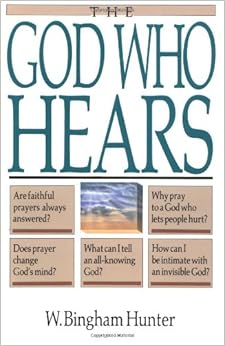
The book we are studying now is about prayer: W. Bingham Hunter’s book The God Who Hears.

I ask your forgiveness as I post my thoughts about how prayer has helped me so much in my life.

You see, I believe in the power of prayer.

Let’s lay aside the ideas about why people don’t pray [the barriers to prayer], how to approach an unapproachable God, our personal honesty about sin and praying to an all-knowing God and let me tell you about the results of prayer in my life—right now.

I am on the verge of returning to Vanderbilt University to see my doctors about the healing that has taken place in my body since I broke my pelvis. I realize I am such a blessed man. I have never had any experience with severe pain, a serious bone break, surgery, long hospital stays, total dependence on other humans for the basics of life, disability, etc.

Until now.

I don’t know what my doctors will say on this day…December 5, 2016, but I can say this: I know I have had people praying for me.

And it matters.

It has been amazing and humbling to receive the phone calls I have received.   Of course, many have been local people, but some have not been. People from distant places have called me to tell me they have me in their prayers.   I have received countless emails from people telling me I am in their prayers.   The cards from my church have flowed in, and they have all said the same thing: “You are in my prayers.”   I am a member of the prayer group at my church and I have been prayed for there by strong fellow prayer warriors who know me very well.   The night of my fall in the emergency room, three pastors came to pray for me.   Their words were so comforting. The pastor of my church followed the ambulance to Vanderbilt and spent the night with my wife. She knew my wife was too scared to drive alone in Nashville so she drove her.   She stayed all night in the waiting room with my wife and visited with me several times in the night. I could not sleep but her prayers did so much to calm me in those early hours.   The day of my surgery, I had an unknown visitor named Doug who came to talk to me as I was in the surgery recovery room.   He told me his story of trauma [much worse than mine] and how he knew I would recover. He did this with God in his heart.   I connected with him immediately and felt that he was sent by God to give me hope.   He prayed over me and I felt every word.   He imparted such peace to me about my future. Then there is that church on 5575 Dick Pond Road. The Socastee United Methodist Church in Myrtle Beach, South Carolina. Every week they have sent me a letter telling me that they are praying for me.   The day they prayed and the time they prayed.

“As you were lifted up in prayer we asked God to let the Holy Spirit comfort and strengthen you.   We also prayed that the Lord would richly bless you and provide for your every need during this time in your life. We will continue to pray for you during the coming week.”

Then nineteen people signed the letter. Nineteen people I have never met.

I know how this contact was made.   I have a good friend in my church who lives in Hopkinsville, Kentucky part of the year and then Myrtle Beach the other part. He has put me on the Socastee prayer list.   Every week I have received their letter.   It means so much.

I have a special friend in my church’s prayer group. She believes in stepping out in faith. She is well-known as a person who does not just ask God; she claims God’s blessings before she receives them because she believes they will come.   She has faith that her Father is on her side and the “evil one” will not win. She has worked with me, trying to get me to step out in faith.

I can hear her now: “David you will receive good news on Monday. God cares for you and He is taking care of you. He has knit your bones back together. He wants you to be whole again. Thank Him for the wonderful things He will reveal to you on Monday.”

I know she is right.

But before I leave for my Monday meetings, I want to thank all of you who have prayed for me.

I have felt those prayers. They have resulted in my body healing. I don’t have to have a doctor tell me how far I have come since October 18. I know that I have come a long way. I still have a ways to go but I have come a long way. PRAISE GOD!

Let’s give credit where credit is due:

I don’t believe I would have come this far…without those prayers.

Posted in Uncategorized | Leave a comment

How We Handle Omniscience

Image result for omniscient god

I don’t have many ways to exercise because my surgeon has confined me to hopping on my left foot with a walker [no weight on the right foot], or sitting or pushing myself around in a wheelchair. As you can imagine, that makes “strenuous” exercise problematic.

What I have done many times is go to the gym at my church and push a wheelchair around as my wife walks for thirty minutes. On the wall at the gym is the warning sign in big letters “Don’t do anything in this gym that you wouldn’t want Jesus to know.”

Oh no, you mean I can’t drop a chewing gum wrapper on the floor, or say a “bad word” when I get my finger jammed in the spoke of my wheelchair?

No, I had better not do that; God will know.

How do we handle the God who knows all? Do we admit that He does and just behave properly 100% of the time?

Sorry, I think we have a problem with that 100% target.

We never make it.

So what do we do?  Bingham Hunter* says we have three ways of dealing with the God-is-everywhere problem.

The fact that God is everywhere is a threat to most people. You can’t sneak anything past God. He sees you when you sin and knows your heart when you are trying to hide your less-than-perfect intentions from others. When you are in the dark with the doors locked, He is there. Many may feel that God has hemmed them in as we have our own secret sins and moral irregularities.   Also, is it not a sin when we have many opportunities to do good and we turn those down? So feeling God everywhere can be oppressive. In Hebrews 4:13 it says “Nothing in all creation is hidden from God’s sight. Everything is uncovered and laid bare before the eyes of Him to whom we must give account.” Bingham says we just “keep ideas like God’s omniscience…stashed safely away with other curious and dusty oddities on that shelf called Interesting Theological Truth….You just sort of, well…forget it.”

Another coping mechanism is putting God in His box. After all, in Habakkuk 2:20 we see “The Lord is in His holy temple. Let all the earth be silent before Him.” The idea is God is localized in a place where His flock comes to worship. We begin to think that we walk in to be in His presence and we walk out when the service or prayer meeting is over. People who think this convenient thought don’t see God on the beach, at the factory or in the store.   God is not part of the kiss we give our wife when we leave for work. God surely is not present when we wax the kitchen floor or clean the cat litter boxes.   God is in the sanctuary. Practicing the idea that God is present everywhere takes a great deal of “God awareness” and a great deal of mental discipline. Bingham also admits that inserting God in the acts of daily life is not a popular modern concept. To do this, you must “swim upstream” against American culture.

If you are not putting God in a box, maybe you are compartmentalizing Him. Life for many of us is a steady stream of activities that repeat daily. We fragment life into various compartments. For example, you may have your work compartment, you may have your golf life compartment, you may have your family activity compartment and you may have your religion compartment. As we move from compartment to compartment we change roles, we can change language and we may even change nonverbal behaviors.   Have you ever heard someone say, “I leave my work problems at work and I leave my family concerns at home.” They are compartmentalizing. How does this relate to God’s omniscience? Well, He is not really omniscient is He? He is only “all knowing” in the religion compartment.   How do you think people justify their very unchristian behaviors at work or on the golf course? Compartmentalization.

This all flies in the face of how God really operates. Bingham compares God in your life to chicken pot pie: “Everything in it relates to the other parts; the flavors interact. Too much or not enough of any ingredient can affect the whole lot” [Bingham, 39].

I can’t think of a better way to confound the coping mechanisms of forgetting, God in a box or compartmentalization than using Bingham’s own strong words: “God does not just hear your prayers. He ‘hears’ your whole life. He doesn’t respond to what you say. He responds to what you are.  He responds to you. You are the factor that ties all the boxes, the compartments together.”

Just because we don’t want to see God in every aspect of life, doesn’t make it so. Like the Old Testament prophet Jacob, we need to be candid: “Surely the Lord is in this place, and I did not know it” [Genesis 28:26]. We also need to be candid and admit that our modern world does not encourage an ever-present God but that does not mean He is not ever-present just because the idea is inconvenient.

“Don’t do anything in this gym that you wouldn’t want Jesus to know.” I guess I had better put that gum wrapper in my pocket.

He is there.


From his book The God Who Hears

Posted in Uncategorized | Leave a comment

Praying to a God who Knows it All?

Image result for prayer to heaven

Let me pose a question to you.

You are praying for healing for a relative, you are praying for better finances because you have a big bill and you don’t have the money to pay for it, you are praying for wisdom as you ponder the pluses and minuses of taking a big trip with your best friend.

Have you ever thought that God knows what is on your heart and God knows what is going to happen to your relative, your finances and the trip? After all, God knows all.

The question is how do we pray to an omniscient God?

Some may even wonder at the usefulness of praying to an omniscient God.

It only makes sense. God is going to handle things the way He wants. We can only ask “if it be Your will, God” I ask that You do this or I ask that You do that (if it is Your will).

“But despite our questions, the statements of Scripture are crystal clear: God knows absolutely everything” [Hunter, 32].

“Our Lord is great, vast in power; His understanding is infinite” [Psalms 147:5].

“For He looks to the ends of the earth and sees everything under the heavens” [Job 28:24].

“God is greater than our hearts and knows all things” [1 John 3:20].

“When you pray, don’t babble like the idolaters, since they imagine they’ll be heard for their many words. Don’t be like them, because your Father knows the things you need before you ask Him” [Matthew 6:7-8].

And then we read this:

“You do not have because you do not ask” [James 4:2].

Wow, this seems so contradictory. We know He knows but we have to ask anyway.

Let’s examine why it is important to pray to an omniscient God.

I believe it is all about relationship with God the Father.

Think about the nature of relationships.   You may love your earthly father and he knows it. However, should you never share information with your father because he knows you and loves you? Of course not: your father wants to hear how much you love him and he loves to show you how much he loves you. You have a relationship. In earthly reality, your relationship is built on the sharing of ideas.   Some of the ideas are not monumental [for example, what do you want for breakfast, do you like Dermot Mulroney, or would you like a table saw for Christmas?] but you share the ideas anyhow. Why do we do this?   So we can know each other better. Father and child can “relate.”

Stop and think about what it is like when children are growing up. Children ask their parents all sorts of questions. Would a child say “I know my parents know everything, so I don’t need to ask them.” That wouldn’t make sense. No matter how much I thought my Dad and Mom knew what I wanted for Christmas, I asked them over and over for my cherished item[s]. In order for the parent to guide the child and pass along wisdom, the child often asks questions. It’s the same for us and God. We want God’s help, we can’t see where we are going, but He can. Just because He knows, doesn’t mean we will somehow get His wisdom. We have to ask.

“Prayer is not like a magic system, where we put in a prayer, and out pops an answer. Prayer is relationship. Think again about the child and the parent. The parent longs for the child to love him/her and to spend time together. It’s the same with God. In a conversation you talk, you wait for a response, then you respond. It’s give and take. When you first start praying, you may feel like you are doing all the talking. But keep at it…as you pray day after day and get into a relationship with our Father, you will begin to ‘hear’ Him. Not really like an audible voice, but, a small quiet voice inside. If you get confused, remember, if the voice puts you down, it’s not God. God encourages and loves us. Even when He corrects us, it’s in a loving way.”*

You know how it goes with prayer. God knows what we need and even though we ask, He doesn’t give us what we want all the time. Why is that? I am not sure but I suspect God knows what we need more than we know ourselves. I do believe in the act of praying to our omniscient God, we receive answers to our prayers or not and the process increases our faith but most of all:

it strengthens our knowledge of God and confirms that He knows all about us

Our relationship with our Holy Father continues to grow [and that is a good thing].


*from the Question and Answer Website “Christian Exchange”

Posted in Uncategorized | Leave a comment

Why Read a Book on Prayer?

Image result for the god who hears

Why would you read a book about prayer?

Maybe you are not sure about how to pray. No one has ever talked to you about it?

Maybe you do pray but you think there are better ways to pray?

Maybe you think you pray pretty well but you want to put more zest in your prayer life?

Here is my personal reason. Prayer is my communication with God and I want it to be the best communication it can be. W. Bingham Hunter says that many Christians are not praying on God’s “wavelength” or they are trying to talk with Him with a lot of static on the line. There are problems with us understanding what He is saying.

I want to be on God’s wavelength and I want the static to go away.

As a Christian, I take very seriously God’s command that I should strive to be holy but what does this mean? It means that I am not satisfied with my automatic qualification to get to heaven just because I believe. It means that I am motivated to do more; to do good in this world [in God’s name]. I am not supposed to be a “moral neutral”; I am supposed to be an active agent showing others my love for God and my love for my neighbor. In short, I think that my behavior is a reflection of God working in me.

In Ephesians 2:10 Paul explains “We are God’s workmanship, created in Christ Jesus to do good works, which God prepared in advance for us to do.”   As Jesus loved us, we are to love others.

To do all this, I need to hear from a Higher Source. I need guidance. I need wisdom. I need prayer.

As humans we are always asking what’s in it for me if I learn to pray more effectively?

Purpose

Fulfillment

Zest for life

An opportunity to live your best life ever, right here on this earth…

Think of the Jesus you see in Scripture. He was not a lost person, a weak person with no sense of purpose. As I read my Bible, I see Him as a capable, strong person who knew where He was going and why He was here. Wow, what a way to live!

In this chapter that I have been blogging on, the title is “Holy: How can I Approach Him”. We have discussed the holiness of God and many think we need to examine ourselves and see if we are worthy to pray before God [we are, but we feel we are not].   Many of the posts have been pretty negative, with me commenting on W. Bingham Hunter’s ideas about how we are falling short of God’s holiness and how some of us have given up and do not even try to approach God. We think He is too holy and we are far from holy.

But it is time to be positive. Read the words of Paul in Phillipians: “Not that I have…already been made perfect, but I press on to take hold of that for which Christ Jesus took hold of me. Brothers, I do not consider myself yet to have taken hold of it. But one thing I do: Forgetting what is behind and straining toward what is ahead, I press on toward the goal to win the prize for which God has called me heavenward in Christ Jesus” [Phil. 3:12-14].

To have a “zest” for holiness and a “zeal” for life is very natural. The more we can act like we have God in us, the more we can experience the blessings that God intends for us to have on earth. Too many settle for mediocrity. Too many act like they have no purpose for living.

When life knocks you down, God intends for you to get up. When life gives you a loss, it is easy to become depressed but look around at your neighbors and you will see more dramatic losses. Those people need help; maybe your help. Their pain is probably greater than your pain. Don’t focus on what you can’t do; focus on what you can do.  God intends for us to live a life of abundance, a full life, a life brimming with joy. How do we SEE others, FEEL for others, ACT to aid others? How do we share our joy? Pray and God will tell you through your Holy Spirit.

After convincing us that we are lacking in our knowledge of the holy, W. Bingham Hunter states how we can cure this problem. “You’ll never experience holiness or effective prayer just standing there. Get going” [Hunter, 29].

“Pursue righteousness, faith, love and peace, along with those who call on the Lord out of a pure heart” [2nd Timothy 2:22]

That’s why you read a book about prayer.

Posted in Uncategorized | Leave a comment

Getting Serious about Context

Image result for context

“Christians who desire to pray more effectively must first spend more time reading those portions of God’s word which emphasize His holiness.”*

Job knew of God’s holiness. You can hear it in the words “My ears had heard of you but now my eyes have seen you. Therefore I despise myself and repent in dust and ashes” [Job 42:5-6]. Consult Isaiah 6:1-6, Ezekiel 1:25-28, and the Elders in Revelation 4:8-10 for more examples.

But no matter how many Scriptures you consult, the problem of context may be a major stumbling block to understanding the significance of Scripture, understanding the words from the point of view of the writer [in the writer’s timeframe].

When I went to college, I had a fascination for American Civil War history and to a certain extent I still do. I would find a .58 caliber minie ball rifle bullet in an antique store and my imagination would go wild thinking of all the circumstances where it could have been used. The tangible item transported me mentally to warfare in the Civil War. However, the more I began to study history in college, the more I had to write about the war in many term papers every semester.   Very seldom did I get to use actual accounts from the battlefields; most of the research material I worked with was 2nd or 3rd hand accounts, people commenting on the action many years from the actual event.

I began to feel more distant from the war. My imagination was influenced by words from distant observers. I just could not understand the context of the actual conflict. I wanted to see what the soldiers saw and feel what the soldiers felt but I just couldn’t.

As Christians, do we have the same problem? Can we lose the context of what happened in Bible days?

Maybe…

Let’s take the idea of Jesus dying for our sins. That is a life-changing idea but some people seem to lose the idea that He did it for us. Maybe when we examine this event, His suffering hides us from the notion of how destructive our sin can be and how imminent judgement can be. We can’t imagine how awful the suffering was for Jesus.   I was shocked to the point of crying several years ago when I saw the 2004 movie “The Passion of the Christ.” Some critics felt that the scourging scenes were too graphic as the Roman guards whipped Jesus but maybe they weren’t. I could not stand the treatment of Jesus because I knew He was suffering for me.   The movie put it right before my eyes. I cried for it to stop; right to the movie screen. Maybe it was just a movie and it was really not like that but it made it real; it provided some context.

Israel’s exile took place thousands of years ago so that context seems distant. The Hebrew people were punished but in a time and place so distant that most of us can’t really relate to it. They sinned over and over again and God said He would punish them and eventually He did. How significant was that punishment? It is hard to determine. We can’t understand an insular people who were forced to lose their cultural identity as a punishment. The context is so hard to relate to but by all accounts, it was devastating. Intermarriage occurred, worship of other gods occurred and the Hebrew nation lost its identity, except for a remnant.

Believe it or not, Bingham also feels the certainty of our salvation works against us when it comes to understanding the context of prayer. We presume that God’s love for us will always be there so we take it for granted. Romans 8:39 says “neither height nor depth, nor anything else in all creation, will be able to separate us from the love of God that is in Christ Jesus our Lord.” That’s very reassuring but should we still not mourn over our sin [see Matthew 5:4]. In short, this (what I call) “grace abuse” can make us seem “bulletproof” to the problem of sin in our lives.   We can do what we want and get away with it because we are covered by grace. In my Bible, I read many calls to understand repentance and contrition which are essential to confession and consequent forgiveness and cleansing.  Maybe we are so far away from Bible times that we think we can skip some of those steps.

Let’s get real.

God does not want us to skip steps and our God wants even more.

God expects us to do a daily cleansing. That is a very foreign concept in today’s world. Why would we need that? Because we need to die daily to our sins. Every day that I live, I sin, and in the hustle and bustle of life, I become blind to it or I choose to ignore it. “It is little wonder that sin grieves the Holy Spirit who lives in us. Yet the greater and more astounding wonder is that sin grieves us so little” [Hunter, 26].

“Christians who desire to pray more effectively must first spend more time reading those portions of God’s word which emphasize His holiness.”

But even more than that, we should make an effort to understand what was happening in the time of the Scriptures.   I know we don’t have access to time capsules to take us back to the days of the Bible, but the more we can take God’s words out of our world and try to put them into Biblical times, the more we have a chance to understand them.

The more we have a chance to understand “the context”.


From his book The God Who Hears

Posted in Uncategorized | Leave a comment

Special Thanksgiving Message… “Thank You God for What I Have”

Mostly from Stephen Witmer from the “Desiring God” Blog

My comments today are almost exclusively from Mr. Witmer. I put this post on my blog “St. John Studies” seven years ago.  At that point in my life, I was trying to recover from a broken pelvis.  In the days leading up to Thanksgiving, I had several dark moments when my injury and forced bed rest really got to me in a negative way.  I found myself unappreciative of God’s gifts to me. I went from a full participant in life to an invalid in one second as I fell from the top of a ten-foot step ladder to the hard ground.   I was confined to a chair or bed with very limited ability to enjoy ordinary life, yet when I wrote this post on November 24, 2016 I recognized how far I had come in the 37 days since my accident.  I wrote “I want more, but this Thanksgiving I need to take a long pause and consider how far I have come. I have a chance at a full recovery and so many people don’t have that chance due to the results of their traumatic injury.   I want to thank God for what I have.”

“Many of us live so focused on what we don’t have that we miss the present gifts we could be enjoying. We’re blessed and discontented, with lowered joy and heightened dissatisfaction.

Singles pine for marriage; couples for freedom. The unemployed long for jobs; workers for weekends. Childless couples yearn for a baby; parents for sleep. We want what we don’t have — until we have it. And then we want something more or something else. Men lust after images of women who are not their wives. Women envy other moms with well-adjusted children, immaculate houses, and successful careers. We live in a world of no thanks, almost physically unable to enjoy what we have.

Of course, we’re not always moping for what we don’t have. We’re not afraid to enjoy the good things of this world. Billions of people daily experience trillions of moments of pleasure, joy, and satisfaction. But this creates another massive problem: Most of those moments are enjoyed without any response of thankfulness to God.

Even when we don’t miss the gift, we often miss the Giver. This thanklessness deeply troubled the apostle Paul, who diagnosed it as an act of rebellion against God: “Although they knew God, they did not honor him as God or give thanks to him, but they became futile in their thinking, and their foolish hearts were darkened” (Romans 1:21).

Paul connected the sin of thanklessness with idolatry. Instead of thanking God for what he gives, we assign ultimate value to things God made, worshiping and thanking them instead of God. It’s what Israel did at Mount Sinai: claiming the golden calf had brought them out of Egypt, they gave honor and thanks to a pile of gold.

God created food — and, by extension, every other good thing — in order to be received with thanksgiving (1 Timothy 4:3–5). God designed a great circle of thanksgiving: we get the gift, and he gets the gratitude. When we receive gifts without returning thanks, it’s a massive exercise in missing the point.

Millions of Americans will sit down this week before a splendid dinner God created, but will not thank Him for it. Instead, many of us will overeat, showing our devotion to some food goddess, and then collapse into a soft chair to worship the great football gods. The guy who gets the winning touchdown will almost certainly receive more praise (and definitely more headlines) than the God who made the whole day possible. The delicious turkey will be praised more than the one who created every living thing.

As Christians, we can commend the goodness of God by cultivating thankful hearts this week, and year round. Let’s examine our lives for patterns of thanklessness. Are there God-given gifts (health, friendships, accomplishments, material blessings) that we haven’t been thanking God for? Let’s be different this Thanksgiving, and celebrate God’s goodness by returning thanks.”

Thank you God…from David Carter…

Posted in Uncategorized | Leave a comment

Personal Honesty

Image result for hand on a bible

For all have sinned and fall short of the glory of God [ Italics and underlining mine] [Romans 3:23].

What does this verse really say?

For me it says we are all sinners…and it would be best to be honest about it.

Bingham Hunter, in his book The God Who Hears, says this is something we all need…personal honesty. God cannot respond to unholiness in His creatures and not admitting to our sinfulness is one of the worst things we can do.

Yet we do it all the time. A large number of Christians are totally preoccupied by what they call “major sins of society” and they feel they can stand in judgment against people who commit those major sins. I call these people the “Jerry Springerites.”   If you are a big fan of that show, I apologize, but reactions to the show serve to make my point about the hypocrisy of Christians. I am not even sure that Springer’s guests are real.   They tend to have all kinds of aberrant behaviors. The usual script for the show is people are confronted by some of their friends and family members whom they have hurt by their behavior.   It could be the spurned spouse, the out-of-wedlock pregnant girlfriend or the abused family member. The whole show is about being honest and accusatory about bad behavior. I have heard several God-fearing folks say “Wow, I may be a bad person, but at least I have not done that! At least I don’t behave that way!”

My response to this is, are you sure you don’t sin just as bad? How can you be sure?

Thank goodness you can hide your sins; they are not on a television program for all to see.

The Apostle Paul is the best antidote for the Christian who is “holier than thou.” Read Romans 1:18 to 3:18 and you will see Paul confronting all Christians with the fact that sin lives in us just like it lives in the non-Christian. If we want further words about our sin, read [1 John 1: 8-10]: “If we claim to be without sin, we deceive ourselves and the truth is not in us. If we confess our sins, He is faithful and just and will forgive us our sins and purify us from all unrighteousness. If we claim we have not sinned, we make Him out to be a liar and His word is not in us.”

Bingham says somehow we emphasize that God’s justification of believers is enough for us to have daily holiness, when it is not.   We are deceiving ourselves when we take up the mantle of holiness, forgetting that we have our own daily struggle with sin. For us to have a chance to get in God’s good graces, it is best to have personal honesty about our lives.   It is also important for us to acknowledge that God knows our failures: He knows our sins, our hearts, our evil intentions even though we have mastered the art of hiding them from those in the world. God knows our intentions.

I wish I could say I have a life without sin, but that is not the case.   I have a sin nature that is very real, a sin nature that goes back to Genesis and the original sin in the Garden of Eden. It is the sin all men have.   I will carry this all my days. I need God to help me overcome my sin. I need the power of the Holy Spirit to help me fight my penchant toward sin. As I sin, despite my best efforts, I need God’s grace to forgive me as I repent my sin and ask His forgiveness. I acknowledge I have fallen short.

For me to claim I lead a sinless life is an abomination to God for God knows I will reap what I sow. To make matters worse, for me to claim a sinless life or even a holier life than others is shameful.   I am not telling the truth to people around me and God knows of my lies.

Two of the most popular verses from the Bible are “Let anyone among you who is without sin be the first to throw a stone at her.” Jesus says that to the accusers who are about to stone the adulterous woman at the well. He confronts the “holy” people with their own sinful natures and they admit they are sinful by leaving the woman at the well without casting a stone. Judge not lest you be judged is in Matthew as Jesus throws down the gauntlet to the “good folk” again; He says if you want to judge others, you will also be judged by that same standard, implying that this will not make you happy.   It is so easy to see a speck in someone else’s eye and you cannot see the plank in your own.

Think about those people you see on The Jerry Springer Show. We might look down at them and think we are better than them. As we compare ourselves to them, we might even feel justified in having a positive attitude about our lives with God.

But let me tell you one thing they have going for them.   Their sinfulness is in the open. It is real. It is on display for all to see. It is honest, a lot more honest than the holier than thou Christian who presents the false front.

Maybe it is even refreshing as their sins are open for all the world to see.

Personal honesty.

Posted in Uncategorized | Leave a comment

Fear of God: The Necessary Surrender

Image result for fear of god

“We know that God does not hear sinners; but if anyone is God-fearing and does His will, He hears him” {italics and bold, mine} [James 9:31].

Recently, I posted on the fear of God. I discussed the idea that God is so holy He is unapproachable and yet we need to approach God in order to pray. But the fear of God can be a good thing, motivating us to pay attention to our behavior and motivating us to do good and avoid evil.

As you can clearly see from the scripture above, a prerequisite for getting God to hear your prayers is for you to fear God.

How can we get past the word fear?

Most of us cannot imagine fear being a good thing. I don’t know about you but my experiences with fear have resulted in very uncomfortable feelings. I associate it with a sense of dread, a lingering feeling that I am in danger and I could be harmed by someone or something. Some of my fear is irrational.   An example from my life is my fear of MRI machines.   They are too tight and I can’t go into one unless I am unconscious. Even thinking about being unconscious in an MRI makes me have the “willies.” What will happen in this machine? Nothing, except I will get a full-body x-ray.   My reaction is an irrational fear.

Psalms 111:10 “The fear of the Lord is the beginning of wisdom.”

Psalms 36:1 “Concerning the sinfulness of the wicked: There is no fear of God before his eyes.”

We must grapple with fear of God for as W. Bingham Hunter says “that without a sense of God’s awesome holiness, and the consequent ‘fear,’ we simply do not have biblical religion.”

Let’s define the Biblical notion of fear of God and we will all feel better: “theological fear is not primarily dread or repulsion for the fear object, but surrender to [God’s] authority” [Robert Morosco in Hunter, 21]. Fear of God is not irrational; not fearing God is irrational. In other words, when we deny God’s holiness, God’s power and God’s presence, we are irrational [and possibly we are being sinfully wicked].

In college, I studied the Age of Enlightenment.   This period which began in Europe in the 17th Century was a period of two hundred years when man emerged from the Dark Ages and began to think again, create again and feel some sense of control over life. Certainly it was good to have some time where humanity left behind the fog of societal collapse of the Roman Empire. However, man makes a mistake over and over when he does not recognize the finite nature of existence.   There really is no security in worshipping things of this world. “Those who do not fear God as the transcendent, holy and infinite Creator replace His power and authority with either themselves, others or material things” [Hunter, 22] Romans 1:25 “They [have] exchanged the truth of God for a lie, and worshiped and served created things rather than the Creator—who is [to be] forever praised.”

We must never forget that God is our Ultimate Creator, our Ultimate Authority. What we make of our lives is His gift to us. What we possess in this life is His gift to us. What we feel in this life is His gift to us.

This leaves us in an eternal fight against egocentrism. It is so easy to feel powerful, insightful and in control.   But all that is illusion. In a blink of an eye, all that we cherish can be taken away and we are left with very little.

For the best proof of the need for the surrender to God’s authority one merely needs to read the Old Testament which is a record of Israel struggling over so many years to have a consistent submission to God’s authority. Over and over again, the Hebrews became so egocentric and were punished by God.   If only they had remembered how much God promised them in His covenantal relationship, life could have been so much easier. The Old Testament is one long story of God promising to help His people and the people promising to love God, only to fall away with worship of idols, intermingling with other cultures and breaking all of God’s commandments.   God punished them. They asked forgiveness. They were redeemed, only to fall away again.

Today, many Christians find themselves in the same situation as the Israelites. We don’t have the pure heart that we need to call out to the Holy One. We are distracted with our own life concerns and don’t realize how much we owe God. We think our day to day lives are all-important and we feel such pride in what we are able to accomplish.

We don’t see the need to submit to our Lord. We certainly don’t fear God’s retribution.

And then I hear Christians say “I wonder why my prayers go unanswered?”


Posted in Uncategorized | Leave a comment