The Way We “See” Things…

Image result for the dangerous act of loving your neighbor

It was many years ago and as we all know the memory plays tricks on us.

But here is how I remember it:

I was in my college library. I used to get out of the office from time to time and go to the library just for some peace and quiet. I would take one book with me so I would not suffer from the distractions of the phone, the computer screen, knocks on the door, stacks of papers that needed to be graded or many ideas in other books that I needed to track down.

From time to time, I just needed to focus.

In this case, the focus was on a subject that I was not teaching. I was asked to teach speech class but the more I began to know about the academic discipline of speech communication, the more I began to see that “communications” teachers did not just teach how to get up in front of audiences and talk.

Don’t get me wrong. Teaching students to speak in front of groups is an admirable task. Many claim that man or woman’s greatest fear is speaking in front of groups [aka stage fright]. But that day, the one book I took to the library was an interpersonal communication book, a course that was not offered at my college. As I began to explore the chapters I was captivated, especially by the chapter on perception.

I knew people did not see “eye to eye” about much in the world. One person goes to a Stephen King horror movie and really likes it; another thinks the same movie is dumb and a waste of time and money. One person comments on how much they like their teacher, he knows his subject matter and makes it interesting and seems to really care about students. Another student thinks the same teacher is a creep. A Los Angeles Rams fan is really impressed with the team and tries to tell his feelings to his friend; “they are really going to contend for the Super Bowl.” The friend replies “That’s ok but I don’t believe that, and let me tell you, the great performance I saw at the Kennedy Center Honors was superb. That is my idea of impressive. I think football is awful.”

These conversations happen all the time and as I began to study the chapter on perception, I saw very clearly why people did not understand each other. Everyone [and I mean everyone] has their own unique way of processing information in this world. Some of us select information because it is intense, big or little, contrasting, repetitive, in motion, familiar or novel. The bottom line is that we all don’t select information the same way. Our sensory organs affect selection; some have acute sight or poor hearing. Some respond to touch in a negative manner while others have a strong sense of smell. After we select, we organize information and guess what; we don’t organize the same way. That is a unique process also. Finally, we interpret what we perceive or put meaning to it and that interpretation can be as different as night and day.

Interpersonal communication is the process of sending a message from one person to another [interpersonal or person to person]. When communication occurs, success or failure of the message is how well the thought of the speaker is recreated in the mind of the listener. I knew I wanted to teach this subject because I wanted to help people overcome some of the barriers that can cause us to be different. I wanted to help people understand other people despite all the ways we are unique.

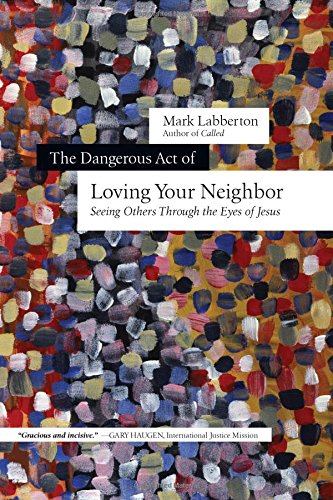
With all these words devoted to my deep dark past, how does this relate to Mark Labberton’s book The Dangerous Act of Loving Your Neighbor?

When I read the Bible, I see a Jesus who has a great deal of empathy, He understand other’s perspectives. He knows the woman at the well is a sinner and He understands her sin but He also understands that her condemners are sinners too. Let he who is without blame cast the first stone. He knew they would drop their stones for they all sin. When He was told that He should spend less time with little children, He knew that they have pure hearts and He told them they are welcome. They don’t have the complex agendas of adults. When He was warned not to eat with tax collectors and other sinners, He knew that He was right where He was supposed to be. He says in Mark “It is not the healthy who need a doctor, but the sick. I have not come to call the righteous, but sinners.”

It seems so obvious to me that to be like Jesus [a goal we might want to strive for] we need to be able to understand the barriers between people and work to overcome them. None of us is the same. Given the nature of our perceptions, it is a wonder that anyone can understand anyone else. How can we hope to help others that come from different perspectives?

We have to; that is our calling. As Christians, that is our number one job. Sure the barriers exist but we have to find what makes us alike, not focus on what makes us different.

Recently, I sat across the table during a lunch with one of my best friends. We have shared so much over the years, yet we are very different. I know it and he knows it. What he said that day meant so much to me because it showed me that differences can be overcome. He said “We don’t think alike on many things but we do on the important things; we both love the Lord and we both love our country.” It meant so much to hear him say this. We are connected.

We know that barriers exist but maybe they can be overcome.

Posted in Uncategorized | Leave a comment

Love Your Neighbor? Really?

Image result for mark labberton the dangerous act of loving your neighbor

The premise of our new book [The Dangerous Act of Loving Your Neighbor by Mark Labberton] is that no matter who is in need, if we perceive the need and we can meet it, we should do so. We should do our dead-level best to help others less fortunate than ourselves.

This is a common message in the Christian faith, but do we heed the words of God?

James 1:27 “Religion that is pure and undefiled before God, the Father, is this: to visit orphans and widows in their affliction, and to keep oneself unstained from the world.” This is only one verse that calls us to help particular persons who have suffered. Obviously children who have lost their parents need help and women who have lost their spouses need assistance. James is saying that love needs to be shown to these special people.

Hebrews 13:16 “Do not neglect to do good and to share what you have, for such sacrifices are pleasing to God. Sharing what you have is the right thing to do especially if you know of someone who does not have what you have. Hebrews states that doing good is pleasing to God and we must not neglect to do it.

First John 3:17 “But if anyone has the world’s goods and sees his brother in need, yet closes his heart against him, how does God’s love abide in him?” This admonition is even stronger as John states if we don’t help our brother in need, God is not within us.

Matthew 25:35-40 “For I was hungry and you gave me food, I was thirsty and you gave me drink, I was a stranger and you welcomed me, I was naked and you clothed me, I was sick and you visited me, I was in prison and you came to me.’ Then the righteous will answer him, saying, ‘Lord, when did we see you hungry and feed you, or thirsty and give you drink? And when did we see you a stranger and welcome you, or naked and clothe you? And when did we see you sick or in prison and visit you?’ And the King will answer them, ‘Truly, I say to you, as you did it to one of the least of these my brothers, you did it to me.” This Scripture may be the most famous directive for our faith as the words of Jesus state that if you assist the needy, you are assisting Him.

We could go on and on but you get the point. A “real” Christian is a generous, loving, sharing person who takes his or her resources and helps other people.

This is our calling.

This is what we are supposed to do with our faith.

This is the love we are to show to others; this love is based on fulfilling the needs of those less fortunate.

Labberton has written a book that we sorely need in our time. Some think that Christians help only themselves. Others think that Christians help only other Christians. My reading of my Bible says Christians are supposed to help human beings who are struggling in life. Labberton states “Jesus didn’t see a sick woman, He saw a daughter of God. He did not see an outcast from society, He saw a child of God. He didn’t see a sinner, He saw a person in the image of the Creator.”

How can we see the way Jesus saw; how can we see others with the eyes of Jesus?

Labberton states that seeing “rightly is the beginning of renewal, forgiveness, healing and grace. Seeing rightly is the beginning of how our hearts are changed.”

Our Christian faith is radical in that it calls all of us to love all of mankind. We all know this is hard for there are many in our world who are “unlovable.” Many who have dire needs do not run in our circles; they are members of a lower social strata. We may be uncomfortable associating with them. Many who have dire needs are not of our race; their skin color is different from ours and their reality is very different due to that racial perspective. Many who have dire needs may not have the same political views that we have and God knows that America is a divided nation right now. Can people of differing political viewpoints lay aside that divide in time of need?

Surely we must.

God tells us to forget our differences and help one another.

God tells us that we must aid those who have great need. Go back and read James, Hebrews, 1st John and Matthew above. The message is clear. If the need is there, we have to meet it or God is not in us.

“As you did it to one of the least of these my brothers, you did it to me.”

That is so clear…

So challenging, but so clear.

Posted in Uncategorized | Leave a comment

Final Comments on a God Book…

Image result for good or god john bevere

It is hard to explain, you know those blessings that come from unusual places. After discussing ten books and posting 667 times, I have to admit that blogging on Christian literature has been a big blessing. John Bevere’s book Good or God? has been one of the best books I have written about, one of the best blessings I have had since I began blogging.

Since I began writing on December 30, 2014, I have had some “up days” and some “down days.” That is the way ordinary life is; you have some of the good and some of the bad. Some of the books I have written about have been better than others but all of the books have taught me something. You might say I have discussed some good books on St. John Studies and I have discussed some much better books.

Most of the days I write, I look forward to writing. When I began blogging in 2014, I tried to write every day but after a year of doing that, I found that more people find my blog if I try to post every other day. That is the target I set for myself. Lot of times I hit that “target.”

As I wrap up another year of writing, I come to a time of transition, a time of ending a book and starting another, a time of ending a year and beginning another.
Good or God? is hard for me to end.

My good friend Pastor Roy King of Bridge of Hope Fellowship in downtown Hopkinsville, Kentucky recommended the book to me in June of 2017 and it has been a slow page turner. What I mean by that is the best books I write about can stimulate an idea for me in a page or two. I can cover a chapter in two or three posts in a weaker book; there is just not much “meat” there. Thanks Roy for the recommendation of this book. I had no idea I would grow so much as I wrote about it. Good or God? certainly has a lot of “meat.”

When I begin to consider what books to blog on I often go to Amazon to see how they have been received by readers. Many people will review books and you can see the percentage of positive reviews and even read comments if you so choose. The number of reviews for this book was not overwhelming [592] but the percentage of five star reviews was amazing [93%].

Why is the response to this book so positive?

First of all, I think that for whatever reason, many people in the Christian community have settled for less. They literally are happy enough with the good things of life and are not aware that God offers so much more. Good or God? explains that there is more for us and Pastor John Bevere tells us how to go about getting it.

Secondly, life is so complex today that many Christians are ensnared in a web of distractions. When contemporary life has so much to do, we forget what we should do. We don’t zero in on the main things, the daily worship of God, the study of His Word and a full-throated fearful reverence for Him. It is so easy to shrug off what we should do with what the world tells us we can do.

Thirdly, in the clatter of life, there is no quiet place where we can hear God’s voice. Many Christians report that they believe in God but God really does not communicate to them. Maybe He is communicating with them but they cannot hear Him. They are too busy. They don’t take time to hear a still small voice; either they are not interested in stopping to hear that voice or maybe they feel that their life is so full they can’t find a quiet place.

The last thought about this book is the need we all have for truth. Right now our world seems to be clouded with relativism. People have their views and it seems that none of us agree. On top of this, no one is setting boundaries. Of course there is right and wrong; after all, life is about choices but today the lines seem blurred. In John Bevere, you have a pastor who desires to teach the whole counsel of God. Grace is not merely a means to “cover” our sins; grace is a means to empower us to live more abundant lives.
People need to have boundaries.

In my many years with my professional educator wife, she has proven to me over and over again that the best students thrive when they know the expectations.

I think the same is true for all of us. We need to know there are rules. Too often Christians view the New Testament as the only guide we should have and the New Testament is all about love and forgiveness of our sins. Of course it is, but it is also about Jesus coming to fulfill the law. He did not come to abolish it. Like my wife’s students, we will all thrive if we know the expectations.

Yes, John Bevere’s book Good or God? has been a blessing but everything comes to an end and it is time to move on to another book. My next post will introduce the next book and I will explain why I picked it. Like so many of the books we have studied, it will probably be a blessing too.

Image result for good or god john bevere

Posted in Uncategorized | Leave a comment

Can I Really be “In Sync?”

Image result for abraham

In the previous post I joked around with the “out of sync” Judas Iscariot. For a person like that, we may want to put some distance between them and us. I was joking about Jerry Springer and the idea that some people who watch that show may say things about the people on the show like “I’m not a very good person but at least I am not that bad.” Outrageous behavior gives us a reason to feel good about ourselves and if it is extremely outrageous, we don’t want to be associated with it at all.

We want some distance…

It seems to go both ways. We know of people who are so nice that sometimes their niceness intimidates us. Maybe they seem to be holy and their holiness is beyond our reach. Maybe we feel some distance from those people because we cannot reach their level. And yes, there are those people who scorn very good folks because they resent how good they are. They believe they don’t have a chance to emulate their behavior. Those folks are just “too good” and they feel they are just “too bad.”

Bevere uses Abraham as a perfect example of a man who is so holy that he seems out of reach. He is a man who has Godly fear, a man who chooses God over good.

Where is the evidence that Abraham is the man Bevere claims him to be? First of all, Abraham obeys God instantly. He may have had doubts about killing his only son Isaac but he prepared to do it and was ready to carry out God’s command. He was ready to obey God even though God’s command did not make sense to this man who was given a son so late in life. In a worldly sense, God made no sense but as Christians we have to accept that God’s ways are not our own. Abraham was feeling pain over this command yet he was willing to carry out God’s wishes anyhow. Abraham did not see the benefit but he was willing to obey. Finally, Abraham was willing to carry out God’s command all the way to the finish. You know the story, the knife was in his hand and he had drawn his arm back to kill Isaac when God intervened.

How is it with so many Christians today?

We have to see the benefit of obeying God before we actually obey. It works that way in life in many circumstances. I spent a good deal of time early in every semester proving to students that they would benefit from studying human communication. Salespeople work hard to get customers to see that buying their product will enhance life, increase their status or even fulfill dreams. Authors who want to sell their books point out personal advantages to the reader in a title, subtitle or on the book jacket.

Should personal benefit be the ultimate criteria in obeying our Lord and Savior?

Sadly, most of us want to fit in with societal standards so much that we choose the world over the Kingdom. “If you belonged to the world, it would love you as its own. As it is, you do not belong to the world, but I have chosen you out of the world. That is why the world hates you” [John 15:19]. “Therefore, I urge you brothers and sisters, in view of God’s mercy, to offer your bodies as a living sacrifice, holy and pleasing to God—this is your true and proper worship. Do not conform to the pattern of this world, but be transformed by the renewing of your mind. Then you will be able to test and approve what God’s will is—his good, pleasing and perfect will” [Romans 12: 1-2]. “Do not love this world nor the things it offers you, for when you love the world, you do not have the love of the Father in you. For the world offers only a craving for physical pleasure, a craving for everything we see, and pride in our achievements and possessions. These are not from the Father, but are from this world. And this world is fading away, along with everything that people crave. But anyone who does what pleases God will live forever” [1 John 2: 15-17].

This is just a sampling of Scripture that speaks clearly about choosing God over the world; choosing God over “good.”

Yes, Abraham is a daunting figure in the Bible. I can’t imagine what I would do if God said I had to sacrifice my son [I too have only one child]. Could I obey God without question?

I couldn’t.

But that does not mean that I have to create distance between this Godly man and myself. Why not admire him? Why not let his love for God inspire me to be a better man? Why not learn from his Godly example…

Why not let Abraham teach me to choose God over good…


Posted in Uncategorized | Leave a comment

In Sync / Out of Sync

Image result for judas

When I was at choir practice last night, the man who was working to make us sound the best we can used a phrase that we often hear in everyday life.

“The sound of the choir was ‘in sync’ with the environment that we are singing in.”

In sync: “working well together, in agreement.”

He was saying we were sounding as well as we could sound in the space we were in. It was a good comment, what a choir director and choir want to hear.

The Bible is full of all kinds of people who are in sync or “out of sync” with God. Examples of out of sync behavior abound: Saul comes to mind and his insane jealousy of David and inability to lead the Israelites in a Godly manner and Samson and his brawn and his feelings that he was the source of his own power, not God. The most extreme example of being “out of sync” comes from the life of Judas Iscariot. John Bevere* makes a very strong point about how we can be so distracted by ways of this world that we can even work against God.

Sometimes I think of Judas as a visitor to the Jerry Springer show, you know those people who behave badly and display their bad behavior for all to see on the television screen. We smugly watch the show and say “I may have my faults but I don’t act that badly.” I may be a bad person but I am not as bad as Judas Iscariot!

Maybe Judas just got too wrapped up in his role. He was the disciple who was in charge of the Jesus’ ministry’s money and he became so money-minded that he lost his judgement. Money became his god and he lost his fear of doing wrong.

The result of this showed in his embezzlement of funds from the treasury, lying to Jesus, and lack of interest in caring for the poor. We all know of the story of the wealthy woman who poured a whole bottle of expensive perfume on Jesus. The hypocrisy was so evident when Judas complained that the worth of the perfume should have been exchanged for money and the money should have been given to the poor. Judas declared the act as “bad” and “fleeting.” Jesus called the act “good” and “lasting.”

This is truly an example of a disciple who is “out of sync” with God.

It is right after this act that Judas decides to betray Jesus to the authorities. He thinks Jesus is on earth to set up God’s kingdom and Judas is pushing Jesus to act. If Judas forces Jesus’ hand, He will take over and Judas will have his rightful place in the new Kingdom on earth. Bevere goes into the mind of Judas with these words: “I’ll speed up the process. I’m not waiting any longer. I want my place of power, influence and riches. I’ve had enough of being a target of ridicule and persecution by the leaders. I don’t want to be viewed as the companion of a lunatic any longer. If I turn Him over to the leaders, He’ll finally show off His power and set up His kingdom, and I’ll have my place of prominence” [p. 235].

How could Judas be so wrong? Why does he think that he knows God’s plan? How could he be so bold that he feels he can assert his will over God’s Son?

He lost the fear of God and was so desirous of money and power that he could not hear the voice of God anymore. He had succumbed to the “siren song” of the world.

Where are we in this story?

Well, we don’t need to be smug and say, I could never be as bad as Judas. The truth of the matter is that we can get very weak in our dedication to the Lord. Our lives are full of snares that can take our hearts far from God. We have weaknesses that Satan can prey upon every day, desires that are not helpful for our relationship with God. Our own judgement can be easily clouded when we get distracted by the news of the day and the behavior of others.

We can be so distracted that we lose that special ability to hear the voice of God, discernment. Sadly, I would venture to say that some Christians have never experienced discernment, just reacting to life without waiting for God to direct their feelings, thoughts and acts. Many of us have had periods of time when God has been pushed aside for the “bad and fleeting”.

Why not wait for some confirmation that our decisions are Godly?

Why not wait for God’s voice?

Why not wait for the “good and lasting?”

Why not wait for discernment?


*from Chapter 15 “Discernment” in Good or God?


Posted in Uncategorized | Leave a comment

Discernment…

Image result for review

June of 2017…

That’s when I began to blog on John Bevere’s book Good or God?

Since I began commenting on various selections of Christian literature, I have moved through some books very quickly; the content was just not that thought provoking. That’s ok. A person should not have to have brain strain all the time.

That was not the case with Good or God? Every two or three pages, I had some serious response regarding this book; I felt I should try to explain some of his main points. I felt Bevere’s main points were important points.

As I begin to close out my discussion of this book, I want to review big ideas that he has discussed in hopes that my review will help me to reemphasize his work in my mind and maybe yours too.

The first “main point” is Bevere’s emphasis on discernment. Today in Sunday school class I asked my class what discernment means. It is a term that is tossed around in Christian circles but I have never heard too many people really explain it well. The reason it is important in Bevere’s thinking is that discernment is the key to determining whether you are responding to the siren song of our culture, your social group and coworkers or are you hearing from God and doing His will?

My class responded to my question with answers like “wisdom” and “common sense.” Those are not bad answers but I am afraid they don’t capture the full meaning of the word discernment. The Christian can have discernment if they have the gift of discerning spirits [one of the gifts of the Holy Spirit described in 1 Corinthians 12: 4-11]. When I was in class and listening to their answers, I kept saying “Holy Spirit Wisdom” and “Holy Spirit Common Sense” to their responses, emphasizing that the Holy Spirit is very much a part of the discerning spirit.

Every Christian can have discernment and in fact some would argue that born-again believers have a certain amount of this ability but some people have more discernment than others. The ones who have the most discernment are those who mature as Christians. Sadly, many people confess a belief in God but they stay “babes in Christ.” The maturing believer uses discernment as a means of empowerment, not only using it for determining the difference between good and evil but going way beyond, having the ability to determine what is good from what is better.

One might ask specifically what is this unique ability and how does it manifest itself? For many this can be confusing because this “Holy Spirit Wisdom” or “Holy Spirit Common Sense” goes beyond what is seen or heard. Discerning Christians speak of discernment as feelings in the heart or will say things like “God spoke to me.” That in itself can be a turn off to some people who don’t believe that God speaks today. For Christians with discernment, they know that God does.

A discerning Christian acknowledges the worth of God’s word. The Bible is a main source of spiritual growth for Christians who want to mature. Serious disciplined study of the Bible will pay off for any Christian who believes in the power of God’s word. Hosea 14:9 says “Who is wise? He will realize these things. Who is discerning? He will understand them. The ways of the LORD are right; the righteous walk in them, but the rebellious stumble in them.” To grow in righteousness, one must read God’s word.

My wife had a conversation with a pastor one day [many years ago]. She had several questions of the man [she loves specific answers]. At that time in her life, she was making moves in her spiritual life that would lead to her becoming a born-again Christian, but at that time she wanted all the answers to all her questions to make perfect sense.

God does not do that for us. His ways are not our ways. Some things we will never know until we are with Him. Mature Christians accept that, exercise their faith and go about their lives. I will never forget the pastor’s answer to her that day, his response to her request for specifics. He knew she was on the verge of becoming a “baby” Christian but at that time, she did not have a great deal of discernment.

He did not say this in a condescending way but it makes a solid point about immature Christians: “some people just need a billboard.”

They won’t understand any other way.
discernment…

Posted in Uncategorized | Leave a comment

God’s Directives…

Image result for god's directives

I was hurt, in fact I was crushed. Someone I truly admired had betrayed me and I just could not believe it, but it was true. I feared my life with them would never be the same.

I remember the day I found out. In fact, I will never forget it. As I walked our cocker spaniel in the neighborhood that morning, I talked…not to the dog but to God.
I asked over and over again “What do I need to do?” “What is my next move?”

My first instinct was to make someone pay, to hurt others as much as I was hurting. I could have easily revealed my problem to friends and family and ruined reputations. I even wanted to do violence to another person when violence was not my normal nature.

Then it happened.

The next move was revealed.

I heard a distinct voice, “Go to work and act like nothing has happened. I will take care of this.”

Ok readers, you are thinking right now that David Carter has gone off the deep end. He is revealing that God has spoken to him. Well, that is what I felt that morning, that God had told me what to do.

It was not the easiest thing, to act like nothing had happened. God asked me to mask my pain. God asked me to not take action at all.

You might ask, why do I think this was God’s directive to me?

John Bevere’s book* gives some insight.

God’s directives need to be obeyed instantly and I did that. I took the command and immediately implemented it. I did carry on with life, acting like nothing had happened.

Obeying The Father is important even if it does not make sense. What God asked me to do did not make sense at the time; some would have told others and would have become violent. That is how many problems are handled but not this time. God said do nothing.

Obey Me even if it hurts. It was hard on me to obey God. Stuffing pain inside does take a toll and I did not understand it but I did it anyhow. It is not on the same level but when God told Abraham to sacrifice Isaac, how do you think Abraham felt? He cried out “What! How can you tell me to do this! You promised me that nations would come through him!” There was no response from God but the next morning he saddled his donkey and took his son to the site of sacrifice.

Obey Me even if you don’t see the benefit. Now here is the catch. After years have passed from this episode, I have definitely reaped benefits. I could not see them on my day of pain but they are real. The list is long of the life lessons this episode taught me. The greatest benefit was the strengthening of my relationship with God. You see, before that day, I never had a word from God, a directive. I guess I thought people who had such experiences were kooks.

Now I knew differently.

Obey me to completion. This outward obedience to God was hard too but it was important for me to do this. You see, going to work and acting like nothing happened was the first in many steps that He wanted me to take. Life did not return to normal just because I did this first thing. I kept asking God what He wanted me to do and He put people and things in my life to help me along the way.

I had a need, a need to know God, a need to know how to be a follower and step by step He revealed all that I needed to know Him more intimately.

I have written about this time in my life before, this falling in love with Jesus. It was just like I felt when I met my girlfriend [my wife]. I thought about Jesus all the time. I wanted to talk about Jesus all the time. I wanted to learn about Jesus so I could know Him even more.

Baby Christians are like that. They sense that God has come into their lives and cleaned them up and it is truly a miracle. You can’t get enough Jesus in your life.

Well, today the hurt has healed. You might say there is a scar but where the scar is, I have a new strength. The scar will never go away but like real scars, the skin where the wound was inflicted is pretty strong, about eighty percent as strong as the original skin. I am not sure I want the scar to go away, the reminder of where I was on that day when I asked God what to do, what my next move was to be.

Without the wound, I would not have encountered God. Without the wound, other areas of my life would not have developed. This is what John Bevere calls “proof of Godly fear.” When God calls on us to obey His commands rather than follow our primal instincts.

The true benefit is hearing God say “I will take care of this.”

All I had to do was obey…


*Good or God?

Posted in Uncategorized | Leave a comment

Fear of the Lord

Image result for fear of the lord

When I ask how she is doing, she says “just fine.”

When I get her to reveal she is in pain, she says “but that is ok.”

When she prays for those who need her prayers, she prays as if the prayers have already been answered.

You see, the woman I speak of knows hardship, but she also knows of the goodness of God. She knows adversity but she also knows she has The Lord to help her fight through it. She has experienced difficult circumstances but she has also seen God over and over deliver her to better circumstances.

How can this be?

She knows to be concerned with God’s desires, plans and kingdom more than her temporary discomforts.

Her faithfulness can be summed up in Habakkuk 3:17 “Though the cherry trees don’t blossom and the strawberries don’t ripen, though the apples are worm-eaten and the wheat fields stunted, though the sheep pens are sheepless and the cattle barns empty, I’m singing joyful praise to God. I’m turning cartwheels of joy to my Savior God. Counting on God’s rule to prevail, I take heart and gain strength. I run like a deer. I feel like I’m king of the mountain!” [the Message].

Ok, I have yet to see her turn cartwheels but I have witnessed her singing joyful praise to God at times when weaker Christians would cower and complain.

John Bevere says that if a believer is seeking to please The Father, then they will have discernment to please God. When a believer fears God, they are motivated to live a Godly life; they want to see the structure in life that will help them in their life decisions, whether the decisions involve career, relationships, finances, social opportunities or any other aspect of life. They are motivated “to cooperate with God’s grace to cleanse themselves from impurity.”

They are able to keep their eye on the main thing…

In my adult Sunday school class, I taught a lesson on Exodus 20, the Ten Commandments. We have all heard that in today’s world the Ten Commandments should be renamed the “ten suggestions.” Too often today we hear believers and even some pastors say that the New Testament idea of grace covers all our sins and we don’t have to worry about those nagging Commandments anymore. I am not sure Bevere would agree. Those commandments are still relevant today, they are a gift from God and if we pay attention to them, we won’t suffer. They are God sharing His wisdom with us to help us live a better life.

Jesus did not come to rid us of the commandments, He came to fulfill them. The Apostle Paul states in Romans 3:31 “Do we, then, nullify the law by this faith? Not at all! Rather, we uphold the law.” Jesus states in Matthew 5:17 “Do not think that I have come to abolish the Law or the Prophets; I have not come to abolish them but to fulfill them.”
New Testament Christians run the risk of living a life without boundaries if they think that grace covers all their sins and they don’t have to fear God and his Commandments. Romans 13: 8-10 states “Owe no one anything except to love one another; for he who loves his neighbor has fulfilled the law. The commandments ‘You shall not commit adultery, you shall not kill, you shall not steal, you shall not covet’ are summed up in this sentence, ‘You shall love your neighbor as yourself.’ Love does no wrong to a neighbor; therefore love is the fulfilling of the law.”

Keeping your eye on the main thing, fulfilling the law is to love one another.

Sounds simple, but too often in today’s world it seems so impossible to reach this goal. We get impatient and unkind to our neighbors. We are jealous and boastful. We are arrogant and rude. We avoid a fellow human who is different from us. We spread rumors and close our ears to those who provide evidence to our well-established ideas. We pout and pity ourselves. We issue ultimatums.

We must keep our eyes on the main thing.

Today it takes no grace whatsoever to live in peace with our brothers and sisters if they think and feel the same way we do. It is those times when people think differently from us that our grace is tested. Times when the easy thing to do is hate and the real test is to love.

Those times when it is best to be concerned with God’s desires, plans and kingdom more than our temporary discomforts.

Those times of discernment, when we prove to others that we really know The Lord…

Posted in Uncategorized | Leave a comment

Discernment…

Image result for discernment

Discernment…

This is a word that is tossed around in Christian circles but can often be misunderstood. What is it? Who has it? What are the signs that you have discernment?

John Bevere titles Chapter 15 of Good or God? “Discernment.” He explains that this is a key factor in being able to determine good from evil. His whole book is about Christians who think they are following Godly lifestyles but really they are following society’s standards [not God’s at all].

He opens his chapter talking about spiritual growth vs physical growth. Physical growth is a process of growing from babies until we are physically grown adults. Time and health are the main factors. If you maintain a healthy body, over time you will reach physical maturity.

Spiritual grow is a very different animal. Sadly, I have known some seventy year old spiritual babies in my life, people who have no idea how to lead a Godly lifestyle. Bevere asks “Have you encountered believers who are only one year old in Christ but are more mature than those who’ve been saved for twenty years?”

I have…

According to Hebrews 5:14, discernment occurs when our inward senses can accurately detect the difference between good and evil. Detecting good and evil is essential. Life is about this all-important choice.

But how can you know you have discernment or those around you have discernment? What are the signs of discernment?

Bevere says a healthy fear of God is one key. Godly fear is our motivation to cooperate with God’s grace in order to cleanse ourselves from impurity. People who are not living a Godly life don’t have discernment; in fact their lack of discernment is a major factor in their very frequent struggles. Remember, Bevere proposes that God’s grace is an empowering factor in the Christian’s life, empowering us to have a closer relationship with our Lord. Christians who lack solid spiritual understanding think of grace as a way to “cover” sin.

Christians with discernment are adept at handling adversity. They understand difficult circumstances and know that all people have them. Just because one professes belief in God does not make one immune from trouble. Bevere says “they are more concerned with God’s desires, plans and kingdom than with their temporary discomfort.” Complaining is not a word that applies to this type of person.

Discerning Christians do not approach worship as a duty. Worship is not something that you must do on a weekly basis and after you have fulfilled your hour, you go home and feel good about yourself. You want to participate in Church, you want to attend Bible study, you want to help your church in projects to serve others. You want to grow and you know that Church can help you do that.

In a related idea, discerning Christians know they don’t know it all. God’s intelligence is not man’s intelligence and when we don’t understand, we must act on faith. Immature Christians get “legalistic,” declaring anything that they don’t understand as evil, mysterious and “of the devil.” I once knew a mature Christian who threw his hands up in my Sunday school class and declared “God’s ways are not man’s ways.” He was mature enough to admit his limitations.

Mature Christians are not easily offended. They know that people have needs that are not just like their own. There are different points of view in this world and to be an effective witness, one must exercise flexibility, empathy and understanding. Conversing with someone who has different views does not mean they are wrong and they must be discredited. Learning another’s view can be educational and at least, helpful in knowing the other person.

Discerning Christians can delay gratification. Here is where abundance or lack of abundance is not a problem. Whatever you have is a blessing from God and is appreciated. Greed is not a factor as the source of abundance is acknowledged. Envy is not a factor if lack of abundance is where you are at the moment. Bevere says it best “resources, riches, wealth and abundance are good. But if those are your target, you’ll lack discernment to recognize if the means to acquire them are evil.”

Last but not least, discerning Christians have the capacity to have intimate relationships. The mature Christian cherishes relationships and is able to have fulfilling, long-term connections with others. Christians who are immature cannot maintain relationship in friendship or even marriage. They have issues of brokenness that must be addressed and they leave behind a trail of botched relationships. I have heard it said that their friendships “barely make it out of the kiddie pool.”

If discernment is a key to Christian maturity, as Christians we should all want it, shouldn’t we?

Just as a mature person wants solid food instead of pureed baby food, we should want to know God more intimately. Then Hebrews 5:14 makes a lot of sense “Solid food belongs to those who are of full age, that is, those who by reason of use have their senses exercised to discern good and evil.”

Posted in Uncategorized | Leave a comment

Shine Your Light…

Image result for jesus says shine a light 

shinelight.info

My other blog. Yes, St. John Studies is not the only place where I share my thoughts. I was told that expressing my journey of recovering from trauma is good psychology, so I have done that at shinelight [shameless promotion, sorry].

Really, I bring this up because I did not choose the name shinelight on a whim. I wanted my thoughts to help others trying to recover. I wanted my little light to shine in someone else’s life, someone trying to bounce back from a setback.

Jesus declared as Christians we are to be “the light of the world” [Matthew 5:14]. He did not do this just once; see also John 8:12, Acts 13:46, Romans 13:12, Ephesians 5:8, 14, Colossians 1:12, Philippians 2:15, 1 Thessalonians 5:5 and 1 John 1:7 and 2:9-10.

Many Christians are content to put their light under a basket or so many Christians are willing to let others shine their light for them as they are perfectly happy to sit on the sidelines, just enjoying a comfortable spot as “observer.”

This sideline view is not what God intended for you. Romans 11:36 states “For everything comes from Him; everything exists by His power and is intended for His glory. To Him be glory evermore.”

There you have it. A Christian exists in order to glorify God. That’s your purpose. That is why God created you.

When a Christian is content to do nothing or almost nothing to further God’s Kingdom, he or she has decided not to shine their light, not to fulfill their purpose.

What can little ole me do? I have no great skill. I am no student of the Bible. I have no ministry.

With that attitude we will never break out of the status quo, we will never surpass the norm, we will never influence others for God. John Bevere in his book Good or God? says: “Not only are we to rise above the adverse circumstances of life, but we’re also to outshine those who don’t have a covenant with God. We are to be leaders in the midst of an unenlightened world.”

The power is there.

Why don’t we try to use it?

It is not from us; it is from God.

“When the Holy Spirit has come upon you, you will receive power and will tell people about me everywhere—in Jerusalem, throughout Judea, in Samaria and to the ends of the earth” [Acts 1:8].

Bevere cites Daniel as the Bible character who exemplifies the believer who turns to God for his power. Daniel was taken captive from the tiny nation of Israel and sent to Babylon, one of the most magnificent civilizations of his day. The Babylonians had the best economy, best political system, the best military, best scientists, artists and educators. In the midst of this culture, Daniel and three other Israelites were put to the test. They were asked to perform in the same circumstances as other young men from Babylon. They were given the same food and drink and then compared to exemplary Babylonian youth.

In short, they thrived, they compared favorably, especially Daniel.

What was the secret? Daniel made sure that he was ritually clean even though he was surrounded by a culture that encouraged him to adopt new ways. Daniel turned to the Lord for guidance even though his new culture did not want him to pray. He prayed anyway, even when they made a law banning his daily prayers. In Bevere’s paraphrase of this story he writes: “These [Babylonian] leaders were baffled and probably consulted each other, saying ‘we don’t get it! We were trained by the most knowledgeable, most gifted and wisest teachers, scientists and leaders in the entire world. He’s from this insignificant country, so where is he getting these ideas? How is he so much better than us? It must be the praying’” [217].

Maybe it was that Daniel made himself available. He worked hard to hold to what he knew to be true and he said to God “lead me.” He believed and felt nothing was impossible. He put himself in God’s hands and accomplished the “immeasurable and unlimited.” He allowed his light to shine.

Instead of saying “What can little ole me do?” Daniel says what can I do today, God? I have always felt that the most powerful three word prayer in the world is this—“use me God”.

God will find a way to use you the best that you can be used in your sphere of influence. You will find yourself glorifying God through your life.

Dallas Willard [one of my favorite authors] wrote the following words that challenge all Christians to do better: “Live your life the way Jesus would live your life if He had your life to live.” Shine your light.

Glory be to God.


Posted in Uncategorized | Leave a comment